
Tabelog 100 #55
Our verdict
A 36-seat Indian and curry address in Kanda Surugadai, selected for Tabelog 100 Asian and Ethnic Cuisine Tokyo 2024, with a format shaped by office-lunch regulars as much as dinner drinkers. The draw is practical rather than ceremonial: counter seats, tables, takeout, vegetarian, halal, and Hindu options, plus a drinks list that stretches from sake and shochu to wine and cocktails.

Pearl is the En Primeur Club membership app, where members save venues, book tables and use the concierge.
The menu
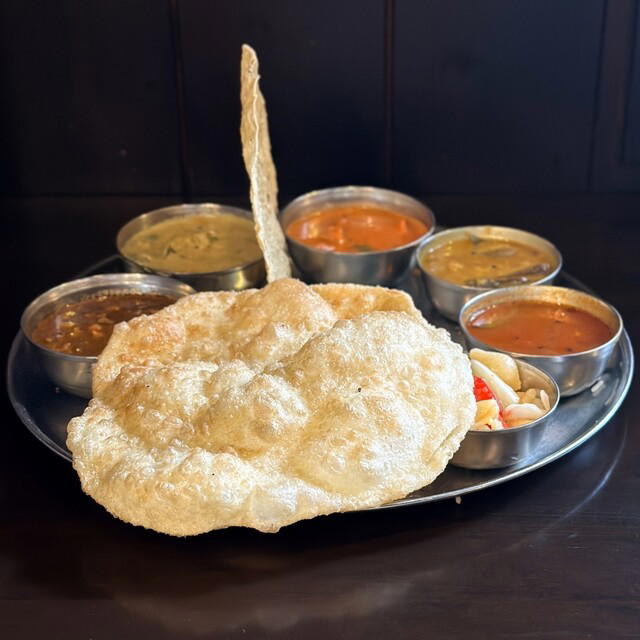
What to order
- Curry of the day
- South Indian meals
- Tandoori chicken
- Naan
In Tokyo, the rhythm changes by the hour. Lunch draws nearby office diners to fast counters and compact rooms; by evening, the city loosens into small drinking addresses, curry shops, and casual formats for people who know exactly what they came for. Indian Street Food & Bar GOND fits that second mode: not a formal tasting-menu room or casual chain shorthand, but a working Tokyo Indian and curry address with recognition beyond its immediate regulars.
Tokyo’s Indian dining scene now extends past generic curry expectations, with specialist kitchens, bar-adjacent curry rooms, and compact addresses paced by lunch trade. This room’s Tabelog Hyakumeiten recognition in 2024 places it in a competitive bracket where operational details matter: midday usefulness, clear identity, and enough evening appeal to make dinner distinct from lunch.
Tokyo regulars set the pace before the destination diners arrive
The regulars’ view is the useful one. Tokyo has many food corridors for people who eat out often without ceremony, where offices, schools, shops, and transit links feed a dining culture that values tight service and clear formats. The lunch crowd is not browsing; it is moving through a schedule.
That explains the appeal of an Indian and Indian curry restaurant with a practical, legible format. In Tokyo, this kind of room builds loyalty when solo diners, small groups, and repeat customers can understand the house rhythm without concierge-style explanation. The strongest appeal is not excess detail, but clarity: a restaurant that can be used repeatedly rather than decoded once.
The comparison set is telling. CHANTOYA COCONUT CURRY, Niou, Ponchi Ken, SANTOSHAM, and Mikokoro Mutenka China 935 all show how Tokyo diners treat focused restaurants as serious pursuits rather than fallback meals. Against that field, GOND is approachable, functional, and repeatable: a curry-and-bar-leaning hybrid for weekday workers, weekend groups, and diners seeking a defined identity rather than a formal sequence.
For a broader Tokyo route, nearby contrasts can be understood generically. Some parts of the city skew toward quick-grill and izakaya energy; others pull in dense casual formats or counter craft. Tokyo’s less theatrical addresses often rely on frequency, with restaurants people fold into actual life.
The bar side matters because dinner is not just lunch after dark
The “Street Food & Bar” wording is not decorative. Tokyo often lets drinks reshape compact dining rooms after office hours, and this address follows that pattern in broad spirit alongside its Indian and Indian curry categories. Indian restaurants in Tokyo often split between quick daytime curry rooms and more destination-oriented kitchens. A bar component gives dinner different grammar, especially for groups wanting spice, curry, and drinks without a high-spend tasting format.
The dinner structure separates it from the simplest curry rooms. SANTOSHAM offers another point of reference, while Mikokoro Mutenka China 935 shows how focused dining in Tokyo can occupy a different register. Here, the draw is a middle path: approachable for repeat use, yet recognized enough that the room is not merely serving passing demand.
That distinction is central to the regulars’ angle. A loyal customer does not need novelty every week; they need reliability, a clear proposition, and a room that understands time. In a city of desks, schools, and transit transfers, a restaurant that works as a sit-down curry address and casual evening option becomes part of daily infrastructure. Recognition follows the rhythm rather than replacing it.
The wider city context sharpens the point. Tokyo casual dining often rewards specialization more than breadth. Some venues win attention through visual format; others sit in narrower curry lanes. GOND differs by using Indian street-food language, curry familiarity, and bar utility to serve several moments of the day without becoming a catch-all restaurant.
How to place it in a Tokyo itinerary
This is a strong fit for diners who care about Tokyo’s everyday food systems as much as trophy counters. The Tabelog Hyakumeiten 2024 recognition supplies trust, but the better reason to pay attention is how the restaurant reflects a shift in Tokyo dining: Indian and curry restaurants are judged not only by authenticity language, but by how well they operate inside the city’s exacting routines. Lunch needs speed. Dinner needs a different mood. Small groups need workable pacing. Solo diners need ease. The concept needs plain statement.
For a full day, pair it with other Tokyo stops rather than treating it as a standalone pilgrimage. Travelers building a Tokyo food map can use Our full Tokyo restaurants guide, then cross-reference Our full Tokyo hotels guide, Our full Tokyo bars guide, Our full Tokyo wineries guide, and Our full Tokyo experiences guide to keep the day geographically coherent.
For broader comparisons, the useful thread is format rather than cuisine. Other dining rooms in Japan and abroad show how smaller or more casual restaurants frame repeat use differently. For comfort-food references, unnamed curry, street-food, and bar-adjacent rooms make useful contrasts. Across cities, the same point holds from another angle: repeat dining is built less on spectacle than on clarity, pace, and a format people can return to without negotiation.
The verdict is practical. Indian Street Food & Bar GOND is for diners who want to understand how Tokyo absorbs Indian curry and street-food cues into neighborhood dining logic. Its Tabelog Hyakumeiten recognition, Indian and Indian curry categories, and listed budget make it more than a passing curry stop, but its value remains rooted in regular use. It belongs on a serious Tokyo list not because it behaves like a grand occasion, but because it shows how a compact, repeatable restaurant earns attention in a city with little patience for loose execution.
Frequently asked questions
What are Indian Street Food & Bar GOND's hours?
Current hours for Indian Street Food & Bar GOND should be confirmed directly with the restaurant before visiting.
Where is Indian Street Food & Bar GOND in Tokyo?
Tokyo.
What's the pricing like at Indian Street Food & Bar GOND?
Pricing at Indian Street Food & Bar GOND is listed as Dinner: JPY 3,000 - JPY 3,999; Lunch: JPY 1,000 - JPY 1,999.
What is Indian Street Food & Bar GOND known for?
Indian Street Food & Bar GOND is known for Indian and Indian curry in Tokyo, with Tabelog Hyakumeiten recognition in 2024.
Cost Snapshot
Comparable venues for orientation by cuisine and category.
| Venue | Cuisine | Price | Awards | Notes |
|---|---|---|---|---|
| Indian Street Food & Bar GONDThis venue (the venue you are viewing) | Indian Street Food & Curry | $20–30 | Tabelog 100 #55 | Not listed |
| Budouya | Indian curry & Izakaya | $30–50 | Tabelog 100 #9 | Chiyoda, Indian curry & Izakaya |
| GURGAON | Traditional North Indian Curry House | $20–30 | Tabelog 100 #3 | Chūō, Traditional North Indian Curry House |
| Andhra Dining GINZA Ginza | Traditional South Indian Andhra cuisine | $20–30 | Tabelog 100 #44 | Chūō, Traditional South Indian Andhra cuisine |
| DELHI Ueno ten | Classic Indian & Pakistani curry house | $10–20 | Tabelog 100 #94 | Bunkyō, Classic Indian & Pakistani curry house |
| NANDHINI Toranomon ten | Authentic South Indian (Halal) Restaurant | $20–30 | Tabelog 100 #35 | Minato, Authentic South Indian (Halal) Restaurant |
Recognition history
Dated appearances from independent guides and award organizations, with the underlying list record or original source where available.
Tabelog 100 #55 · No. 55
Tabelog · Tabelog 100 - Asian cuisine / Ethnic cuisine - TOKYO - 2024
Continue exploring
More in Tokyo
Restaurants in Tokyo
All restaurants in Tokyo →




Details
- Lively
- Cozy
- Trendy
- Energetic
- Group Dining
- Casual Hangout
- Family
- Standalone
- Design Destination
- Beer Program
- Craft Cocktails
- Street Scene
- A La Carte
- Set Menu
- Beer
- Wine
- Chai
- Lassi
- Vegetarian Friendly
Current opening hours
- Monday
- 11:30 AM–3 PM, 5–10 PM
- Tuesday
- 11:30 AM–3 PM, 5–10 PM
- Wednesday
- 11:30 AM–3 PM, 5–10 PM
- Thursday
- 11:30 AM–3 PM, 5–10 PM
- Friday
- 11:30 AM–3 PM, 5–10 PM
- Saturday
- 11:30 AM–3:30 PM, 5–9:30 PM
- Sunday
- 11:30 AM–3:30 PM, 5–9:30 PM
Hours can change for holidays and private events. Hours as of .
Bright, colorful, and energetic, with vivid wall colors and GOND art creating a playful street-food atmosphere.