Our verdict
Inari Okami occupies a quayside address on the Rhône in Beaucaire, a town where ancient trade routes and Languedoc-Provence produce converge. The restaurant's name, borrowed from the Shinto deity of rice and agriculture, signals an orientation toward sourcing and ingredient provenance that sits at odds with the region's more conventional dining offer.

Pearl is the En Primeur Club membership app, where members save venues, book tables and use the concierge.
Where the Rhône Slows Down
The quai du Général de Gaulle runs along Beaucaire's riverfront, the Rhône moving wide and grey-green on one side, the old town's limestone facades pressing close on the other. Beaucaire sits at a crossing point that has mattered for centuries: the medieval Foire de Beaucaire, once one of the largest trade fairs in Europe, drew merchants from across the Mediterranean basin to this precise stretch of river. What arrived here was not just goods but ingredients, spices, and agricultural knowledge from cultures separated by long distances. That history of convergence still shapes what the region produces and, by extension, what its kitchens have to work with.
Inari Okami takes that geographic position seriously. Its address 5 Quai du Général de Gaulle, in the heart of Beaucaire's riverside quarter, places it directly within that historical current, a few minutes from the Rhône's western bank and within reach of both the Camargue delta to the south and the garrigue-covered hills of the Gard to the north. The name itself borrows from Inari Ōkami, the Shinto deity associated with rice, fertility, and agricultural abundance. For a restaurant in this corner of Occitanie, that reference is not decorative. It points toward a founding orientation: the land as primary subject, the kitchen as its interpreter.
The Sourcing Logic of the Southern Rhône Valley
The territory around Beaucaire is one of the more compelling ingredient zones in southern France, though it receives considerably less attention than the Luberon or the Alpilles. The Camargue, roughly thirty kilometres to the south, produces the only rice cultivated in mainland France, a short-grain variety grown in the delta's salt-edged paddies since the twentieth century, now carrying AOC protection. Wild bulls and semi-feral horses graze the marshes; Camargue beef carries a distinct mineral quality shaped by brackish pasture. North and west, the Costières de Nîmes appellation runs across volcanic basalt soils, producing olives, stone fruit, and vine-grown produce with the kind of mineral edge that altitude-grown equivalents rarely achieve at this latitude.
This is the ingredient context that separates a thoughtfully sourced kitchen in Beaucaire from one operating in a more generic provincial register. The question for any restaurant working this territory is how deliberately it draws on that geography, whether the menu is locally inflected in the superficial sense, with a few regional names dropped into descriptions, or whether sourcing decisions shape the entire cooking logic. The name Inari Okami suggests the latter ambition. Japan's agricultural deity presides over rice, foxes, and the fertility of the earth; invoking that figure in a Languedoc river town implies a kitchen with something to say about where food originates before it reaches the plate.
That framing connects Inari Okami to a broader shift in French regional cooking. Over the past decade, the most serious provincial kitchens have moved away from repertoire-led cuisine toward what might be called landscape-responsive cooking, menus that change not because a chef wants novelty, but because the surrounding terroir dictates it. This approach is visible at places like Bras in Laguiole, where the Aubrac plateau's flora has structured the kitchen's output for decades, or Auberge du Vieux Puits in Fontjoncouse, where a remote Corbières village became a culinary reference point precisely because of its hyper-local ingredient discipline. Beaucaire's river delta and garrigue offer a different but equally specific palette.
Beaucaire in Its Regional Dining Context
Southern France's fine dining geography concentrates heavily on a handful of established reference points. Mirazur in Menton operates from its clifftop garden on the Italian border; L'Oustau de Baumanière in Les Baux anchors the Alpilles luxury circuit; AM par Alexandre Mazzia in Marseille represents the city's creative haute cuisine tier. Beaucaire sits between these poles, neither a tourist-dense destination like Les Baux nor a major urban centre like Marseille, which means it operates with less footfall pressure and a different diner profile. The town draws visitors interested in the Rhône corridor's Roman and medieval history, wine tourism from the Costières and Rhonnais appellations nearby, and an increasing number of travellers moving between Arles and Nîmes who are willing to stop somewhere that requires a deliberate detour.
That positioning places any serious restaurant in Beaucaire in an interesting strategic position. It cannot rely on passing trade in the way a Lyon brasserie or a Paris bistro might. It earns its covers through reputation, recommendation, and the kind of editorial attention that directs purposeful travellers. For context on how French kitchens operating in similar provincial registers have built that reputation, the records at Flocons de Sel in Megève and Auberge de l'Ill in Illhaeusern are instructive: both achieved national recognition from positions in secondary towns by developing a cuisine inseparable from their immediate geography.
The international comparison is also worth noting. When kitchens in non-obvious cities develop strong ingredient-sourcing philosophies, they often find audiences that transcend their local catchment. Atomix in New York City built its reputation on Korean fermentation and seasonal discipline applied within a metropolitan context; Le Bernardin in New York City earned its standing through uncompromising product sourcing in a city with no shortage of technically accomplished kitchens. The principle holds across geographies: a clear sourcing logic, consistently applied, is one of the more durable foundations for a restaurant's identity.
Planning Your Visit
Beaucaire is accessible by TGV to Nîmes (approximately 20 minutes from Avignon TGV, 10 minutes from Nîmes centre to the old town by taxi or car), with the quayside address reachable on foot from the town centre. Given the limited number of serious dining options in Beaucaire itself, Inari Okami's quai address functions as both a destination restaurant and a logical stop on a Rhône-corridor itinerary that might also include wine exploration in the Costières de Nîmes or visits to the Roman monuments at Nîmes. Verified hours and pricing were not available at time of publication.
Frequently asked questions
Would Inari Okami be comfortable with kids?
If dining with children, check the venue's official channels before booking to confirm suitability. The quayside location along the Rhône does give families an outdoor context if needed.
What kind of setting is Inari Okami?
Inari Okami sits on Beaucaire's Quai du Général de Gaulle, the riverfront promenade where the Rhône runs wide on one side and the old town's limestone facades close in on the other. It is a distinctly local address, Beaucaire sits across the river from Tarascon and draws considerably less tourist traffic than Avignon or Arles, which shapes the atmosphere. The setting favours those who seek a quieter southern French context over a marquee dining destination.
Is Inari Okami the only Japanese-named restaurant in the Beaucaire and Nîmes area?
Inari Okami takes its name from the Japanese deity associated with foxes, rice, and agriculture, an unusual choice for a venue on the Rhône in the Gard department, where the dining scene skews heavily towards southern French and Provençal formats. It does distinguish the address clearly within Beaucaire's small restaurant offering on the Quai du Général de Gaulle.
What should I order at Inari Okami?
Given the venue's position in the southern Rhône Valley, a territory with strong connections to Camargue produce, Costières de Nîmes wines, and Provençal ingredients, the menu is likely to reflect regional sourcing. Contacting the venue directly will confirm current offerings before your visit.
Where is Inari Okami in Beaucaire?
Inari Okami is located at 5 Quai du Général de Gaulle, 30300 Beaucaire, France, Beaucaire.
Can I walk in to Inari Okami?
Beaucaire is a small town with limited restaurant options on the quayside, and demand at a singular riverfront address can concentrate quickly, particularly on weekends. Securing a reservation in advance is the safer approach; the address is 5 Quai du Général de Gaulle, Beaucaire.
Quick Comparison
Comparable venues nearby, for context on price, style, and recognition.
| Venue | Cuisine | Price | Awards | Notes |
|---|---|---|---|---|
| Inari OkamiThis venue (the venue you are viewing) | Modern Japanese Sushi | $20–30 | Not listed | Not listed |
| Signorvino Paris | Italian trattoria & wine bar | $30–50 | Gambero Rosso 2 Bottiglie | Latin Quarter |
| Brasserie L'ANNEXE | French Brasserie | $20–30 | Not listed | near Stade des Costières |
| Yuzuya | Japanese Izakaya | $30–50 | Not listed | Quartier Voltaire Part-Dieu |
| Manao | thai | Not listed | Not listed | Nice |
| La Nonna Restaurant Montpellier Millénaire | Italian Grandmother-Style Trattoria | $30–50 | Not listed | Grammont |
Continue exploring
More in Beaucaire
Restaurants in Beaucaire
All restaurants in Beaucaire →
Bars in Beaucaire
Browse all →

Details
- Cozy
- Modern
- Intimate
- Date Night
- Casual Hangout
- Terrace
- Open Kitchen
- Sake Program
- Local Sourcing
- Waterfront
- Street Scene
- A La Carte
- Small Plates
- Vegetarian Friendly
Current opening hours
- Monday
- 12–2 PM, 7–9:30 PM
- Tuesday
- 12–2 PM, 7–9:30 PM
- Wednesday
- 12–2 PM, 7–9:30 PM
- Thursday
- 12–2 PM, 7–9:30 PM
- Friday
- 12–2 PM, 7–9:30 PM
- Saturday
- 12–2 PM, 7–9:30 PM
- Sunday
- Closed
Hours can change for holidays and private events. Hours as of .
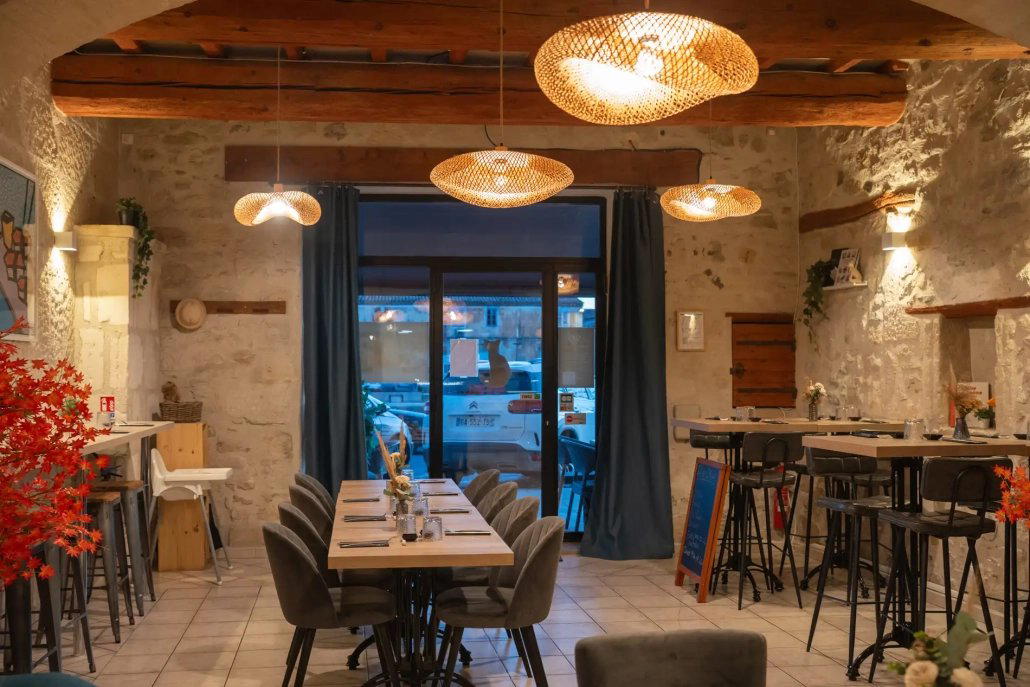
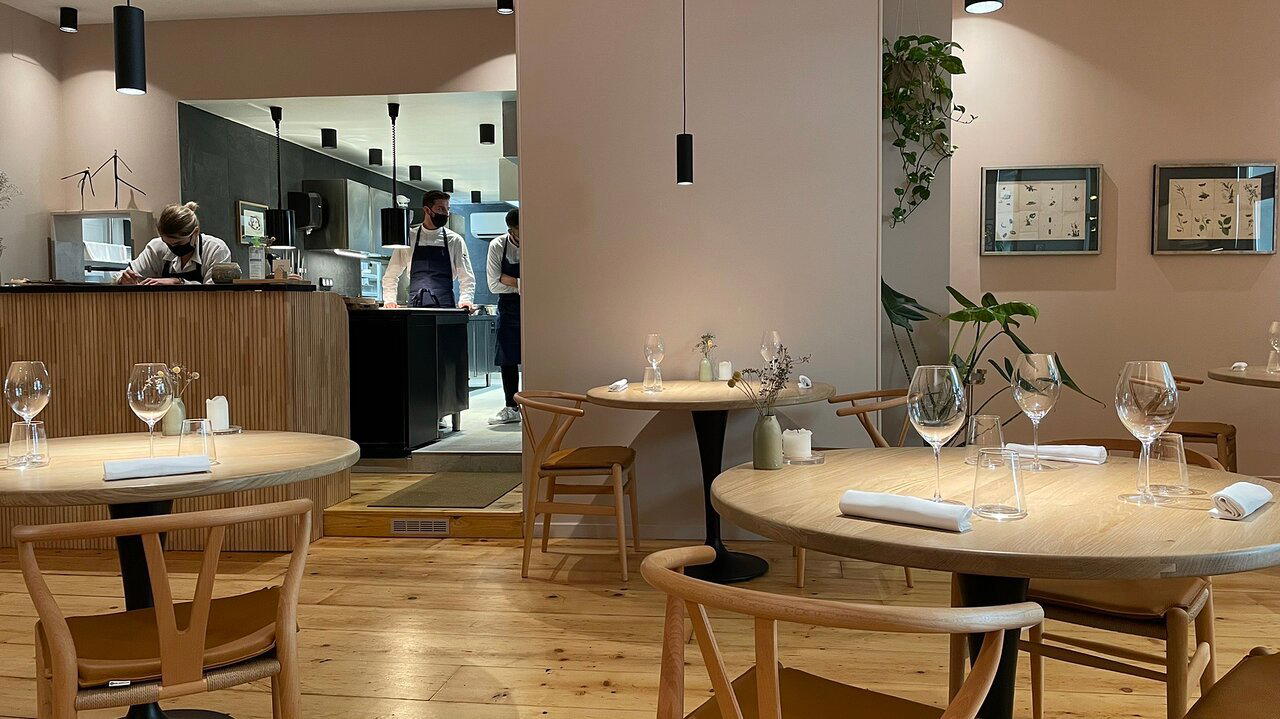
Cosy and refined décor with clean, well-decorated interior highlighting fresh Japanese cuisine.