Inaka An Kokura honten

Tabelog 100 #23
Our verdict
Kitakyushu’s serious unagi tradition is built on sourcing, grill control, and sauce discipline rather than spectacle. Inaka An Kokura honten sits in that conversation with Tabelog 100 - Unagi - 2024 recognition, an eel-focused format, sake and shochu on hand, and a room large enough for family meals as well as destination dining.

Pearl is the En Primeur Club membership app, where members save venues, book tables and use the concierge.
The menu
What to order
- Unagi kabayaki (grilled eel with tare)
- Unagi don/unaju (eel over rice)
- Unagi chazuke
Approaching dining in Kitakyushu, the appeal here is not theatrical luxury but the older rhythm of a Japanese eel house: eel, rice, sauce, and a kitchen organized around one demanding ingredient. In Kitakyushu, where regional appetite often favors directness over ceremony, unagi can occupy a different place from sushi counters or broader Japanese dining rooms: craft built on heat, timing, and repetition.
That frames Inaka An Kokura honten. Its selection for Tabelog 100 - Unagi - 2024 places it inside Japan’s narrower eel-specialist conversation, beyond the general category of good regional restaurants. Tabelog also lists a score of 3.69 and a dinner budget of JPY 5,000 - JPY 5,999, with lunch at JPY 3,000 - JPY 3,999, useful because unagi recognition rewards consistency: the sauce cannot drift, the grill cannot be casual, and the meal’s balance has to support its price.
Unagi in Kitakyushu is judged by focus before polish
Japanese eel dining is easy to misunderstand from outside Japan. The format can look simple: eel over rice, often served in a box or bowl. The hierarchy starts earlier: preparation, heat, sauce, rice, and timing decide whether the final plate feels heavy, thin, smoky, sweet, or balanced. At Inaka An Kokura honten, the public category is clear: this is an unagi specialist, and the point of the meal is how focused eel cookery carries the table.
That specialization points to style, not vague quality. Eel restaurants reveal themselves through the balance of exterior char, interior richness, rice absorption, and sauce sweetness. Here, the emphasis is the discipline of a dedicated unagi address rather than a menu trying to cover every corner of Japanese cuisine. This is not a minimalist tasting-counter experience; it belongs to the lineage of Japanese specialty restaurants where repetition is the authority.
Kitakyushu’s dining map sharpens that distinction. A sushi meal at Tsubasa or Sushi Asauumi occupies a different spend-and-ritual category; Yakitori Asahina sits in another evening bracket; Hountei represents a more casual local comparison. Eel falls between comfort and ceremony: lunch, family meal, business meal, or destination stop, depending on appetite and timing. Readers building a broader city itinerary can pair this with other Kitakyushu dining rooms, local casual cooking, sweets, or noodles elsewhere in the city.
A specialist room centered on eel rather than spectacle
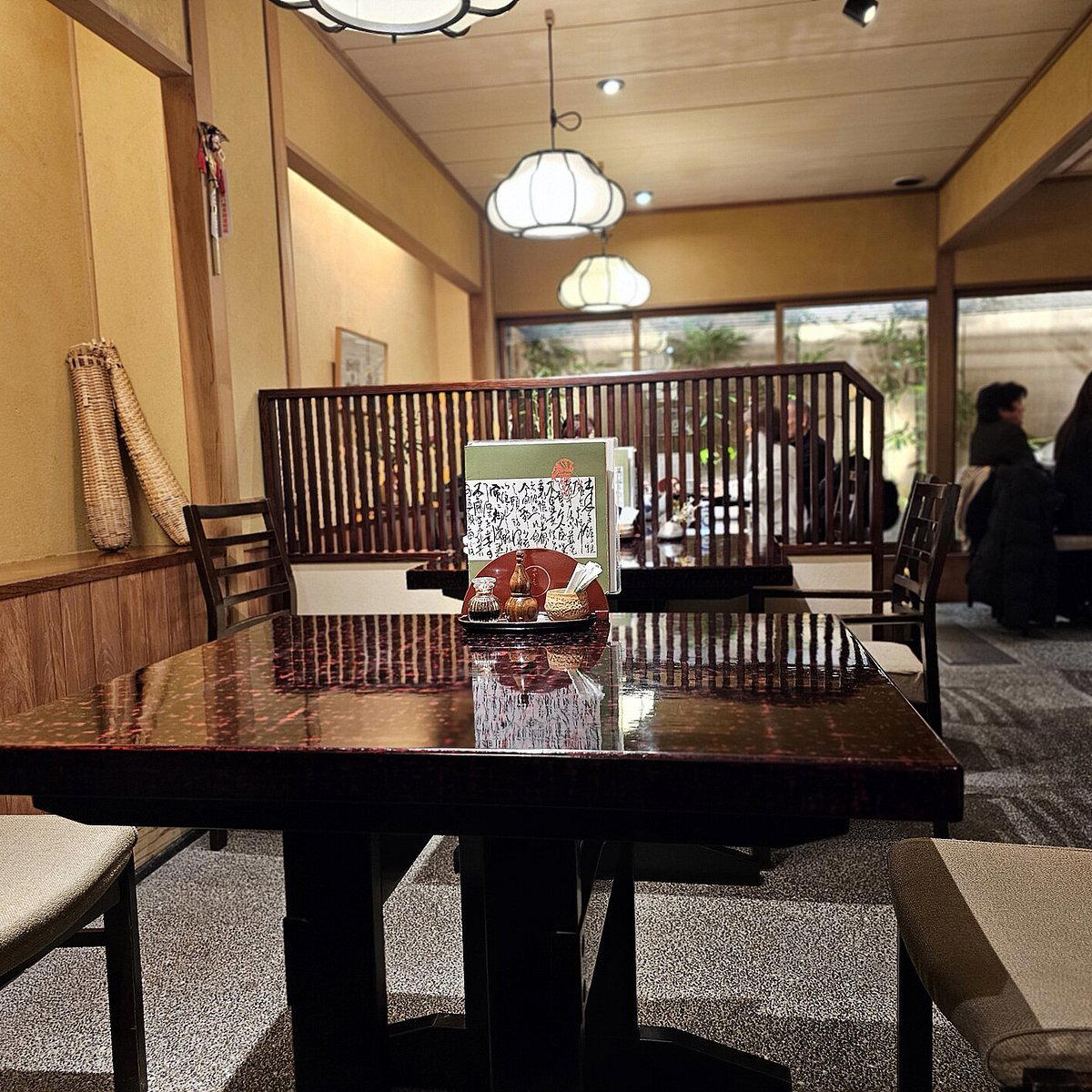
The experience is best understood through the category rather than through the expectations of a tightly staged Japanese counter. Eel is often wanted as a complete meal built around rice, sauce, and grill, and Inaka An Kokura honten should be approached on those terms. Rather than making the room the main event, the restaurant keeps the focus on the central ingredient and the familiar pleasure of a focused unagi meal. It sits closer to a practical specialist stop than a hushed luxury counter.
The beverage context should be read through the category rather than cocktail-bar novelty: drinks, where chosen, are there to support grilled eel and tare rather than compete with them. For visitors, the appeal is not only the seated restaurant ritual, but also the way unagi in Japan can be associated with travel meals, seasonal appetite, and a direct sense of occasion. The format is practical and built around a food that carries cultural weight without needing elaborate staging.
Recognition should be read carefully. Tabelog 100 - Unagi is a category-specific selection, not a Michelin star and not a claim that the room behaves like formal fine dining. Its value is narrower and, for the right diner, more useful: it identifies a specialist in a genre where small differences in preparation and grill style matter more than design language. Inaka An Kokura honten has a Tabelog score of 3.69, but the stronger signal is its place on the 2024 unagi list.
How to place it in a Kitakyushu food itinerary
For a visitor choosing one serious meal in Kitakyushu, eel is a smart counterweight to the city’s ramen, udon, sushi, and izakaya circuits. The meal is structured, recognizably Japanese, and rooted in an ingredient that rewards focused restaurants. It also avoids some of the reservation psychology of smaller counters, where a few seats can define the evening. Timing still matters, but the point is the meal itself rather than making it a trophy hunt.
Read the restaurant as a focused unagi address in a city that rewards specificity. It is not trying to cover every corner of Japanese cuisine. It does eel, rice, sauce, grill, and the steady grammar of a Japanese specialty restaurant. That discipline is the point. For wider planning, see Inakaan (田舎庵 小倉本店) in the Kitakyushu restaurant index, then compare the city through Our full Kitakyushu restaurants guide, Our full Kitakyushu hotels guide, Our full Kitakyushu bars guide, Our full Kitakyushu wineries guide, and Our full Kitakyushu experiences guide.
Travelers extending the comparison beyond Fukuoka can read this meal against other tightly defined Japanese formats in major dining cities, from grill-led specialists and casual counters to ingredient-focused rooms abroad. The useful comparison is not about matching décor or ceremony, but about how a narrow format becomes persuasive through repetition. Kitakyushu’s eel appeal remains more direct: keep the focus tight, grill with intent, and let rice carry the argument.
Frequently asked questions
Is Inaka An Kokura honten child-friendly?
Inaka An Kokura honten is an unagi restaurant in Kitakyushu, and the experience is best understood as a practical eel meal rather than a formal tasting-counter format.
What is the atmosphere like at Inaka An Kokura honten?
It is presented as a specialist eel house rather than a formal counter restaurant, with the focus on unagi, rice, sauce, and grill. The room is best approached as a direct Kitakyushu dining stop rather than a luxury fine-dining set piece.
Is Inaka An Kokura honten more mid-range or high-end?
Pricing at Inaka An Kokura honten is listed as Dinner: JPY 5,000 - JPY 5,999; Lunch: JPY 3,000 - JPY 3,999.
What days is Inaka An Kokura honten closed?
Specific closure details are not provided here; check directly with Inaka An Kokura honten before planning a visit.
What's Inaka An Kokura honten's location?
Kitakyushu.
A Quick Peer Check
Comparable venues by cuisine and price in the same metro.
| Venue | Cuisine | Price | Awards | Notes |
|---|---|---|---|---|
| Inaka An Kokura hontenThis venue (the venue you are viewing) | Traditional Unagi (Grilled Eel) Restaurant | $30–50 | Tabelog 100 #23 | Not listed |
| Inakaan (田舎庵 小倉本店) | Traditional Japanese Unagi | $30–50 | Not listed | Kokurakita-ku |
| Miyoshino | Traditional Yakitori & Chicken Dishes | $30–50 | Tabelog 100 #8 | Kokura Kita Ward |
| Terasawa | Traditional Japanese Fine Dining | Not listed | Tabelog Bronze #457 | Ōdōri |
| Imanami Udon | Japanese Udon Noodles | $1–10 | Tabelog 100 #41 | Kokuraminami-ku |
| Kurosaki Inakaan Hibiya | Japanese Unagi (Eel) | Not listed | Tabelog 100 #68 | Kurosaki |
Recognition history
Dated appearances from independent guides and award organizations, with the underlying list record or original source where available.
Tabelog 100 #23 · No. 23
Tabelog · Tabelog 100 - Unagi - 2024
Continue exploring
More in Kitakyushu
Restaurants in Kitakyushu
All restaurants in Kitakyushu →
Bars in Kitakyushu
Browse all →
Details
- Classic
- Elegant
- Well Known
- Cozy
- Family
- Group Dining
- Special Occasion
- Business Dinner
- Solo
- Standalone
- Historic Building
- Sustainable Seafood
- A La Carte
- Set Menu
- Tea
- Beer
- Sake
- Pescatarian Friendly
Current opening hours
- Monday
- 11 AM–8 PM
- Tuesday
- 11 AM–8 PM
- Wednesday
- 11 AM–8 PM
- Thursday
- 11 AM–8 PM
- Friday
- 11 AM–8 PM
- Saturday
- 11 AM–8 PM
- Sunday
- 11 AM–8 PM
Hours can change for holidays and private events. Last verified .
Traditional Japanese eel house with a refined, slightly old-fashioned atmosphere; warm wood interiors and a calm, orderly dining room where the focus is on carefully prepared unagi rather than loud socializing.