On Rua da Torrinha in Porto's Cedofeita neighbourhood, Iguarias De Hanói brings Vietnamese cooking to a city whose dining scene has long been defined by Atlantic-facing Portuguese tradition. The address places it squarely in the residential quarter where independent restaurants have displaced corner grocers over the past decade. For visitors working through Porto's contemporary food circuit, it represents a deliberate detour from the Douro-and-bacalhau defaults.
Pearl is the En Primeur Club membership app — saves, bookings, and concierge access live there. Same editors, same standards.
- Address
- Rua da Torrinha 232, 4050-610 Porto, Portugal
- Phone
- +351 912 476 519
- Directions
- Get directions
 Saves & bookings on Pearl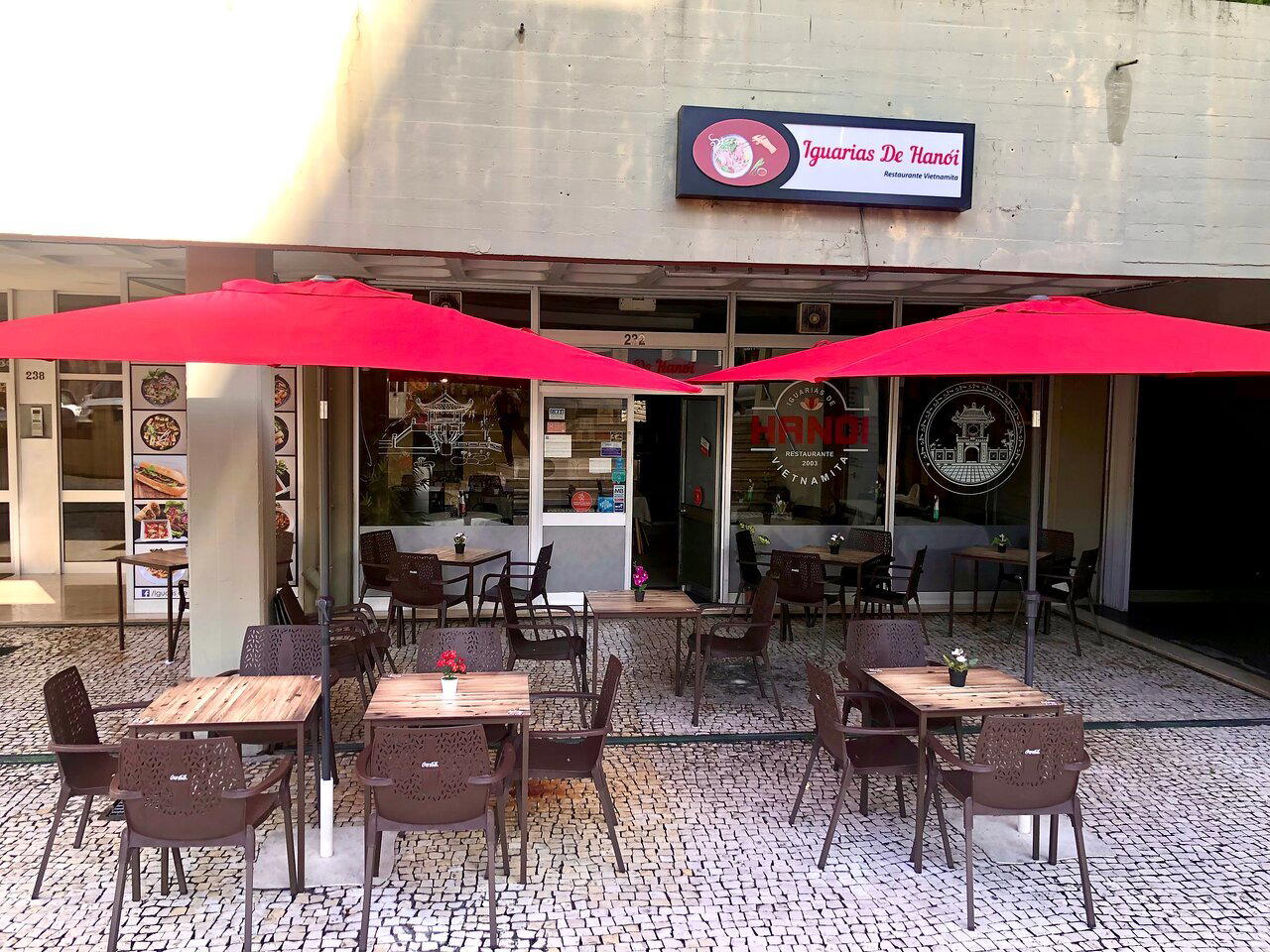
Vietnamese Cooking in a Portuguese City
Porto's restaurant culture has, for most of its modern history, organised itself around a set of recognisable pillars: bacalhau in its hundred preparations, grilled river fish, francesinha at the casual end, and a tier of contemporary Portuguese tasting menus at the leading. That top tier now includes addresses like Euskalduna Studio, Antiqvvm, and Blind, each working within a broadly Portuguese register even when the technique is progressive. What Iguarias De Hanói represents is something structurally different: a kitchen rooted in a culinary tradition with no local antecedent, operating on a street where the neighbourhood, not the Michelin circuit, sets the terms.
Vietnamese cuisine is among the more regionally specific in Southeast Asia. The food of Hanói, the city referenced in the restaurant's name, sits at the northern end of a country whose cooking changes markedly across its length. Northern Vietnamese food is typically less sweet than its southern counterpart, more restrained in its use of fresh herbs at the table, and shaped by a cooler climate that favours heartier broths and fermented condiments. Pho, bánh cuốn, and bún thang are northern staples. The register is subtler than the vivid, herb-laden plates associated with Hội An or Saigon. Bringing that specific culinary geography to Porto, a city on the Atlantic edge of Europe, is a particular editorial choice, one that speaks to the small but growing category of immigrant-founded restaurants in the city that prioritise regional fidelity over generalised pan-Asian accessibility.
The Cedofeita Address
Rua da Torrinha 232 sits in Cedofeita, the inner residential parish that stretches west of the historic Baixa. The neighbourhood has shifted over the past fifteen years from a quiet grid of early twentieth-century apartment buildings and corner shops to one of Porto's more active zones for independent hospitality. Cedofeita now holds a concentration of concept stores, natural wine bars, and restaurants that have chosen the lower rents and foot traffic of a residential street over the higher visibility of Ribeira or Foz. The dynamics here differ from Porto's more touristic zones: the clientele skews local, the formats tend toward casual, and longevity depends on repeat neighbourhood business rather than tourist throughput. For a restaurant rooted in a foreign culinary tradition, that neighbourhood context is meaningful, it signals a kitchen serving people who return by choice, not one positioned to capture passing visitors.
Porto's dining scene at the premium end is well-documented. Le Monument and Vila Foz anchor the contemporary Portuguese tier, while the broader Portuguese fine dining circuit extends south to Belcanto in Lisbon and along the coast to Casa de Chá da Boa Nova in Leça da Palmeira, just outside the city. Its competitive set is the more interesting category of restaurants working in non-Portuguese culinary traditions that have found audiences in Porto: the Vietnamese, Japanese, and South Asian kitchens that have emerged in the city's residential quarters over the past decade.
Why Northern Vietnamese Cooking Matters Here
The cultural logic of Vietnamese food in Portugal has a historical dimension that is easy to understate. Portugal's colonial history runs through Africa and Asia, Macau, Goa, Timor-Leste, and Portuguese itself is spoken as a second language in parts of Southeast Asia. Vietnam, however, sits outside that direct colonial thread; the French presence there created a different culinary hybrid. What Vietnamese restaurants in Portugal represent is not a colonial return but a more recent migration story, one driven by the Vietnamese diaspora's movement through France and other parts of Europe, and by the global reach of a cuisine that travels well because its central techniques, fresh aromatics and long-cooked broths, are legible even to palates unfamiliar with the original geography.
Northern Vietnamese food specifically demands a more careful audience than its southern variants. The flavours are less immediately declarative. A well-made northern broth is built on depth and clarity simultaneously, a combination that rewards attention rather than immediate impact. Restaurants that commit to that register rather than migrating toward a sweeter, more broadly accessible profile are making a choice about their audience, and about their cooking. That is the culinary tradition Iguarias De Hanói's name stakes a claim in.
Planning a Visit
The restaurant sits at Rua da Torrinha 232 in Cedofeita, accessible on foot from the city centre in under twenty minutes or by taxi from Ribeira in roughly ten. For visitors building a Porto itinerary around the city's full range of eating, the Cedofeita and Bonfim neighbourhoods reward exploration beyond the waterfront circuit. Porto's broader dining map now extends to recognised addresses across the country: The Yeatman in Vila Nova de Gaia is visible from the Douro's southern bank, while the Algarve holds a cluster of serious kitchens including Ocean in Porches, Bon Bon in Lagoa, Al Sud in Lagos, and Vila Joya in Albufeira. Further afield, Il Gallo d'Oro in Funchal represents the Madeiran end of the Portuguese dining circuit, and A Cozinha in Guimaraes is within day-trip range of Porto. For those organising a full Portuguese itinerary, A Ver Tavira in Tavira and Le Bernardin in New York City or Atomix in New York City provide useful points of comparison for what serious cooking looks like at either end of the formality spectrum.
Price and Positioning
Comparable venues nearby, for context on price, style, and recognition.
| Venue | Cuisine | Price | Notes |
|---|---|---|---|
| Iguarias De HanóiThis venue — the venue you are viewing | Cedofeita, Traditional Vietnamese | $$ | Not listed |
| Eatery 119 ӏ food, desserts & specialty coffee | Not listed | $$ | Santo Ildefonso, Ukrainian-Inspired Brunch Café |
| Gruta | Not listed | $$ | Santo Ildefonso, Modern Portuguese-Brazilian Seafood |
| Café A Brasileira | Not listed | $$ | Santo Ildefonso, Historic Portuguese Café |
| Casa Triunfo | Not listed | $$ | Vitória, Portuguese Conservas & Specialty Foods |
| A Regaleira | Not listed | $$ | Santo Ildefonso, Traditional Portuguese - Home of Original Francesinha |
Continue exploring
More in Porto
Restaurants in Porto
Browse all →
Bars in Porto
Browse all →
Hotels in Porto
Browse all →


At a Glance
- Cozy
- Casual Hangout
- Family
Current opening hours
- Monday
- 6:30–11 PM
- Tuesday
- 6:30–11 PM
- Wednesday
- 6:30–11 PM
- Thursday
- 6:30–11 PM
- Friday
- 6:30–11 PM
- Saturday
- 6:30–11 PM
- Sunday
- 6:30–11 PM
Hours can change for holidays and private events. Last verified .
Simple, bright, and cozy interior with a welcoming, unpretentious neighborhood feel.