
Tabelog 100 #25
Our verdict
Ichou no Ki belongs to Tokyo’s small but serious world of wagashi cafés and kakigori rooms, where low price points can still carry award-level scrutiny. Its Tabelog 100 selection for Tokyo Japanese traditional sweets cafés in 2023 places it in a category shaped by seasonality, small-batch preparation, and careful use of perishable ingredients rather than luxury dining signals.

Pearl is the En Primeur Club membership app, where members save venues, book tables and use the concierge.
The menu
What to order
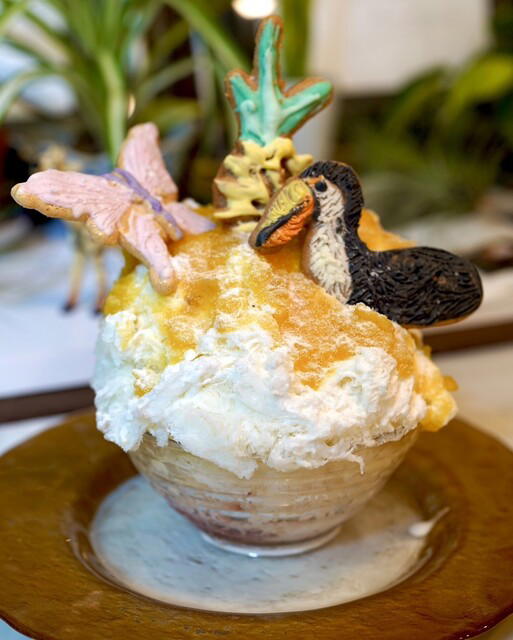
- Decorated kakigori shaved ice
- Cake-style kakigori
- Pie-style kakigori
- Japanese sweets (wagashi)
Tokyo’s older café rhythms slow the pace before the first spoonful: modest scale, quiet service, and a sweet-café culture that reads less like dessert after dinner than its own cooking tradition. Here, Japanese sweets sit alongside kissa comfort and kakigori’s seasonal discipline. Ichou no Ki sits within that lineage: a café for Japanese sweets, coffee-shop service, and shaved ice, recognised through Tabelog’s 2023 hyakumeiten listing.
The environmental angle is not slogan-heavy sustainability. It is the older Japanese café logic of perishability, portion discipline, and limited-format service. Japanese sweets and kakigori depend on preparations that punish overproduction: toppings, syrups, ice, tea, and small sweet components must move through tight daily cycles. In a city where dessert queues can become spectacle, a compact sweets café suggests a lower-footprint urban pattern: arrive simply, eat within the café’s rhythm, and let the kitchen work at the scale the product requires.
Tokyo's sweet-café category rewards precision over luxury signals
Tokyo’s high-end restaurant conversation often turns to tasting counters, kappo rooms, and formal menus, but sweets cafés operate on different evidence. Price is only part of it. Ichou no Ki sits in the JPY 1,000 to JPY 1,999 bracket for both lunch and dinner, closer to everyday Tokyo spending than special-occasion dining. Its distinction is category discipline: Japanese sweets café, kissa, and kakigori under one roof, not a broad dessert menu chasing trends.
That matters because kakigori has moved well beyond casual shaved ice. In Tokyo, the serious end treats ice texture, syrup structure, temperature, and pacing with the attention other specialist counters give their core craft. Better sweet cafés also understand restraint: sweetness should support the ingredient, not flatten it. The Tabelog recognition in 2023 is useful because it places the venue within a Tokyo-specific sweets field, not as a general café with a popular dessert.
Compared with other Tokyo specialists, this category asks for another kind of patience. Chuka Soba Waka TOKYO, Rebanira ya Kintaro Toukyou shucchoujo, Gyoza Mania Shinagawa hon ten, and Kappo MAKINO each point to different ways the city supports focused formats. The point is not hierarchy. Tokyo contains highly specialised dining rooms at many levels of formality, and sweets cafés deserve the seriousness given to other narrow crafts.
Small-format sweets make seasonality practical, not decorative
Seasonality in Japanese sweets is often discussed poetically, but the practical mechanics matter more. The form has long used the calendar as a production system: ingredients appear, peak, and disappear; presentation changes with weather; chilled preparations suit humid months; warmer, denser sweets answer colder days. Kakigori intensifies that logic because temperature and demand shape the format. Waste control is built into the craft when a café works in limited batches rather than industrial volume.
Ichou no Ki’s kissa element is also important. Tokyo coffee shops have historically been places for lingering, reading, and quiet conversation, while sweets cafés add a more specialised kitchen cadence. That scale defines the experience: less about ceremony or performance than timing, texture, and the café’s ability to handle fragile preparations within a compact service model.
The contrast with restaurants that announce seriousness through cost or formality is useful. Quintessence represents a different register of Tokyo dining, where the frame and pacing of the meal are not the same as a café stop. A sweets café in Tokyo works by almost opposite signals: modest spend, narrow product identity, and repeatable craft. For travellers, that can be more revealing than another expensive reservation, showing how Tokyo assigns status to small categories when execution is consistent enough to earn specialist recognition.
How to place it within a Tokyo eating day
Read this venue as a focused café stop, not a substitute for every meal in the day. Its place in Tokyo makes it easy to fold into a wider itinerary, but the experience should be approached at a slower tempo than station dining or quick-service snacking. It suits a day already built around a serious savory meal elsewhere: a specialist counter, a casual dining room, or a bar later. In EP Club’s Tokyo coverage, that means mapping it alongside other Tokyo dining rooms depending on appetite, timing, and geography.
The planning discipline is simple: treat the café as a specialist stop with its own operating rhythm, not a casual fallback. Its Tabelog information places it in a modest JPY 1,000 to JPY 1,999 budget band for both lunch and dinner, with the categories of Japanese sweets café, kissa, and kakigori doing most of the work. Those details are enough to set expectations: this is not luxury dining, but a narrow, craft-led format where timing and product condition matter.
For a wider Tokyo food map, use Our full Tokyo restaurants guide as the anchor, then layer in Our full Tokyo bars guide, Our full Tokyo hotels guide, Our full Tokyo wineries guide, and Our full Tokyo experiences guide. Japan-focused travellers can compare category specialisation beyond Tokyo through unnamed regional specialists, from compact sweet shops to casual counters and small-format cafés. For a broader Japanese-drinks-and-rice-snack counterpoint abroad, look for tightly defined Japanese formats that travel well when they resist becoming generic.
Frequently asked questions
What price level is Ichou no Ki?
Pricing at Ichou no Ki is listed as JPY 1,000 - JPY 1,999 JPY 1,000 - JPY 1,999 View spending breakdown.
How do I find Ichou no Ki?
Ichou no Ki is located in Tokyo.
Do they take walk-ins at Ichou no Ki?
Ichou no Ki was selected for Tabelog 100 in 2023, so planning ahead can be sensible on busier days. For current visit details, check directly with the café before going.
What's Ichou no Ki best at?
Its strongest lane is Japanese sweets, with the Tabelog 100 2023 selection covering Japanese traditional sweets / Japanese sweets café in Tokyo. The price band of JPY 1,000–JPY 1,999 also keeps it in café territory rather than splurge dining.
Is Ichou no Ki allergy-friendly?
The café’s format is Japanese sweets, kissa, and kakigori, so ingredients can vary by sweet and topping. For any allergy concern, use the listed phone number +81-90-8818-2835 before ordering and mention the specific ingredient to check.
Peers in This Market
Comparable venues for cuisine and category context.
| Venue | Cuisine | Price | Awards | Notes |
|---|---|---|---|---|
| Ichou no KiThis venue (the venue you are viewing) | Japanese shaved ice & sweets cafe (kakigori) | $10–20 | Tabelog 100 #25 | Not listed |
| Kappo MAKINO | Traditional Japanese Izakaya & Kappo Seafood | $50–100 | Tabelog 100 #46 | JPY 8,000 - JPY 9,999 |
| Chuka Soba Waka TOKYO | Modern Tokyo ramen & tsukemen | $10–20 | Tabelog 100 #78 | JPY 1,000 - JPY 1,999 JPY 1,000 - JPY 1,999 |
| Rebanira ya Kintaro Toukyou shucchoujo | Japanese Cafeteria | Not listed | Tabelog 100 #55 | JPY 1,000 - JPY 1,999 JPY 1,000 - JPY 1,999 |
| Gyoza Mania Shinagawa hon ten | Gyoza-focused Japanese Izakaya | $30–50 | Tabelog 100 #50 | JPY 3,000 - JPY 3,999 |
| Quintessence | Modern French Fine Dining | $300–500 | 3 Michelin Stars · La Liste Top Restaurants | French |
Recognition history
Dated appearances from independent guides and award organizations, with the underlying list record or original source where available.
Tabelog 100 #25 · No. 25
Tabelog · Tabelog 100 - Japanese traditional sweets / Japanese sweets cafe - TOKYO - 2023
Continue exploring
More in Tokyo
Restaurants in Tokyo
All restaurants in Tokyo →
Bars in Tokyo
All bars in Tokyo →




Details
- Whimsical
- Cozy
- Intimate
- Solo
- Casual Hangout
- Brunch
- After Work
- Standalone
- Design Destination
- A La Carte
- Tea
- Coffee
- Soft Drinks
A small, homey Japanese sweets cafe in a converted house, with a whimsical, almost storybook interior filled with colorful, highly decorated kakigori; the atmosphere is relaxed but can feel busy in summer, and the space is cozy enough that guests are asked to keep children calm and strollers outside.