Our verdict
Set along the Grande Rue of Barbizon, the village that gave its name to nineteenth-century French landscape painting, Hôtellerie du Bas-Bréau occupies a position that few rural French properties can match: a working inn with deep roots in the Fontainebleau forest region, drawing on a kitchen tradition tied to the produce of the Seine-et-Marne. For travellers approaching French fine dining from outside the Paris orbit, it represents one of the more considered stopping points in the Île-de-France.

Pearl is the En Primeur Club membership app — saves, bookings, and concierge access live there. Same editors, same standards.
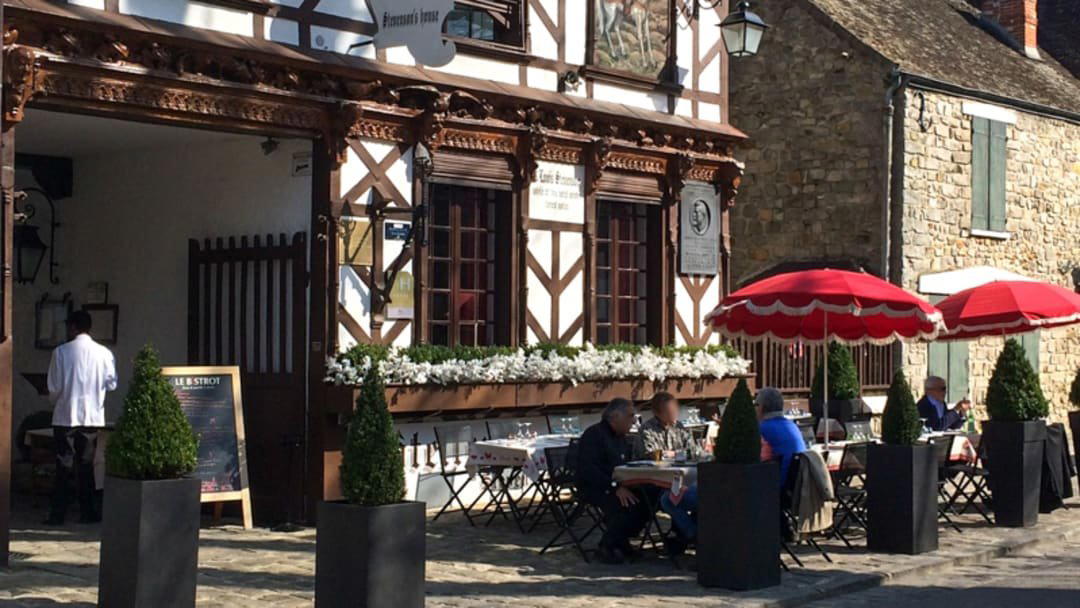
Where the Forest Begins
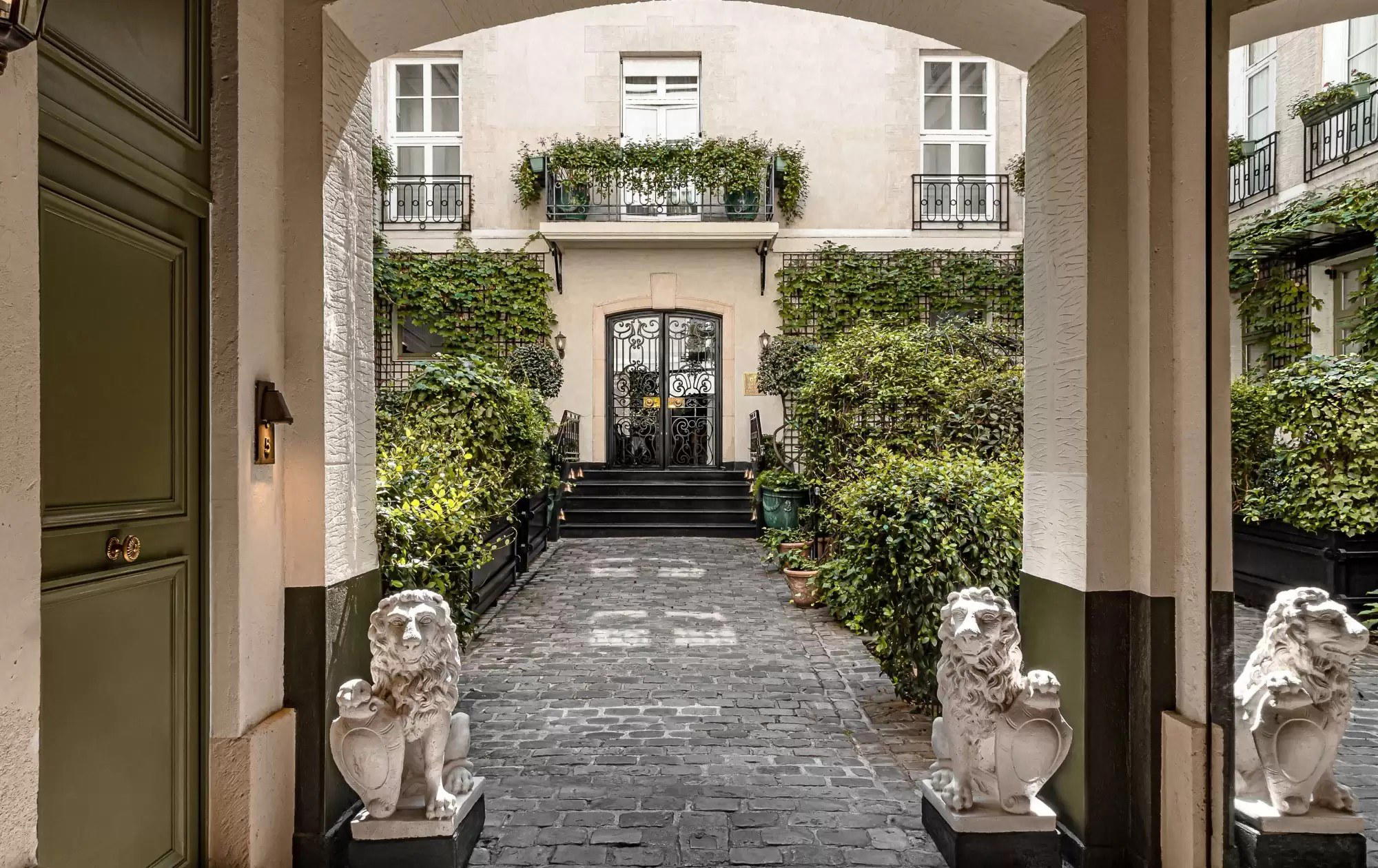
Approach Barbizon from Melun or from the motorway exits near Fontainebleau, and the shift is immediate. The village sits at the edge of the forest classified as a forêt de protection, a designation that has kept development at bay and preserved the quality of the surrounding terroir for centuries. The Grande Rue, which runs the length of the village, has not changed in its essential character since the mid-nineteenth century, when painters from the Barbizon School — Millet, Corot, Théodore Rousseau — made it their base. Hôtellerie du Bas-Bréau sits on that same street at number 22, in a property that has absorbed the village's unhurried pace into its walls. The physical impression on arrival is of a manor house that has quietly accumulated consequence over time: stone, timber, garden depth, the sound of little beyond birdsong from the forest edge.
The Barbizon position matters to understanding what this address does at table. Rural French hotel-restaurants operating at this tier draw their identity from place as much as from technique. The most persuasive examples in the country, L'Oustau de Baumanière in Les Baux, Auberge de l'Ill in Illhaeusern, Georges Blanc in Vonnas, function as region-defining institutions, and their kitchen sourcing is inseparable from that identity. Bas-Bréau operates in the same tradition: a hotel-restaurant in which the room and the table are equally part of the proposition, and in which the surrounding terrain is the implicit argument for being there at all.
The Île-de-France Kitchen and Its Larder
Seine-et-Marne is not a department that appears frequently in the sourcing notes of Paris restaurants, yet it is one of the more productive agricultural zones within the Île-de-France region. The land around Fontainebleau offers game from the royal forest, historically one of the best-managed hunting reserves in France, alongside market garden produce from the river valleys and mushrooms from the forest floor. This is a larder that rewards proximity, and a kitchen anchored in Barbizon has direct access to ingredients that a Paris restaurant would need to import from the same region. That proximity carries editorial weight: sourcing from this terrain is not a marketing gesture but a structural advantage of the location.
The broader pattern in French provincial gastronomy supports this reading. Addresses like Bras in Laguiole built their reputations partly on the specificity of their terroir, the Aubrac plateau's flora made legible through the kitchen. Mirazur in Menton draws its seasonal logic from its own gardens above the Mediterranean. Flocons de Sel in Megève frames alpine sourcing as the organizing principle of its menu. What connects these kitchens is not the geography per se but the decision to treat location as cuisine's primary raw material. At Bas-Bréau, the Fontainebleau forest context implies a similar commitment, placing the kitchen inside a regional tradition rather than outside it looking in.
Barbizon in the French Fine-Dining Map
France's highest-profile gastronomy is concentrated in Paris, Lyon, and along the Riviera. The addresses that draw the most sustained critical attention, Alléno Paris au Pavillon Ledoyen, AM par Alexandre Mazzia in Marseille, Assiette Champenoise in Reims, belong to cities or to well-trafficked wine regions. The rural auberge model occupies a different register: lower profile in media terms, but often more coherent as a total experience precisely because the remove from urban competition allows a kitchen to cook according to local logic rather than metropolitan expectation.
Bas-Bréau's position within this model is clarified by its village context. Barbizon attracts a visitor profile that skews toward the culturally informed: people making the Fontainebleau day trip from Paris, or staying for the forest walks, or tracing the painting history that made the village a touchstone in French art history. That audience tends to arrive with patience for a slower meal in a room with some age to it. The hotel-restaurant format here is not a compromise between accommodation and dining but the natural form of an address built for extended visits. Comparable rural establishments of similar heritage across France, Auberge du Vieux Puits in Fontjoncouse, Troisgros - Le Bois sans Feuilles in Ouches, demonstrate that the format can sustain serious culinary ambition. The question for any visit to Bas-Bréau is the same as for those addresses: whether the kitchen is using its setting as a starting point or a backdrop.
Getting There and Planning Your Visit
Barbizon sits roughly 55 kilometres southeast of central Paris, reachable by train to Melun followed by a short taxi or rideshare to the village, the journey from Gare de Lyon runs under an hour by rail. The address at 22 Grande Rue places the hotel at the centre of the village, walkable from any point on the main street. For those driving from Paris via the A6 motorway, the Fontainebleau exit brings you into the forest before the village, which makes for an arrival that prepares you for the environment before you reach the door. Visitors combining the stay with time at the Château de Fontainebleau, the royal palace is a short drive, tend to find the two-night format more satisfying than a single night, given the unhurried pace the setting encourages. Given the position of the property within its village and the audience it draws from Paris weekenders, advance booking for weekend stays is advisable, particularly in autumn when the forest is at its most compelling and demand from walkers and day-trippers is highest. Our full Barbizon restaurants guide covers the broader dining options in the village for those planning an extended stay.
Frequently asked questions
Can I bring kids to Hôtellerie du Bas-Bréau?
Hôtellerie du Bas-Bréau sits on Barbizon's Grande Rue in a village setting that tends to favour a quieter, adult-oriented pace. The property's position at the edge of Fontainebleau forest does make the surrounding area naturally engaging for families, with open woodland on the doorstep. check the venue's official channels to confirm any specific family policies before booking.
How would you describe the vibe at Hôtellerie du Bas-Bréau?
Barbizon earned its reputation as the village where 19th-century painters set up easels at the forest edge, and Bas-Bréau occupies that same unhurried register. The address on Grande Rue places it at the centre of a village of under 1,500 residents, which sets the tone: this is a retreat from Paris, not an extension of it. Expect calm over ceremony.
Is Hôtellerie du Bas-Bréau a good base for exploring the Fontainebleau forest and surrounding region?
At 22 Grande Rue, Barbizon, the property sits at the literal threshold of the Fontainebleau forest, one of France's oldest royal hunting grounds and now a protected natural area covering roughly 25,000 hectares. The village functions as the northwestern entry point to the forest, making Bas-Bréau a logical overnight base for those combining woodland walking with the fine-dining and cultural heritage of Seine-et-Marne. The train connection from Melun to Paris keeps the capital within reach for day trips in either direction.
What's the best thing to order at Hôtellerie du Bas-Bréau?
Seine-et-Marne is one of the more productive agricultural departments in Île-de-France, supplying grains, vegetables, and game that rarely appear in Parisian sourcing notes. A kitchen in Barbizon has direct access to that larder, and the Fontainebleau forest adds seasonal forage to the picture. Specific menu details are best confirmed with the property ahead of your visit.
Where is Hôtellerie du Bas-Bréau in Barbizon?
Hôtellerie du Bas-Bréau is located at 22 Grande Rue, 77630 Barbizon, France, Barbizon.
Do I need a reservation for Hôtellerie du Bas-Bréau?
Barbizon draws visitors making the 55-kilometre trip from central Paris, particularly on weekends when the forest trails and village atmosphere pull a steady crowd. For a property of this standing on the Grande Rue, booking ahead is the practical approach rather than arriving on spec. Reservations can be arranged directly through the property.
At-a-Glance Comparison
| Venue | Cuisine | Price | Awards | Notes |
|---|---|---|---|---|
| Hôtellerie du Bas-BréauThis venue — the venue you are viewing | French Gastronomic Restaurant | $50–100 | Not listed | Not listed |
| Alléno Paris au Pavillon Ledoyen | Modern French Fine Dining | $150–200 | 3 Michelin Stars · World's 50 Best #79 | Creative |
| Kei | Modern French with Japanese Influences | $300–500 | 3 Michelin Stars · World's 50 Best #93 | Contemporary French, Modern Cuisine |
| L'Ambroisie | Classic French Haute Cuisine | $300–500 | 2 Michelin Stars · World's 50 Best #23 | French, Classic Cuisine |
| Le Cinq - Four Seasons Hôtel George V | Modern French Fine Dining | $300–500 | 3 Michelin Stars · World's 50 Best #24 | French, Modern Cuisine |
| Mirazur | Modern French Fine Dining | $300–500 | 3 Michelin Stars · World's 50 Best #1 | Modern French, Creative |
Continue exploring
More in Barbizon
Restaurants in Barbizon
All restaurants in Barbizon →
Bars in Barbizon
Browse all →



Details
- Romantic
- Classic
- Elegant
- Scenic
- Quiet
- Private Event
- Special Occasion
- Celebration
- Business Dinner
- Family
- Hotel Restaurant
- Historic Building
- Garden
- Private Dining
- Extensive Wine List
- Local Sourcing
- Garden
- A La Carte
- Bar
- Vegetarian Friendly
Timeless, classic hotel atmosphere with a shaded garden setting and period details such as an old fireplace.