Sichuan Heat in the City of Romeo and Juliet Verona is not a city that typically invites comparison with Chengdu. Its dining identity is anchored in Venetian braised meats, risotto all'Amarone, and the kind of slow-cooked lake fish that appears...
Pearl is the En Primeur Club membership app — saves, bookings, and concierge access live there. Same editors, same standards.
- Address
- Via dei Mutilati, 5E, 37122 Verona VR, Italy
- Phone
- +393762530158
- Website
- module.thefork.com
- Directions
- Get directions
 Saves & bookings on Pearl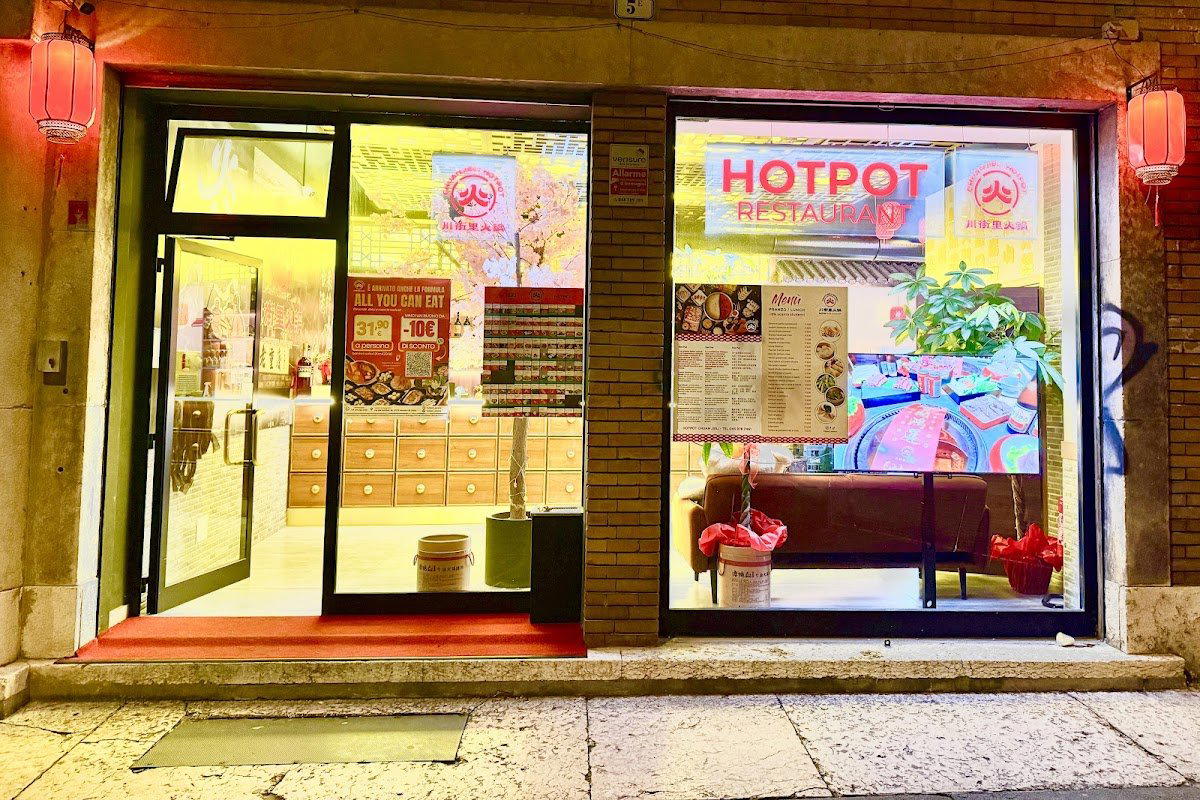
Sichuan Heat in the City of Romeo and Juliet
Verona is not a city that typically invites comparison with Chengdu. Its dining identity is anchored in Venetian braised meats, risotto all'Amarone, and the kind of slow-cooked lake fish that appears at places like Al Bersagliere and Al Capitan della Cittadella. Yet Via dei Mutilati, a short walk from the Arena and the medieval core, is where HOTPOT Restaurant Chuangjieli (川蜀老巷子火锅) operates, a Sichuan hotpot house that sits at a significant remove from the regional Italian tradition surrounding it. The address alone signals something: this is not the kind of restaurant that arrives by accident in a secondary Italian city. It arrives because a community exists to sustain it and because the format travels well.
What Sichuan Hotpot Actually Is
Sichuan hotpot is one of China's most socially structured dining formats. The table centres on a divided or single-pot of simmering broth, traditionally built on a base of doubanjiang (fermented chilli bean paste), dried chillies, Sichuan peppercorns, and aromatics rendered in tallow or oil. The numbing, electric sensation produced by Sichuan peppercorn, a phenomenon Chinese cuisine describes as mala, meaning numb-and-spicy, is not merely a flavour but a physiological event. Diners cook raw ingredients tableside: thinly sliced beef and lamb, offal, tofu skins, mushrooms, leafy greens, and hand-rolled noodles. The sesame-and-peanut dipping sauce that accompanies the broth is as much a part of the meal as anything that goes into the pot. This is communal eating in its most deliberate form, and it resists the kind of quick service that defines most European dinner formats. A hotpot meal is measured in hours, not courses.
The cultural context matters for understanding why a restaurant like this occupies a real position in a city like Verona. Italy's Chinese diaspora is one of the oldest and largest in Europe, concentrated historically in Prato and Milan but spread across every major northern city. Verona, as a node of northern Italian commerce, has a Chinese community substantial enough to support restaurants oriented primarily toward that community rather than toward tourist accommodation. Chuangjieli's full name gestures at this directly: the Chinese characters reference Sichuan and an "old alley" sensibility, a type of vernacular Sichuan dining that contrasts with the more polished hotpot chains that have globalised the format in recent years.
Placing It in the Verona Dining Map
Verona's high-end Italian scene runs from the creative contemporary work at Casa Perbellini 12 Apostoli to the Italian contemporary tradition at Il Desco, with the more grounded contemporary register covered by Iris Ristorante. HOTPOT Restaurant Chuangjieli operates outside this competitive tier entirely. It belongs to a different category: the ethnic specialist restaurant serving a diaspora community in a European city where that cuisine has genuine roots. This category is often underserved in premium travel editorial, which tends to funnel readers toward award-validated Italian fine dining. For context on that fine dining tier nationally, the Italian scene includes institutions like Osteria Francescana in Modena, Le Calandre in Rubano, and Enoteca Pinchiorri in Florence, none of which share a reference point with Chuangjieli. The more instructive comparison is with diaspora-rooted restaurants in cities where they've earned serious recognition: Atomix in New York represents what happens when a diaspora cuisine reaches its highest formal expression in a Western city; Chuangjieli operates in a different register, closer to the vernacular end of that spectrum.
That vernacular positioning is not a criticism. Sichuan hotpot at its most authentic resists fine-dining translation. The format's power is in its informality, the shared pot, the self-cooking, the extended table time. Particularly respected hotpot operations in Chengdu and Chongqing are not award-circuit restaurants; they are institutions measured in decades of neighbourhood loyalty.
Practical Notes for Visitors
The restaurant is located at Via dei Mutilati 5E, Verona 37122, near the Arena di Verona, which makes it walkable from the historic centre. Reservations are recommended, and visiting in person during off-peak hours or arriving early in an evening service is the practical approach for first-time visitors. The restaurant is casual, with an estimated price tier of about $20 per person. For allergy concerns, Sichuan hotpot broth typically contains sesame, soy, and often shellfish or meat stocks, and the dipping sauces are sesame-forward; diners with relevant allergies should verify directly with the restaurant before visiting.
The Broader Pattern: Asian Dining Formats in Secondary European Cities
Hotpot's global spread over the past decade has followed a clear pattern: first concentrated in cities with large Chinese communities, then gradually recognised by food media as the format's communal intensity made it compelling to non-Chinese diners. The format now appears in serious food cities across Europe, from London to Paris to Berlin, though it remains less documented in secondary Italian cities. Verona's position as a transit city between Milan and Venice means it absorbs some of the culinary diversity of northern Italy's larger urban centres. What HOTPOT Restaurant Chuangjieli represents in that context is the presence of a diaspora-sustaining restaurant format in a city whose international dining profile is largely defined by its Roman amphitheatre and its operatic summer season. That gap between cultural identity and culinary reality is precisely where interesting restaurants tend to operate. The comparison venues in Verona's Italian tradition, from the affordable Venetian cooking at Al Bersagliere to the fine dining commitment of Il Desco, define one axis of the city's food scene. Chuangjieli sits on a different axis entirely, one that connects Verona's Chinese community to Sichuan culinary tradition across several thousand kilometres of cultural distance.
For readers planning a broader Italian itinerary around serious dining, the regional context includes Atelier Moessmer Norbert Niederkofler in Brunico, Dal Pescatore in Runate, Uliassi in Senigallia, Reale in Castel di Sangro, Piazza Duomo in Alba, Quattro Passi in Marina del Cantone, and Enrico Bartolini in Milan, each operating at the summit of Italian fine dining and each providing a useful point of reference for understanding what Verona's own high-end scene positions itself against. Chuangjieli is not competing with any of them. It is doing something structurally different, and that difference is the point.
FAQs: HOTPOT Restaurant Chuangjieli in Verona
- What do regulars order at HOTPOT Restaurant Chuangjieli? In the Sichuan hotpot tradition the restaurant's name references, the core ordering pattern centres on the broth choice (typically a divided pot with a mala spicy broth and a milder option), thinly sliced beef and lamb, tofu skins, mushrooms, and a sesame-peanut dipping sauce. These are the structural staples of the format across Sichuan hotpot restaurants globally, though the specific offering here should be confirmed on arrival.
- How hard is it to get a table at HOTPOT Restaurant Chuangjieli? Reservations are recommended. In the absence of a confirmed website or phone contact, the practical approach is to visit directly during off-peak hours. Verona's dining scene at the fine dining tier, venues like Casa Perbellini 12 Apostoli, requires advance booking weeks out, but community-serving hotpot restaurants in secondary European cities typically operate on a walk-in or same-day basis.
- What has HOTPOT Restaurant Chuangjieli built its reputation on? The restaurant's name references Sichuan hotpot tradition and an "old alley" vernacular style, suggesting an orientation toward the format's communal, informal roots rather than its more polished chain iterations. Its location on Via dei Mutilati in Verona places it within reach of the city's Chinese community and of visitors seeking a dining format outside Verona's dominant Venetian-Italian tradition.
- Is HOTPOT Restaurant Chuangjieli allergy-friendly? Sichuan hotpot as a format involves sesame (in the standard dipping sauce), soy, and broths that frequently contain shellfish, meat stocks, or both. Diners managing allergies should verify directly with the restaurant before visiting. For allergy-conscious dining in Verona with confirmed restaurant contact details, the full Verona guide covers venues across multiple cuisines and price points.
- Is HOTPOT Restaurant Chuangjieli a good option for a large group dinner in Verona? The hotpot format is structurally designed for group dining: a shared central pot, communal ordering, and extended table time make it one of the few dining formats that genuinely improves with larger numbers. Sichuan hotpot restaurants in this tradition typically accommodate groups of four to ten around a single table with a divided pot. The format itself, rooted in the communal dining culture of Chengdu and Chongqing, is among the more group-compatible in Chinese cuisine.
Budget Reality Check
Comparable venues nearby, for context on price, style, and recognition.
| Venue | Cuisine | Price | Awards | Notes |
|---|---|---|---|---|
| HOTPOT Restaurant Chuangjieli å·è¡éèç«éThis venue — the venue you are viewing | Cittadella, Sichuan Hotpot | $$ | Not listed | Not listed |
| Du De Cope | Not listed | $$ | Not listed | Citta' Antica, Neapolitan Wood-Fired Pizza |
| Osteria all'Organetto | Not listed | $$ | Not listed | S. Zeno, Traditional Veronese Trattoria |
| Alcova del Frate | Not listed | $$$ | Not listed | Citta' Antica, Traditional Veronese Italian |
| Antica Torretta | Not listed | $$$$ | Not listed | Citta' Antica, Contemporary Italian Fine Dining with Seafood Focus |
| Osteria la Fontanina | Not listed | $$$ | Michelin Plate | Veronetta, Traditional Italian Regional Cuisine |
Continue exploring
More in Verona
Restaurants in Verona
Browse all →
Bars in Verona
Browse all →
Hotels in Verona
Browse all →

At a Glance
- Lively
- Modern
- Energetic
- Group Dining
- Casual Hangout
- Family
- Open Kitchen
- Beer Program
Current opening hours
- Monday
- 12–3 PM, 6:30–11:30 PM
- Tuesday
- 12–3 PM, 6:30–11:30 PM
- Wednesday
- 12–3 PM, 6:30–11:30 PM
- Thursday
- 6:30–11:30 PM
- Friday
- 12–3 PM, 6:30–11:30 PM
- Saturday
- 12–3 PM, 6:30–11:30 PM
- Sunday
- 12–3 PM, 6:30–11:30 PM
Hours can change for holidays and private events. Last verified .
Casual and lively atmosphere with warm lighting from table burners, creating an interactive and communal dining environment typical of hotpot restaurants.