Hospiz Alm
.png)
Hospiz Alm holds a Michelin Plate for 2024 and 2025, placing it among the recognised contemporary dining addresses in Sankt Anton am Arlberg. Positioned at St. Christoph — one of the highest permanently inhabited points in the Austrian Alps — the restaurant operates in a context where altitude and ski culture shape both the clientele and the tempo of service. With a Google rating of 4.1 across 708 reviews, it draws a broad cross-section of the resort's winter audience.
 Discover on Pearl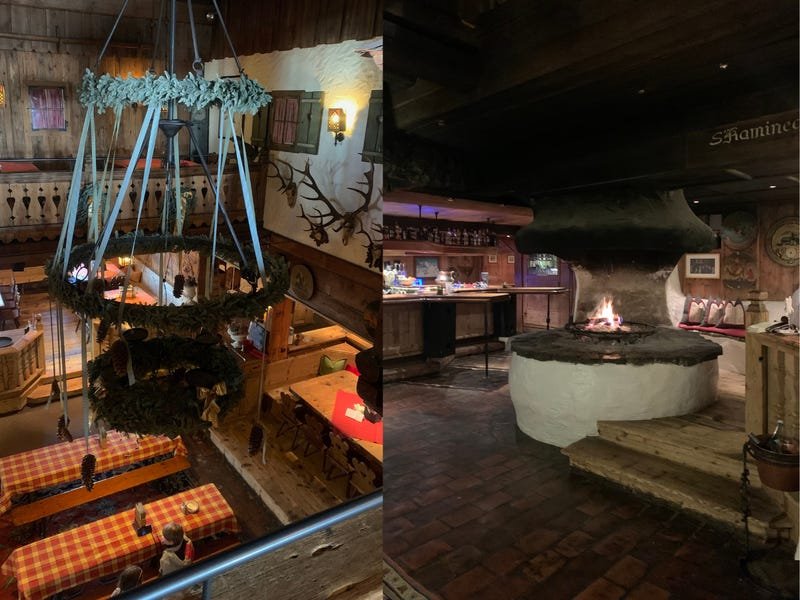
Dining at Altitude: The St. Christoph Context
St. Christoph am Arlberg sits at roughly 1,800 metres, a few kilometres above Sankt Anton proper, on the main road over the Arlberg Pass. This is not a village in the conventional sense. There are no year-round residents in the way that Sankt Anton's base has them, no summer market square filling with cyclists. St. Christoph exists almost entirely in relation to snow: the hospice that gave the area its name was founded in the 14th century to shelter travellers crossing the pass, and the logic of providing refuge at altitude has defined everything built here since. Hospiz Alm sits within that tradition, operating on a site where the altitude itself is part of the offer.
For diners arriving from the resort below, the elevation matters in practical terms. The air is thinner, the light on clear days is more direct, and the surrounding terrain — the Galzig and Kapall massifs framing the valley — is more present than it would be from a restaurant in the village. This is the kind of setting where the room's relationship to its windows, and the timing of a meal relative to the afternoon light, becomes part of what guests are actually buying. Contemporary restaurants at ski resorts across the Alps have increasingly acknowledged this: the architecture of dining, not just the plate, is the product at altitude.
The shortlist, unlocked.
Hard-to-book tables, cellar releases, and concierge-planned trips.
Get Exclusive Access →Where Hospiz Alm Sits in the Local Tier
Sankt Anton's restaurant scene runs from casual post-ski Tyrolean to formally recognised fine dining, and the gap between those poles has widened over the past decade as the resort has positioned itself against Lech, Zürs, and Kitzbühel for high-spending international visitors. The Michelin Plate , awarded to Hospiz Alm for both 2024 and 2025 , sits below the star tier but above the general population of resort restaurants. It signals that inspectors found the cooking worth noting without placing it in the same bracket as, say, Gourmetrestaurant Tannenhof, which holds two Michelin stars and operates as the most formally recognised table in Sankt Anton, or Alpin Gourmet Stube, which carries one star.
The Plate designation is useful for orienting expectations. It means the kitchen is producing food that Michelin's inspectors considered competent and worth recommending, without the tasting-menu commitment or price premium that a starred address demands. In a resort where the €€€€ price tier covers a wide range of formats , from wine-focused Alpine dining rooms to hotel restaurants with international menus , the Plate functions as a signal of seriousness rather than a guarantee of any specific cuisine philosophy. At the €€€€ level, Hospiz Alm prices against Tannenhof and Alpin Gourmet Stube rather than the more accessible €€€ addresses like Endlich or Verwallstube.
Across Austria's broader fine dining map, the Arlberg region occupies a specific position: it is not Vienna, where restaurants like Steirereck im Stadtpark define the national benchmark, nor is it Salzburg, where Ikarus draws an international audience specifically for its rotating guest-chef format. The Arlberg's leading tables serve a clientele that is largely seasonal and largely already committed to being in the mountains; the dining room competes with the ski day, not with other cities. That shapes format, pacing, and the style of contemporary cooking on offer. For comparison, Griggeler Stuba in Lech operates in the same regional context , a mountain resort with a serious kitchen drawing a winter-focused audience , while addresses like Döllerer in Golling an der Salzach, Obauer in Werfen, Kräuterreich by Vitus Winkler, and Landhaus Bacher in Mautern an der Donau represent the country's broader tradition of destination dining outside the capital. Internationally, the contemporary format Hospiz Alm operates within has counterparts in metropolitan settings: César in New York City and Jungsik in Seoul both work within the contemporary idiom, though in contexts where the competitive set and guest expectations differ considerably from an Alpine resort.
The Guest Experience and What Drives It
A Google rating of 4.1 across 708 reviews is a meaningful data point for a €€€€ restaurant at altitude. That volume of reviews suggests consistent foot traffic over multiple seasons, and the rating indicates that the experience lands reliably for a broad population of guests rather than a narrow specialist audience. High-altitude resort restaurants can be exposed to a more varied and sometimes less sympathetic reviewing public than urban fine dining rooms, given that guests often arrive after a full day on the mountain with different energy levels and expectations. The 4.1 in that context reflects a kitchen and front-of-house operation that manages those variables.
The contemporary cuisine classification positions Hospiz Alm's cooking away from strictly regional Tyrolean formats, suggesting a menu that works with international technique and broader ingredient references rather than staying anchored to Vorarlberg specifics. This is a common choice at resort-level €€€€ addresses, where the guest mix across nationalities creates demand for a register that travels across palates. Whether the menu leans toward Alpine produce interpreted through modern technique, or takes a more globally inflected approach, is not something the available data specifies, and readers should approach the kitchen's current direction with that openness.
Planning a Visit
St. Christoph sits on the road between Sankt Anton and the Arlberg Pass itself, accessible by the ski circuit or by road when conditions allow. The address , St. Christoph 18, 6580 St. Anton am Arlberg , places it in the upper section of the resort, and the operating season aligns with the ski calendar rather than a year-round schedule. For visitors building a fuller picture of the resort's food and drink options, EP Club's complete Sankt Anton am Arlberg restaurants guide covers the full range of recognised tables. The hotels guide is useful for understanding accommodation in relation to dining locations , staying at St. Christoph versus the base village changes both access and atmosphere considerably. The bars guide, wineries guide, and experiences guide round out the resort picture for visitors planning around more than a single meal.
Given the €€€€ pricing and the Michelin recognition, advance planning is advisable in peak ski weeks , January and February in particular, and the Christmas-New Year stretch. The restaurant does not publish booking details in our current data, so direct contact via the property is the appropriate channel for reservations. Phone and website information is not listed in our database at time of publication; checking with the hotel at St. Christoph or via the resort's official resources is the practical starting point.
The shortlist, unlocked.
Hard-to-book tables, cellar releases, and concierge-planned trips.
Get Exclusive Access →Frequently Asked Questions
Just the Basics
A compact peer snapshot based on similar venues we track.
| Venue | Notes | Price |
|---|---|---|
| Hospiz Alm | This venue | €€€€ |
| Gourmetrestaurant Tannenhof | Alpine, €€€€ | €€€€ |
| Alpin Gourmet Stube | Modern Cuisine, €€€€ | €€€€ |
| Endlich | Scandinavian, €€€ | €€€ |
| Verwallstube | International, €€€ | €€€ |
Need a table?
Our members enjoy priority alerts and concierge-led booking support for the world's most difficult tables.
Get Exclusive AccessThe shortlist, unlocked.
Hard-to-book tables, cellar releases, and concierge-planned trips.
Get Exclusive Access →