

Guía Repsol 2 Soles
Our verdict
One of Madrid's longest-running European classical restaurants, Horcher on Calle Alfonso XII has held its Retiro address since the mid-twentieth century, operating a Spanish-German kitchen under Chef Miguel Hermann. Ranked #212 in Opinionated About Dining's Classical Europe list for 2025, it occupies a narrow but significant niche: formal European dining with Central European roots in a city whose fine-dining conversation is dominated by avant-garde Spanish technique.

Pearl is the En Primeur Club membership app, where members save venues, book tables and use the concierge.
The menu
What to order
- Venison carpaccio
- Roe deer stroganoff
- Duck magret with manchego ratatouille
- Oxtail ravioli with mushrooms
- Horcher chocolate cake
- Smoked eel
- Don Victor beef consommé
A Room That Refuses to Move With the Times, and Means It
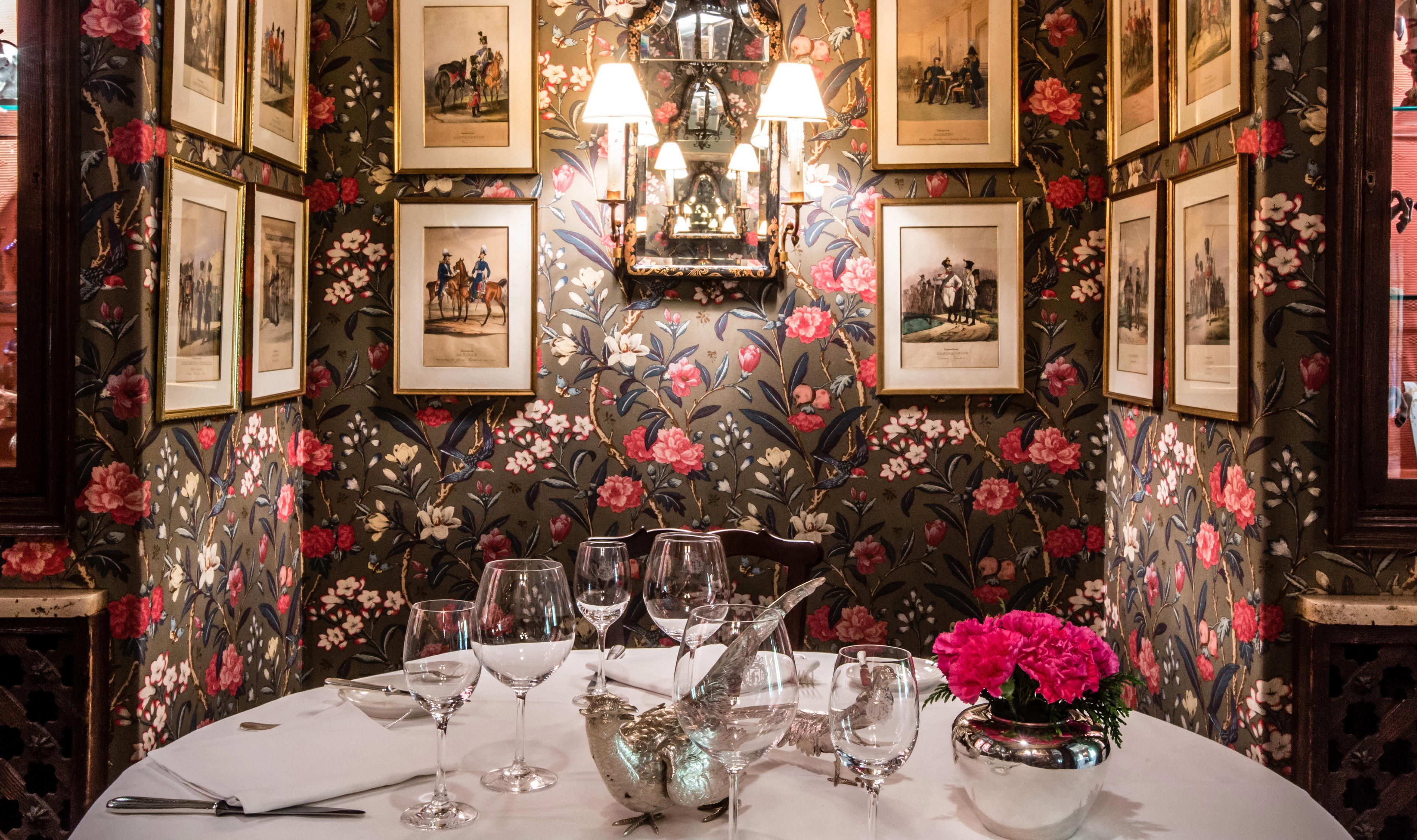
The dining rooms at the upper end of the Retiro district have a particular quality: the neighbourhood's proximity to the Parque del Retiro and the embassy belt gives its restaurants a gravitational pull toward formality that newer parts of Madrid's dining scene have largely abandoned. Horcher, on Calle Alfonso XII, operates within that gravity with unusual conviction. The address is deliberate, the service register is deliberate, and the retention of a Spanish-German kitchen format, rare in any European capital today, is equally deliberate. None of this reads as nostalgia. It reads as position.
Madrid's premium restaurant market has bifurcated sharply over the past two decades. On one side sit the progressive houses: DiverXO, operating at the furthest edge of Spanish avant-garde with three Michelin stars; Coque and Deessa, both holding two stars and framing modern Spanish cooking through distinct creative lenses; DSTAgE and Paco Roncero, each building contemporary tasting formats around concept and technique. On the other side, a smaller and less discussed cohort holds to classical European structures with formal room service, carving trolleys, and wine lists organised by Old World region rather than natural producer. Horcher belongs to this second group and, within it, occupies an especially specific sub-niche: the Spanish restaurant that carries significant Central European culinary DNA.
Where Spanish and German Cooking Actually Meet
The Spanish-German designation is not shorthand for fusion. The culinary traditions of Central Europe, game cookery, cured preparations, rich stocks, elaborate saucing, arrived in Horcher's kitchen through the restaurant's documented German origins and have persisted across generations under the Hermann family. What this produces in practice is a menu where Iberian ingredients and Central European technique coexist without either tradition subordinating the other. In the broader context of Spanish fine dining, this is genuinely uncommon. The country's premium restaurant conversation runs from Basque classicism at houses like Arzak in San Sebastián and Martin Berasategui in Lasarte-Oria through contemporary Catalan work at Cocina Hermanos Torres in Barcelona and El Celler de Can Roca in Girona, with outliers pushing into marine territory like Aponiente in El Puerto de Santa María. Horcher's Central European strand sits outside all of those lineages.
That positioning has earned it consistent recognition from Opinionated About Dining, which specifically tracks classical European dining as a distinct category. Horcher ranked #306 in OAD's Classical in Europe list in 2024, moved to #212 in 2025, a meaningful upward shift of nearly 100 places, and held a Recommended status in 2023. OAD's classical category is curated specifically to recognise restaurants operating within pre-nouvelle European culinary traditions, making its recognition of Horcher more telling than a general dining award would be. The upward trajectory across three consecutive years suggests a kitchen and room performing with increasing confidence, not coasting on legacy.
The Room, the Service Structure, and What They Signal
Classical European dining rooms of Horcher's type operate on a set of conventions that have largely disappeared from the broader fine-dining market. The model prizes tableside service, saucing, carving, and finishing carried out at or beside the table, over kitchen-plated precision. It values service depth, meaning staff who carry wine and food knowledge simultaneously rather than relying on specialist sommeliers and separate floor teams. And it maintains room formality not as affectation but as structural commitment to a particular conception of hospitality.
This format remains common in a narrow range of European cities, Paris, Vienna, certain rooms in London, but is scarce in Madrid, where even the most formal contemporary houses have moved toward modern service theatre over classical tableside work. For diners whose reference points are built around that classical European register, Horcher fills a position that no other restaurant in the Spanish capital occupies with comparable focus. For comparative context outside Spain, the structural parallel is closer to rooms like Le Bernardin in New York City, where classical European service discipline remains the operating framework, than to tasting-menu-driven formats like Atomix in New York City, which represent an entirely different hospitality philosophy. The same contrast holds against Azurmendi in Larrabetzu, where contemporary Basque cooking and modern service design are the defining features.
Ordering and Timing
Horcher opens Tuesday through Friday from 1:30 pm, covering both lunch and dinner through to 12:30 am. Saturday service runs from 8:30 pm only, and the restaurant is closed Sundays. Lunch on a weekday is the standard entry point for first visits, the room operates differently at midday than at dinner, with a slightly different clientele mix and a pace that allows the service format to demonstrate itself more fully than during a compressed evening sitting.
The Spanish-German kitchen means game preparations, cured and preserved elements, and sauced dishes carry more weight here than in kitchens built around Iberian product or contemporary technique. Dishes rooted in Central European tradition, those built around rich reductions, slow-cooked proteins, and classical accompaniments, reflect the house's culinary lineage most directly. Chef Miguel Hermann operates within an inherited framework rather than a personal-statement menu, which means the kitchen's strength lies in execution of established forms rather than seasonal novelty. Ordering around that logic, rather than treating Horcher like a modern tasting-menu house, produces the most accurate read of what the restaurant actually does.
Know Before You Go
- Address: C. de Alfonso XII, 6, Retiro, 28014 Madrid, Spain
- Chef: Miguel Hermann
- Cuisine: Spanish-German classical
- Hours: Tuesday–Friday 1:30 pm–12:30 am; Saturday 8:30 pm–12:30 am; Sunday closed
- Awards: Opinionated About Dining Classical in Europe #212 (2025); #306 (2024); Recommended (2023)
- Neighbourhood: Retiro, close to the Parque del Retiro and embassy district
- Dress code: Formal dress is consistent with the room's service register; smart-formal is appropriate
Horcher in Madrid's Wider Dining Picture
For anyone building a Madrid dining itinerary around the full range of what the city offers, Horcher represents a category that the progressive houses, however accomplished, do not replicate. The classical European format, the Spanish-German culinary history, and the OAD recognition within the specific classical category make it a distinct data point rather than a stylistic alternative. See our full Madrid restaurants guide for the complete picture, alongside our guides to Madrid hotels, Madrid bars, Madrid wineries, and Madrid experiences.
Frequently asked questions
What are the opening hours for Horcher?
Hours at Horcher: Hours: Monday 1:30 pm–12:30 am Tuesday 1:30 pm–12:30 am Wednesday 1:30 pm–12:30 am Thursday 1:30 pm–12:30 am Friday 1:30 pm–12:30 am Saturday 8:30 pm–12:30 am Sunday Closed.
Does Horcher have a Michelin star or similar recognition?
Horcher has received recognition including: Opinionated About Dining Classical in Europe Ranked #212 (2025); Opinionated About Dining Classical in Europe Ranked #306 (2024); Opinionated About Dining Classical in Europe Recommended (2023).
What should I order at Horcher?
The kitchen's clearest strengths lie in Central European territory: game preparations, sauced meat dishes, and cured or cold-larder work rooted in the German culinary tradition that has defined Horcher since its founding. These are the preparations that earned the restaurant its Opinionated About Dining Classical Europe ranking, #212 in 2025, and they reflect a culinary register largely absent from Madrid's broader dining scene. Steer toward the room's historical strengths rather than lighter Mediterranean plates, which exist here more as context than as the kitchen's primary statement.
Where is Horcher in Madrid?
Horcher is located at C. de Alfonso XII, 6, Retiro, 28014 Madrid, Spain, Madrid.
Who's behind the kitchen at Horcher?
The chef associated with Horcher is Miguel Hermann.
A Tight Comparison
| Venue | Cuisine | Price | Awards | Notes |
|---|---|---|---|---|
| HorcherThis venue (the venue you are viewing) | Continental Haute Cuisine with German & Central European Heritage | $50–100 | Guía Repsol 2 Soles | Not listed |
| DiverXO | Avant-Garde Spanish Tasting Menu | $300–500 | 3 Michelin Stars · World's 50 Best #4 | Progressive - Asian, Creative |
| Deessa | Modern Valencian Fine Dining | $150–200 | 2 Michelin Stars · La Liste Top Restaurants | Modern Spanish, Creative |
| Smoked Room | Modern Japanese Fire Omakase | $200–300 | 2 Michelin Stars · La Liste Top Restaurants | Progressive Asador, Contemporary |
| Coque | Modern Spanish Fine Dining | $300–500 | 2 Michelin Stars · La Liste Top Restaurants | Spanish, Creative |
| Paco Roncero | Avant-Garde Spanish Fine Dining | $150–200 | 2 Michelin Stars · La Liste Top Restaurants | Creative |
Recognition history
Dated appearances from independent guides and award organizations, with the underlying list record or original source where available.
Guía Repsol 2 Soles
Guía Repsol
Opinionated About Dining Classical in Europe Ranked #212
Opinionated About Dining
Full recognition history (4 entries)
Opinionated About Dining Classical in Europe Ranked #306
Opinionated About Dining
Opinionated About Dining Classical in Europe Recommended
Opinionated About Dining
Continue exploring
More in Madrid
Restaurants in Madrid
All restaurants in Madrid →
Bars in Madrid
All bars in Madrid →

Horcher
The wine
- Wine program
- Deep wine list
- Extensive wine list
- Sommelier-led
Details
- Classic
- Elegant
- Romantic
- Sophisticated
- Well Known
- Date Night
- Business Dinner
- Special Occasion
- Celebration
- Historic Building
- Wine Cellar
- Private Dining
- Extensive Wine List
- Sommelier Led
- A La Carte
- Prix Fixe
- Wine
- Champagne
- Cava
Current opening hours
- Monday
- 1:30–4 PM, 8:30 PM–12 AM
- Tuesday
- 1:30–4 PM, 8:30 PM–12 AM
- Wednesday
- 1:30–4 PM, 8:30 PM–12 AM
- Thursday
- 1:30–4 PM, 8:30 PM–12 AM
- Friday
- 1:30–4 PM, 8:30 PM–12 AM
- Saturday
- 8:30 AM–11 PM
- Sunday
- Closed
Hours can change for holidays and private events. Hours as of .
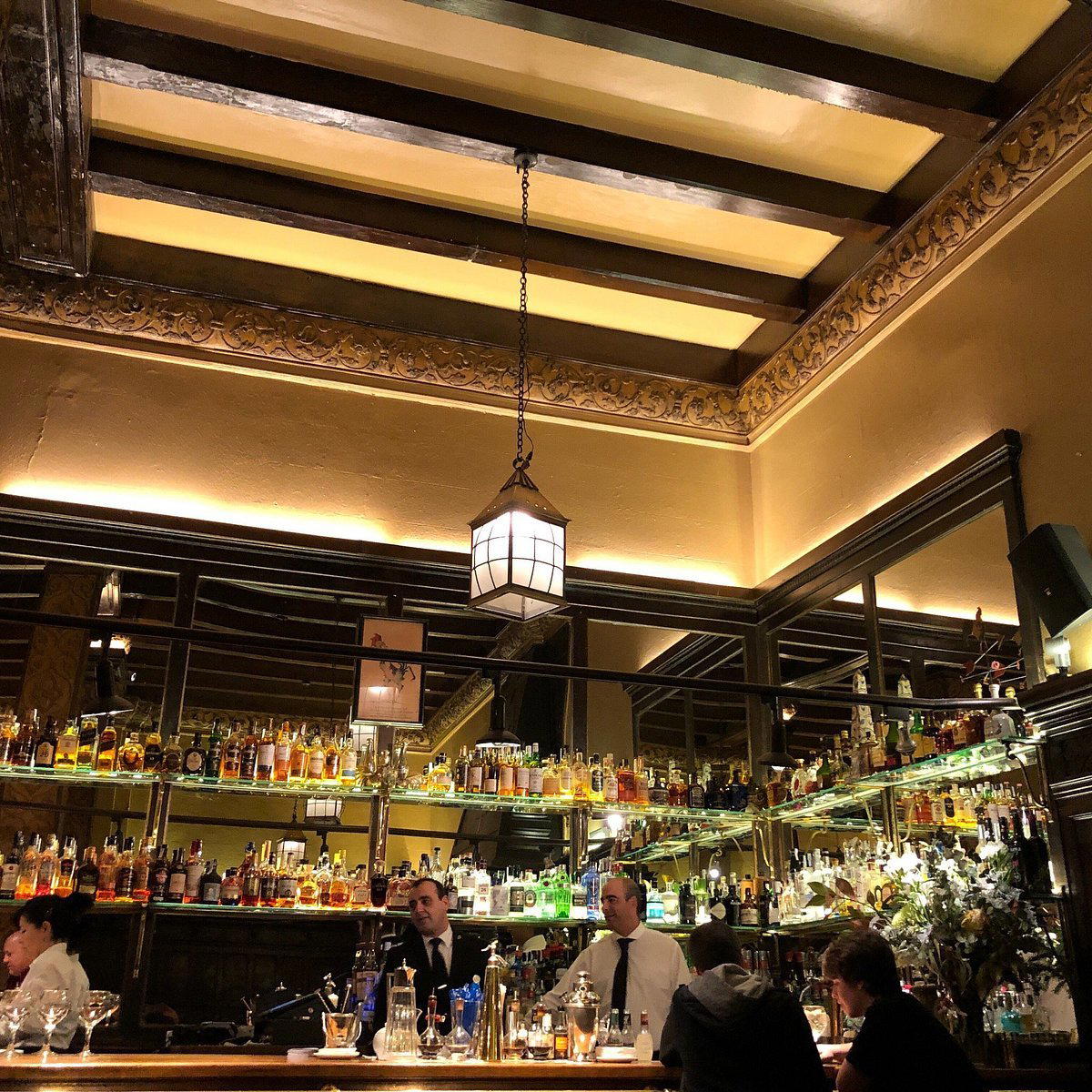
Sultry crimson tones, Austrian porcelain, and plush fabrics create a palatial, utterly romantic and charmingly traditional dining space with warm, elegant, and inviting atmosphere.