
Marugame is better known to visiting diners for Sanuki udon, but Kagawa’s bone-in chicken tradition gives the city another local register. Honetsukidori Ikkaku Marugame honten belongs in that conversation: a 111-seat chicken, kamameshi and izakaya house near Marugame Station, selected for Tabelog’s 2025 Chicken Cuisine 100 and priced in the JPY 1,000–1,999 bracket.
Pearl is the En Primeur Club membership app — saves, bookings, and concierge access live there. Same editors, same standards.
- Address
- 317 Hamamachi, Marugame, Kagawa 763-0022, Japan
- Phone
- +81 877-22-9111
- Website
- ikkaku.co.jp
 Saves & bookings on Pearl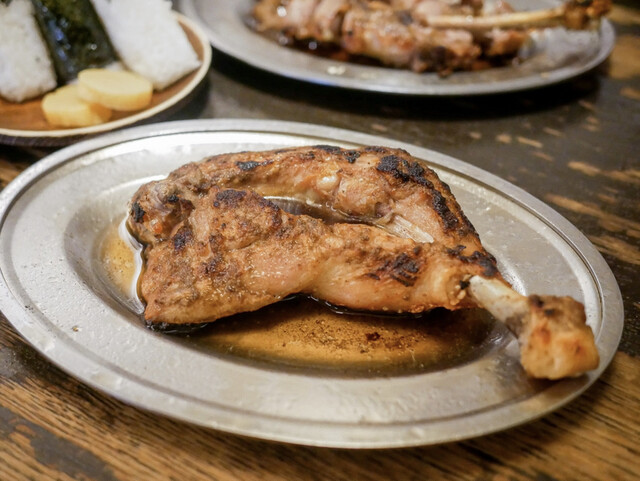
Approaching the station-side part of Marugame, the city’s dining grammar changes quickly: udon counters, family izakaya, train commuters, and regional specialists sit close together rather than in separate restaurant districts. That matters here because Kagawa’s food identity is not built only on wheat and dashi. Bone-in chicken, served in a format that belongs as much to drinking culture as to dinner, gives Marugame a second local signature: direct, unfussy, and built around a small number of repeatable orders.
Honetsukidori Ikkaku Marugame honten sits inside that tradition rather than above it. Its recognition on Tabelog’s 2025 Chicken Cuisine 100 gives the address a measurable trust signal, but the more useful fact is the format: chicken dishes, kamameshi, and izakaya service under one roof, with takeout available and a room large enough for 111 seats. In a city where many acclaimed daytime meals are short, noodle-led stops, this is the local counterweight: a chicken house that can handle groups, children, and evening pacing without turning the meal into a ceremony.
Bone-in chicken as Kagawa's other local language
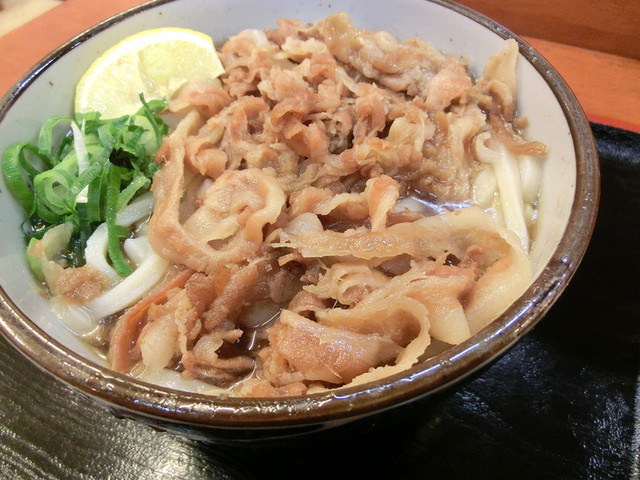
Sanuki udon dominates the way outsiders read Kagawa, and Marugame is dense with places that trade on flour, broth, and speed. For that side of the city, nearby references include Ayauta Seimen, Iinoya, Jun Teuchi na Manpuku Udon, Jun Teuchi Udon Yoshiya, and Kamaage Udon Okajima Marugame ten. Those addresses help explain the baseline: Marugame diners often judge craft through clarity and repetition, not through long menus or elaborate plating.
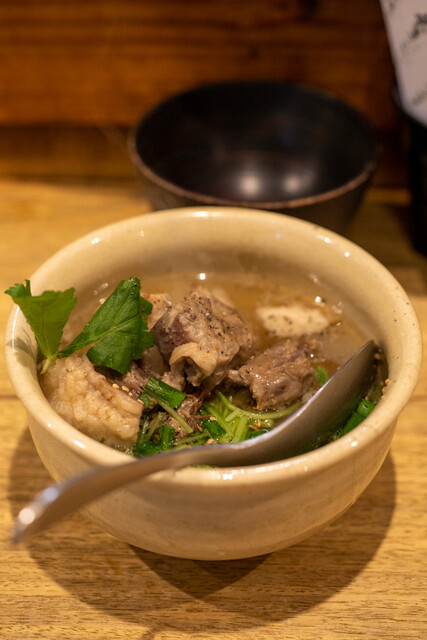
Bone-in chicken operates by a different logic. It is less about a sequence of seasonal small plates than about choosing the cut and style of the meal around it. The listed takeout items give the clearest map of the house vocabulary: oyakodori, hinadori, and torimeshi. That trio says plenty about the category. One order points toward mature chicken, one toward young chicken, and one toward rice as the meal’s anchor. Ingredient sourcing here is not framed through farm-name storytelling; it is expressed through the decision to make chicken the central raw material and to keep the supporting cast narrow.
That restraint is why the place reads as a regional specialist rather than a general izakaya with a chicken section. The drinks list spans sake, shochu, wine, and cocktails, but the food identity remains tighter than the beverage spread. In Japan’s regional dining culture, that imbalance is common: the kitchen protects the local signature while the drinks make the room usable for different groups and times of day. It also explains why the Tabelog Chicken Cuisine 100 selection matters more here than a broad restaurant ranking would. The award places the address inside a category where poultry is the point, not an incidental order.
A large room for a narrow specialty
The 111-seat capacity changes the nature of the experience. Many regional specialists in Japan are small enough that the room becomes part of the scarcity; here, scale works differently. Counter seating, couple seating, spacious tables, and tatami room options point to a restaurant built for several dining speeds: solo station-area meals, family dinners, groups of friends, and takeout. Children are welcome, private rooms are not part of the format, and the room is non-smoking, all of which make the practical read clearer than at many tavern-style restaurants.
Price also keeps the meal grounded. Lunch and dinner both sit in the JPY 1,000–1,999 range, a band that positions the address above the city’s sub-JPY 999 udon stops such as Mendokoro Wataya Marugame ten, Nakamura Udon, Yamato, and Kamaage Udon Okajima Marugame ten, but well below destination tasting-menu territory. That comparison is useful for planning: this is not the cheapest way to eat in Marugame, but it is a low-friction way to understand a Kagawa specialty that is not udon.
The location reinforces that role. The restaurant is listed at 317 Hamamachi, close to Marugame Station, with no dedicated parking; nearby paid parking is the practical solution, and the underground parking lot in front of Marugame Station is listed as free for up to one hour. Reservations are available, though weekend and holiday evenings after 5 PM are not accepted. For travelers, the implication is simple: use lunch or an early weekday slot when timing matters, and treat peak weekend evenings as a walk-in calculation rather than a controlled reservation plan.
How to place it within a Marugame itinerary
Marugame rewards a two-track eating plan. One track should follow udon, because the city’s noodle culture remains central to its identity. The other should make room for chicken, rice, and izakaya rhythms, because that is where the dining day becomes less transactional. Honetsukidori Ikkaku Marugame honten is strongest as the second track: a meal that can carry lunch, dinner, or takeout without requiring a high-budget commitment.
For a wider read on the city, use Our full Marugame restaurants guide alongside Our full Marugame hotels guide, Our full Marugame bars guide, Our full Marugame wineries guide, and Our full Marugame experiences guide. Readers building a broader Japan food route can compare the category focus here with -Grilled beef Sukiyaki- KAMAKURA TANUKIAN 鎌倉 たぬき庵 in Kamakura,. 鮪と炭火焼き うお炭 秋葉原店 in Tokyo,.cafe in Osaka,.know in Kumamoto, (Shoku) Vietnam in Kawasaki, and [Curry Senmon Ten] Maruyama Kyoju. in Sapporo. For Japanese drinking and casual-food context outside Japan, Jōdo Saké Bar in Los Angeles and Onigiri Time in Pasadena show how tightly focused formats travel.
The editorial case is not that this address replaces Marugame’s udon culture. It corrects the itinerary. A traveler who eats only noodles in Kagawa leaves with an incomplete reading of the prefecture’s appetite. Bone-in chicken belongs beside udon as a local habit with its own rules, and this station-adjacent, award-listed room gives that habit a practical, category-specific expression.
Comparable Spots, Quickly
Comparable venues by cuisine and price in the same metro.
| Venue | Cuisine | Price | Awards | Notes |
|---|---|---|---|---|
| Honetsukidori Ikkaku Marugame hontenThis venue — the venue you are viewing | Honetsukidori & Japanese Izakaya | $$ | , | |
| Kamaage Udon Okajima Marugame ten | Traditional Sanuki kamaage udon | $ | , | .Marugame |
| Ayauta Seimen | Sanuki Udon | $ | , | Ayautacho Okadanishi |
| Teuchi Udon Ayumi | Traditional Sanuki udon shop | $ | , | Utazu / Marugame |
| Nakamura Udon | Traditional Sanuki Udon | $ | , | .null |
| Teuchi Self Udon Kaiji Sonoichi iiyama ten | Self-service Sanuki udon | $ | , | Iiyama-cho |
Continue exploring
More in Marugame
Restaurants in Marugame
Browse all →
At a Glance
- Lively
- Classic
- Cozy
- Iconic
- Group Dining
- Family
- Casual Hangout
- Late Night
- After Work
- Solo
- Standalone
- Historic Building
- Beer Program
- Sake Program
- Local Sourcing
Bustling, Showa‑era retro izakaya atmosphere with closely set tables, warm lighting, and the aroma and sizzle of grilled chicken filling a lively, casual dining room.[3][5][8]