Google: 4.6 · 3,966 reviews
Hog Island Oyster Co.

At the Ferry Building on San Francisco's Embarcadero, Hog Island Oyster Co. draws a loyal following anchored to the rhythms of the bay rather than the trends of the restaurant industry. Regulars return for the ritual of raw bar eating at the water's edge, where the sourcing is traceable to the company's own Marshall, California farm in Tomales Bay, and the format rewards repeat visits over first impressions.
 Discover on Pearl
Pearl is the En Primeur Club membership app — saves, bookings, and concierge access live there. Same editors, same standards.
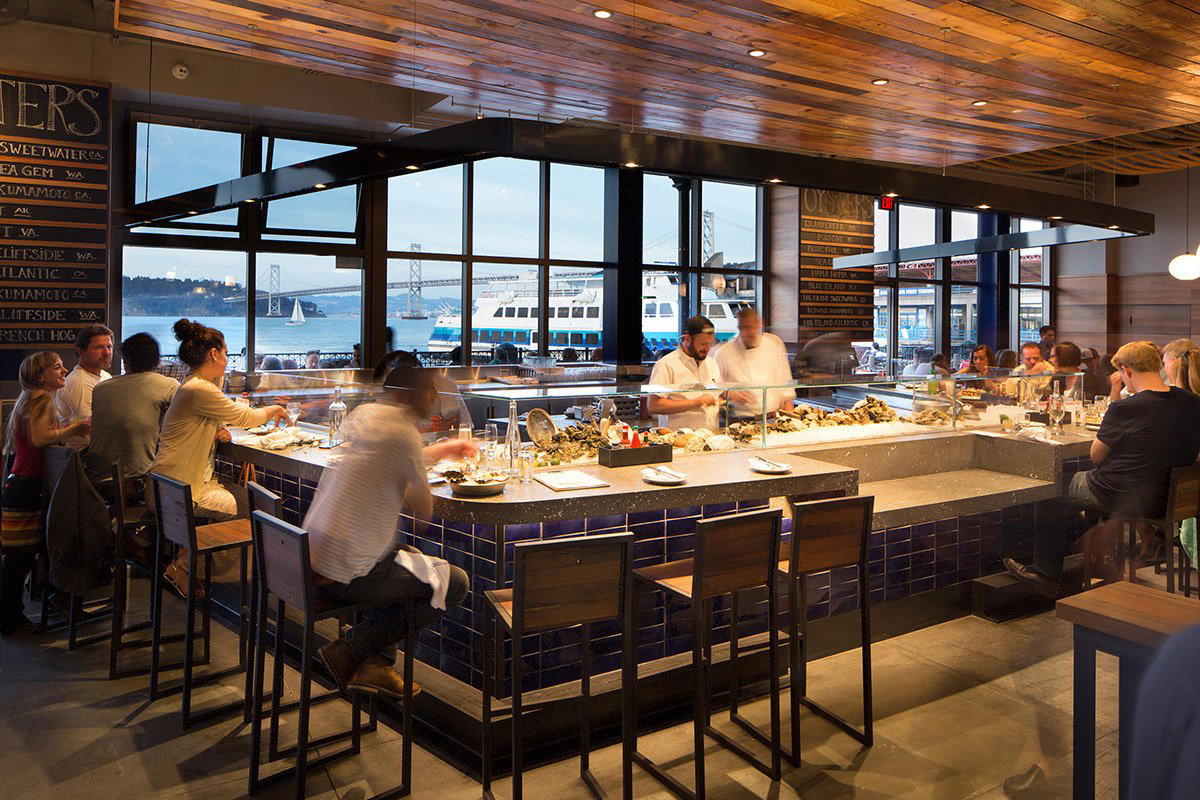
The Ferry Building Counter and What Keeps People Coming Back
San Francisco's Ferry Building is one of the few food markets in the United States where the building itself sets editorial expectations before a single dish arrives. The Saturday farmers' market draws the weekend crowds, the bread and cheese vendors operate with serious intent, and the anchor tenants are held to a standard that filters out casual operators. Hog Island Oyster Co. has occupied space here long enough to become part of the building's identity rather than a beneficiary of it. That tenure matters in a market where foot traffic could sustain mediocrity indefinitely. It hasn't.
The regulars who return to this counter week after week are not chasing novelty. Raw bar dining in general, and oyster bars in particular, operate on a logic of consistency: you come back because the product arrives the same way it did last time, because the staff recognize you, and because the ritual itself has become the point. At Hog Island, that ritual is underwritten by a supply chain that runs from the restaurant's own farm in Marshall, on the western shore of Tomales Bay, approximately 65 miles north of the city. That connection between source and counter is not incidental to the experience. It is the experience.
A Bay Area Oyster Tradition with a Specific Address
Tomales Bay has been central to Northern California oyster cultivation for over a century, its cold, nutrient-rich water producing shellfish with a briny, clean finish that reflects the Pacific inlet rather than the estuarine character of East Coast growing regions. The difference is not subtle to anyone who eats oysters with any frequency. West Coast bivalves, and Tomales Bay specimens in particular, tend toward a smaller, firmer profile with a mineral salinity that holds through the finish rather than fading quickly.
Hog Island has farmed that bay since the early 1980s, making its history in the region one of the longer continuous operations in Northern California aquaculture. That depth of tenure translates into a product consistency that matters specifically to the returning customer. When a regular orders a half-dozen on a Tuesday afternoon, the expectation of what those oysters will taste like is not aspirational. It is founded on accumulated experience. That is a different relationship with a restaurant than most dining contexts allow.
The Counter at Ferry Building #11
The physical setup at Ferry Building Stall 11 places the raw bar within view of the bay, which is either a design decision or a happy coincidence that no one has bothered to correct. Either way, the alignment between what you are eating and the water you can see from your seat is the kind of contextual coherence that coastal dining usually gestures toward without achieving. Here it functions literally: the bay visible from the counter is ecologically connected to the bay where the oysters were grown, even if Tomales Bay itself is around a headland to the north.
The setting also places the venue inside a broader Embarcadero dining corridor that has developed significantly over the past two decades. The Ferry Building's food tenants operate at a different register than the chain restaurants along the waterfront further south. Visitors making their way along the bay for the first time often find the concentration of serious food producers in the market surprising. Regulars have long since stopped being surprised and use the building the way a neighborhood resident uses a good covered market: purposefully, selectively, and often.
What the Loyal Clientele Actually Orders
Among regulars, the raw oysters are the anchor order, but the extended menu reflects the same farm-to-counter logic applied to other shellfish and accompanying preparations. Clam chowder, grilled oysters, and rotating seasonal additions appear alongside the raw bar. The wine list skews toward Northern California producers, with the same bias toward provenance that characterizes the food sourcing. A glass of dry Sonoma County white alongside a tray of Sweetwater or Kumamoto oysters is not an accidental pairing but an expression of a regional identity that the venue has maintained across multiple decades.
Planning a visit benefits from understanding the rhythm of the building. Weekend mornings, particularly Saturdays during the farmers' market, compress a significant crowd into the Embarcadero corridor. Weekday visits, particularly mid-week, tend to offer more counter availability and a more deliberate pace. Reservations are recommended where available; the format and location make walk-ins competitive during peak periods.
Where Hog Island Sits in the San Francisco Dining Scene
San Francisco's dining economy contains multiple tiers of seafood-focused restaurants, from high-end raw bars in the Financial District to casual fishmonger counters in the Outer Richmond. Hog Island occupies a specific position in that range: a mid-to-upper price point justified by farm ownership and product traceability, located in a venue with strong foot traffic and high visibility, but operating with a format and ethos that reads closer to the serious casual end of the spectrum than to tasting-menu seafood.
That positioning has helped it build a repeat-visit clientele that extends beyond tourists and weekend visitors. The office workers from the nearby Financial District, the residents of neighborhoods within walking distance of the Embarcadero, and the food professionals who move through the Ferry Building regularly all contribute to a customer base with expectations that go beyond first-visit novelty. For a deeper orientation to how Hog Island fits within the broader range of what the city offers, see our full San Francisco restaurants guide.
For those building a longer evening in the area, San Francisco's cocktail scene offers credible options close to the waterfront and further afield. Pacific Cocktail Haven and ABV both represent the city's technically serious end of bar programming. Smuggler's Cove offers a different register entirely, with a rum-focused program that has drawn recognition well beyond the Bay Area. Friends and Family rounds out the neighborhood bar options for those staying closer to the Mission corridor.
Travelers comparing West Coast oyster bar culture against other American coastal traditions will find relevant reference points elsewhere in EP Club's coverage. The craft-forward approach to provenance and sourcing that characterizes Northern California seafood has parallels in the way serious cocktail programs have developed in cities like New Orleans (Jewel of the South), Houston (Julep), Chicago (Kumiko), New York (Superbueno), Washington D.C. (Allegory), Honolulu (Bar Leather Apron), and Frankfurt (The Parlour): a commitment to sourcing discipline and regional identity over trend-chasing.
How It Stacks Up
A quick peer reference to anchor this venue in its category.
| Venue | Cuisine | Price | Awards | Notes |
|---|---|---|---|---|
| Hog Island Oyster Co. | This venue | |||
| ABV | World's 50 Best | |||
| Smuggler's Cove | World's 50 Best | |||
| Trick Dog | World's 50 Best | |||
| Bar at Hotel Kabuki | ||||
| Evil Eye |
Continue exploring
More in San Francisco
Restaurants in San Francisco
Browse all →
Bars in San Francisco
Browse all →
Hotels in San Francisco
Browse all →



At a Glance
- Scenic
- Classic
- Iconic
- Casual Hangout
- Group Outing
- Date Night
- Waterfront
- Historic Building
- Standalone
- Waterfront
Bright dining area with waterfront views overlooking San Francisco Bay; moody, earthy bar with regional Mexican spirits; small counter seating and side tables with a mix of locals and tourists.