Historic Michabelle Inn
A historic inn on Hammond's South Holly Street, the Michabelle occupies a quietly significant position in Louisiana's small-city hospitality tradition. Where New Orleans draws the headlines, Hammond offers a more grounded encounter with the region's sourcing culture and inn-style dining. Visitors looking for proximity to Tangipahoa Parish's produce belt and the rhythms of genuine South Louisiana cooking will find the address worth noting.
Pearl is the En Primeur Club membership app — saves, bookings, and concierge access live there. Same editors, same standards.
- Address
- 1106 S Holly St, Hammond, LA 70403
- Phone
- +19854190550
- Website
- michabelle.com
- Directions
- Get directions
 Saves & bookings on Pearl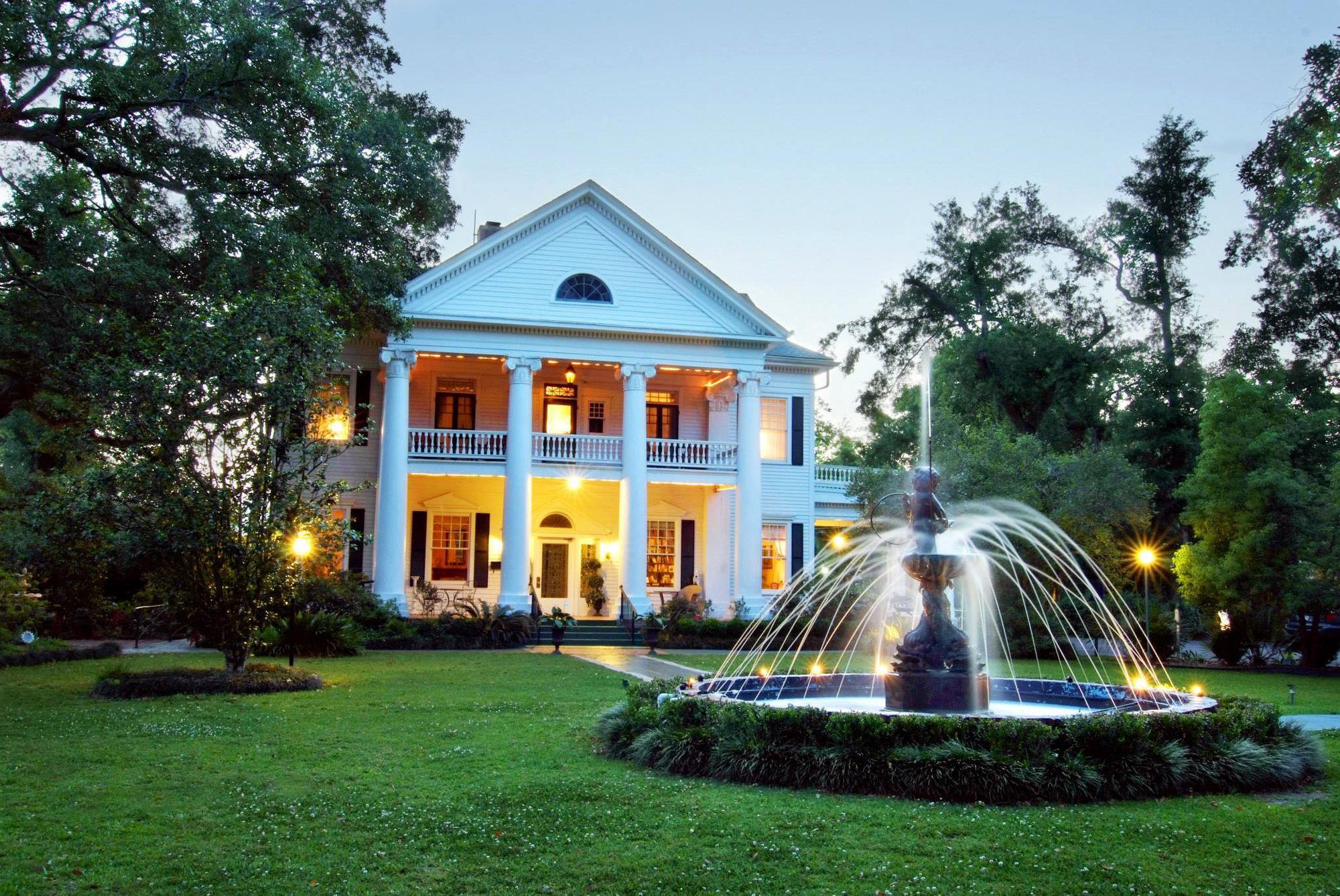
Hammond and the Louisiana Inn Tradition
South Louisiana's dining reputation is built almost entirely around New Orleans, but the parishes north of Lake Pontchartrain tell a different story. Hammond, the commercial center of Tangipahoa Parish, sits inside one of the state's more productive agricultural corridors: strawberry farms, sweet potato fields, and small vegetable operations that supply both local tables and wholesale markets across the Gulf South. That agricultural context matters when reading an address like the Historic Michabelle Inn at 1106 S Holly St, because inn-style dining in this part of Louisiana has historically drawn its character from proximity to what grows nearby, not from the theatrical ambition you find at Emeril's in New Orleans or the hyper-sourced formality of Blue Hill at Stone Barns in Tarrytown.
The broader American inn-dining format has experienced a quiet revival in recent years. Properties like The Inn at Little Washington in Washington, Virginia helped establish a template: architecture with genuine age, a kitchen that treats the surrounding region as larder, and a pace calibrated to overnight guests rather than urban table-turn economics. Hammond's version of this tradition is necessarily more modest in scale, but the underlying logic, sourcing from the land immediately around you and letting that determine what appears on the plate, is the same.
Tangipahoa Parish as Larder
To understand the Michabelle's position, it helps to understand what Tangipahoa Parish actually produces. The parish is Louisiana's principal strawberry-growing region, with the town of Ponchatoula hosting an annual festival that draws significant regional attention each spring. Beyond strawberries, the corridor between Hammond and Amite supports truck farming at a scale that keeps local restaurants supplied with greens, peppers, and sweet potatoes across much of the year. For a kitchen operating inside this geography, the sourcing argument is clear.
Inn kitchens working within this kind of agricultural environment tend to produce menus that shift by season rather than by trend. The spring strawberry window, the summer pepper harvest, and the fall sweet potato abundance each create a natural rhythm that urban restaurants with fixed supply chains rarely follow as closely. That seasonality is not a marketing choice in this context; it is a practical consequence of buying from farms whose own calendars impose limits.
The Physical Setting
The Michabelle occupies a historic structure on South Holly Street, one of Hammond's quieter residential approaches. Inn properties of this age in Louisiana typically date from the late nineteenth or early twentieth century, built during the period when the Illinois Central Railroad made Hammond a junction point connecting New Orleans to the interior South. That rail-era prosperity produced a generation of substantial residential buildings, some of which were later converted to hospitality use. The physical fabric of such buildings, high ceilings, wide porches, mature tree cover, creates an atmosphere that newer purpose-built hotels do not replicate, however much their design programs attempt it.
The approach to a property like this reads differently from the arrival sequence at a contemporary boutique hotel. There is no valet canopy, no lobby installation meant to signal premium positioning at first glance. What you get instead is architectural authenticity: a building that has existed in its neighborhood long enough to become part of the street's memory. Travelers who gravitate toward that quality, the same travelers who choose Bacchanalia in Atlanta over a chain steakhouse because context matters to them, will recognize what they are walking into.
Where the Michabelle Sits in a Wider comparable set
Inn-dining in the American South occupies a distinct niche from the destination-restaurant model dominant in major cities. Venues like Alinea in Chicago or Lazy Bear in San Francisco are built around a single culinary proposition executed at high intensity for a fixed number of covers per night. The inn format distributes attention differently: guests arrive for the place as much as for the plate, and the kitchen serves a population whose relationship with the property extends beyond a single meal.
That structural difference changes what a kitchen prioritizes. Sourcing consistency matters more than theatrical presentation. The ability to produce a reliable, regionally grounded meal for guests who may eat multiple times during a stay matters more than the one-night-only climax of a tasting menu. Properties operating on this model share more DNA with Frasca Food and Wine in Boulder, where hospitality is the organizing principle, than with the high-intensity counter formats at venues like Atomix in New York City.
For the Hammond market specifically, the Michabelle sits in a thin competitive tier. The city does not have a deep fine-dining ecosystem, which means the Inn functions as an anchor for visitors seeking something beyond the chain-restaurant corridor along US-190. That relative scarcity gives it a local significance that its equivalent in a larger city might not hold.
Planning Your Visit
Hammond sits approximately fifty miles north of New Orleans via I-55, making it accessible as either a standalone destination or a detour from a broader Louisiana itinerary. The Tangipahoa Parish strawberry season runs roughly from late February through April, which represents one compelling window for anyone whose interest in the region is partly agricultural. Visitors with an interest in the farm-to-table sourcing tradition that runs from Providence in Los Angeles to Addison in San Diego will find the spring visit the illustrative of what the parish produces at its peak. Reservations are essential, and the dress code is smart casual.
Side-by-Side Snapshot
Comparable venues nearby, for context on price, style, and recognition.
| Venue | Cuisine | Price | Notes |
|---|---|---|---|
| Historic Michabelle InnThis venue — the venue you are viewing | French Creole Fine Dining | $$$$ | Not listed |
| Le Moyne Bistro | Modern French Bistro with New Orleans Influence | $$$ | Warehouse District |
| MaMou | Modern French Brasserie | $$$ | French Quarter |
| Antoine's | French-Creole | $$$ | French Quarter |
| Couvant | French-Southern Brasserie | $$$ | Central Business District |
| Broussard's | Classic French-Creole | $$$$ | French Quarter |
Continue exploring
More in Hammond
Restaurants in Hammond
Browse all →
At a Glance
- Romantic
- Elegant
- Classic
- Cozy
- Intimate
- Historic
- Sophisticated
- Date Night
- Special Occasion
- Celebration
- Private Event
- Historic Building
- Private Dining
- Garden
- Garden
Elegant old-world charm with candlelit private dinners, romantic jazz, fresh roses, and beautifully decorated historic interiors evoking Southern hospitality.