Hirschgehege Hauser
Our verdict
Hirschgehege Hauser sits in the Lobmingtal valley of central Styria, an address whose name signals a direct connection to the managed deer enclosures and hunting traditions that have shaped rural Styrian cooking for generations. The valley setting places it in a quieter tier of Austrian regional dining, organised around agricultural proximity rather than institutional recognition.

Pearl is the En Primeur Club membership app, where members save venues, book tables and use the concierge.
The menu
What to order
- Hirschrohwurst
- Hirschrohschinken
- Wildkrainer
- Käsekrainer
- Wildleberkäse
Styria's Rural Dining Tradition and Where Hirschgehege Hauser Fits
The Murtal valley in central Styria operates on a different logic than Austria's more celebrated restaurant corridors. Where the capital's dining scene clusters around the kind of institutional recognition that places like Steirereck im Stadtpark in Vienna have accumulated over decades, rural Styrian eating tends to be organised around proximity: to the farm, the forest, and the producer. The village of Mitterlobming, reached along a narrow valley road off the B317, sits inside this agricultural register. Hirschgehege Hauser, at Hausergraben 13, is positioned within a landscape shaped by managed deer enclosures, small-scale livestock operations, and the hunting tradition that has defined Styrian upland cooking for generations.
That hunting and foraging heritage is not incidental to the dining category this address occupies. Across Styria and into the Salzkammergut, the most grounded rural restaurants draw their identity from what the immediate terrain produces rather than from imported fine-dining frameworks. The approach visible at addresses like G'Schlössl Murtal in the same valley points toward the same regional logic: sourcing from within a tight geographic radius, presenting ingredients with minimal transformation, and anchoring the menu calendar to the hunting and harvesting seasons of the Austrian alpine interior.
The Ingredient Story: Deer, Forest, and the Styrian Calendar
The name Hirschgehege, meaning deer enclosure in German, signals the sourcing framework before a visitor reaches the door. In the Murtal and surrounding valleys, managed deer enclosures have long supplied local Gasthäuser and hunt-connected kitchens with venison at different stages of the season. The autumn months drive the most direct expression of this: fresh venison appears on menus across Styria from September through November, while slow-cooked preparations extend into the winter months using aged and preserved cuts.
This ingredient-led seasonality places Hirschgehege Hauser in a category distinct from the progressive Austrian kitchens further afield. Restaurants such as Döllerer in Golling an der Salzach and Kräuterreich by Vitus Winkler in Sankt Veit im Pongau work with similar regional raw materials but route them through technically ambitious kitchens oriented toward a national and international audience. The rural Gasthaus model, by contrast, keeps the sourcing story short and the preparation vocabulary closer to the tradition it references. Game broths, roasted root vegetables, forest mushrooms, and cured preparations made from what the surrounding terrain produces are characteristic of this tier.
Styria's foraging calendar runs from spring wild garlic through summer berries and autumn mushrooms into the hunting season proper, meaning a kitchen genuinely connected to its address has access to distinct produce across all four quarters. That calendar discipline is what separates a restaurant with meaningful local sourcing from one that simply uses regional labelling as positioning.
Setting and Arrival
The Hausergraben address places the property at the end of a tributary valley, away from any through-traffic. Arriving by car along the valley road, the surrounding terrain is agricultural and forested in close alternation, with the kind of topography that keeps most casual visitors moving toward more accessible destinations. That geographic remove is not incidental: it shapes who arrives, how they arrive, and the register of hospitality they expect when they do. Kitchens at similar addresses across Austria's rural interior, from Obauer in Werfen to Landhaus Bacher in Mautern an der Donau, have built durable reputations precisely because their location selects for guests willing to make the journey deliberately rather than by convenience.
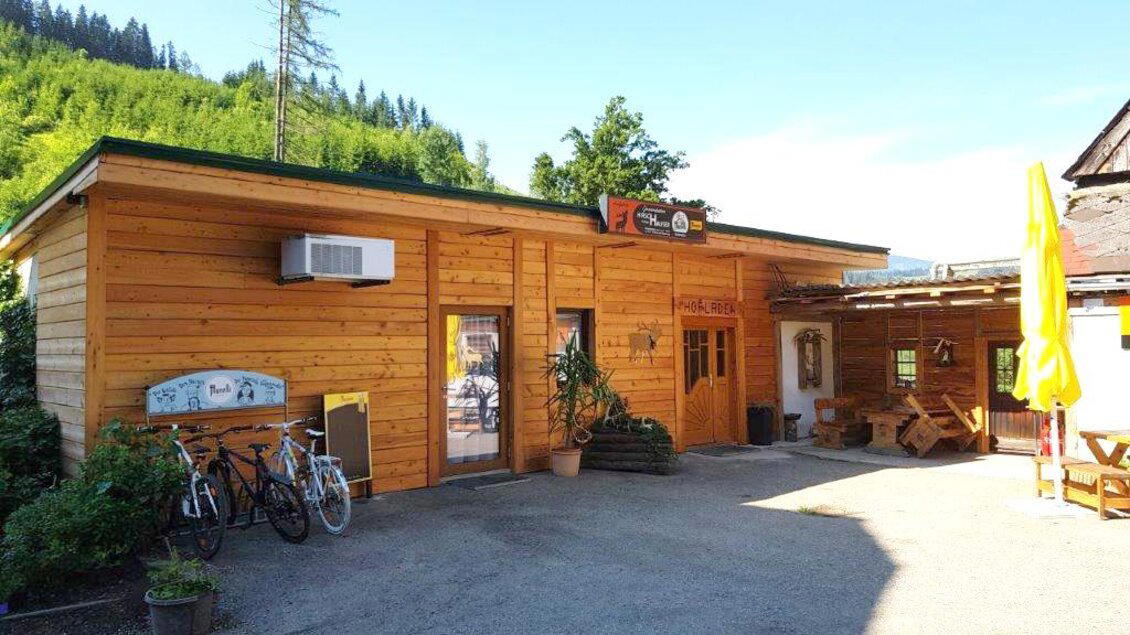
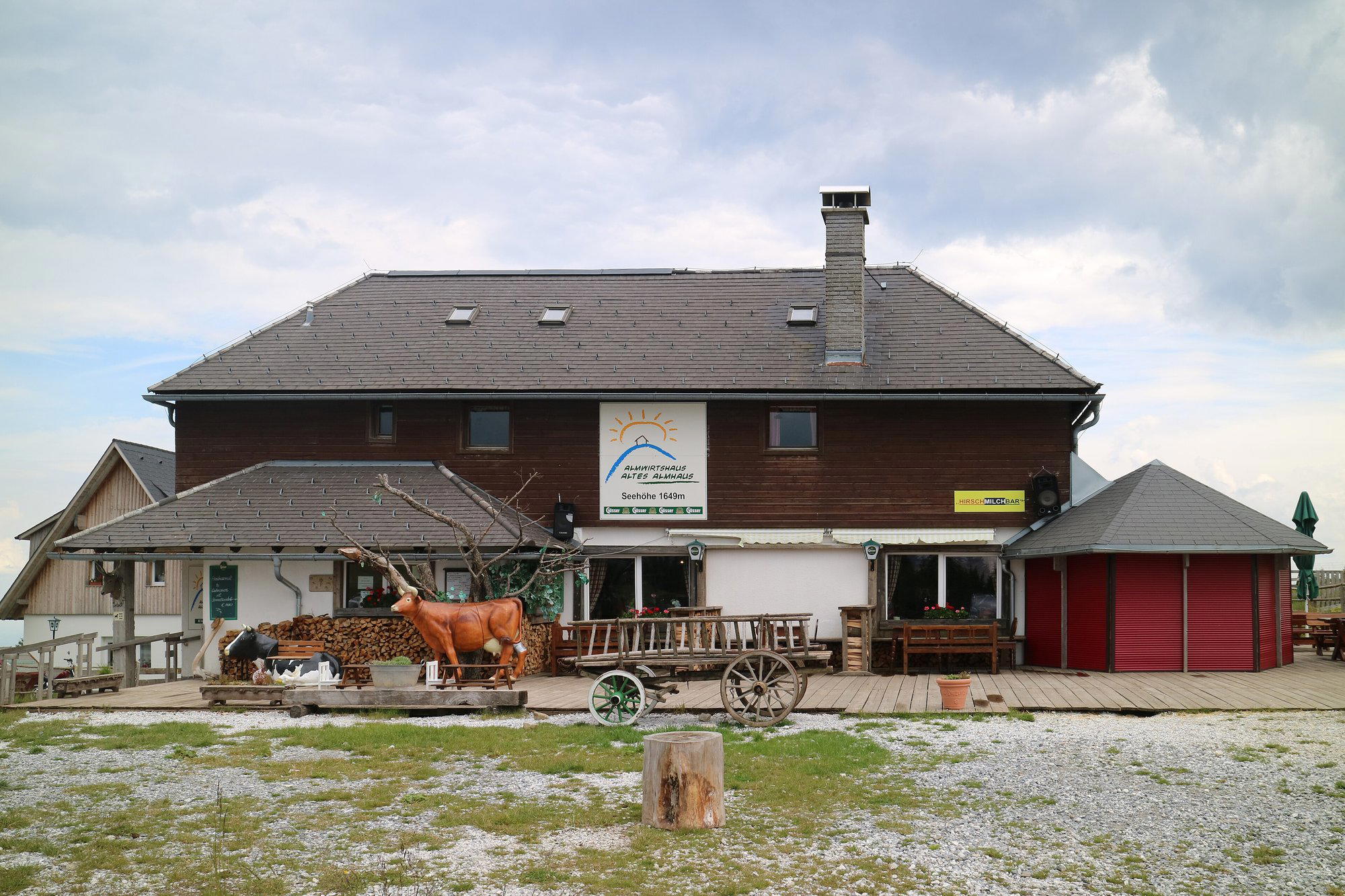
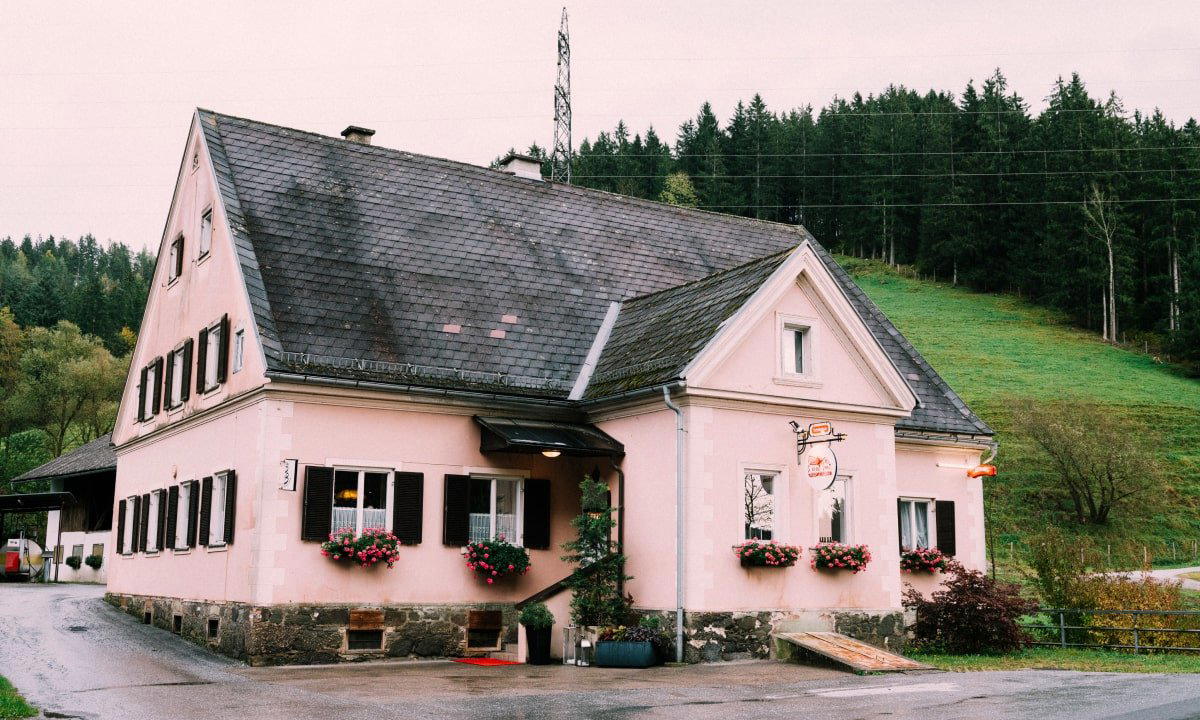
The physical surroundings at Mitterlobming belong to the quieter register of Styrian rural architecture: functional farm buildings adapted over time rather than purpose-built hospitality infrastructure. That material context matters to the ingredient sourcing story, because a kitchen operating at this address has immediate physical access to the kind of production systems that urban or resort-facing restaurants can only source from at a remove.
Lobmingtal in the Context of Austrian Regional Dining
Austria's serious regional restaurant tier spans a wide geographic range. In the alpine west, addresses such as Griggeler Stuba in Lech, Gourmetrestaurant Tannenhof in Sankt Anton am Arlberg, and Stüva in Ischgl operate within a resort economy that drives both the price point and the ambition of their kitchens. In the east, Burgenland estates like Taubenkobel in Schützen am Gebirge connect their sourcing to the wine-growing terrain of the Pannonian plain. Central Styria sits in a different position: less resort-dependent than the Tyrol, less wine-defined than Burgenland, and more oriented toward the hunting, farming, and forestry traditions of the Mur river basin.
The Lobmingtal specifically sits within this central Styrian register. For the broader context of dining in this area, our full Lobmingtal restaurants guide maps the other addresses worth knowing in the valley. Beyond the valley, the Graz restaurant scene, anchored by addresses such as Artis in Graz, offers the regional urban counterpoint to the Murtal's more agricultural grain. And for those building a wider Austrian itinerary, the programming approach at Ikarus in Salzburg and the refined regionalism of Schwarzer Adler in Hall in Tirol and Restaurant 141 by Joachim Jaud in Mieming sit at different points on the ambition spectrum from a Styrian valley Gasthaus. At the far end of the international reference frame, the sourcing rigour visible at Le Bernardin in New York City or the cultural precision of Atomix in New York City illustrates how seriously ingredient provenance functions as a structuring principle in kitchens at any price point. The version at Hirschgehege Hauser simply operates with different coordinates: shorter supply chains, lower transformation, and a seasonal calendar tied to the Murtal's own production rhythm. For further context on regional Austrian restaurants with comparable sourcing ambitions, Ois in Neufelden offers a useful point of comparison from the Upper Austrian tradition.
Planning a Visit
Hirschgehege Hauser is located at Hausergraben 13, 8734 Mitterlobming, in the Lobmingtal valley of central Styria. The address is accessible by car from Knittelfeld, the nearest town of scale, in under fifteen minutes. Public transport connections to this part of the Murtal are limited, making a private vehicle the practical requirement for most visitors arriving from Graz or Vienna. Given the rural Styrian kitchen calendar, the autumn months represent the most direct point of connection between the sourcing premise and what arrives at the table: the Styrian hunting season runs through September, October, and November, and a kitchen working with game from its own enclosure will be most fully expressed during that period.
Frequently asked questions
Is Hirschgehege Hauser child-friendly?
The rural Gasthaus tradition across Styria, the category Hirschgehege Hauser fits by location and format, is broadly family-oriented, with communal dining rooms and menus that skew toward hearty, accessible preparations. The Hausergraben address in Mitterlobming, set away from through-traffic at the end of a tributary valley, also suggests an environment where a slower, less formal pace is the norm.
What kind of setting is Hirschgehege Hauser?
Hirschgehege Hauser sits at Hausergraben 13 in Mitterlobming, at the far end of a side valley feeding into the Lobmingtal, in central Styria's Murtal region. There is no resort infrastructure here, this is agricultural, forested terrain, with the property accessible primarily by car along a valley road. The setting is closer in character to a working estate than to a polished dining destination.
Does Hirschgehege Hauser source deer from its own enclosure on the property?
The name Hirschgehege refers explicitly to a managed deer enclosure, which in the Styrian agricultural tradition indicates at minimum a close sourcing relationship between the property and its venison supply. Whether the kitchen draws from animals raised on-site or from a connected local operation, the name functions as a provenance statement rather than mere branding. For precise sourcing details, contact the venue at Hausergraben 13, Mitterlobming directly.
What do people recommend at Hirschgehege Hauser?
The name Hirschgehege translates directly as deer enclosure, which in Styrian rural tradition signals venison preparations as the kitchen's central focus. In the Murtal valley context, that typically means slow-braised or roasted deer alongside seasonal accompaniments drawn from the surrounding forest and farmland. Game-based dishes would be the logical starting point for any first visit.
What part of town is Hirschgehege Hauser in?
Hirschgehege Hauser is located at Hausergraben 13, 8734 Mitterlobming, Austria, Lobmingtal.
How hard is it to get a table at Hirschgehege Hauser?
Rural Gasthaus properties in the Murtal valley typically operate without the advance booking windows required at resort destinations like Griggeler Stuba in Lech. Availability is likely reasonable, though contacting the venue ahead of a special occasion or weekend visit is advisable.
In Context: Similar Options
Comparable venues nearby, for context on price, style, and recognition.
| Venue | Cuisine | Price | Notes |
|---|---|---|---|
| Hirschgehege HauserThis venue (the venue you are viewing) | Regional Styrian Game Specialties | Not listed | Not listed |
| G'Schlössl Murtal | Regional Styrian Austrian | $50–100 | Lobmingtal |
| Würstelstand Christian Lange | Austrian Sausage Stand | $10–20 | Rudolfsheim |
| MR CURRYWURST | German Currywurst | Not listed | Vösendorf |
| Würstelbox | Viennese Sausage Stand | $1–10 | Favoriten |
| Schönwetterhütte | Austrian Mountain Hut Fare | Not listed | Solk |
Continue exploring
More in Lobmingtal
Restaurants in Lobmingtal
All restaurants in Lobmingtal →

Details
- Rustic
- Scenic
- Cozy
- Group Dining
- Casual Hangout
- Standalone
- Local Sourcing
- Mountain
Rustic rural farm setting centered on a deer enclosure and regional products; atmosphere details such as lighting are not documented.