G'Schlössl Murtal
Our verdict
Set on a working estate in Styria's Murtal valley, G'Schlössl Murtal represents the kind of place where the sourcing argument is not a menu footnote but an architectural fact.

Pearl is the En Primeur Club membership app, where members save venues, book tables and use the concierge.
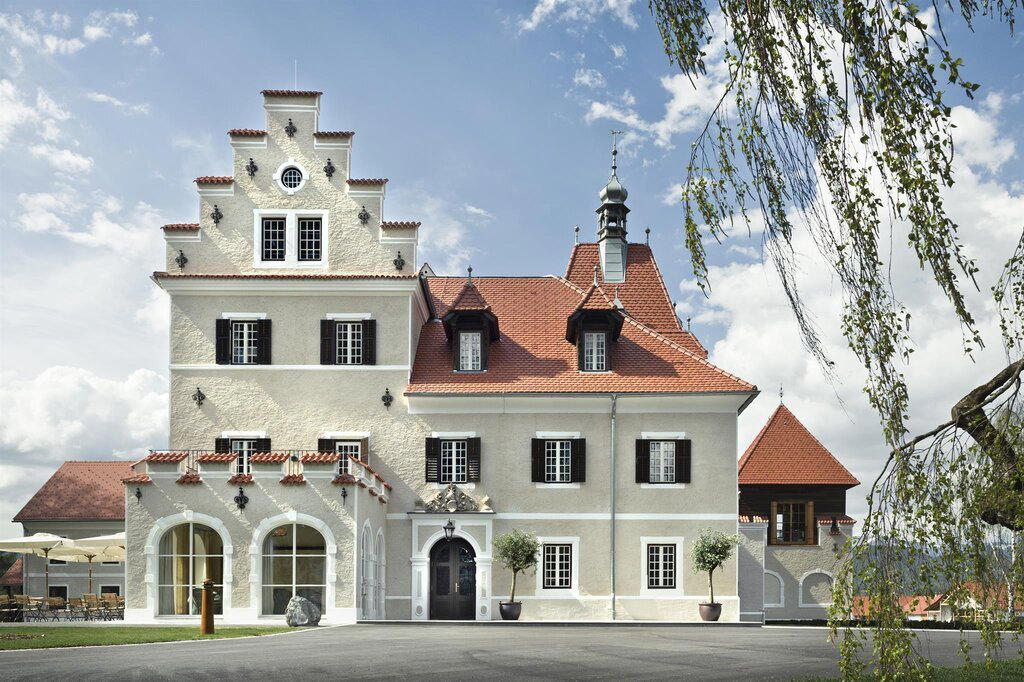
Reaching the property requires a car or pre-arranged transfer; Großlobming has no rail connection, and the nearest significant town, Judenburg, sits to the northwest along the valley. That logistical reality is itself a signal. Venues that require genuine travel commitment from their guests tend to attract a specific kind of visitor: one who has decided in advance that the destination justifies the effort. Within the Lobmingtal area, Hirschgehege Hauser operates along a similar axis of deliberate destination dining. For a fuller picture of what this part of Styria offers, our full Lobmingtal restaurants guide maps the area's dining character in detail. In Vienna, Styrian cuisine specifically leans on a set of regional markers: pumpkin seed oil from the southeastern lowlands, beef from Styrian cattle breeds, freshwater fish from the Mur and its tributaries, and wild game from the surrounding forests. Properties like Kräuterreich by Vitus Winkler in Sankt Veit im Pongau and Ikarus in Salzburg.
Within Styria, the estate-restaurant model remains less documented than the equivalent format in Burgenland or the Wachau, which means properties operating here carry fewer external reference points. Properties in Tyrol, such as Schwarzer Adler in Hall in Tirol and Gourmetrestaurant Tannenhof in Sankt Anton am Arlberg, benefit from tourism infrastructure that funnels well-resourced visitors past their doors. The Murtal has no equivalent draw, which shapes both who visits and how the kitchen must position itself.
The comparison is instructive. At resort-anchored venues like Stüva in Ischgl or Griggeler Stuba in Lech, the clientele is partly self-selecting through proximity, wealthy skiers who happen to be in the village. At a rural Styrian estate, every guest has made a specific decision to be there. That changes the operating dynamic and tends to produce a more focused, less theatrical dining experience. It also raises the stakes on ingredient quality, since there is no ambient atmosphere doing part of the work.enprimeurclub.com/restaurants/atelier-fischer-sankt-gilgen-restaurant">Atelier Fischer in Sankt Gilgen
, Ois in Neufelden, and Restaurant 141 by Joachim Jaud in Mieming each represent points on the same continuum, though in different provincial contexts. The international analogue, a farm-to-kitchen model where sourcing is the primary editorial statement, appears in formats as different as Lazy Bear in San Francisco and the produce-driven rigor that underlies the kitchen philosophy at Le Bernardin in New York City, however different those registers may be. Reaching it requires road travel; the nearest motorway access is from the A9 Pyhrn Autobahn via the Judenburg or Knittelfeld exits. Given the estate's rural setting, confirming current opening hours, booking procedures, and seasonal availability directly with the property before travel is advisable.Frequently asked questions
Is G'Schlössl Murtal a family-friendly restaurant?
The country-manor setting at Murhof 1 in Lobmingtal suits families with older children who can engage with a slower, produce-led meal in a rural Styrian environment. The pace and format differ considerably from a casual urban restaurant, so younger children who need short sittings may find it less comfortable. The estate grounds and valley location give the visit a broader context beyond the table itself.
How would you describe the vibe at G'Schlössl Murtal?
Arriving at Murhof 1 in the Lobmingtal valley, the setting establishes the tone before you step inside: forested hillsides, the Mur River corridor, and an estate removed from any urban centre. The atmosphere is closer to a working country property than a polished dining room, with a pace that reflects the rural Styrian surroundings rather than any metropolitan benchmark. Visitors arriving from Graz or Vienna should recalibrate expectations accordingly.
Is G'Schlössl Murtal accessible by public transport from Graz or Judenburg?
The estate address at Murhof 1, 8734 Großlobming places it in the rural Lobmingtal valley, where road access is the practical reality for visitors. The nearest motorway connections run through the Murtal corridor, and the journey from Judenburg is short by car, while Graz requires around an hour's drive. Public transport into the valley is limited, making a private vehicle or arranged transfer the standard approach for reaching the property.
What's the must-try dish at G'Schlössl Murtal?
What the estate's position in the Murtal valley suggests is that produce drawn from the surrounding Styrian agricultural region drives the cooking: freshwater fish from the Mur, local game, and seasonal field ingredients are characteristic of this format across the area. Confirming the current kitchen focus directly with the property before visiting is advisable.
Where is G'Schlössl Murtal in Lobmingtal?
G'Schlössl Murtal is located at Murhof 1, 8734 Großlobming, Austria, Lobmingtal.
In Context: Similar Options
| Venue | Cuisine | Price | Awards | Notes |
|---|---|---|---|---|
| G'Schlössl MurtalThis venue (the venue you are viewing) | Regional Styrian Austrian | $50–100 | Not listed | Not listed |
| Steirereck im Stadtpark | Modern Austrian Fine Dining | $200–300 | 3 Michelin Stars · World's 50 Best #33 | Creative |
| Döllerer | Modern Alpine Cuisine | $100–150 | 2 Michelin Stars · La Liste Top Restaurants | Contemporary Austrian, Innovative |
| Landhaus Bacher | Classic Austrian Fine Dining | $100–150 | 2 Michelin Stars · La Liste Top Restaurants | Austrian, Classic Cuisine |
| Obauer | Modern Austrian Fine Dining | $50–100 | 2 Michelin Stars · La Liste Top Restaurants | Classic Cuisine |
| Taubenkobel | Regional Austrian Fine Dining | Not listed | 2 Michelin Stars · La Liste Top Restaurants | Modern Austrian, French Contemporary |
Continue exploring
More in Lobmingtal

Details
- Rustic
- Cozy
- Classic
- Family
- Special Occasion
- Open Kitchen
- Garden
- Historic Building
- Hotel Restaurant
- Extensive Wine List
- Local Sourcing
- Garden
- Mountain
- A La Carte
- Tasting Menu
- Vegetarian Friendly
Stylish Styrian inn-style parlours with cozy winter garden and guest garden in castle park, offering classic Austrian hospitality.