Our verdict
Arkadia occupies a quiet address on Burggasse in Judenburg, a Styrian town that sits closer to Austria's agricultural heartland than its headline restaurant circuit. In a region where ingredient provenance and seasonal discipline define serious kitchens, Arkadia represents the kind of neighbourhood dining that rewards those willing to look beyond Vienna and Salzburg's more familiar names. See our full Judenburg guide for context on the local scene.

Pearl is the En Primeur Club membership app, where members save venues, book tables and use the concierge.
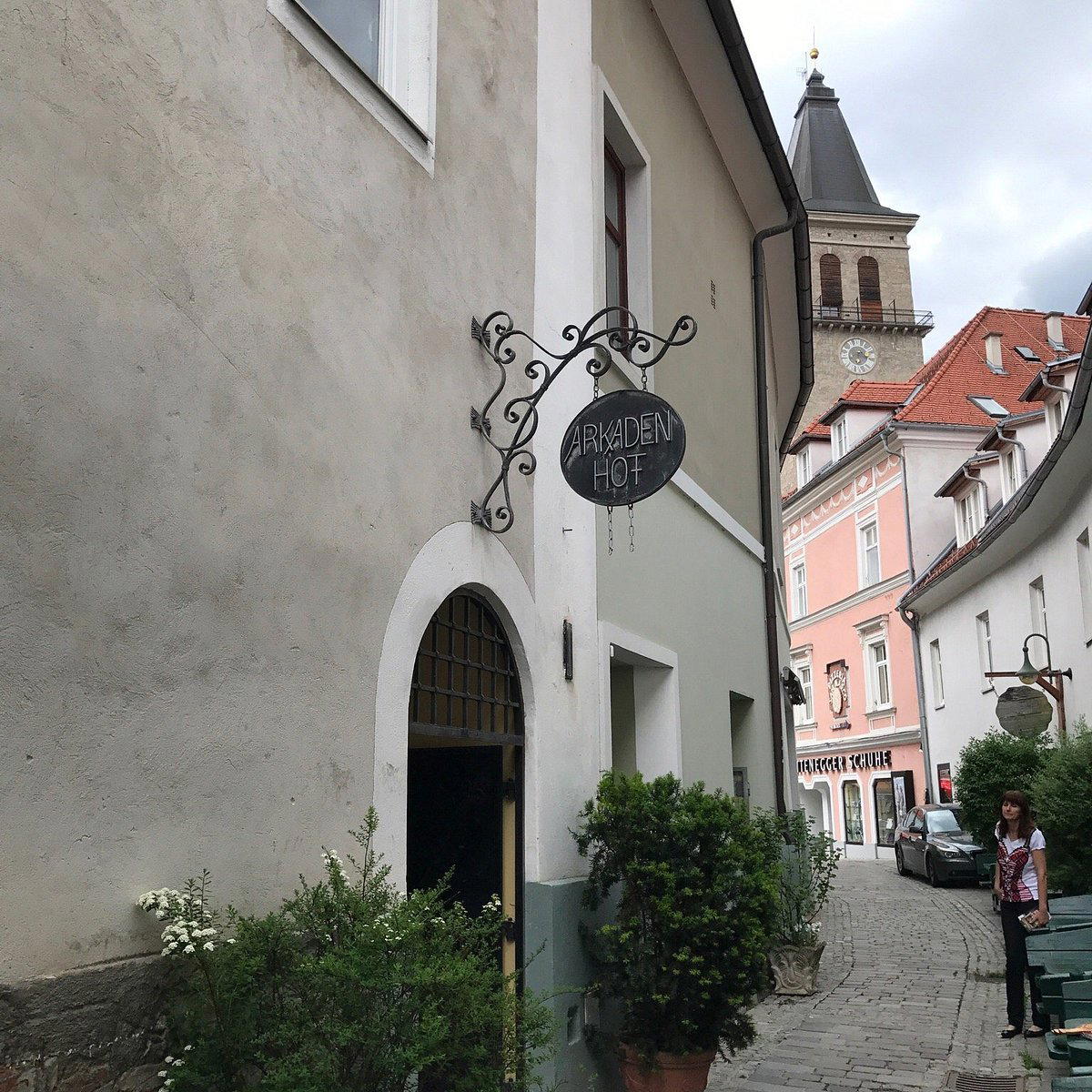
Judenburg and the Case for Styrian Dining Beyond the Circuit
Austria's serious restaurant conversation tends to cluster around a handful of addresses: the grand creative kitchens of Vienna, the alpine destination tables in Salzburg's orbit, the Arlberg lodges where seasonal menus follow the ski calendar. Styria operates differently. The province has long maintained its own culinary logic, built on a larder that most Austrian regions cannot match: pumpkin seed oil from the south, freshwater fish from mountain streams, game from forested uplands, and wine from the Südsteiermark slopes. Judenburg, sitting in the upper Mur valley at around 700 metres, is part of that broader Styrian story, a market town with a medieval centre and an agricultural hinterland that has always fed the region quietly, without much fanfare from the food press.
That context matters when you encounter a restaurant like Arkadia at Burggasse 3. Restaurants in smaller Austrian towns either lean on the tourist trade with broadly European menus, or they do something more focused, drawing on what the surrounding countryside actually produces. The distinction separates a dining room worth a detour from one that simply fills a postcode.
The Physical Address and What It Signals
Burggasse is one of those narrow old-town streets that Austrian market towns preserve almost by accident, the kind of address where the building fabric predates any current hospitality business by several centuries. Arriving at a restaurant on a street like this, the city noise drops away quickly. Stone and render, a compressed scale, the occasional sound of traffic from the main square filtered through walls that have seen considerable history. In this kind of setting, the interior decision a restaurant makes carries real weight. Does it lean into the historic shell, or does it try to impose something contemporary onto it? Either approach can work; what fails is indifference to the context.
Arkadia's position in this environment places it within a pattern visible across provincial Austria, where the most compelling dining rooms are often the ones that treat the physical address as part of the proposition rather than background. The contrast with the large, purpose-built dining spaces of Steirereck im Stadtpark in Vienna or the resort-scale operations of Griggeler Stuba in Lech is significant. Scale here is not a constraint; it is the format.
Ingredient Sourcing and the Styrian Advantage
The editorial angle that matters most for a Judenburg restaurant is provenance. Styrian kitchens have an argument that few Austrian provinces can match: the region produces ingredients with genuine identity, not just generic Austrian produce. Kürbiskernöl, the cold-pressed pumpkin seed oil that functions as Styria's most recognisable export, is pressed within the province and used in salads and cold preparations with an intensity that imported oils cannot replicate. Freshwater carp and trout from upper Mur tributaries, venison and wild boar from the Niedere Tauern foothills, Steirisches Kürbiskernöl g.g.A. (a protected designation of origin product), these are not generic central European ingredients. They carry specific regional character.
Restaurants that work seriously with this larder tend to operate with seasonal menus that shift more frequently than their urban counterparts, because the ingredient window for many Styrian products is genuinely narrow. The mushroom season in the surrounding forests runs roughly from late summer into autumn. Game availability tracks legal hunting seasons. This is a different operating rhythm from kitchens that source internationally year-round, and it produces a different kind of menu discipline. For comparison, Döllerer in Golling an der Salzach and Obauer in Werfen both demonstrate what sustained commitment to Alpine and regional ingredient sourcing looks like at the highest recognised level in Austria. Provincial tables like Arkadia operate within the same tradition at a different tier of visibility.
The herb and vegetable sourcing question is equally relevant in this region. Upper Styria's altitude means shorter growing seasons but more concentrated flavours in root vegetables, wild herbs, and soft fruits. Kitchens that source locally in this environment are working with ingredients that arrive in smaller quantities and on tighter schedules than anything available through a national distributor. That constraint, when it functions as discipline rather than limitation, tends to produce more coherent menus.
Where Arkadia Sits in the Provincial Austrian Dining Pattern
Austria has a recognisable tier of serious provincial restaurants that operate below the Michelin spotlight but above the generic Gasthof level. These are places where the cooking is technically grounded, the sourcing is intentional, and the format reflects the local rather than the cosmopolitan. Landhaus Bacher in Mautern an der Donau, Taubenkobel in Schützen am Gebirge, and Kräuterreich by Vitus Winkler in Sankt Veit im Pongau all occupy that tier in different ways and in different corners of the country. Judenburg is not a restaurant destination in the way that Schützen or Mautern have become, but the town's position in the Styrian interior gives any serious kitchen there access to a supply chain that urban restaurants would pay considerably more to approximate.
Other restaurants in the immediate local area, including Mamas Tacos, serve a different function in Judenburg's dining fabric. Arkadia's address and name suggest a different register. For a broader survey of what Judenburg offers, the full Judenburg restaurants guide maps the options across formats and price points.
For travellers moving through Styria rather than treating Judenburg as a terminus, the practical radius from Arkadia includes Atelier Fischer in Sankt Gilgen to the northwest and Ikarus in Salzburg for those extending north. Within the alpine quadrant, Schwarzer Adler in Hall in Tirol, Restaurant 141 by Joachim Jaud in Mieming, Gourmetrestaurant Tannenhof in Sankt Anton am Arlberg, Stüva in Ischgl, and Ois in Neufelden round out the Austrian provincial dining picture. Internationally, Le Bernardin in New York City and Lazy Bear in San Francisco represent the kind of ingredient-sourcing rigour that translates across formats and continents.
Planning a Visit
Judenburg is accessible by rail on the main Graz-Klagenfurt line, with the town centre within walking distance of the station. Burggasse 3 sits in the old town, reachable on foot from the Stadtturm area in a few minutes. Given the limited publicly available information about Arkadia's current booking method, hours, and pricing, contacting the restaurant directly before visiting is advisable. Provincial Austrian restaurants at this level often have shorter service windows than their urban equivalents, and seasonal closures or limited-day opening schedules are common in smaller towns.
Frequently asked questions
Is Arkadia okay with children?
Judenburg is a working Austrian market town, not a tourist-facing resort, and that shapes the general atmosphere at restaurants along Burggasse. Provincial Austrian dining rooms at this address tend to accommodate families without the formality that comparable Vienna venues impose. That said, no specific children's menu or family policy is documented for Arkadia, so a quick call ahead is the practical approach for groups with young children.
What should I expect atmosphere-wise at Arkadia?
Burggasse 3 sits in Judenburg's preserved old-town core, where the building stock runs to thick walls, vaulted ceilings, and centuries of accumulated fabric, the kind of setting that Austrian market towns maintain almost by default. Expect something closer to a composed regional dining room than a contemporary open-kitchen format. The town's working character keeps the atmosphere grounded rather than performative.
Does Arkadia make sense as a dining stop on the Graz–Klagenfurt rail route?
Judenburg sits on the main Graz–Klagenfurt rail line, and the town centre, including Burggasse 3, is within walking distance of the station. That routing makes Arkadia a practical stop for travellers moving between Styria's capital and Carinthia rather than a dedicated detour. Few restaurants at this level of seriousness sit this conveniently on an intercity rail corridor in Austria's provincial south.
What should I order at Arkadia?
Styrian kitchens make their strongest case with regionally anchored ingredients: pumpkin seed oil from the province's protected Kernöl tradition, foraged herbs from Upper Styria's documented gathering culture, and seasonal game from the surrounding hills. Without a current published menu for Arkadia on record, the safest approach is to follow whatever the kitchen presents as its market-driven option for the day, that framing is where Styrian cooking earns its credibility.
What part of town is Arkadia in?
Arkadia is located at Burggasse 3, 8750 Judenburg, Austria, Judenburg.
How far ahead should I plan for Arkadia?
Judenburg has a limited number of restaurants operating at a serious level, which means the few that do attract reservations from across the region, not just the immediate town. Smaller Austrian venues of this type can fill a week or more in advance on weekends, particularly during autumn harvest season when Styrian ingredient-driven kitchens draw their widest audience. Booking several days ahead is a reasonable baseline; a week or more is safer for Friday and Saturday.
What do critics highlight about Arkadia?
Styrian food press at the provincial level tends to recognise kitchens that commit to local sourcing over cosmopolitan technique, and Judenburg's position in Upper Styria places any serious restaurant here within that conversation by geography alone.
Comparison Snapshot
Comparable venues nearby, for context on price, style, and recognition.
| Venue | Cuisine | Price | Notes |
|---|---|---|---|
| ArkadiaThis venue (the venue you are viewing) | Austrian | Not listed | Not listed |
| Mamas Tacos | Authentic Mexican Taqueria | $10–20 | Judenburg |
| Liebocher Stubn | Modern Austrian | Not listed | Lieboch |
| ARX Restaurant | Modern Austrian with Experimental Twists | $50–100 | Rohrmoos-Untertal |
| Florian | Traditional Austrian & Styrian Fine Dining | Not listed | St. Leonhard |
| mo.wi | Modern Alpe-Adria Austrian | Not listed | Seeboden |
Continue exploring
More in Judenburg


Details
- Cozy
- Intimate
- Date Night
- Casual Hangout
- Standalone
- Extensive Wine List
- A La Carte
- Wine
Current opening hours
- Monday
- 10 AM–2 PM, 5–10 PM
- Tuesday
- 10 AM–2 PM, 5–10 PM
- Wednesday
- Closed
- Thursday
- Closed
- Friday
- 10 AM–2 PM, 5–10 PM
- Saturday
- 10 AM–10 PM
- Sunday
- 10 AM–5 PM
Hours can change for holidays and private events. Hours as of .
Cozy indoors with a warm and welcoming atmosphere.