Hiramasa
Our verdict
Hiramasa occupies a specific address on West Chester Pike in Newtown Square, PA — a stretch of suburban Philadelphia's Main Line dining corridor where the competition ranges from Italian staples to established American bistros.

Pearl is the En Primeur Club membership app — saves, bookings, and concierge access live there. Same editors, same standards.
- Address
- 3554 West Chester Pike, Newtown Square, PA 19073
- Phone
- (484) 420-4023
- Hours
- Mon–Thu 11 AM–2:30 PM, 4–9:30 PMFri 11 AM–2:30 PM, 4–10:30 PMSat 11 AM–10:30 PMSun 12–9:30 PM
- Website
- hiramasapa.com
- Directions
- Get directions
- Booking
- Book on OpenTable
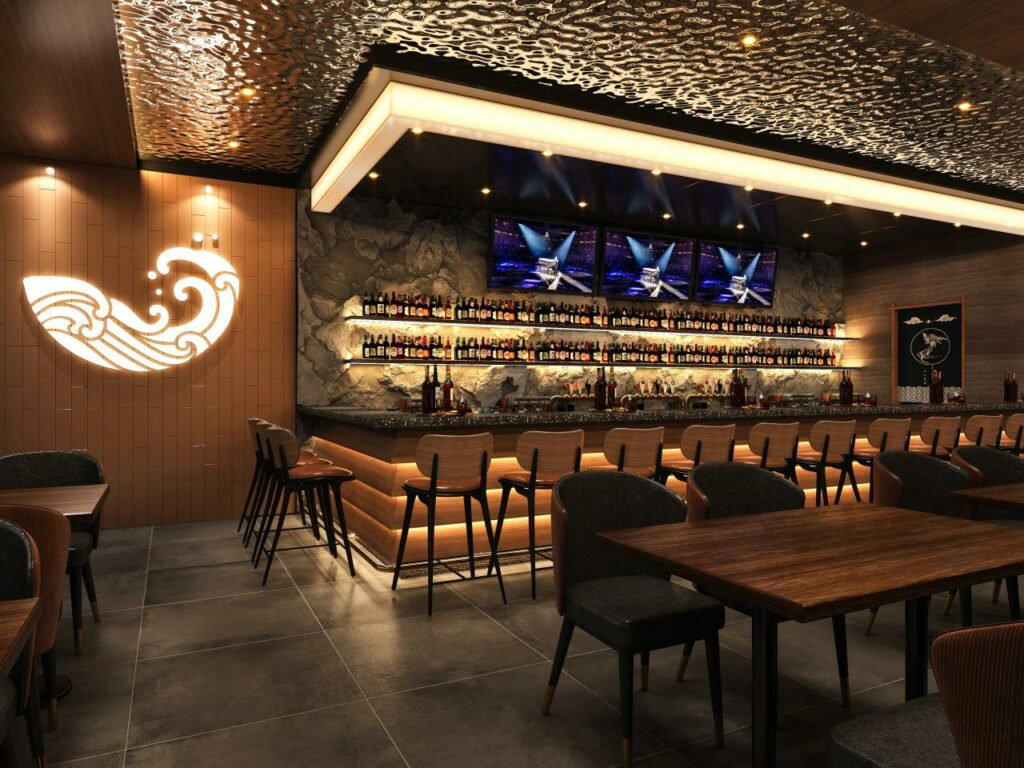
West Chester Pike and the Question of Ambition Outside the City
Suburban dining corridors in the United States have long carried a reputation problem. The assumption — rarely examined — is that serious food requires a city address. The Main Line west of Philadelphia challenges that read more persistently than most comparable zones in the mid-Atlantic. Newtown Square, sitting along West Chester Pike about 16 miles from Center City, hosts a dining scene that includes long-running independents and the kind of table that rewards a deliberate trip rather than a casual detour. Hiramasa, at 3554 West Chester Pike, is positioned within that corridor at a moment when suburban-to-urban dining migration is reversing in parts of the country, with operators and guests alike reconsidering what proximity to a major city actually needs to mean.
The name itself signals something. Hiramasa, the Japanese term for yellowtail amberjack, a fish prized in high-end Japanese cooking for its clean fat content and firm texture, suggests a culinary orientation that places this address in deliberate conversation with a particular dining tradition. Whether that conversation is sustained through a full omakase format, a modern Japanese-influenced menu, or a more eclectic frame is information that sits outside the publicly available record. But the name as a cultural marker is not subtle, and in a suburban dining corridor, naming a restaurant after a premium Japanese ingredient carries a specific kind of positioning signal.
The Cultural Weight of Hiramasa as a Name
In Japanese culinary tradition, hiramasa occupies a complicated status. It is frequently compared to hamachi (yellowtail), and the two are often confused on Western menus, but they are distinct species with meaningfully different profiles. Hiramasa is leaner, firmer, and considered by many Japanese chefs to be the more refined of the two, a fish that performs leading at higher quality thresholds and rewards precise sourcing. Naming a restaurant after it is a declaration of intent: it aligns the kitchen conceptually with a standard of ingredient precision that the broader category of Japanese-influenced American dining only inconsistently achieves.
That tradition has matured substantially across the country. At the upper end of the national spectrum, restaurants like Le Bernardin in New York City have demonstrated for decades how ingredient-led seafood cooking can sustain a position at the very leading of a competitive market. Further west, Providence in Los Angeles has built a comparable argument around seasonal American seafood with European and Japanese influence.
Newtown Square's Dining Position
The local dining scene provides useful context for where a name-forward, ingredient-oriented restaurant fits. Newtown Square's West Chester Pike corridor already hosts Charlotte's Restaurant, a long-standing independent that has maintained a loyal following through consistency rather than reinvention, and LaScala's Fire Newtown Square, which represents the reliable Italian-American format that anchors suburban Philadelphia dining across multiple zip codes. Teca Newtown Square adds another layer to the area's mid-range offer. Our full Newtown Square restaurants guide maps this terrain in more detail.
Within that mix, a Japanese-inflected concept, particularly one signaling ingredient precision through its name, occupies a distinct tier. It does not compete on the same terms as a neighborhood Italian. The peer conversation is harder to locate locally and must be conducted with references further afield: with Atomix in New York City, which has redefined what Korean-Japanese culinary synthesis can mean at a tasting-menu level, or with the farm-sourcing discipline of Blue Hill at Stone Barns in Tarrytown, where ingredient provenance functions as the primary editorial statement of the menu.
Closer in geography, The Inn at Little Washington in Washington has spent decades demonstrating that serious cooking at a destination level does not require a metropolitan address, it requires a clear culinary identity communicated with consistency. That is the model that gives a Main Line address like Hiramasa's its plausibility as a dining destination rather than merely a neighborhood convenience.
A Broader Frame: Ingredient-Led Dining Across American Markets
The shift toward ingredient-specificity as a restaurant's primary organizing principle has reshaped American fine dining over the past fifteen years. The influence runs from the hyper-seasonal tasting formats of Single Thread Farm in Healdsburg and the modernist architecture of Alinea in Chicago through to the more vernacular versions of the same commitment showing up in markets like Brutø in Denver and Bacchanalia in Atlanta. What these restaurants share, across very different formats and price points, is the positioning of the ingredient as the primary communication, the thing the guest is meant to understand and remember.
A restaurant named for a specific fish species is making the same argument. The name is not meant to describe a theme or an aesthetic; it is meant to describe a standard. Whether Hiramasa delivers on that framing at the level of execution is a question the public record cannot yet answer fully. What is clear is that the name functions as a commitment, one that invites comparison with serious cooking at the national level, and that places the restaurant in a conceptual conversation well above its suburban address.
For reference, the disciplined tasting-format approaches at Lazy Bear in San Francisco, the sourcing philosophies of The French Laundry in Napa, and the classical seafood precision of Addison in San Diego each demonstrate that ingredient-led identity, when executed rigorously, creates a durable competitive position independent of location. At an international level, 8 1/2 Otto e Mezzo Bombana in Hong Kong and Emeril's in New Orleans each illustrate how strong culinary identity anchors a restaurant's reputation across decades and geography.
Planning a Visit
Hiramasa is located at 3554 West Chester Pike, Newtown Square, PA 19073. The address sits along a well-traveled commercial corridor in Delaware County, accessible by car from Center City Philadelphia in roughly 30 minutes depending on traffic, and reachable via the Paoli/Thorndale SEPTA line with connecting ground transport from Newtown Square station. Given the culinary positioning signaled by the name, it would be reasonable to anticipate a format and price point above the surrounding neighborhood average, and to plan accordingly. Reservation availability and lead times are similarly unconfirmed, making direct contact the most reliable approach for current logistical information.
Frequently asked questions
What part of town is Hiramasa in?
Hiramasa is located at 3554 West Chester Pike, Newtown Square, PA 19073, Newtown Square.
Is Hiramasa in Newtown Square part of a restaurant group or a standalone independent?
Based on available information, Hiramasa at 3554 West Chester Pike in Newtown Square operates as a standalone address with no documented affiliation to a broader restaurant group or multi-concept operator. That independence places it in the same category as other ingredient-focused independents that have reshaped suburban dining in greater Philadelphia over the past decade. Verify current ownership structure directly with the restaurant.
How hard is it to get a table at Hiramasa?
Reservation lead times at Hiramasa are not on public record. Restaurants with a distinct culinary identity along Delaware County's West Chester Pike corridor tend to build a loyal local following quickly, which can compress availability — particularly on weekends. Calling or checking directly with the Newtown Square address is the only confirmed method for current booking information.
What makes Hiramasa worth seeking out?
The case begins with the name itself: anchoring a restaurant's identity to a single, specific Japanese ingredient — hiramasa, the amberjack — is a commitment to a culinary point of view that suburban Philadelphia dining corridors rarely see. Operating at 3554 West Chester Pike in Newtown Square, the restaurant sits in a commercial stretch where ingredient-specificity of that kind carries real distinction. For diners willing to travel beyond Center City, that specificity is the draw.
Is Hiramasa allergy-friendly?
Allergy accommodation details for Hiramasa are not in the public record. Given the restaurant's name-forward connection to a specific seafood ingredient, guests with fish or shellfish allergies should contact the Newtown Square location directly before booking to confirm what the kitchen can accommodate.
Booking and Cost Snapshot
Comparable venues nearby, for context on price, style, and recognition.
| Venue | Cuisine | Price | Notes |
|---|---|---|---|
| HiramasaThis venue — the venue you are viewing | Modern Japanese Sushi and Kaiseki | Not listed | Not listed |
| LaScala's Fire Newtown Square | Wood-Fired Italian American | $30–50 | Newtown Square, Wood-Fired Italian American |
| Charlotte's Restaurant | American Steakhouse & Seafood | $50–100 | Newtown Square, American Steakhouse & Seafood |
| Teca Newtown Square | Contemporary Italian with Neapolitan Pizza | $30–50 | Newtown Square, Contemporary Italian with Neapolitan Pizza |
| Zama | Modern Japanese Sushi & Omakase | $30–50 | Rittenhouse Square, Modern Japanese Sushi & Omakase |
| Kooma - King of Prussia | Asian Fusion Sushi Bar | $50–100 | King of Prussia Town Center, Asian Fusion & Sushi |
Continue exploring
More in Newtown Square
Restaurants in Newtown Square
Browse all →
Bars in Newtown Square
Browse all →
Hotels in Newtown Square
Browse all →
Wineries in Newtown Square
Browse all →
Details
- Modern
- Elegant
- Sophisticated
- Date Night
- Business Dinner
- Open Kitchen
- A La Carte
- Vegetarian Friendly
Current opening hours
- Monday
- 11 AM–2:30 PM, 4–9:30 PM
- Tuesday
- 11 AM–2:30 PM, 4–9:30 PM
- Wednesday
- 11 AM–2:30 PM, 4–9:30 PM
- Thursday
- 11 AM–2:30 PM, 4–9:30 PM
- Friday
- 11 AM–2:30 PM, 4–10:30 PM
- Saturday
- 11 AM–10:30 PM
- Sunday
- 12–9:30 PM
Hours can change for holidays and private events. Last verified .
Moderate noise level with elegant atmosphere focused on Japanese culinary craftsmanship.