Himalayan Kitchen
Our verdict
On Kaimuki's 11th Avenue, Himalayan Kitchen occupies a corner of Honolulu's dining scene that few other cuisines reach: the high-altitude cooking traditions of Nepal, Tibet, and northern India, translated for a neighbourhood that prizes both locality and specificity. In a city where Japanese and Pacific Rim formats dominate, the restaurant offers a distinct regional counterpoint worth tracking down.

Pearl is the En Primeur Club membership app — saves, bookings, and concierge access live there. Same editors, same standards.
The menu
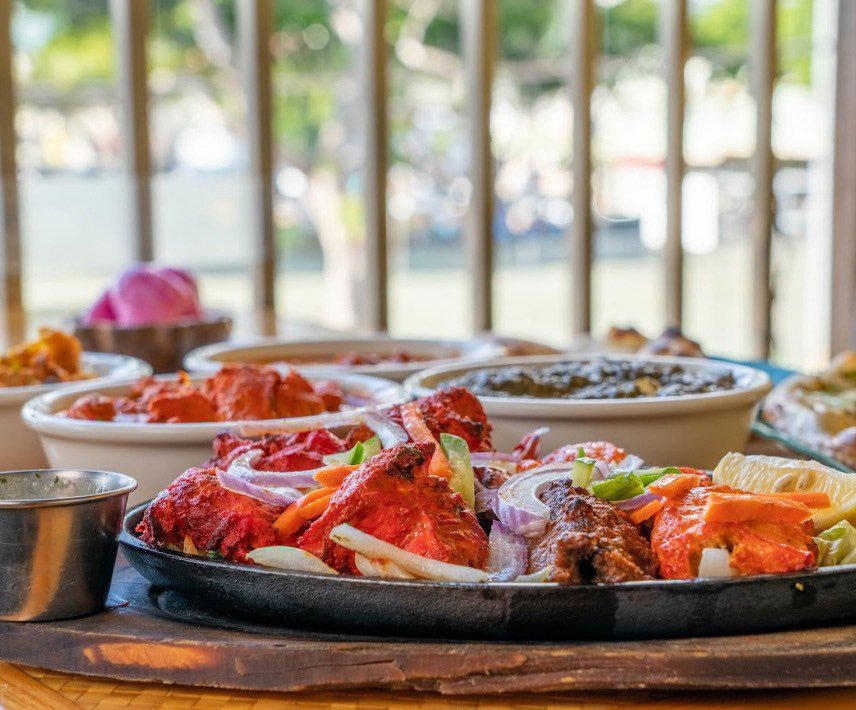
What to order
- Chicken Tikka Masala
- Saag Paneer
- Lamb Curry
- Garlic Naan
- Vegetable Samosas
- Momo
- Kathmandu Lamb Chilli
A Different Altitude on Kaimuki's Main Dining Strip
Kaimuki has quietly become one of Honolulu's more interesting dining neighbourhoods, a stretch of 11th and Waialae Avenues where independent operators outnumber chain concepts and where the density of serious kitchens rivals anything in Waikiki at a fraction of the spectacle. The area draws a local crowd, not a tourist one, and the restaurants that survive here tend to do so on repeat business rather than foot traffic from hotel lobbies. Into that context, Himalayan Kitchen occupies a position that is genuinely without much competition in the city: a kitchen focused on the cooking traditions of Nepal, Tibet, and the northern Indian hill regions, cuisines that rarely get standalone treatment in Hawaii's restaurant economy.
The physical space on 11th Avenue reflects the neighbourhood's character. Kaimuki's dining rooms are generally modest in scale, built for community rather than occasion, and Himalayan Kitchen fits that mould. The interior leans into the visual language of its culinary geography: warm tones, low-key ornamentation drawn from Himalayan craft traditions, and a room that reads as a deliberate act of place-making rather than generic ethnic-restaurant shorthand. In a city where dining rooms at the tier of 53 By The Sea use panoramic ocean views as the primary spatial statement, or where Fête (New American) anchors itself in polished urban minimalism, Himalayan Kitchen operates on an entirely different register. The room is not about grandeur. It is about coherence.
What the Space Communicates About the Cooking
The relationship between a dining room's physical container and the food it frames is rarely accidental at independently operated neighbourhood restaurants. At Himalayan Kitchen, the spatial approach signals something about the cooking's ambitions: this is not a kitchen trying to translate Himalayan food into Western fine-dining idioms. The room does not perform luxury. It performs authenticity in the older, more literal sense of the word: consistency with a source tradition. That positions it differently from Honolulu's Japanese-leaning restaurants, where precision and minimalism are often architectural as much as culinary, and differently from the Hawaii Regional Cuisine tradition exemplified by 3660 On the Rise, which fuses local ingredients with classical technique inside a contemporary framework.
Himalayan food occupies a specific culinary geography. The cooking traditions of Nepal and Tibet developed under constraints of altitude, climate, and trade routes, producing dishes built around warming spices, fermented elements, slow-cooked proteins, and staple grains that differ substantially from the coastal Indian cooking most Americans encounter first. Momos, the steamed or fried dumplings that have become something of a regional calling card, sit alongside dal bhat preparations, curry formats that use different spice scaffolding than South Indian or Punjabi variants, and bread traditions including roti and thali accompaniments that ground each meal in specific regional logic. In the broader American dining context, this cooking remains underrepresented even in cities with large South Asian populations. In Honolulu, it is close to singular.
Honolulu's Dining Pattern and Where This Fits
Hawaii's restaurant culture has historically been shaped by three strong forces: the Japanese influence that runs through everything from ramen shops to high-end omakase, the Pacific Rim fusion tradition that defined the 1990s and still informs menus across the island, and the luau and plantation-era traditions that anchor experiences like Ahaaina Luau. What gets less attention is the city's capacity for quietly absorbing cuisines from elsewhere in Asia that sit outside the dominant Japanese axis. Korean, Vietnamese, Filipino, and Indian restaurants all have footholds in Honolulu's neighbourhood dining scene, but they tend to operate without the critical apparatus that follows Japanese and New American formats. Himalayan Kitchen belongs to this broader cohort of kitchens that operate on merit and word-of-mouth rather than awards infrastructure.
That dynamic is not unique to Honolulu. In American cities at large, the restaurants that receive the most critical attention at the level of Atomix in New York City or Alinea in Chicago tend to cluster around a handful of dominant cuisines and formats. The neighbourhood independent operating in an underrepresented culinary tradition builds its reputation differently, through the loyalty of diners who come back for specific dishes rather than through the tasting-menu formats that generate critical visibility. Himalayan Kitchen's position on Kaimuki's 11th Avenue places it squarely in that category.
Booking, Timing, and the Kaimuki Rhythm
Restaurants in Kaimuki generally operate without the advance booking windows that characterise destination dining. The neighbourhood's rhythm is more casual than Honolulu's hotel-driven dining strip, and tables at most 11th Avenue restaurants are available with shorter lead times than the weeks-in-advance requirements that apply to heavily awarded kitchens. For Himalayan Kitchen, the practical advice is to check current availability closer to your visit rather than planning months ahead. The exception is busy weekend evenings, when Kaimuki's dining room traffic is consistently higher and the area's better-known spots fill early. Coming on a weekday, or timing dinner before the main rush, gives more flexibility. The address at 1137 11th Ave is walkable from several Kaimuki residential streets and accessible by bus from central Honolulu, which matters in a city where parking near popular dining strips can be competitive.
For visitors building a Honolulu dining itinerary that extends beyond the obvious, Himalayan Kitchen anchors a Kaimuki evening well when paired with a drink elsewhere in the neighbourhood. The broader Honolulu dining picture, including options across price points and cuisine types, is covered in our full Honolulu restaurants guide. For reference points outside Hawaii, the independent neighbourhood model that Himalayan Kitchen represents has direct counterparts in the way that Lazy Bear in San Francisco or 855-ALOHA locally built followings through format specificity rather than mainstream critical pathways. Those comparisons operate at different price points, but the underlying dynamic of building loyalty through a defined point of view is consistent.
Frequently asked questions
Where is Himalayan Kitchen located?
Himalayan Kitchen is located at 1137 11th Ave, Honolulu, HI 96816, Honolulu.
Is Himalayan Kitchen in Honolulu a good option for vegetarians or those with dietary restrictions?
Himalayan and Nepalese culinary traditions include a substantial range of vegetable-forward dishes rooted in dal, lentil preparations, and rice-based plates, making restaurants in this category generally hospitable to plant-based diners. Himalayan Kitchen is located at 1137 11th Ave in Kaimuki, Honolulu — calling ahead is the most reliable way to confirm current menu options and any accommodation policies.
What's the best thing to order at Himalayan Kitchen?
Himalayan Kitchen sits on 11th Avenue in Kaimuki, a neighborhood where independent operators tend to anchor menus around kitchen strengths rather than crowd-pleasing range. Without a publicly confirmed current menu, the safest approach is to ask staff which dishes are made in-house from scratch — at restaurants of this type, that question usually points directly to the items worth ordering.
How far ahead should I plan for Himalayan Kitchen?
Kaimuki restaurants generally don't require the multi-week booking windows associated with Honolulu's downtown destination dining. For Himalayan Kitchen at 1137 11th Ave, arriving early on weekends is a reasonable precaution, but walk-in timing on weeknights typically works in the diner's favor.
What is Himalayan Kitchen known for?
Himalayan Kitchen is a neighborhood-operated restaurant on Kaimuki's 11th Avenue, a corridor that has developed a reputation for independent operators serving cuisines not well represented elsewhere in Honolulu. In Hawaii's restaurant scene, where Japanese and Pacific influences dominate, a Himalayan-focused kitchen occupies a distinct and underserved position on Oahu.
The Essentials
Comparable venues nearby, for context on price, style, and recognition.
| Venue | Cuisine | Price | Notes |
|---|---|---|---|
| Himalayan KitchenThis venue — the venue you are viewing | Authentic Nepalese & Indian Cuisine | $20–30 | Not listed |
| Jimbo Restaurant | Traditional Japanese Udon | Not listed | McCully-Moiliili, Traditional Japanese Udon |
| Tonkatsu Kuro | Modern Japanese Tonkatsu & Soba | $30–50 | Ala Moana, Modern Japanese Tonkatsu & Soba |
| Brick Fire Tavern | Neapolitan Pizza / Italian | $20–30 | Kaimuki, Authentic Neapolitan Pizza |
| Waikiki Shokudo | Japanese Izakaya | $20–30 | Waikiki, Japanese Izakaya |
| Cream Pot | French-Inspired American Breakfast & Brunch | $30–50 | Waikiki, French-Inspired American Breakfast & Brunch |
Continue exploring
More in Honolulu
Restaurants in Honolulu
All restaurants in Honolulu →
Bars in Honolulu
All bars in Honolulu →

Details
- Cozy
- Casual
- Casual Hangout
- Group Dining
- Family
- Solo
- Standalone
- Byob
- Local Sourcing
- A La Carte
- Family Style
- Lassi
- Chutneys
- Vegetarian Friendly
- Vegan Options
- Halal
Current opening hours
- Monday
- 11 AM–2:30 PM, 5–9 PM
- Tuesday
- 11 AM–2:30 PM, 5–9 PM
- Wednesday
- 11 AM–2:30 PM, 5–9 PM
- Thursday
- 11 AM–2:30 PM, 5–9:30 PM
- Friday
- 11 AM–2:30 PM, 5–9:30 PM
- Saturday
- 11 AM–2:30 PM, 5–9:30 PM
- Sunday
- 11 AM–2:30 PM, 5–9:30 PM
Hours can change for holidays and private events. Last verified .
Casual, cozy indoor and patio seating with a welcoming neighborhood atmosphere; spacious dine-in settings across locations.