Canada's 100 Best Restaurants #83
Our verdict
HENI brings together the culinary traditions of Southwest Asia and North Africa with Quebec terroir on a compact stretch of Notre-Dame Ouest in Saint-Henri. The kitchen works across both à la carte and tasting menu formats, pairing regional sourcing, P.E.I. beef, Quebec-foraged ingredients, with a wine list that draws from Lebanon, Quebec, and further afield. It occupies a niche in Montreal dining where heritage cuisine meets deliberate local sourcing.

Pearl is the En Primeur Club membership app, where members save venues, book tables and use the concierge.
Where the Ingredients Come From
Montreal's most interesting dining shift over the past decade has not been stylistic so much as geographic: where the food originates now carries as much editorial weight as how it is cooked. The city's better kitchens have moved steadily toward sourcing that tells a regional story, whether that means Charlevoix lamb, Gaspésie sea vegetables, or the slow-building network of Quebec small farms supplying proteins and produce to Notre-Dame Ouest tables. HENI sits squarely inside that movement, but adds a layer that most Quebec-terroir projects do not attempt: it frames that local sourcing through the culinary traditions of Southwest Asia and North Africa, two food cultures where ingredient quality and provenance have always been structural, not decorative.
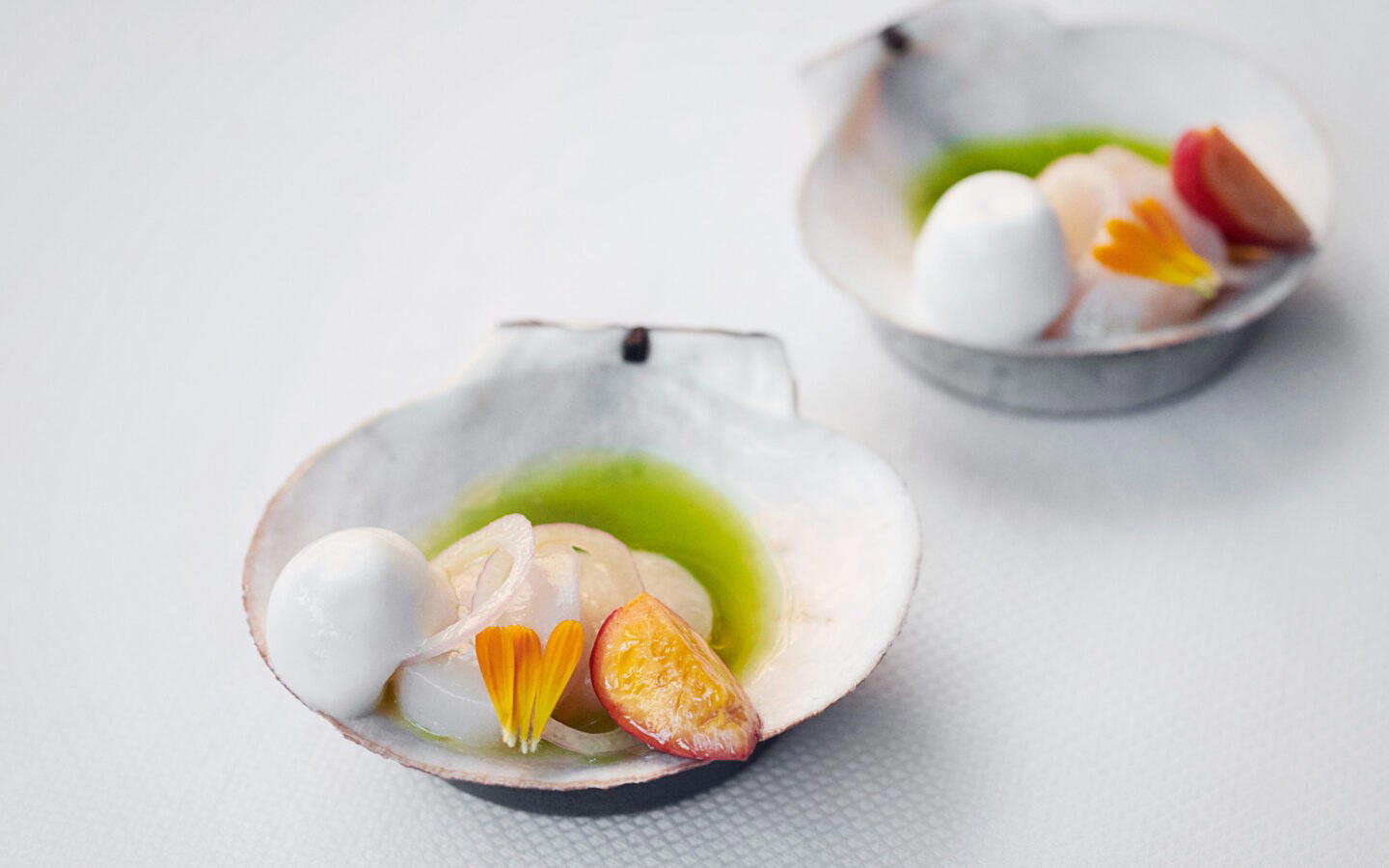
The kibbeh nayyeh at HENI illustrates the principle precisely. Raw beef from Prince Edward Island, a province with a well-established reputation for cattle raised on pasture, is the foundation of a dish whose Lebanese origins demand that the meat carry the flavour entirely on its own. Ramps, foraged seasonally across Quebec, bring a sulfurous, green sharpness that functions the way wild herbs do in the Levantine source tradition. Caper berry adds brine and acid. The dish does not need to announce its sourcing because the sourcing is already legible in the outcome: P.E.I. beef has the clean, mineral quality that kibbeh nayyeh requires, and Quebec's foraging calendar happens to produce ramps at the moment in spring when the dish reads leading.
This is a kitchen that treats terroir not as a marketing stance but as a culinary argument. Southwest Asian and North African cooking developed over centuries in regions where ingredient scarcity sharpened cooks' attention to provenance. Transplanting those sensibilities to Quebec means the local supply chain, already among the most varied and producer-conscious in Canada, gets filtered through a set of culinary priorities that understand what good raw material is supposed to do.
The Dining Room on Notre-Dame Ouest
Saint-Henri, the western Plateau-adjacent neighbourhood where HENI operates, has undergone the kind of gradual culinary densification that tends to follow residential investment by a decade or so. Notre-Dame Ouest between Atwater and the Lachine Canal now holds a cluster of independent restaurants serious enough to draw diners from Outremont and Rosemont, not just the immediate blocks. The street is not the Old Port, and it does not perform for tourists. Tables fill because the cooking warrants it.
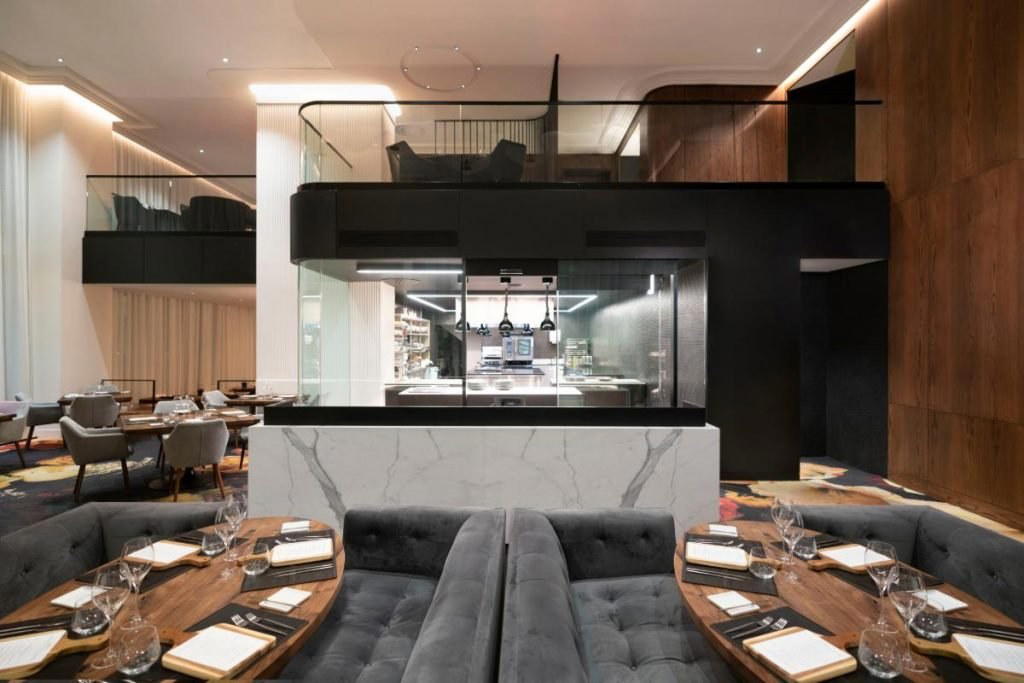
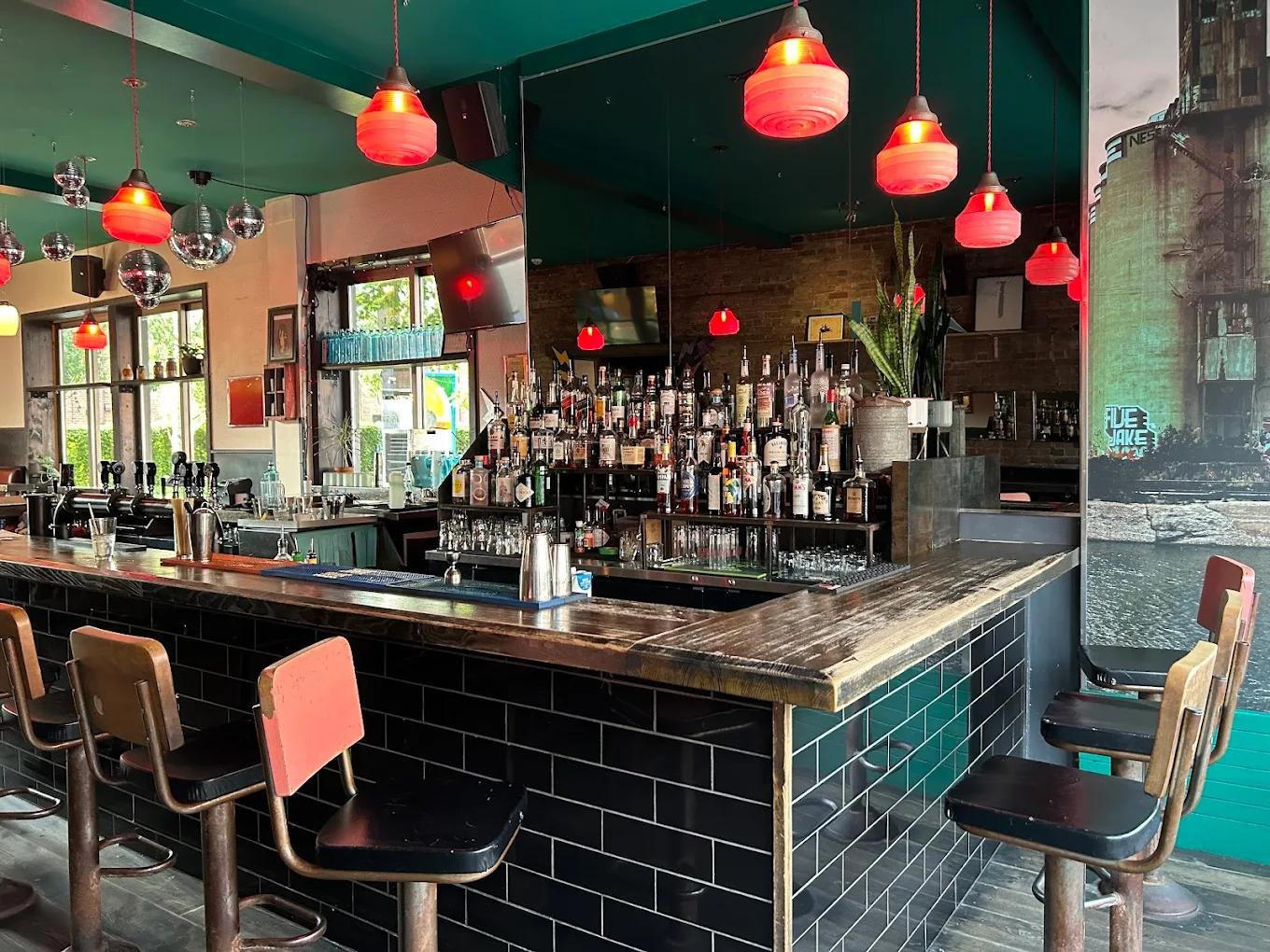
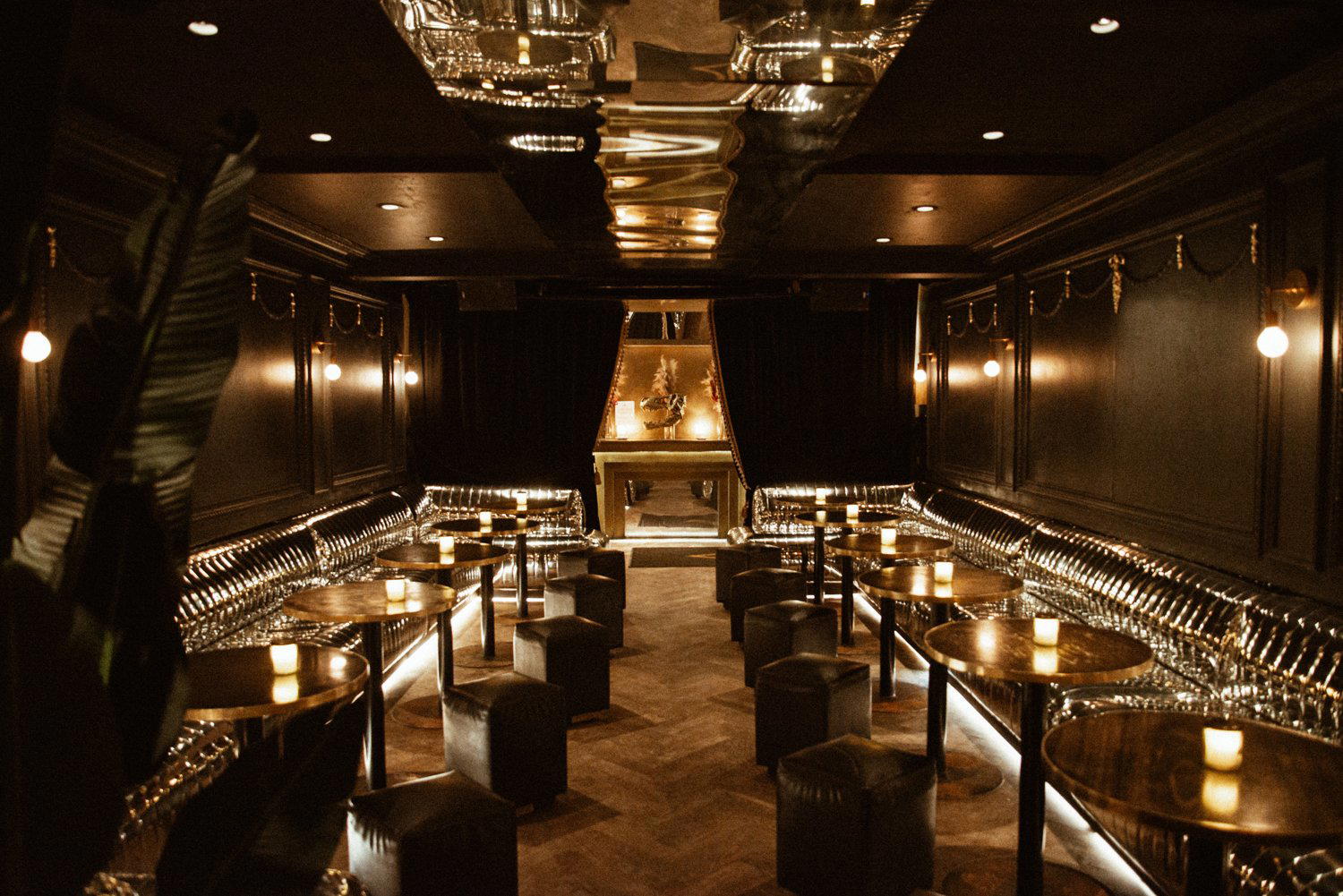
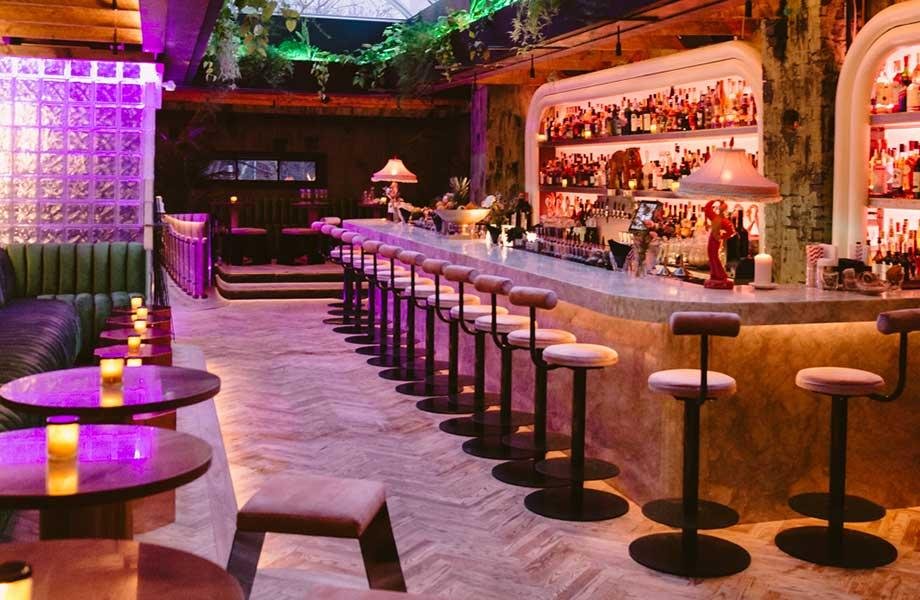
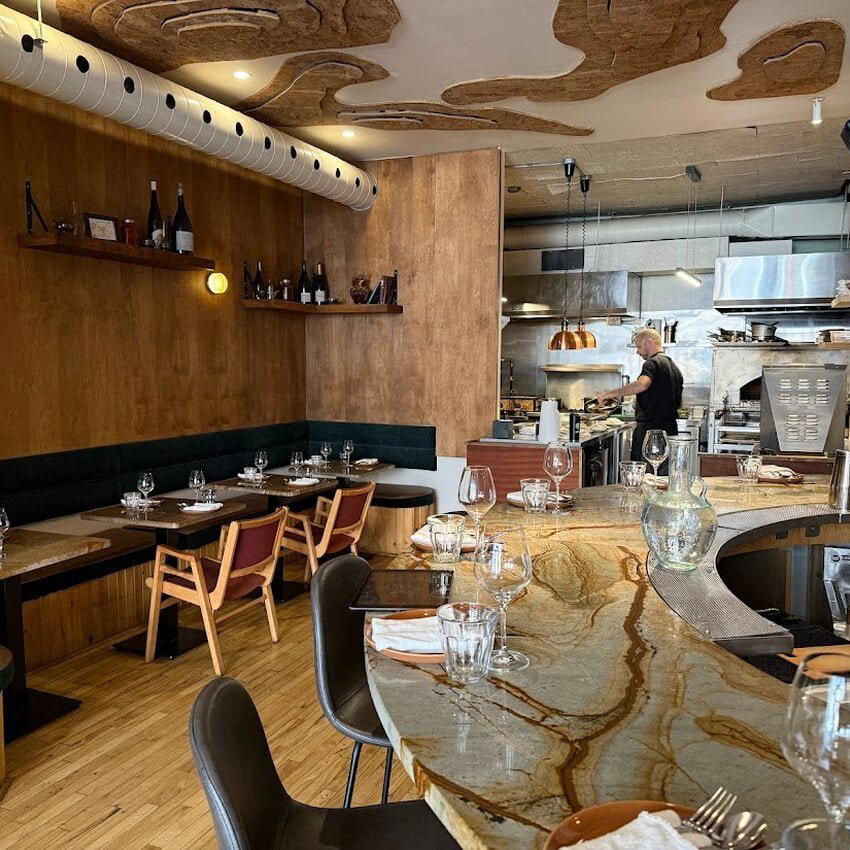
The address at 2621 Notre-Dame Ouest places HENI in a stretch that still reads as neighbourhood rather than destination corridor, which shapes the atmosphere inside. The space is described as refined and inviting, a pairing that in Montreal dining shorthand typically signals a room with considered design that does not enforce formality. At the price level where tasting menus and serious wine lists operate, that register matters: it allows the cooking to carry authority without the room demanding deference.
For comparable ambitions in the city, the frame of reference runs toward Mastard and Alma Montreal, both operating with tasting formats and strong sourcing discipline, or the more established benchmark of Jérôme Ferrer - Europea at the top of the modern cuisine tier. HENI's positioning is more specific: it does not compete in the French-technique tradition that defines most of Montreal's upper bracket.
The Wine List as Argument
A wine list spanning Lebanon, Quebec, and beyond is not a novelty selection or a gesture toward the menu's cultural references. It is an editorial position. Lebanese wine, anchored by the Bekaa Valley, with producers like Château Musar carrying international critical standing over several decades, represents one of the oldest wine-producing regions in the world. Pairing it alongside Quebec bottles, which operate at the opposite end of the viticultural timeline, creates a list with genuine intellectual range.
The practical effect for a diner is that pairings across the tasting menu can move between registers in a way that a France-heavy list would not allow. A Lebanese red from the Bekaa can handle spiced meat preparations in ways that Burgundy often cannot. A Quebec white, typically working with cold-climate aromatics and higher acidity, can cut through rich preparations in a way that mirrors what Mediterranean whites do in the source cuisines. The list's geography is not decorative; it is calibrated to the food.
For broader context on Canadian wine ambition, Restaurant Pearl Morissette in Lincoln represents a comparable level of wine seriousness in Ontario, while Annette bar à vin and Sabayon sit within Montreal's own natural-wine and bar-à-vin tier. HENI's list occupies different ground: it is built to serve a specific culinary tradition rather than to lead with wine as the primary identity.
Format and Planning
HENI offers both à la carte ordering and a tasting menu, which gives it flexibility unusual in the segment where it competes. The tasting format is described as rich in storytelling, meaning the progression of dishes carries a narrative logic connected to the sourcing and cultural context described above, rather than simply moving through textures or temperatures. The à la carte option means a shorter visit or a more selective engagement with the menu is possible without committing to the full tasting arc.
The restaurant is located at 2621 Rue Notre-Dame Ouest, accessible by Metro to the Lionel-Groulx station and a short walk west along Notre-Dame, or directly by the 57 bus. Given the format and the neighbourhood's general dining intensity on weekends, advance reservations are the reliable approach.
For a broader view of where HENI fits in the city's dining structure, the EP Club Montreal restaurants guide covers the full range from neighbourhood bistros to tasting-menu specialists. Those travelling and looking for accommodation context can find hotel recommendations in the Montreal hotels guide, and the Montreal bars guide covers the city's considerable cocktail and natural wine bar scene. The Montreal experiences guide and wineries guide complete the city picture for those spending several days.
For comparison across Canadian cities at a similar level of culinary ambition, Tanière³ in Québec City applies comparable terroir rigour within a French-heritage format, while Alo in Toronto and AnnaLena in Vancouver anchor the tasting-menu conversation in their respective cities. Outside Canada, Atomix in New York City offers the closest structural parallel, a kitchen translating a non-European culinary heritage through a fine-dining tasting format with serious local sourcing discipline.
Frequently asked questions
What's the address for HENI?
HENI is located at 2621 R. Notre Dame O, Montréal, QC H3J 1N9, Canada, Montreal.
Does HENI have a Michelin star or similar recognition?
HENI has received recognition including: Heni weaves the flavours of Southwest Asia and North Africa with Quebec terroir in a refined and inviting space. Choose from à la carte selections or a tasting menu rich in storytelling. Kibbeh nayyeh, P.E.I. beef with ramps and caper berr….
What should I order at HENI?
The kibbeh nayyeh, made with P.E.I. beef, ramps, and caper berry, is the clearest single expression of what HENI is doing: Quebec sourcing applied to a Southwest Asian form. The tasting menu is built around that kind of cross-referencing and delivers it in sequence, so first-time visitors who want the full context are better served there than by ordering à la carte.
Can I walk in to HENI?
HENI operates on Notre-Dame Ouest in Saint-Henri at 2621 Rue Notre-Dame O, and the à la carte format means walk-in seats may be available on quieter nights. That said, the tasting menu format draws a reservation-forward crowd, so calling ahead is the practical approach if you have a specific evening in mind.
What do critics highlight about HENI?
The kitchen's approach to Quebec terroir through the lens of Southwest Asian and North African cooking draws consistent attention, as does the wine list, which spans Lebanon, Quebec, and broader producing regions. That list is treated editorially, as an argument for how those regions relate, rather than as a token gesture toward the menu's cultural references.
Can HENI accommodate dietary restrictions?
The menu structure at HENI, which includes both à la carte ordering and a tasting menu, gives the kitchen more flexibility than a fixed-format-only restaurant. Specific dietary needs are best confirmed directly with the venue before arrival, given that the tasting menu is described as rich in storytelling and likely composed around specific ingredient relationships.
Side-by-Side Snapshot
Comparable venues nearby, for context on price, style, and recognition.
| Venue | Cuisine | Price | Awards | Notes |
|---|---|---|---|---|
| HENIThis venue (the venue you are viewing) | Modern SWANA (Southwest Asia & North Africa) | Not listed | Canada's 100 Best Restaurants #83 | Not listed |
| Alep | Syrian & Armenian | $30–50 | Star Wine List | Parc-Jarry |
| Garage Beirut | Authentic Lebanese | $20–30 | Not listed | Golden Square Mile |
| Les Cavistes | French Bistro with Québec Flair | $50–100 | Star Wine List | Nicolas-Viel |
| Mythik | Québec Regional Market Cuisine | $50–100 | Not listed | Centre-Ville |
| NORA GRAY | Southern Italian | Not listed | Canada's 100 Best Restaurants #90 | Vieux Montréal |
Recognition history
Dated appearances from independent guides and award organizations, with the underlying list record or original source where available.
Canada's 100 Best Restaurants #83
Canada's 100 Best