Harajuku Kitchen
Harajuku Kitchen sits on Gillespie Place in Edinburgh's Bruntsfield neighbourhood, bringing Japanese cooking techniques into conversation with Scottish produce. The restaurant occupies a corner of the city's quieter, residential dining scene — a deliberate distance from the tourist-heavy Old Town — and draws a local crowd for whom precision matters more than spectacle.
Pearl is the En Primeur Club membership app — saves, bookings, and concierge access live there. Same editors, same standards.
- Address
- 10 Gillespie Pl, Edinburgh EH10 4HS, United Kingdom
- Phone
- +441312858182
- Website
- harajukukitchen.co.uk
- Directions
- Get directions
 Saves & bookings on Pearl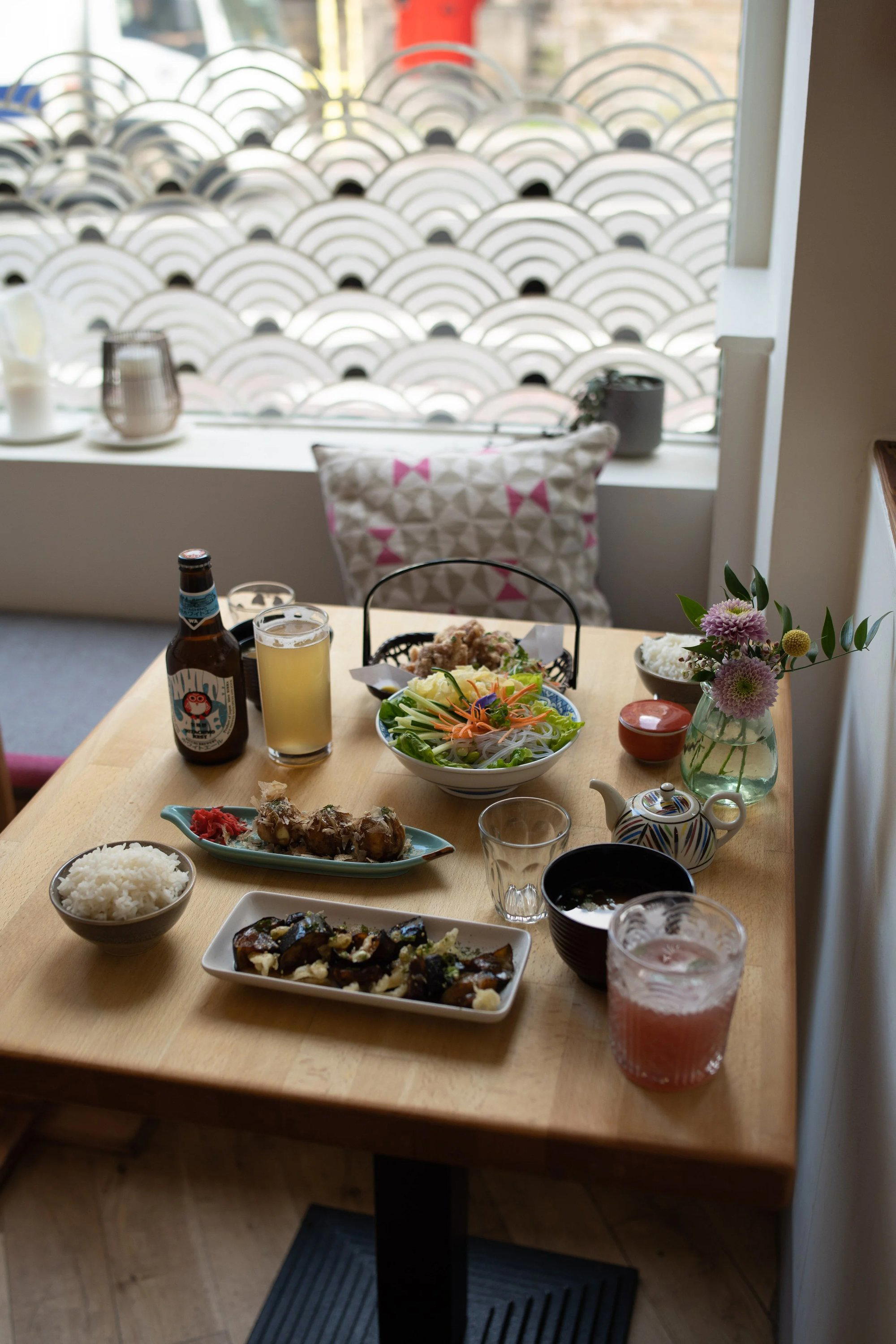
Bruntsfield's Quiet Bet on Japanese Precision
Edinburgh's dining energy tends to cluster around the Old Town and Leith, where Michelin-starred rooms like The Kitchin and Martin Wishart anchor a well-established fine-dining corridor. Bruntsfield sits outside that orbit. The neighbourhood runs south from the Meadows through terraced tenements and independent shopfronts, and its restaurant scene reflects something closer to where locals eat than where visitors tend to look. Harajuku Kitchen, at 10 Gillespie Place, is part of that residential fabric — a Japanese restaurant that reads the room as a neighbourhood operation rather than a destination performance.
The setting announces its priorities early. Gillespie Place is a quiet stretch, and the restaurant's exterior does little to interrupt it. Inside, the room is compact and unhurried — the kind of space where the food is expected to do the work. That spatial modesty is actually consistent with a broader pattern in Japanese dining: in Tokyo, the rooms that take cooking most seriously are often the ones with the fewest decorative distractions. Edinburgh's version of that principle may be less deliberate, but the result is similar, attention narrows quickly to the plate.
Japanese Technique Meets Scottish Larder
The more interesting editorial question is what Japanese technique does when it meets Scottish produce. Scotland's larder is, by most professional assessments, one of the stronger raw-material arguments in European cooking: North Sea seafood, Highland game, soft-fruit seasons in summer, and a dairy tradition that punches above its visibility. The problem has historically been that Scottish produce has been more reliably celebrated by chefs working in European frameworks, the Nordic-influenced approach at Timberyard or the modern-British register at AVERY, than by kitchens importing Asian methodologies.
Japanese cooking, at its structural core, is built around the same principle that defines Scotland's leading produce: the idea that the primary ingredient should be allowed to arrive at the table as itself, with technique functioning as amplification rather than transformation. Cold-water fish handled with the restraint of Japanese preparation is not a conceptual stretch, it is, in some respects, a natural fit. The gap between Scottish seafood landed in the morning and a precise Japanese treatment applied in the afternoon is a smaller intellectual distance than it might appear. Where that equation works, it tends to produce food that is more honest than fusion and more interesting than either tradition in isolation. Restaurants operating in this space in other cities, Atomix in New York, which maps Korean technique onto local produce at serious depth, or the broader movement visible at precision-led European rooms like L'Enclume in Cartmel, demonstrate how technique-first kitchens can reframe regional ingredients without dissolving their identity.
Harajuku Kitchen works at a different scale and register than any of those references. But the editorial logic is the same: imported method applied to indigenous material, with the tension between the two as the point rather than the problem.
Edinburgh's Wider Japanese Moment
Japanese food in the UK sits in an interesting structural position heading into the mid-2020s. London has developed a credible high-end Japanese tier, omakase counters, izakayas with serious wine programs, sushi restaurants that benchmark against Tokyo rather than against each other. That concentration reflects London's population depth and its ability to sustain specialist formats at premium price points. Outside London, the picture is patchier. Edinburgh has a growing appetite for precision cooking, as the continued strength of tasting-menu rooms like Condita suggests, but the city has not yet developed a Japanese dining tier equivalent to what cities like Manchester or Glasgow can offer at volume. Harajuku Kitchen operates in that gap, a Japanese restaurant in a city where the category has relatively little competition, which is both an opportunity and a constraint.
The comparison set for a serious Japanese restaurant in Edinburgh is not, ultimately, local. It is national and international: the question of how Scottish produce handled with Japanese discipline compares to what visitors might encounter at comparable operations in London, or at European restaurants applying Asian techniques more explicitly, like Opheem in Birmingham, where Indian technique meets British ingredients with documented critical recognition. That framing is not unfair to Harajuku Kitchen, it is, if anything, the frame that makes the restaurant worth paying attention to at all.
Planning a Visit
Gillespie Place is accessible from the city centre on foot in around twenty minutes from the Grassmarket, or via frequent bus connections southward from Princes Street. The Bruntsfield neighbourhood is walkable and compact, with enough around it that the evening extends naturally before or after. Given the sparse public data on booking windows and current format, visitors planning around peak Edinburgh periods, the Festival in August, the Christmas market season in December, would be well-advised to contact the restaurant directly and allow more lead time than they might for comparable rooms in quieter months. Edinburgh's dining scene tightens considerably in August, when even mid-range neighbourhood restaurants operate at capacity. For those approaching with the same planning discipline they would apply to tasting-menu rooms like Midsummer House in Cambridge or hide and fox in Saltwood, booking early, confirming closer to the date, the logistics here are direct by comparison.
For those building a broader Edinburgh itinerary, our full Edinburgh restaurants guide maps the city's dining tiers across neighbourhoods and price points, with context on where Japanese and Asian-influenced cooking sits relative to the city's stronger Modern European and Modern British cohorts.
How Harajuku Kitchen Edinburgh compares with similar nearby venues.
| Venue | Cuisine | Price |
|---|---|---|
| Hendersons | Vegetarian | ££ |
| LeftField | Seafood | ££ |
Continue exploring
More in Edinburgh
Restaurants in Edinburgh
Browse all →
Bars in Edinburgh
Browse all →

At a Glance
- Trendy
- Cozy
- Modern
- Date Night
- Casual Hangout
- Family
- Open Kitchen
- Sake Program
Current opening hours
- Monday
- 12–3 PM, 5–10:30 PM
- Tuesday
- 12–3 PM, 5–10:30 PM
- Wednesday
- 12–3 PM, 5–10:30 PM
- Thursday
- 12–3 PM, 5–10:30 PM
- Friday
- 12–3 PM, 5–10:30 PM
- Saturday
- 12–10:30 PM
- Sunday
- 12–4 PM, 5–9 PM
Hours can change for holidays and private events. Last verified .
Smart casual interior with a welcoming bistro atmosphere and moderate noise levels.
Know Before You Go
- Getting there
- 10 Gillespie Pl, Edinburgh EH10 4HS, United Kingdom