
A Michelin Plate restaurant occupying the back of a fashion and design concept store in the 2nd arrondissement, Halo Paris pairs Mediterranean and Basque-inflected cooking with a glass-roofed dining room, basement cocktail bar, and gallery space. Chef Victor Blanchet, who trained at L'Arpège and appeared on Top Chef 2023, produces colourful, light plates rooted in coastal produce. Online booking only.
Pearl is the En Primeur Club membership app — saves, bookings, and concierge access live there. Same editors, same standards.
- Address
- 12 Rue Saint-Sauveur, 75002 Paris, France
- Website
- halo-paris.com
- Directions
- Get directions
 Saves & bookings on Pearl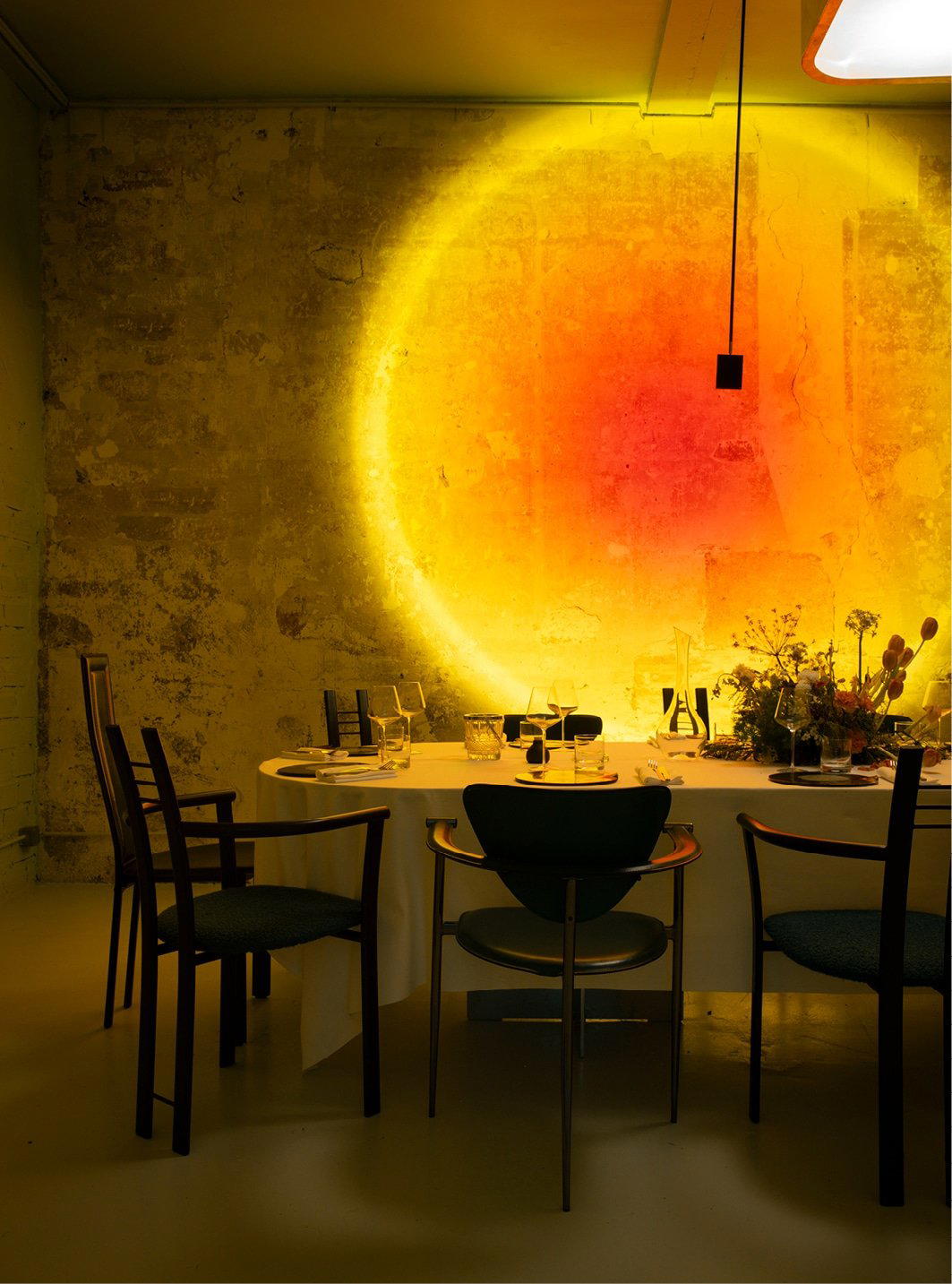
A Concept Store That Happens to Feed You Well
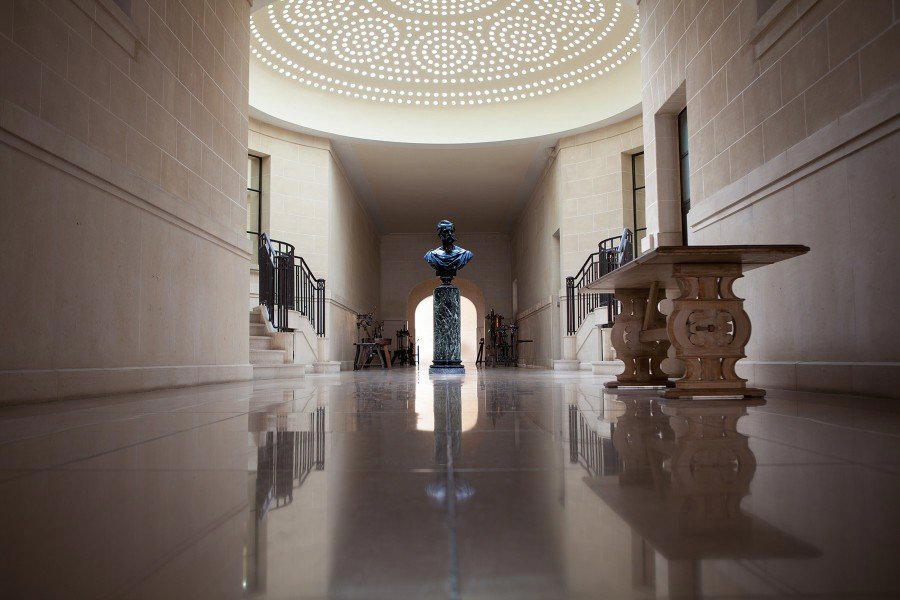
Halo Paris is a restaurant in Paris's 2nd arrondissement serving a Modern Mediterranean Bistro with Basque Influences menu, with online booking essential and a price tier of €€€. Halo Paris takes this logic further than most: the dining room sits at the back of a fashion and design concept store on Rue Saint-Sauveur, behind a wooden door that gives no particular signal of what lies beyond. Natural light falls through a glass roof onto bare concrete floors and an open kitchen. The architecture is spare in a way that feels deliberate rather than economical, the kind of space that lets food and conversation carry the room.
That physical setting matters editorially because it positions Halo inside a broader Parisian shift: the cultural-hub restaurant, where eating is one activity among several. The basement compounds the point, housing a small exhibition room, a cocktail bar, and a table d'hôte format that invites longer stays. The building functions less like a conventional restaurant and more like a programme, something closer to the ateliers of the Marais than to the white-tablecloth formality of the nearby Bourse district.
Mediterranean and Basque Cooking at the €€€ Tier
Paris's mid-to-upper dining tier, the €€€ bracket that sits between neighbourhood bistros and the €€€€ three-star houses like Alléno Paris au Pavillon Ledoyen, Kei, and Pierre Gagnaire, is where interesting creative cooking often happens. The constraints are productive: fewer covers to fill than a brasserie, less institutional weight than a palace-hotel restaurant, and a kitchen small enough that a single chef's point of view can hold the whole menu together.
At Halo, the editorial compass points south and southwest: the Mediterranean and the Basque Country, two culinary territories that share an emphasis on direct, produce-forward cooking, acid-brightness, and coastal proteins. The Michelin Plate awarded in 2025 signals food that inspires attention without necessarily reaching for technical spectacle. In the current Paris recognition landscape, a Plate is often more interesting than a star as a leading indicator, it marks kitchens where the inspectors see something worth tracking.
The cooking is described by Michelin as colourful, light, and well composed. One cited example: sea bass tataki flambéed with pastis, served with beetroot mousseline and preserved lemon. That dish tells you something useful about the kitchen's orientation. The tataki technique imports a Japanese brevity of heat, keeping the fish at a texture that registers as barely cooked. The pastis flambage introduces a coastal Provençal register without being decorative, pastis and sea bass share an anise-and-iodine logic. Preserved lemon adds the oxidised, saline sharpness that both Mediterranean and Basque cooking use to cut fat and anchor a plate. It is not a complicated dish. It is a precisely reasoned one.
Sustainability Signals in the Menu's DNA
Mediterranean and Basque culinary traditions have an inherent structural alignment with low-waste, ingredient-led cooking. Neither tradition prizes elaborate sauce work that masks primary produce; both depend on seasonal availability and coastal proximity. A kitchen working within those references, at this price point, is implicitly committed to sourcing produce that can hold up without heavy intervention.
The light, vegetable-forward compositions, beetroot mousseline, preserved aromatics, suggest a kitchen where the prep hierarchy starts from the plant up rather than from the protein down. Preservation techniques like the preserved lemon in the sea bass dish extend shelf life without synthetic input, a practice that Basque and Provençal larders have relied on for centuries. In the current Paris dining scene, where sustainability claims are sometimes performative, the more credible signal is a menu architecture that makes waste-reduction structurally necessary rather than optionally virtuous.
The concept-store context reinforces this. The young designers showcased in the retail space operate in a fashion sector increasingly scrutinised for waste and overproduction. That Halo aligns itself with this cohort rather than with luxury hospitality groups suggests a consistent philosophical orientation across the building's activities, one that a growing segment of Paris diners in their twenties and thirties finds more legible than a conventional fine-dining provenance story.
Victor Blanchet's Credentials in Context
French television's Leading Chef has a mixed record as a predictor of sustained kitchen quality, but the contestants who arrive with strong institutional training before the cameras tend to emerge with their credibility intact. Victor Blanchet's pre-television CV includes time at L'Arpège, Alain Passard's three-star house on the Left Bank and one of the addresses most associated with vegetable-led, low-intervention cooking in France, and at Neso, a Paris restaurant that has operated in a similarly produce-forward register. Those two kitchens, taken together, are a reasonable explanation for why the Halo menu reads the way it does: precise, light, colour-led, and not particularly interested in classical French sauce architecture.
For diners calibrating against the broader France kitchen circuit, Blanchet's lineage places him in a different conversation from the haute cuisine houses. He is not working in the tradition of Flocons de Sel in Megève or Mirazur in Menton, nor in the classical continuity of Auberge de l'Ill in Illhaeusern, Bras in Laguiole, Troisgros - Le Bois sans Feuilles in Ouches, or Paul Bocuse - L'Auberge du Pont de Collonges in Collonges-au-Mont-d'Or. He is operating in the newer, lighter, more urban strand of French contemporary cooking, closer in spirit to what Accents Table Bourse represents in the same arrondissement, or to Anona and Amâlia across other Paris neighbourhoods. Internationally, the appetite for this kind of precise, produce-led modern cooking at the mid-luxury tier shows no signs of contraction, venues like Frantzén in Stockholm demonstrate how far the format can scale when the sourcing and technique align.
The 2nd Arrondissement as Context
Rue Saint-Sauveur sits in the part of the 2nd arrondissement that has absorbed much of the creative-industry migration out of the Marais. The street and its immediate surrounds now carry a concentration of independent labels, studios, and hybrid spaces that makes the concept-store-restaurant format feel less like a novelty and more like a neighbourhood vernacular. For visitors oriented toward that creative Paris rather than the palace-hotel circuit, it is a more useful starting coordinate than the 8th or the 1st.
Other restaurants in adjacent streets and comparable registers include 114, Faubourg at the luxury end of the spectrum and Auberge de Montfleury for a different register entirely.
Planning Your Visit
Reservations are essential and online booking is the only option. Booking ahead is advisable, particularly for evenings. Price tier: €€€, placing Halo in the mid-to-upper Paris range. Format: The basement table d'hôte and cocktail bar mean the evening can extend beyond dinner. Address: 12 Rue Saint-Sauveur, 75002 Paris, France.
A Tight Comparison
Comparable venues nearby, for context on price, style, and recognition.
| Venue | Cuisine | Price | Notes |
|---|---|---|---|
| Halo ParisThis venue — the venue you are viewing | Modern Cuisine | $$$ | Not listed |
| Jupi | Not listed | $$ | Batignolles, Modern Mediterranean Sharing Plates |
| L'Apibo | Montorgueil, Modern French Bistro | $$$ | Not listed |
| LAZU | Not listed | $$$ | 9th Arr., Modern French Bistronomy |
| Sétopa | Not listed | $$$ | Odéon (6th arrondissement), Modern Korean Gastronomy |
| Le Bon Saint-Pourçain | Not listed | $$$ | Saint-Germain-des-Prés, Modern French Bistro |
Recognition history
Dated appearances from independent guides and award organizations, with the underlying list record or original source where available.
Michelin Plate
Michelin
Michelin Plate
Michelin
Michelin Plate
Michelin
Continue exploring
More in Paris
Restaurants in Paris
Browse all →
Bars in Paris
Browse all →
Hotels in Paris
Browse all →



At a Glance
- Trendy
- Modern
- Elegant
- Date Night
- Group Dining
- Special Occasion
- After Work
- Open Kitchen
- Private Dining
- Design Destination
- Historic Building
- Craft Cocktails
- Natural Wine
- Sommelier Led
- Local Sourcing
- Natural Wine
Current opening hours
- Monday
- Closed
- Tuesday
- 7 p.m.–2 a.m.
- Wednesday
- 7 p.m.–2 a.m.
- Thursday
- 7 p.m.–2 a.m.
- Friday
- 7 p.m.–2 a.m.
- Saturday
- 7 p.m.–2 a.m.
- Sunday
- Closed
Hours can change for holidays and private events. Last verified .
Futuristic and moody with halos of orange, red, and yellow light projected onto dining room walls; bright natural daylight from glass roof during day; open kitchen with deep moss-green marble; concrete floors and minimalist design.