1 Michelin Star
Our verdict
hallmann & klee holds a Michelin star earned in both 2024 and 2025, placing it among a consistent tier of Berlin's modern cuisine addresses. Located in Neukölln at Böhmische Str. 13, the restaurant operates under chef Guillermo Tellez with a price positioning at €€€, a notch below the capital's multi-star bracket but well above its casual neighbourhood peers.

Pearl is the En Primeur Club membership app, where members save venues, book tables and use the concierge.
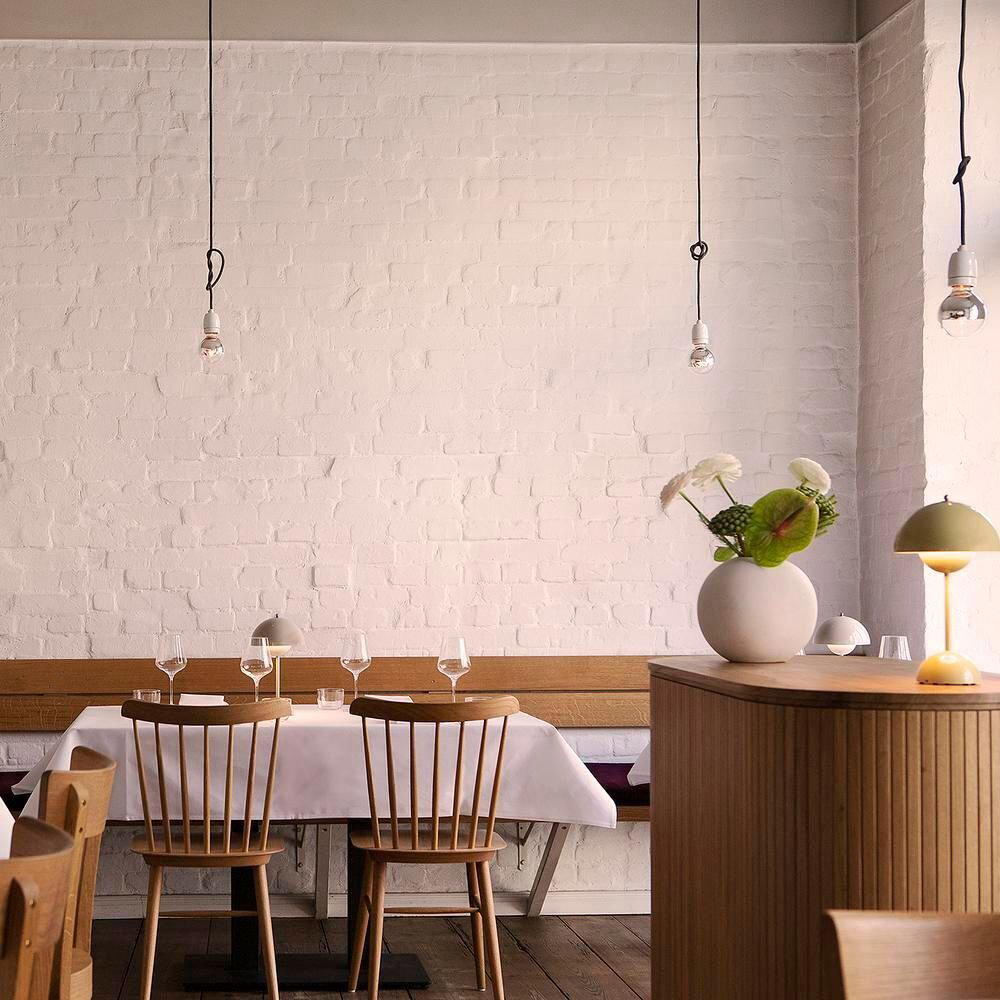
A Quieter Postcode, A Considered Meal
Böhmische Strasse sits in Neukölln, a district that Berlin's dining scene absorbed gradually over the past decade, first through natural wine bars and small plates operations, then through more formally structured kitchens. The street itself carries none of the theatre you'd associate with a Mitte address or a hotel dining room. The approach to hallmann & klee is correspondingly low-key: a residential block, a modest shopfront, the kind of exterior that makes the meal feel earned rather than performed. This is a pattern visible across a specific category of Berlin's starred restaurants, venues that chose postcode character over prestige signalling and built their reputation through the food rather than the setting.
That positioning matters when thinking about what a meal here represents. Berlin's Michelin-starred bracket spans a wide range of formats and ambitions. At one end, Rutz operates at three stars with a price tier to match. Horváth and FACIL sit at two stars with contemporary European programs that draw heavily on product sourcing as their editorial logic. hallmann & klee, with a star held consecutively in 2024 and 2025, occupies the lower end of that starred hierarchy by star count but not necessarily by intent. The €€€ price range places it accessibly below the two-and-three-star tier, which in Berlin terms means it competes for the same evening as thoughtful, structured independents like Bieberbau and pars Restaurant, and sits at a meaningful remove from the hotel-backed formality of Hugos.
How a Meal Here Tends to Move
Modern cuisine, as a Michelin category designation, covers significant ground: it encompasses produce-led tasting menus, technique-forward multi-course formats, and kitchens where the chef's training lineage shapes every decision about sequence and temperature. What it signals, in the context of a single-star Berlin address at €€€, is a structured meal with a clear arc, as opposed to the à la carte freedom of a brasserie or the casual disorder of a natural wine bar. Chef Guillermo Tellez brings a named individual perspective to the kitchen, but the more instructive frame is the tasting progression itself, the way a meal at this price and star level in Berlin tends to be choreographed rather than assembled.
The multi-course format, which anchors this category of dining globally, works through contrast and accumulation. Early courses tend to read as composed and delicate, establishing a register before building toward more saturated flavours and larger proteins. The middle section of a tasting menu at this level is typically where a kitchen reveals its technical range: textural interplay, temperature contrast, the use of acidity to reset the palate. The final savoury course, before any dessert sequence, usually carries the most weight. How a kitchen handles that transition, from the savoury peak into the sweet, often determines whether a meal feels complete or merely long.
At this price point and with Michelin recognition behind two consecutive years, a volatile or inconsistent experience would show up as divergence in that score. The consistency points to a kitchen operating with confidence in its own sequencing logic rather than chasing novelty course by course.
Neukölln as Context
For readers unfamiliar with Berlin's geography of dining, Neukölln's entry into the serious restaurant conversation is relatively recent in historical terms but now firmly established. The district built credibility through density of interesting, independent operators before any starred recognition arrived. It now holds a mix of casual wine-focused rooms, international kitchens reflecting the area's demographic character, and a smaller number of formally structured restaurants that chose the neighbourhood deliberately. hallmann & klee belongs to that last group: venues where the postcode is a statement about values rather than a compromise on ambition.
For planning purposes, Böhmische Strasse is accessible from central Berlin without difficulty, and the surrounding streets offer options for a pre-dinner drink or a post-dinner walk into the broader neighbourhood. Booking a meal here at the starred tier means planning ahead; in Berlin's competitive reservation window, single-star addresses with small rooms fill several weeks out, and weekend sittings at this level tend to close first. Visitors arriving in Berlin for a broader dining itinerary might cross-reference with aerde and SKYKITCHEN for contrast across different format registers. The full picture of where hallmann & klee sits in the city's dining structure is available in our full Berlin restaurants guide.
Where This Sits in the German Starred Picture
Germany's Michelin map is dense at the one-star level. Comparing hallmann & klee to peers elsewhere in the country makes the Berlin context clearer. JAN in Munich operates a similar format in a different urban register. ES:SENZ in Grassau and Schwarzwaldstube in Baiersbronn reflect the German tradition of serious dining in non-metropolitan contexts. Restaurant Haerlin in Hamburg and Vendôme in Bergisch Gladbach represent higher-star benchmarks for those tracking upward through the German fine dining tier. And at the absolute peak, Aqua in Wolfsburg holds three stars, offering a reference point for what the category looks like at maximum investment and recognition. hallmann & klee's position within this national picture is as a Berlin address that earned consecutive Michelin recognition in a city where the competition for those recognitions has grown meaningfully over the past decade.
For those whose frame of reference extends across European modern cuisine, the comparison set expands further. Frantzén in Stockholm and FZN by Björn Frantzén in Dubai represent what the modern cuisine category looks like at maximum international profile. hallmann & klee operates at a different scale and with different ambitions, but the category context is shared: structured progression, technical discipline, and a clear point of view expressed over multiple courses.
Planning a Visit
hallmann & klee is located at Böhmische Str. 13, 12055 Berlin. The €€€ price positioning makes it a realistic choice for a special occasion that doesn't require the commitment of the city's top-tier tasting menu pricing. Reservations at this level in Berlin are worth securing well in advance, particularly for Friday and Saturday evenings. The restaurant's Michelin star, held across 2024 and 2025, means it appears on the shortlists of visitors specifically tracking the city's starred circuit, which adds competitive pressure to the booking window. For those building a wider Berlin trip, the city's hotels, bars, wineries, and experiences are covered in dedicated guides: Berlin hotels, Berlin bars, Berlin wineries, and Berlin experiences.
Frequently asked questions
Where do I go for hallmann & klee?
hallmann & klee is located at Böhmische Str. 13, 12055 Berlin, Germany, Berlin.
Who runs the kitchen at hallmann & klee?
The chef associated with hallmann & klee is Guillermo Tellez.
What dish is hallmann & klee famous for?
No single signature dish has been confirmed through verifiable public sources. hallmann & klee's Michelin recognition in both 2024 and 2025 points to consistent execution across a modern cuisine format rather than a single calling-card plate. Chef Guillermo Tellez's approach at the €€€ price point suggests a menu built around composition and technique rather than one headline dish.
How would you describe the cuisine at hallmann & klee?
How much does it cost to eat at hallmann & klee?
Pricing at hallmann & klee is listed as €€€.
The Short List
| Venue | Cuisine | Price | Awards | Notes |
|---|---|---|---|---|
| hallmann & kleeThis venue (the venue you are viewing) | Modern European Fine Dining | $100–150 | 1 Michelin Star | Not listed |
| CODA Dessert Dining | Dessert-Inspired Fine Dining | $200–300 | 2 Michelin Stars · World's 50 Best #82 | Creative |
| Rutz | Modern German Fine Dining | $200–300 | 3 Michelin Stars · La Liste Top Restaurants | Modern European, Modern Cuisine |
| Nobelhart & Schmutzig | Hyper-Local Modern German Fine Dining | $100–150 | 1 Michelin Star · World's 50 Best #76 | Modern German, Creative |
| FACIL | Modern Fusion Fine Dining | $200–300 | 2 Michelin Stars · La Liste Top Restaurants | Contemporary European, Creative |
| Horváth | Modern Austrian Vegetable Cuisine | $200–300 | 2 Michelin Stars · La Liste Top Restaurants | Modern Austrian, Creative |
Recognition history
Dated appearances from independent guides and award organizations, with the underlying list record or original source where available.
Michelin 1 Star
Michelin
Full recognition history (3 entries)
Michelin 1 Star
Michelin
Michelin 1 Star
Michelin