
Tabelog 100 #31
Our verdict
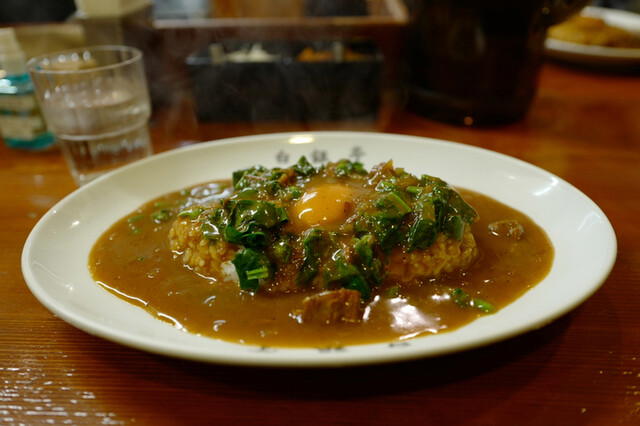
Hakugin Tei belongs to Osaka’s disciplined lunch-counter curry culture: compact, fast, inexpensive, and judged by repeat selection rather than ceremony. Its Tabelog Curry WEST “Tabelog 100” 2024 recognition, 16 counter seats, and weekday-only service place it in the serious end of casual dining, where timing matters more than formality.

Pearl is the En Primeur Club membership app, where members save venues, book tables and use the concierge.
The menu
What to order
- Tonkatsu curry
- Beef curry
- Shrimp tempura curry
Osaka is not only the city of neon excess. Its everyday dining culture also works on office rhythm: quick decisions at lunch, value-conscious choices, and little tolerance for restaurants that waste time. In that setting, curry has a different social role from the long tasting menus elsewhere in the city. It is direct, price-conscious, and surprisingly competitive. Hakugin Tei sits inside that culture rather than above it, a curry shop whose reputation has been built in a category where small differences in spice balance, turnover, and consistency decide whether a room becomes part of the local routine.
Osaka’s dining range can be read in sharp contrasts. Daytime bakeries and cafes speak to the city’s grazing habits; familiar local comfort food reflects the mass-market strength of quick, satisfying meals; international formats show how widely the city absorbs outside influences. Curry occupies another lane: modest spend, quick service, and heavy dependence on regulars who can tell when a recipe has drifted. That makes recognition in this field meaningful, because the benchmark is not luxury but repeatable satisfaction.
Osaka curry, judged by repetition rather than ceremony
Japanese curry is often treated abroad as a simple comfort category, but in Japan its serious shops form a dense micro-scene. The Kansai version tends to reward clarity and momentum: lunch service, compact formats, and a menu built for decisions made fast. Hakugin Tei’s 2024 Tabelog recognition places it within a documented group of curry specialists, alongside a broader Osaka field that includes BOTANI:CURRY as another comparison point in the same city. The signal matters because this is a crowded, low-price category. A restaurant does not need a long menu or luxury materials to become competitive; it needs a curry that can survive weekday scrutiny.
The evolution here is less about reinvention in the theatrical sense than about endurance in a practical dining category. In Osaka, lunch habits are tied to walking routes, work schedules, and the short window between obligations. A curry shop that keeps its relevance has passed a practical test: customers have to return, and new regulars have to adopt it. Hakugin Tei’s Osaka setting puts it in the city’s everyday-food conversation, where weekday lunch can be the natural habitat rather than a secondary service.
Price is part of the argument. With the listed budget at JPY 999 and under, the restaurant competes not with formal Japanese dining but with the city’s better everyday meals. That comparison is useful for travelers who arrive in Osaka expecting every serious recommendation to involve reservations, omakase etiquette, or a long evening. Here, seriousness is compressed. A low spend does not mean low standards; it means the evaluation shifts to speed, turnover, and whether a small format can keep quality stable across repeated service.
A compact curry format changes the reader's expectations
The format is not incidental. A focused curry room creates a narrow kind of dining experience: less lingering, more observation, and a meal shaped by the pace of service. This is closer to an efficient specialist stop than a restaurant for a long group meal. The decision to go should be based on appetite for a focused curry visit, not a desire for a leisurely night out.
Planning still matters. In this price tier and category, travelers should treat Hakugin Tei as a targeted Osaka stop rather than a flexible backup for every occasion. The smarter reading is simple: build it into a daytime food plan and leave room for the practical realities of a popular, inexpensive specialist. Visitors should also avoid assuming that a low-cost counter-style meal will operate like a hotel restaurant or a formal reservation-driven dining room.
The location reinforces that logic in broad terms: Hakugin Tei is in Osaka, making it a useful counterpoint to the city’s longer evening meals and bar itineraries. Readers building a broader Osaka plan can place it alongside unnamed local dining options, then separate daytime food decisions from hotel, drinking, and activity planning through broader Osaka research. The point is not to make Hakugin Tei carry an entire itinerary, but to understand how a modest curry specialist can anchor one precise meal within it.
Where it fits in a wider Japan itinerary
For visitors traveling beyond Osaka, Hakugin Tei helps explain why Japan’s casual specialist restaurants deserve the same attention as formal counters. Across the country, many focused dining rooms turn a single category into a destination in itself. The pattern repeats across formats: specificity often beats breadth, and a restaurant can matter because it does one thing with discipline rather than because it tries to cover every mood.
That lesson travels well even outside Japan. The appeal of Japanese food formats abroad often depends on understanding them as disciplined systems rather than generic comfort food. In Osaka, this discipline is especially clear because the city does not sentimentalize hunger. A curry shop with a low listed budget and 2024 Tabelog recognition has to function under pressure. Hakugin Tei is best read through that lens: not as a long-form occasion, but as a compact example of how Osaka turns everyday lunch into a serious local category.
Frequently asked questions
Is Hakugin Tei good for families?
It can work for families that are comfortable with a focused curry setting in Osaka. The format is better suited to diners who want a simple, efficient meal than to large groups seeking a leisurely restaurant experience.
Is Hakugin Tei better for a quiet night or a lively one?
Hakugin Tei is better understood as a focused curry stop than as a lively night-out venue. Its appeal is the compact, value-conscious Osaka meal rather than a long evening format.
Is Hakugin Tei more mid-range or high-end?
Pricing at Hakugin Tei is listed as - JPY 999 - JPY 999.
When is Hakugin Tei open?
Current opening details should be checked before visiting, especially because inexpensive specialist restaurants can be sensitive to service flow and availability.
What's the address for Hakugin Tei?
Osaka.
A Quick Peer Check
Comparable venues at the same tier for side-by-side context.
| Venue | Cuisine | Price | Awards | Notes |
|---|---|---|---|---|
| Hakugin TeiThis venue (the venue you are viewing) | Japanese Curry | $10–20 | Tabelog 100 #31 | Not listed |
| Hirokawa Tailor | Japanese stand-up bar (tachinomi) | $20–30 | Tabelog 100 #12 | Chūō |
| KALUTARA | Sri Lankan Curry House | $10–20 | Tabelog 100 #64 | Nishi |
| Madam Curry | Japanese Curry | Not listed | Tabelog 100 #86 | Chūō |
| yobareya | Japanese Curry | $1–10 | Tabelog 100 #41 | Nishi |
| Ramenya Akagi | Chicken paitan ramen shop | $10–20 | Tabelog 100 #20 | Higashiyodogawa |
Recognition history
Dated appearances from independent guides and award organizations, with the underlying list record or original source where available.
Tabelog 100 #31 · No. 31
Tabelog · Tabelog 100 - Curry - WEST - 2024
Continue exploring
More in Osaka
Restaurants in Osaka
All restaurants in Osaka →




Bars in Osaka
All bars in Osaka →




Hotels in Osaka
All hotels in Osaka →




Wineries in Osaka
Browse all →
Details
- Cozy
- Classic
- Intimate
- Solo
- Casual Hangout
- Standalone
- A La Carte
- Counter Dining
Current opening hours
- Monday
- 11:45 AM–3 PM
- Tuesday
- 11:45 AM–3 PM
- Wednesday
- 11:45 AM–3 PM
- Thursday
- 11:45 AM–3 PM
- Friday
- 11:45 AM–3 PM
- Saturday
- Closed
- Sunday
- Closed
Hours can change for holidays and private events. Hours as of .
A compact, no-frills, counter-only curry shop atmosphere that feels cozy and focused on a quick lunch service rather than a lingering dine-in experience.