
Tabelog 100 #79
Our verdict
Gyoza Li gives Fukuoka’s casual Chinese dining culture a serious dumpling address, with Shandong cooking and gyoza treated as craft rather than side order. Its Tabelog 100 selections for Chinese WEST 2026 and earlier dumpling recognition place it in a rare lane: accessible, specialist, and grounded in everyday appetite rather than ceremony.

Pearl is the En Primeur Club membership app, where members save venues, book tables and use the concierge.
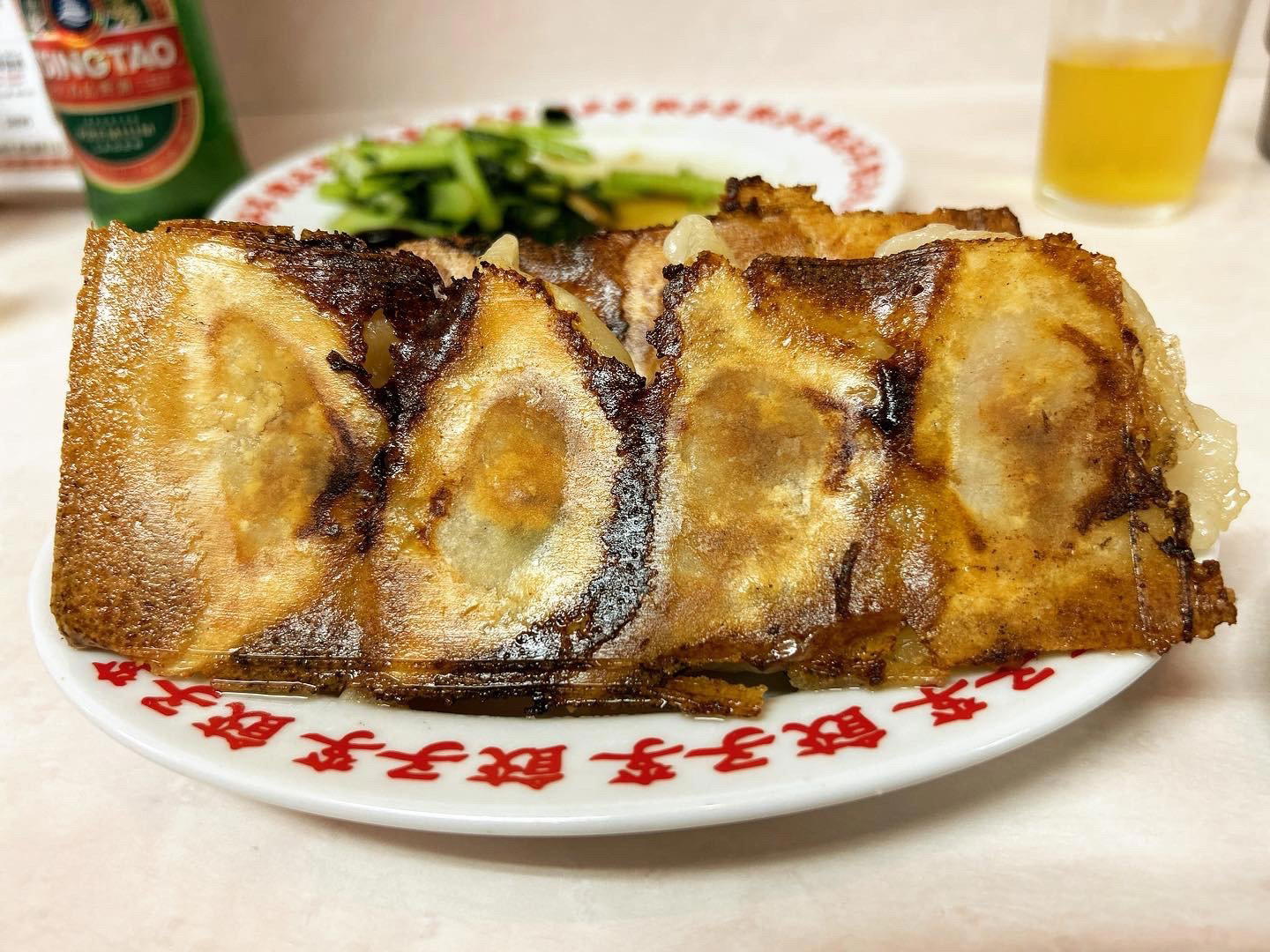
A good Fukuoka dumpling house is usually louder than polished: steam, quick table turns, clipped orders moving from table to kitchen. In Fukuoka, that energy matters. The city is compact enough for everyday lunches and evening detours, but local enough to keep casual Chinese cooking from becoming theatre. Gyoza Li fits that register, where room and menu ask for appetite first and reverence second.
Visitors often reduce Fukuoka to ramen, yatai, and seafood, but its everyday dining culture is broader. Chinese restaurants, dumpling counters, izakaya, and other specialist rooms share a practical urban pattern: speed, craft, and repeat use. For a wider read, Our full Fukuoka restaurants guide maps the city beyond one dish category, while other Fukuoka dining rooms show how specialist addresses shape daily eating habits.
Chinese roots, Fukuoka tempo, and gyoza as the anchor
Gyoza in Japan often arrives as a supporting act: a plate beside beer, noodles, or stir-fry. Here, the stronger reading is different. The restaurant is identified with Chinese and dumpling cooking, so the dumpling is not merely a snack borrowed by Japanese drinking culture, but a focused staple adapted to a Fukuoka rhythm.
The menu’s appeal rests on that simple frame. Gyoza Li is best read through the category it is publicly recognised in: Chinese and dumpling cooking at a casual price tier. That explains the appeal better than ornate praise. Dumpling quality depends on repetition, dough handling, filling balance, and timing; the pleasure is in a familiar format treated with enough care to justify a dedicated stop.
Recognition adds weight without ceremony. Gyoza Li was selected for Tabelog Hyakumeiten in 2026, with a listed Tabelog score of 3.67 and a price range of JPY 1,000 - JPY 1,999. For travellers used to Michelin-led hierarchies, the translation is useful: the signal is not luxury, but durable local confidence in a narrow speciality.
Where it sits in Fukuoka's dining hierarchy
Fukuoka’s premium dining image is often pulled upward by sushi counters and high-spend Japanese formats. Comparison venues such as 鮨 行天 and Sushi Gyoten occupy a different expectation set, built around reservation gravity, counter ritual, and access to Kyushu seafood. Teppanyaki Akatsuki and Chinese Sai KHAOS sit in a more elevated register. Gyoza Li works differently: it converts craft into frequency, not exclusivity.
That distinction matters when planning a serious Fukuoka eating itinerary. A city meal need not be expensive to be editorially significant. The stronger itinerary pairs high-precision counters with grounded specialist rooms, because that contrast shows how the city actually eats. A sushi dinner may express Fukuoka’s luxury seafood economy; a dumpling meal shows the value placed on consistency, filling food, and casual technical competence.
The format also explains why this address travels well. It is legible, direct, and built around a dish travellers can understand quickly while still rewarding attention. In Japan, that kind of casual institution can be as revealing as a formal counter: the room may be simple, but the repeat use tells its own story.
How to fold it into a Fukuoka trip
Fukuoka rewards diners who treat the city as more than a checklist of famous dishes. Gyoza Li is easy to place within a Fukuoka eating day, especially when the goal is to balance richer or more formal meals with something practical, filling, and focused.
The better move is to use this meal as a counterweight to formal bookings. It is not competing with more elaborate Chinese dining or sushi temples; it fills the slot where craft, speed, and price discipline matter. That makes it useful for lunch or a casual meal when higher-end counters would feel miscast.
Fukuoka’s broader travel fabric supports that sequencing. Dining can be paired with drinking, hotel, and experience planning through Our full Fukuoka bars guide, Our full Fukuoka hotels guide, Our full Fukuoka wineries guide, and Our full Fukuoka experiences guide. For travellers building a wider Japan food map, the contrast stretches further through other casual specialist restaurants across Japan and abroad, all pointing to the same lesson: serious casual dining often sits outside the luxury script.
The editorial case for Gyoza Li is simple: it treats a familiar dish with enough discipline to earn Tabelog recognition, while staying inside daily Fukuoka eating. For travellers who already understand the city’s ramen and sushi narratives, this is the dumpling stop that broadens the picture.
Frequently asked questions
How much does it cost to eat at Gyoza Li?
Pricing at Gyoza Li is listed as JPY 1,000 - JPY 1,999.
What are the opening hours for Gyoza Li?
Opening hours are not specified in the provided venue information.
What's Gyoza Li's location?
Fukuoka.
What's the defining dish or idea at Gyoza Li?
Gyoza Li treats dumplings as the anchor within a Chinese cooking format. The restaurant was recognised by Tabelog Hyakumeiten in 2026, with lunch listed in the JPY 1,000 - JPY 1,999 range.
Price Lens
Side-by-side context: comparable cuisine and price.
| Venue | Cuisine | Price | Awards | Notes |
|---|---|---|---|---|
| Gyoza LiThis venue (the venue you are viewing) | Traditional Chinese & Dumpling House | $10–20 | Tabelog 100 #79 | Not listed |
| HYDER | Halal Bangladeshi medicinal curry house | $10–20 | Tabelog 100 #47 | Chūō, Halal Bangladeshi medicinal curry house |
| ZAEKA | Halal Pakistani & Indian Curry House | $20–30 | Tabelog 100 #62 | Chūō, Halal Pakistani & Indian Curry House |
| Hountei | Hakata bite-sized gyoza & izakaya dishes | $20–30 | Tabelog 100 #58 | Hakata, Hakata bite-sized gyoza & izakaya dishes |
| Toho Yushusai Nuwara Eliya | Sri Lankan Curry & Tea | $10–20 | Tabelog 100 #99 | Chūō, Sri Lankan Curry & Tea |
| Onokoro Hanjou | Seafood-focused Japanese izakaya | $30–50 | Tabelog 100 #67 | Chūō, Seafood-focused Japanese izakaya |
Recognition history
Dated appearances from independent guides and award organizations, with the underlying list record or original source where available.
Tabelog 100 #79 · No. 79
Tabelog · Tabelog 100 - Chinese cuisine - WEST - 2026
Continue exploring
More in Fukuoka
Restaurants in Fukuoka
All restaurants in Fukuoka →

Details
- Lively
- Classic
- Well Known
- Casual Hangout
- Group Dining
- After Work
- Solo
- Family
- Standalone
- Beer Program
- A La Carte
- Family Style
- Beer
- Soft Drinks
Current opening hours
- Monday
- 11:30 AM–2:30 PM, 5–9:50 PM
- Tuesday
- Closed
- Wednesday
- 11:30 AM–2:30 PM, 5–9:50 PM
- Thursday
- 11:30 AM–2:30 PM, 5–9:50 PM
- Friday
- 11:30 AM–2:30 PM, 5–9:50 PM
- Saturday
- 11:30 AM–2:30 PM, 5–9:50 PM
- Sunday
- 11:30 AM–2:30 PM, 5–9:50 PM
Hours can change for holidays and private events. Hours as of .