Gut Obermühle Alex(z)ander's
Our verdict
Gut Obermühle Alex(z)ander's occupies a historic mill property in Kirchensittenbach, a village in Franconia's rural hinterland southeast of Nuremberg. The setting places it firmly within Germany's tradition of destination dining in converted agricultural estates, where proximity to farmland and forest shapes what arrives on the plate. For the full picture of what to expect in this corner of Bavaria, see our full Kirchensittenbach restaurants guide.

Pearl is the En Primeur Club membership app, where members save venues, book tables and use the concierge.
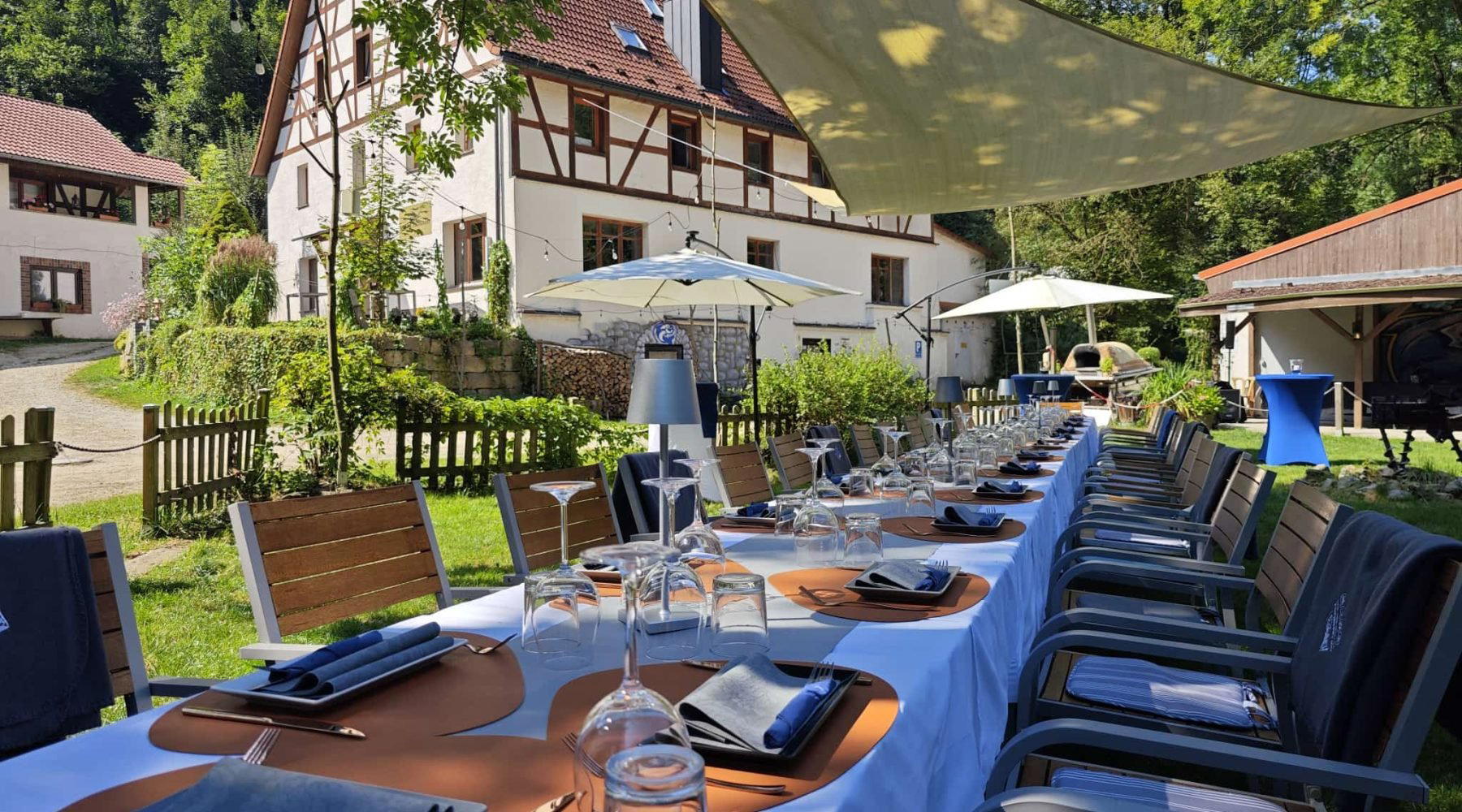
Where Franconian Farmland Meets the Plate
Germany's most compelling destination restaurants tend not to sit in cities. They occupy converted farmhouses, forest lodges, and old mill buildings where the supply chain from field to kitchen is a matter of geography rather than philosophy. Gut Obermühle Alex(z)ander's, at Obermühle 1 in Kirchensittenbach, belongs to that tradition. The address alone signals what to expect: a working estate in Franconia's agricultural belt, roughly midway between Nuremberg and the Fränkische Schweiz, where the sourcing argument makes itself without needing a chalkboard to explain it.
The mill property format is significant context. Across German-speaking Europe, the Gutshof restaurant model, anchored to an estate with its own land or direct farmer relationships, has produced some of the country's most interesting cooking precisely because geography constrains the menu in productive ways. Chefs who work within what the surrounding region provides in a given season tend to develop a more coherent culinary identity than those assembling ingredients from across the continent. That constraint, in Franconia, means Spessart game, Altmühl valley fish, regional grain, and the particular vegetable character of Bavaria's northern agricultural corridor.
The Ingredient Argument in Franconian Cooking
Franconia occupies an awkward position in Germany's fine dining geography. It lacks the marquee recognition of Baden's Black Forest corridor, where Schwarzwaldstube in Baiersbronn draws international visitors, or the Rhine-Moselle axis that produced destinations like Schanz in Piesport and Waldhotel Sonnora in Dreis. That relative obscurity, from a tourism standpoint, has preserved something useful: a regional ingredient culture that has not been entirely absorbed into the homogenized luxury-product sourcing that characterizes top-tier urban restaurants.
The area around Kirchensittenbach sits within reach of some of the most distinctive agricultural production in southern Germany. The Fränkische Schweiz to the east provides foraged materials. The Pegnitz valley runs nearby. The broader Middle Franconian plateau supplies grain, root vegetables, and dairy from small producers who rarely see their names on menus in Frankfurt or Munich. An estate restaurant in this context has genuine sourcing options that a city restaurant would have to manufacture through supply agreements and branding.
This is the competitive logic that separates rural destination dining from urban fine dining at the same price point. Properties like Gut Obermühle Alex(z)ander's do not compete on the same terms as a Michelin-starred address in a major city, where sourcing is a choice among many. They compete on the specificity of place, on what the land around them provides that cannot be replicated elsewhere. For comparison, consider what different sourcing philosophies produce at the city end of the spectrum: Aqua in Wolfsburg and JAN in Munich operate in urban contexts where ingredient provenance is curated rather than determined by geography.
The Setting and What It Produces
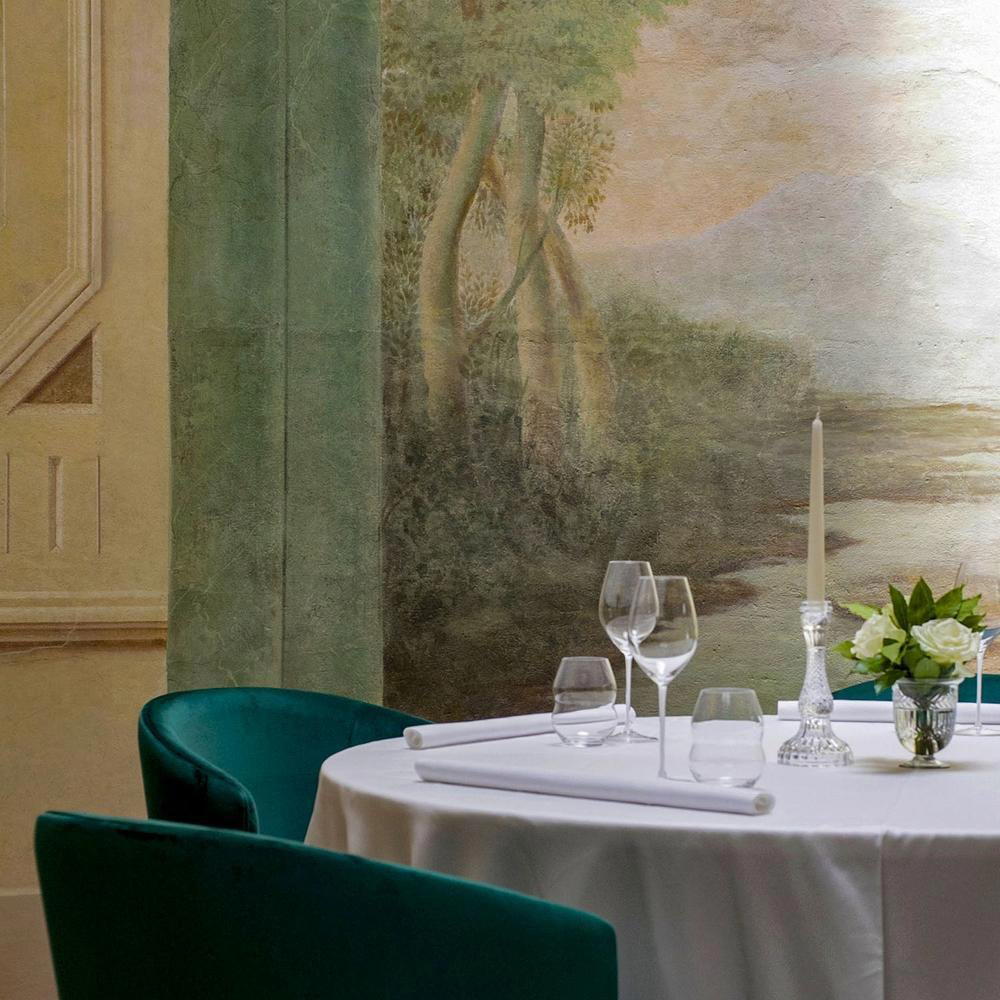
Mill conversions present a particular kind of dining atmosphere: stone walls, running water nearby, the structural weight of a building that predates the restaurant by centuries. In Franconia, where half-timbered agricultural buildings survive in significant numbers, this kind of setting is not unusual, but it remains effective. The physical environment at an address like Obermühle 1 frames the meal before any food arrives. Guests arriving from Nuremberg, roughly 30 kilometres to the southwest, move from a city context to a rural one in under half an hour, which is a transition that matters for how a meal is received.
That shift in context is not incidental. Germany's estate and rural destination restaurants have consistently attracted a specific kind of diner: someone willing to make the journey, which filters for commitment and tends to produce a more engaged room. The contrast with urban restaurants, where the convenience of location does some of the work, is significant. Rural Franconian dining requires intention, and that shapes the atmosphere in ways that a converted industrial space in a city cannot replicate.
For those planning a broader tour of Germany's regional fine dining circuit, the geographic logic holds: pair a Kirchensittenbach visit with AURA by Alexander Herrmann and Tobias Bätz in Wirsberg, which operates in a comparable Franconian register, or extend west toward Vendôme in Bergisch Gladbach and Victor's Fine Dining by Christian Bau in Perl for a wider read on how Germany's non-urban fine dining scene is structured.
Kirchensittenbach in the German Destination Dining Map
Germany's destination dining scene has historically concentrated in a few corridors: Baden-Württemberg in the southwest, the Rhine-Moselle in the west, and the Bavarian south. Franconia has produced serious cooking, but fewer internationally recognised addresses than its agricultural richness might suggest. That gap is partly a function of marketing and partly a function of the region's resistance to positioning itself as a luxury tourism product.
That resistance has consequences for visibility. Addresses like Gut Obermühle Alex(z)ander's tend to be found through local networks and regional food media rather than through international award cycles. The contrast with more prominently awarded German restaurants, places like Restaurant Haerlin in Hamburg or AUGUST in Augsburg, is partly about cuisine and format, and partly about the infrastructure of recognition. Franconian addresses that earn attention tend to do so through the specificity of their cooking rather than through the kind of institutional backing that supports urban flagship restaurants.
For a different register altogether, Germany's creative fringe is well represented by addresses like CODA Dessert Dining in Berlin, ATAMA by Martin Stopp in Sankt Ingbert, and Bagatelle in Trier, each operating in a different regional context with different sourcing logics. For a global reference point on what ingredient-led precision looks like at the highest tier, Le Bernardin in New York City and Atomix in New York City demonstrate how sourcing philosophy and culinary identity can be inseparable at the top of the market. ES:SENZ in Grassau and ammolite in Rust round out the southern German picture with distinctive regional approaches.
Planning a Visit
Kirchensittenbach sits in rural Middle Franconia, most accessibly reached by car from Nuremberg. The village is small, the property is at Obermühle 1, and arrival by public transport would require planning from Nuremberg's main station toward the Pegnitz valley direction. For practical booking details including current hours and reservation method, contacting the venue directly or consulting our full Kirchensittenbach restaurants guide Given the rural location and the estate format, advance planning is advisable regardless of season.
Frequently asked questions
Would Gut Obermühle Alex(z)ander's be comfortable with kids?
The property at Obermühle 1 in Kirchensittenbach is a rural mill conversion, which typically suits families better than a tightly formatted urban tasting counter. That said, the destination nature of the restaurant, reached by car from Nuremberg, with no nearby distractions, means it works best with children who are settled at a table for an extended meal.
What should I expect atmosphere-wise at Gut Obermühle Alex(z)ander's?
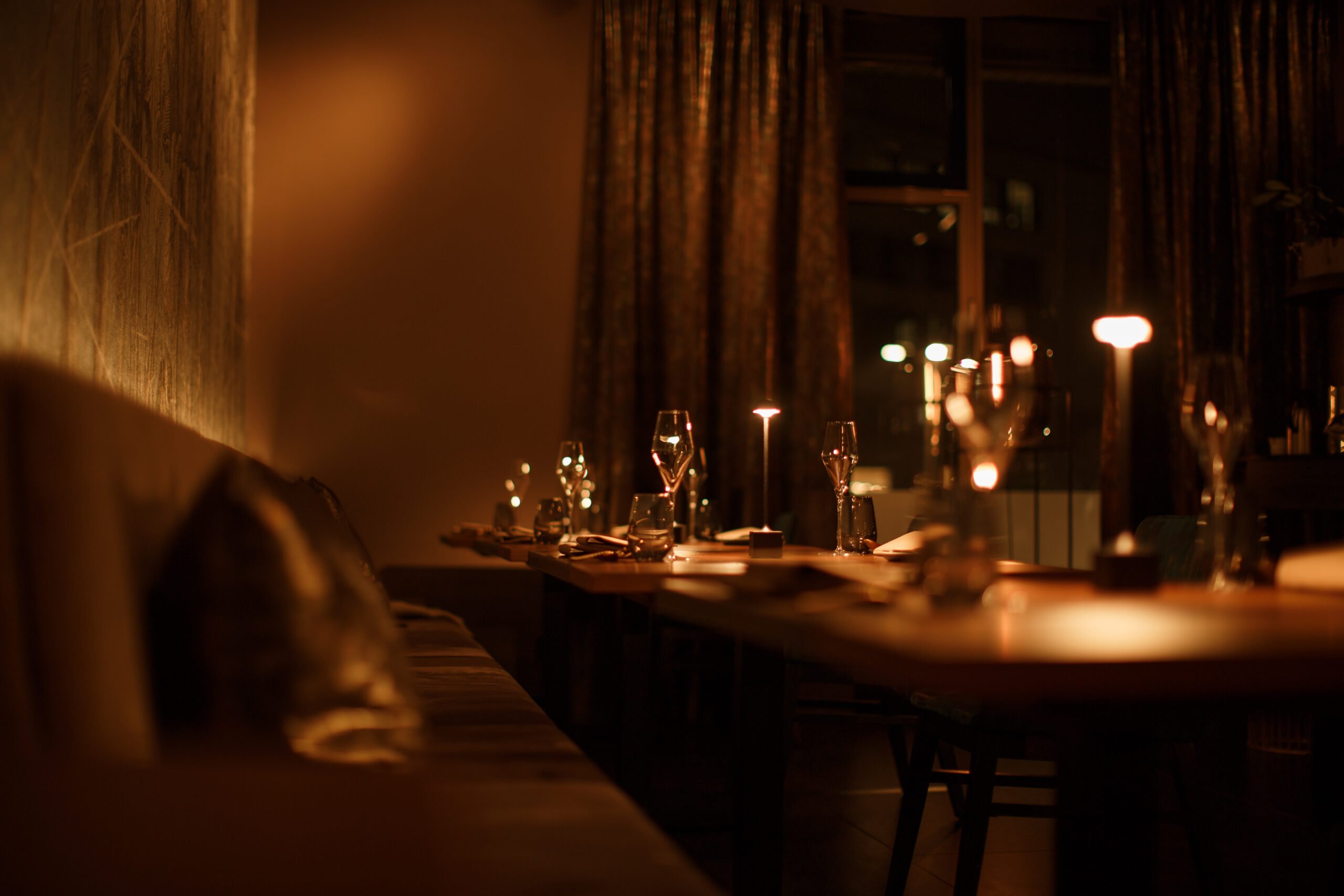
Mill buildings carry a particular physical presence: stone construction, the sense of running water nearby, and proportions that predate contemporary restaurant design. In a village as small as Kirchensittenbach, this is a destination unto itself rather than one stop on a dining strip. The atmosphere is shaped more by architecture and rural surroundings than by room styling or ambient programming.
Is Gut Obermühle Alex(z)ander's a good option for a special occasion dinner near Nuremberg?
For occasions that warrant a deliberate drive into the countryside, Kirchensittenbach and the Gut Obermühle setting provide a clear separation from the city. Rural Franconia sits within reach of Nuremberg by car, and a converted mill property at Obermühle 1 carries the kind of architectural specificity that a hotel restaurant or urban venue cannot replicate. Franconian cooking, historically grounded in regional produce and brewing culture, gives the meal a geographic identity that generic occasion dining in the city does not.
What do regulars order at Gut Obermühle Alex(z)ander's?
Franconian restaurant cooking at this level typically draws on regional produce, game, freshwater fish, root vegetables, and local grains, though the exact format and dishes here would need to be confirmed with the restaurant directly.
What part of town is Gut Obermühle Alex(z)ander's in?
Gut Obermühle Alex(z)ander's is located at Obermühle 1, 91241 Kirchensittenbach, Germany, Kirchensittenbach.
How hard is it to get a table at Gut Obermühle Alex(z)ander's?
Destination restaurants in rural Franconia, particularly those operating in converted historic properties, often have limited covers, which can make reservations competitive on weekends. Contacting the restaurant well ahead of your intended visit is advisable.
What's the standout thing about Gut Obermühle Alex(z)ander's?
The location is the argument: a historic mill property in Kirchensittenbach, in rural Middle Franconia, reached primarily by car from Nuremberg. Germany's most compelling destination restaurants have consistently occupied converted agricultural or industrial buildings outside major cities, and Gut Obermühle Alex(z)ander's fits that pattern in a region that receives less national dining attention than Baden-Württemberg or the Rhineland.
A Quick Peer Check
| Venue | Cuisine | Price | Awards | Notes |
|---|---|---|---|---|
| Gut Obermühle Alex(z)ander'sThis venue (the venue you are viewing) | Elevated Franconian Fusion | Not listed | Not listed | Not listed |
| Aqua | Contemporary German, Italian/Japanese, Creative | Not listed | Michelin 3 Star | Not listed |
| Schwarzwaldstube | Modern French Fine Dining | $150–200 | 3 Michelin Stars · World's 50 Best #47 | French, Classic French |
| CODA Dessert Dining | Dessert-Inspired Fine Dining | $200–300 | 2 Michelin Stars · World's 50 Best #79 | Creative |
| Vendôme | Modern German Haute Cuisine | $200–300 | 2 Michelin Stars · World's 50 Best #47 | Modern European, Creative |
| Tantris | Modern French Fine Dining | $300–500 | 2 Michelin Stars · World's 50 Best #73 | Modern French, French Contemporary |
Continue exploring
More in Kirchensittenbach
Restaurants in Kirchensittenbach
All restaurants in Kirchensittenbach →
Bars in Kirchensittenbach
Browse all →
Hotels in Kirchensittenbach
Browse all →
Details
- Rustic
- Elegant
- Cozy
- Special Occasion
- Celebration
- Historic Building
- Waterfront
- Waterfront
- A La Carte
Stylish and beautiful ambiance with a sophisticated yet rustic mill atmosphere, praised for its high-quality and impressive setting.