Gold on the Table: Dining at the Upper Register of Macau Chinese Fine Dining The approach to The Eight, on the second floor of a Lisbon Avenue address in Se, sets expectations immediately. Se is the older district of Macau, where Portuguese...
Pearl is the En Primeur Club membership app — saves, bookings, and concierge access live there. Same editors, same standards.
- Address
- 2/F, Avenida de Lisboa
- Directions
- Get directions
 Saves & bookings on Pearl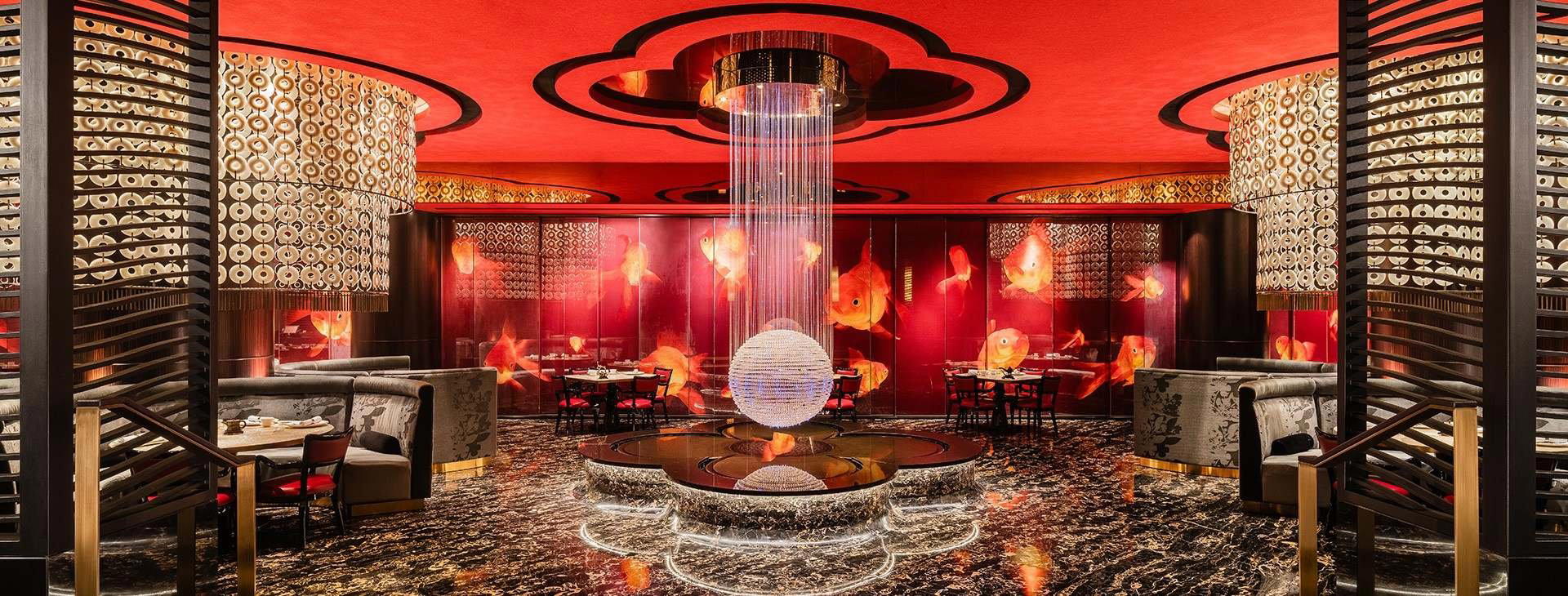
Gold on the Table: Dining at the Upper Register of Macau Chinese Fine Dining
The Eight (8餐廳) is a modern Cantonese fine-dining restaurant in Se, Macau, with a price tier of about US$115 per person. The approach to The Eight, on the second floor of a Lisbon Avenue address in Se, sets expectations immediately. Se is the older district of Macau, where Portuguese colonial architecture runs alongside temple courtyards and the geography of the city's original settlement. This is not the Cotai Strip, where resort-scale ambition has largely absorbed the region's dining conversation. What happens in Se carries a different weight: quieter, more deliberate, rooted in a neighbourhood that predates the casino economy by centuries.
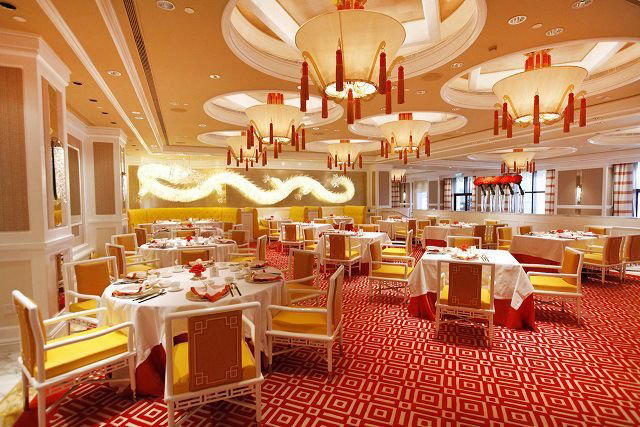
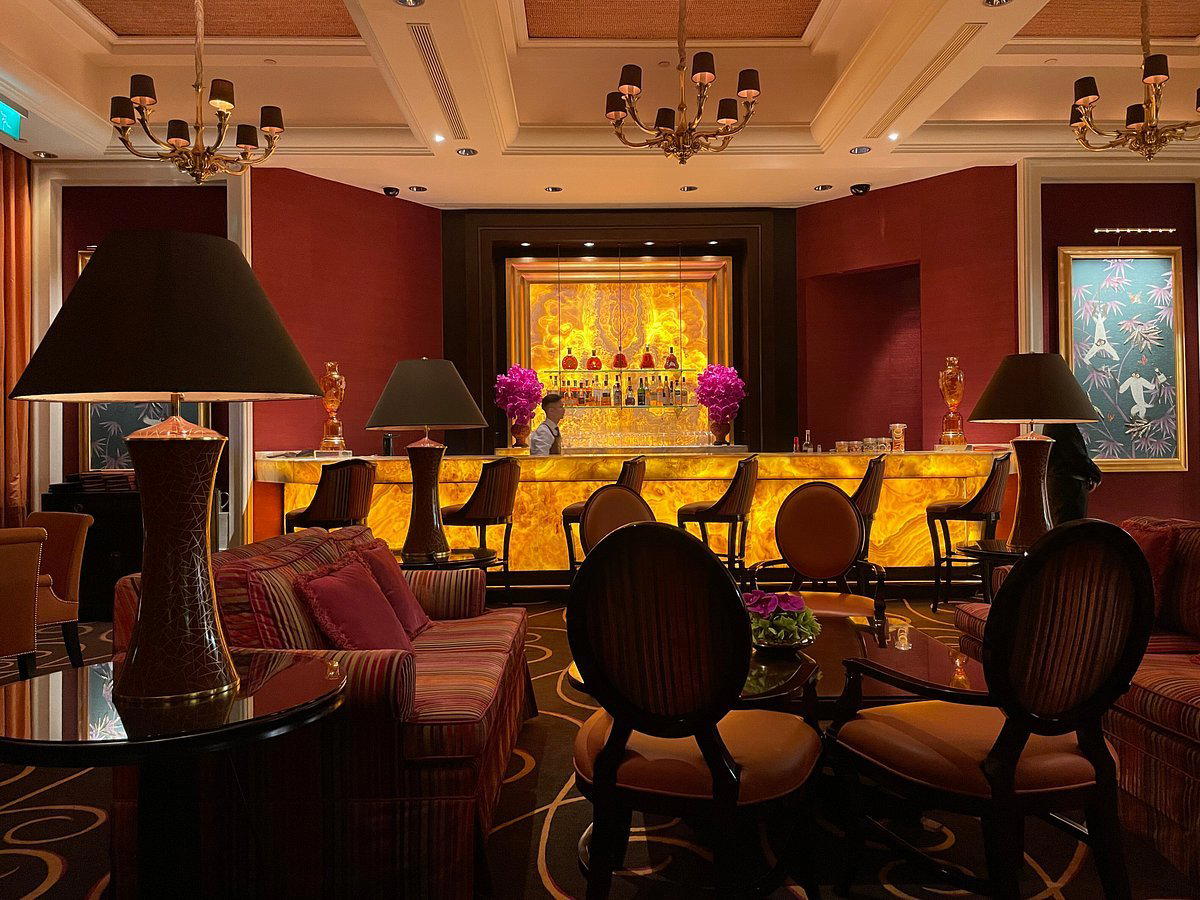
The dining room at The Eight is designed around the number's significance in Chinese culture, where eight signals prosperity and completeness. The space reads as ceremonial without being stiff, calibrated for the kind of occasion dining that Cantonese and Chinese fine-dining rooms in this part of the world do particularly well. The physical environment communicates that the meal ahead will be structured rather than spontaneous, and it honours that promise.
Where the Food Comes From, and Why It Matters
Chinese haute cuisine at this tier operates within a sourcing logic that differs substantially from its European counterparts. The premium ingredients driving Cantonese fine dining are not primarily seasonal in the Western agricultural sense. Instead, they reflect a global procurement network for dried and preserved goods, wild-caught seafood, and regionally specific produce with centuries of documented culinary value. At restaurants operating at this level in Macau and Hong Kong, the sourcing of abalone, sea cucumber, shark fin alternatives, Iberian-influenced cured products, and high-grade Yunnan or Japanese ingredients is where the kitchen's commitment is most legible.
Macau's position as a former Portuguese colony gives its fine dining a particular geographic advantage. The city sits at a trading intersection between Chinese, Southeast Asian, and European supply chains that few dining cities can match. Ingredients that would require complex import arrangements elsewhere move through Macau with relative ease, and the region's proximity to the Pearl River Delta means access to particularly prized freshwater and coastal seafood available anywhere in southern China. This matters at a restaurant like The Eight, where the credibility of the kitchen rests substantially on the quality of what arrives before any cooking begins.
The broader pattern visible in Chinese fine dining across Macau and Hong Kong is that sourcing provenance has become as prominent a marker of positioning as technique. At venues like Amber in Hong Kong or 8 1/2 Otto e Mezzo Bombana, ingredient origin is central to the editorial identity of the menu. The Eight operates in this same register, where what is sourced and from where functions as the first statement of intention.
The Competitive Position: Macau's Fine Dining Tier
Macau has a concentration of high-end restaurants that would be notable even against cities with far larger populations, a direct consequence of the resort economy that funds the hospitality infrastructure. The Eight occupies a position within that tier that is distinct from the large-footprint resort restaurants that cluster around gaming floors. It reads as a dedicated Chinese fine-dining room rather than an amenity within a broader entertainment complex, which places it in a smaller, more committed comparable set.
Globally, Cantonese-tradition fine dining at this level competes for the same well-travelled guest as rooms like Le Bernardin in New York City or Alain Ducasse's Louis XV in Monte Carlo: diners who treat format and sourcing rigor as prerequisites rather than differentiators. What distinguishes the Macau context is the hybridised cultural identity of the city itself. There is nowhere else where Portuguese tile work, Buddhist temple lanes, and the highest density of Michelin-starred restaurants in the world exist within the same few square kilometres. The Eight is part of that compressed, layered dining reality.
For comparative context: in San Francisco, restaurants like Benu and Lazy Bear have built serious reputations around technique and sourcing discipline. In Paris, Arpège and Alléno Paris au Pavillon Ledoyen anchor ingredient-forward fine dining at similar price points. The Eight belongs to a global cohort where the sourcing question is non-negotiable, even though the culinary tradition is categorically different.
Format, Occasion, and What to Expect
Chinese fine dining at this level in Macau and Hong Kong tends toward banquet-format service, where dishes arrive in a sequenced procession that mirrors classical Chinese meal structure: cold appetisers, soups, whole or portioned seafood preparations, braised courses, rice or noodle dishes, and desserts. The pacing is different from European tasting-menu conventions, and portions are sized for sharing rather than individual plating. First-time visitors to this format sometimes underestimate how many dishes the meal will involve; the structure is cumulative by design.
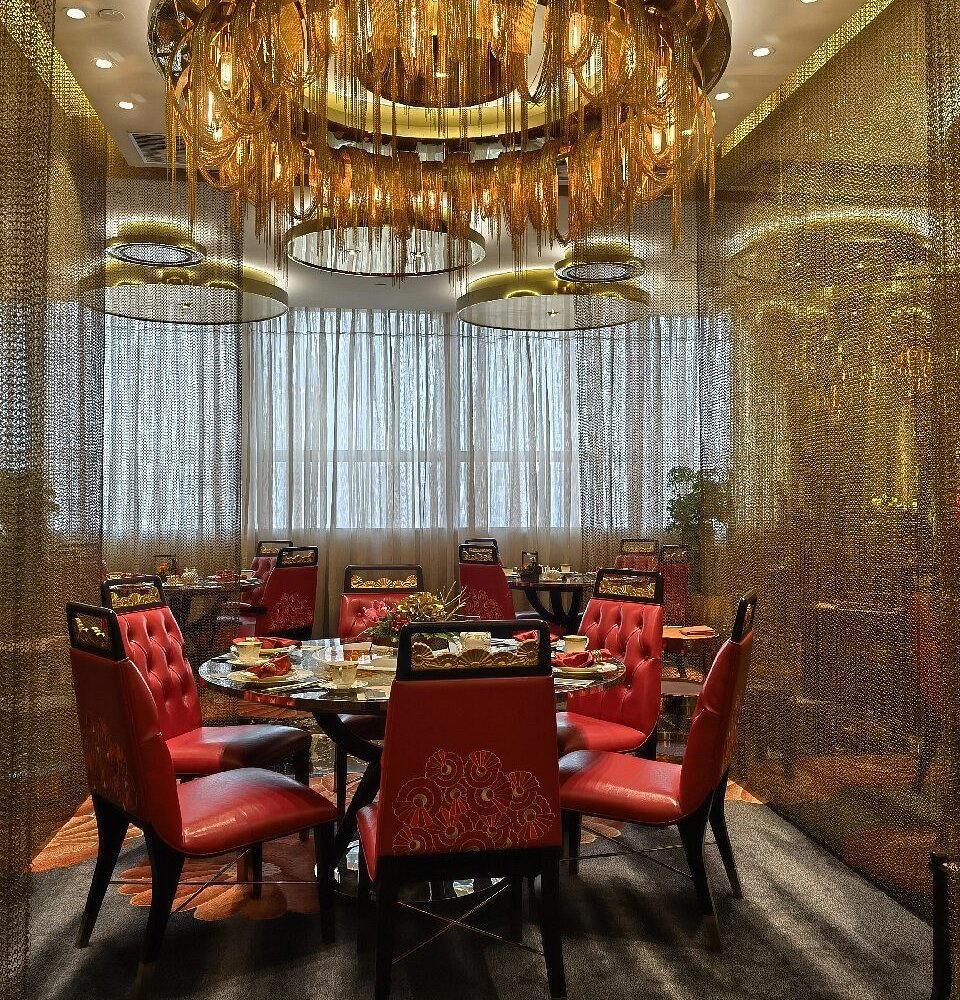
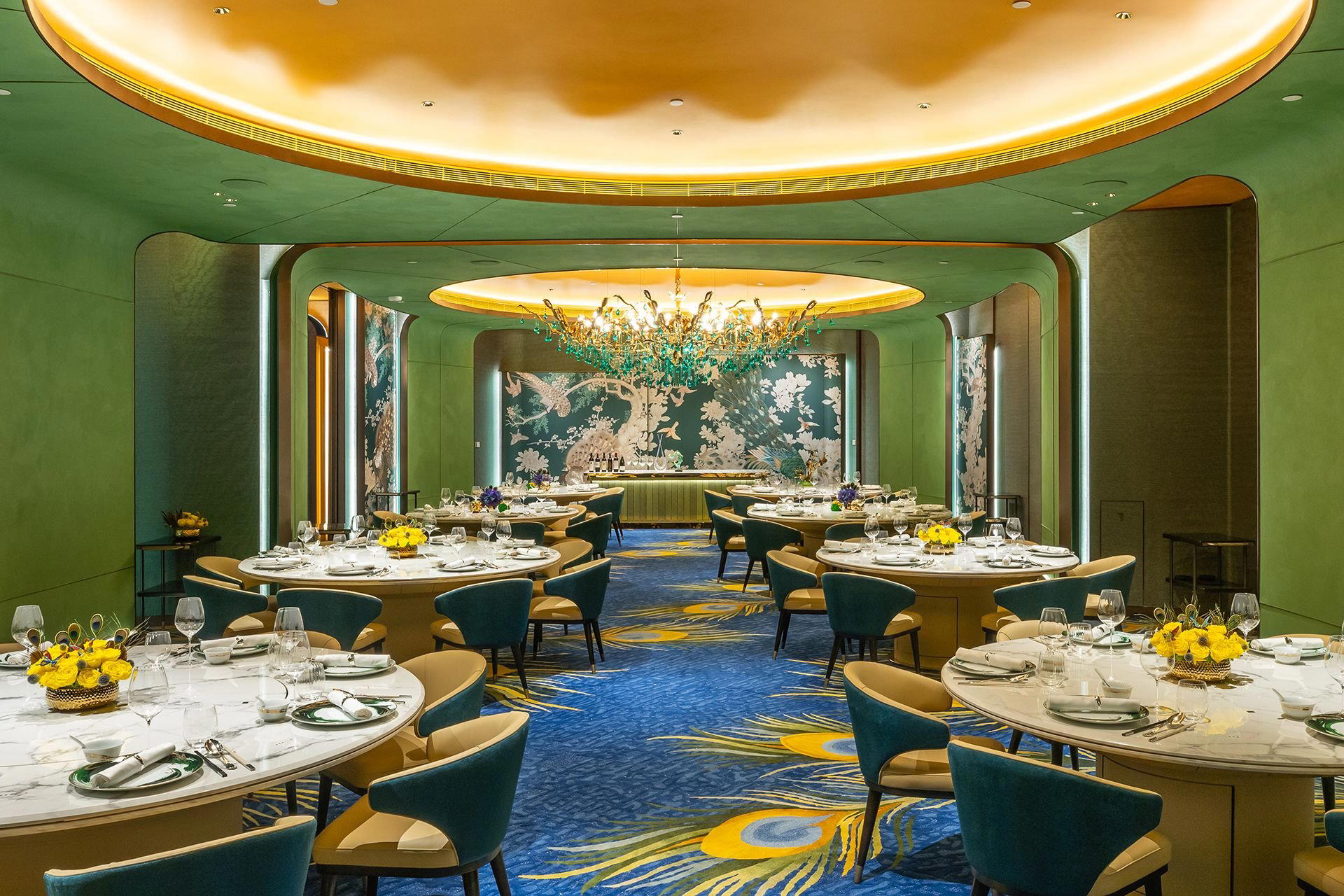
The dining room itself, shaped around that auspicious numeral, divides into configurations suited for groups and private dining as well as smaller parties. In Macau's fine-dining context, private rooms are not an afterthought: they are a central part of the proposition, reflecting Chinese dining culture's preference for semi-enclosed spaces where conversation and ceremony can coexist. Booking well ahead of major Chinese holidays, Golden Week periods, and Lunar New Year is standard practice across this tier of Macau dining.
Planning Your Visit
The Eight sits at 2/F, Avenida de Lisboa in Se, Macau. Reservations are advisable across all seasons, with lead times extending considerably during major Chinese public holidays and the Macau Grand Prix weekend in November. Dress expectations at this level of Chinese fine dining in Macau run toward smart casual.
For the wider context of how premium dining in this region compares, the structural approaches at venues like Alinea in Chicago, Atomix in New York City, Atelier Crenn in San Francisco, or Arzak in San Sebastián share sourcing seriousness with what Chinese haute dining rooms in Macau aspire to, even as the culinary traditions diverge entirely. Other fine-dining benchmarks internationally, including Aponiente, Aqua in Wolfsburg, Azurmendi, Atelier Moessmer Norbert Niederkofler, and Emeril's in New Orleans, each illustrate how sourcing geography shapes a kitchen's identity. The Eight, in its Macau context, operates from one of the region's most distinctive sourcing geographies.
Comparable Venues Nearby
Comparable venues nearby, for context on price, style, and recognition.
| Venue | Cuisine | Price | Notes |
|---|---|---|---|
| The Eight (8餐廳)This venue — the venue you are viewing | Modern Cantonese Fine Dining | $$$$ | Not listed |
| Chef Tam's Seasons | Seasonal Cantonese Fine Dining | $$$$ | Cotai |
| Yi | Seasonal Modern Chinese Tasting Menu | $$$$ | Cotai |
| Five Foot Road | Sichuan Fine Dining | $$$$ | Cotai |
| The Huaiyang Garden | Huaiyang Fine Dining | $$$ | Cotai |
| 58 Degree Grill | Modern woodfire grill and steakhouse | $$$$ | Cotai |
Continue exploring
More in Se
Restaurants in Se
Browse all →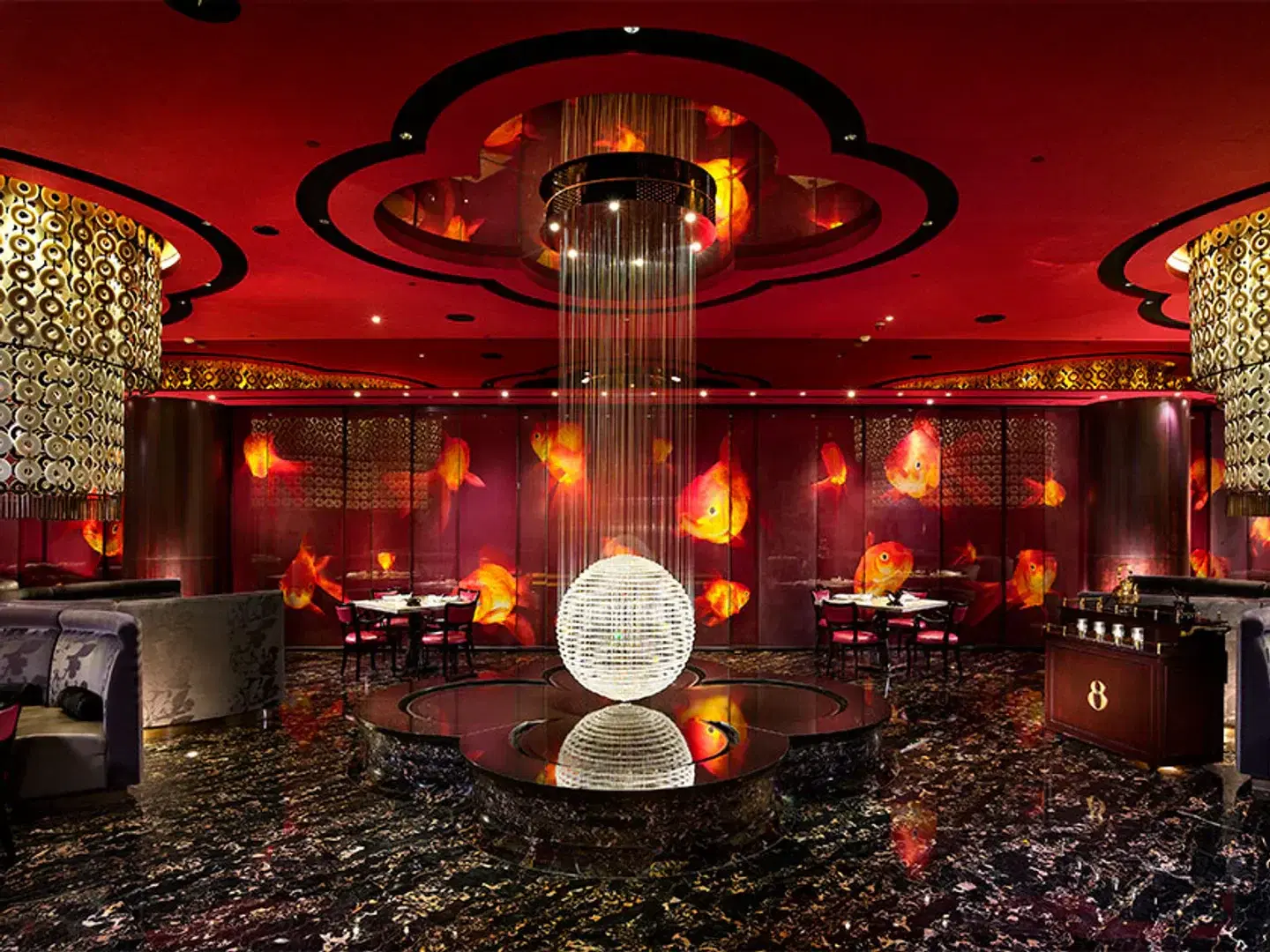
At a Glance
- Elegant
- Sophisticated
- Ornate
- Special Occasion
- Business Dinner
- Celebration
- Hotel Restaurant
- Extensive Wine List
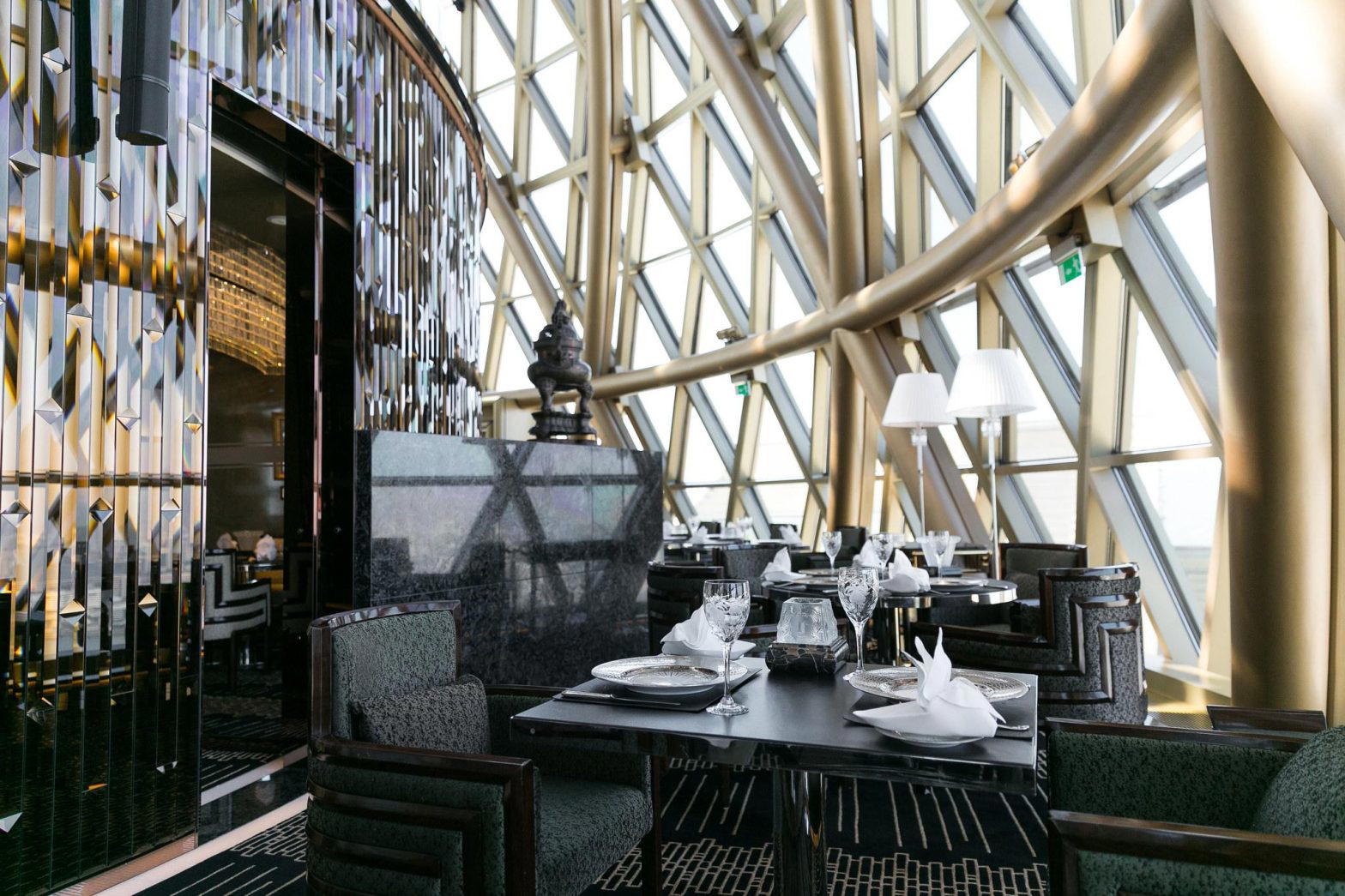
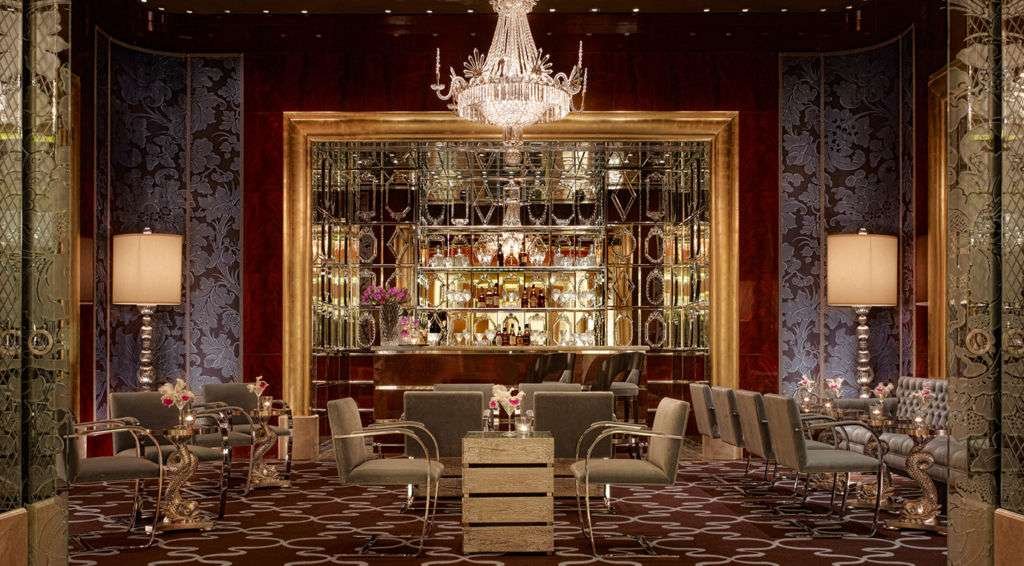
Lavish interior with goldfish motifs, figure-eight symbolism for good fortune, sophisticated black and red palette, and relaxing water curtains.