Golden Unicorn

Our verdict
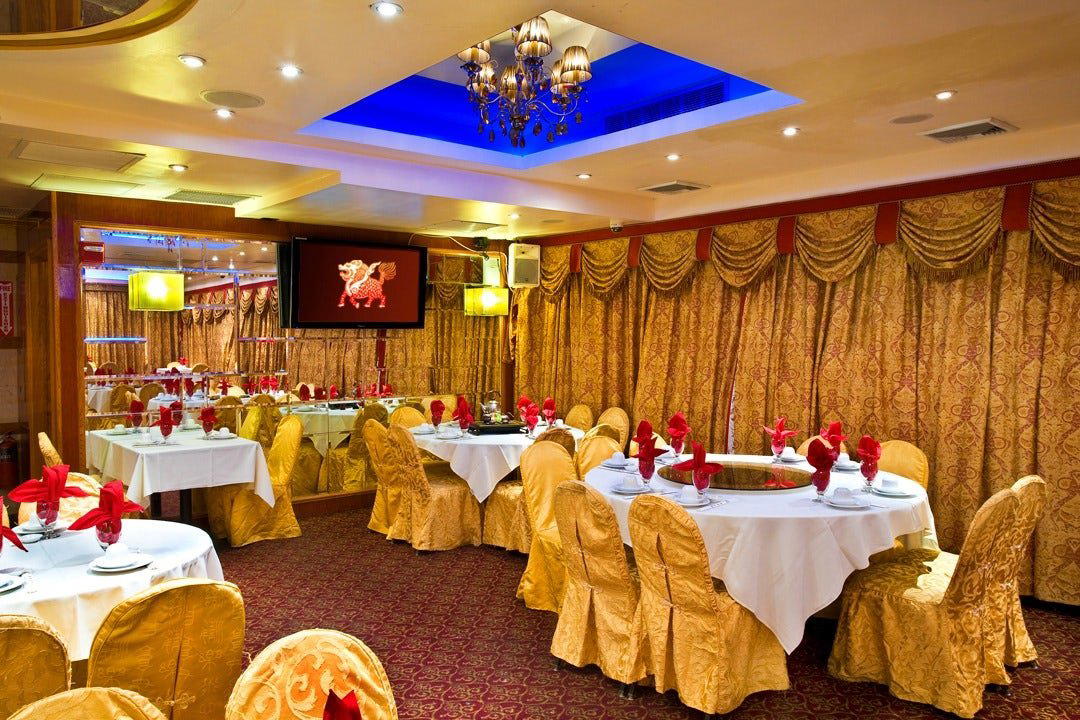
Golden Unicorn on East Broadway has anchored Chinatown's dim sum circuit for decades, earning consecutive Opinionated About Dining recognition from a Recommended listing in 2023 to a ranked #412 placement in 2025. The multilevel dining room runs on the traditional trolley-cart format, a format increasingly rare in Manhattan, drawing families, regulars, and downtown visitors across a seven-day schedule that starts at 9am on weekends.

Pearl is the En Primeur Club membership app, where members save venues, book tables and use the concierge.
The menu
What to order
- Shrimp dumplings
- BBQ pork buns
- Shu mai
Dim Sum, Trolley Carts, and the Calculus of a Disappearing Format
Manhattan's Chinatown has always operated at a different register from the city's fine-dining tier. Where restaurants like Alinea in Chicago or The French Laundry in Napa have built reputations on controlled, intimate formats, the great dim sum houses of East Broadway and Mott Street run on controlled chaos: multilevel rooms, overlapping conversations in Cantonese and Mandarin, and the rattle of metal trolleys pushed by staff who've memorized the floor better than any front-of-house software could. Golden Unicorn at 18 East Broadway belongs firmly to that tradition, and its sustained recognition from Opinionated About Dining, moving from a Recommended listing in 2023 to a ranked placement at #527 in 2024 and climbing to #412 in 2025, confirms that the tradition still commands critical respect when it's executed at a consistent level.
That upward trajectory within OAD's casual North America rankings matters for context. The list skews toward quality-to-value ratios and consistency rather than novelty, which means a multi-year climb within it signals kitchen discipline rather than a single good season. In a Chinatown where turnover is high and generational restaurant families routinely navigate staff succession and supply-chain pressure, durability of that kind is not incidental.
The Trolley Cart as a Statement About Food and Waste
The trolley-cart service format, where staff circulate through the room with bamboo steamers and platters, and diners select dishes as they pass, carries an underappreciated logic from a sustainability standpoint. At the surface, it looks like abundance: dozens of items moving through a room simultaneously. But the format, when managed well, produces less food waste per cover than a la carte service, because kitchen output tracks real-time demand rather than projections from pre-ordered tickets. Dishes circulate, sell, and are replenished in batches calibrated by how the room is eating, not by a static menu commitment made hours in advance.
This is distinct from the approach taken at more internationally profiled Chinese restaurants. Mister Jiu's in San Francisco operates as a refined, seated tasting environment where Chinese-American culinary identity is examined through a contemporary lens. Restaurant Tim Raue in Berlin uses Chinese flavor architecture within a fine-dining framework oriented toward European sourcing and technique. Golden Unicorn does neither. It sits inside a lineage of Cantonese banquet and dim sum service that has its own internal logic, a logic that has fed communities efficiently and with relatively low waste for generations, long before sustainability became a restaurant marketing category.
The sourcing patterns in a high-volume Chinatown kitchen also differ structurally from those of destination tasting menus. East Broadway restaurants have historically drawn from wholesale networks in the neighborhood itself, seafood from suppliers on Canal Street, produce from the Manhattan Bridge corridor, reducing the transport footprint that longer supply chains accumulate. This isn't a formal certification or a stated program; it's the operational inheritance of a neighborhood that built its food economy on proximity and density.
Chinatown's dim sum houses form a coherent competitive tier, and Golden Unicorn occupies a position within it that OAD's ranking data helps clarify. Compared to the street-level, counter-format Cantonese operations on Mott Street, like Big Wong, which operates as a roast-meat-and-congee specialist, Golden Unicorn runs a larger, more formally organized dim sum operation with a multilevel room that accommodates the kind of group dining that defines weekend morning Chinatown. It is not the same category as Asian Jewel Seafood Restaurant, which leans into live-seafood Cantonese banquet service, or Chongqing Lao Zao, which represents the Sichuan-focused regional Chinese wave that has expanded Chinatown's flavor vocabulary over the past decade.
Within the dim sum sub-tier, Blue Willow and Alley 41 represent more recent entries that have attracted younger downtown regulars with updated room aesthetics and tighter, more curated dim sum selections. Golden Unicorn's positioning is more traditional: it maintains the full-scale trolley format rather than shifting to the order-sheet system that many dim sum houses adopted during and after the pandemic years, partly to reduce contact and partly to tighten waste control. That the trolley format persists here is both a marker of the restaurant's identity and a logistical commitment that distinguishes it from competitors who moved to order-pad service.
For a different reference point on where ambitious Chinese cooking sits in the American restaurant conversation, Mister Jiu's and places like Lazy Bear in San Francisco or Providence in Los Angeles are in a completely different peer bracket, destination tasting menus with reservation lead times measured in months. Golden Unicorn is not competing in that space. Its OAD casual ranking places it alongside serious neighborhood restaurants evaluated on consistency, value, and community function rather than culinary ambition in the tasting-menu sense.
Reading the Room: What the Operating Hours Signal
The weekly schedule runs Monday through Thursday from 10am to 10pm, extending to 11pm on Fridays and Saturdays, with weekend mornings beginning at 9am. That 9am Saturday and Sunday open is specifically calibrated to the peak demand window for dim sum in Chinese communities, the post-church, extended-family breakfast-into-lunch occasion that has defined weekend morning Chinatown for decades. The extended Friday and Saturday evening hours, conversely, reflect a dinner trade that draws from beyond the immediate neighborhood, including downtown diners looking for the kind of Cantonese banquet-format meal that the neighborhood's large-table rooms do better than anywhere else in Manhattan.
Planning Your Visit
Address: 18 East Broadway, New York, NY 10002, in the heart of Chinatown. Hours: Monday to Thursday 10am–10pm; Friday 10am–11pm; Saturday 9am–11pm; Sunday 9am–10pm. Budget: Price range data is not published; dim sum format meals at this tier in Chinatown typically run at the lower end of the Manhattan casual dining scale, with per-person costs well below the $$$$ bracket occupied by comparison venues like Emeril's in New Orleans or Alinea. Booking: No booking method is listed in available data; large groups should call ahead, particularly for weekend morning service. Recognition: Opinionated About Dining Casual North America, Ranked #412 (2025).
For broader planning across the city, see our full New York City restaurants guide, our full New York City hotels guide, our full New York City bars guide, our full New York City wineries guide, and our full New York City experiences guide.
Frequently asked questions
What are Golden Unicorn's hours?
Hours at Golden Unicorn: Hours: Monday 10 am–10 pm Tuesday 10 am–10 pm Wednesday 10 am–10 pm Thursday 10 am–10 pm Friday 10 am–11 pm Saturday 9 am–11 pm Sunday 9 am–10 pm.
Comparison Snapshot
| Venue | Cuisine | Price | Awards | Notes |
|---|---|---|---|---|
| Golden UnicornThis venue (the venue you are viewing) | Cantonese Dim Sum | $30–50 | Not listed | Not listed |
| Le Bernardin | French Seafood Fine Dining | $300–500 | 3 Michelin Stars · World's 50 Best #13 | French, Seafood |
| Atomix | Modern Korean Tasting Menu | $300–500 | 2 Michelin Stars · World's 50 Best #7 | Modern Korean, Korean |
| Masa | Seasonal Hokkaido Tempura Omakase | $150–200 | Tabelog 100 #34 | Sushi, Japanese |
| Per Se | French Fine Dining Tasting Menu | $300–500 | 3 Michelin Stars · World's 50 Best #40 | French, Contemporary |
| Eleven Madison Park | Contemporary Plant-Based Fine Dining | $300–500 | 3 Michelin Stars · World's 50 Best #4 | French, Vegan |
Recognition history
Dated appearances from independent guides and award organizations, with the underlying list record or original source where available.
Opinionated About Dining Casual in North America Recommended
Opinionated About Dining
Full recognition history (4 entries)
Opinionated About Dining Casual in North America Ranked #412
Opinionated About Dining
Opinionated About Dining Casual in North America Ranked #527
Opinionated About Dining
Opinionated About Dining Casual in North America Recommended
Opinionated About Dining
Continue exploring
More in New York City
More from Chef Various
Browse all →
Restaurants in New York City
All restaurants in New York City →
Bars in New York City
All bars in New York City →





Details
- Lively
- Classic
- Group Dining
- Family
- Casual Hangout
- Brunch
- Open Kitchen
- A La Carte
- Small Plates
- Vegetarian Friendly
Current opening hours
- Monday
- 10 AM–10 PM
- Tuesday
- 10 AM–10 PM
- Wednesday
- 10 AM–10 PM
- Thursday
- 10 AM–10 PM
- Friday
- 10 AM–11 PM
- Saturday
- 9 AM–11 PM
- Sunday
- 9 AM–10 PM
Hours can change for holidays and private events. Hours as of .
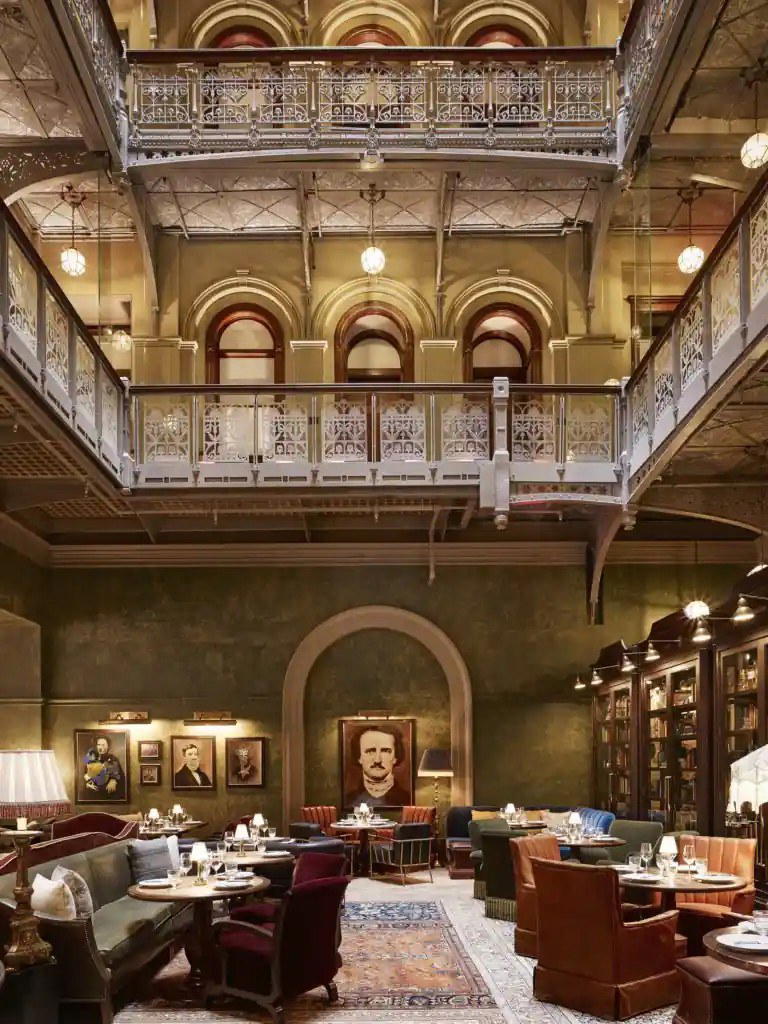
Festive and warm with striking red and gold color scheme, bright multi-floor dining rooms featuring white tablecloths, gold chair covers, and a lively atmosphere filled with families and groups.