Go Fish Sushi Broomfield
Our verdict
Go Fish Sushi in Broomfield sits on the suburban north corridor of metro Denver, where the appetite for quality Japanese seafood has grown well ahead of the supply of serious counters serving it. The format is casual, the address is a strip-mall suite on West 136th Avenue, and the draw is straightforward: sushi in a city where landlocked geography makes sourcing decisions the central question for any fish-focused kitchen.
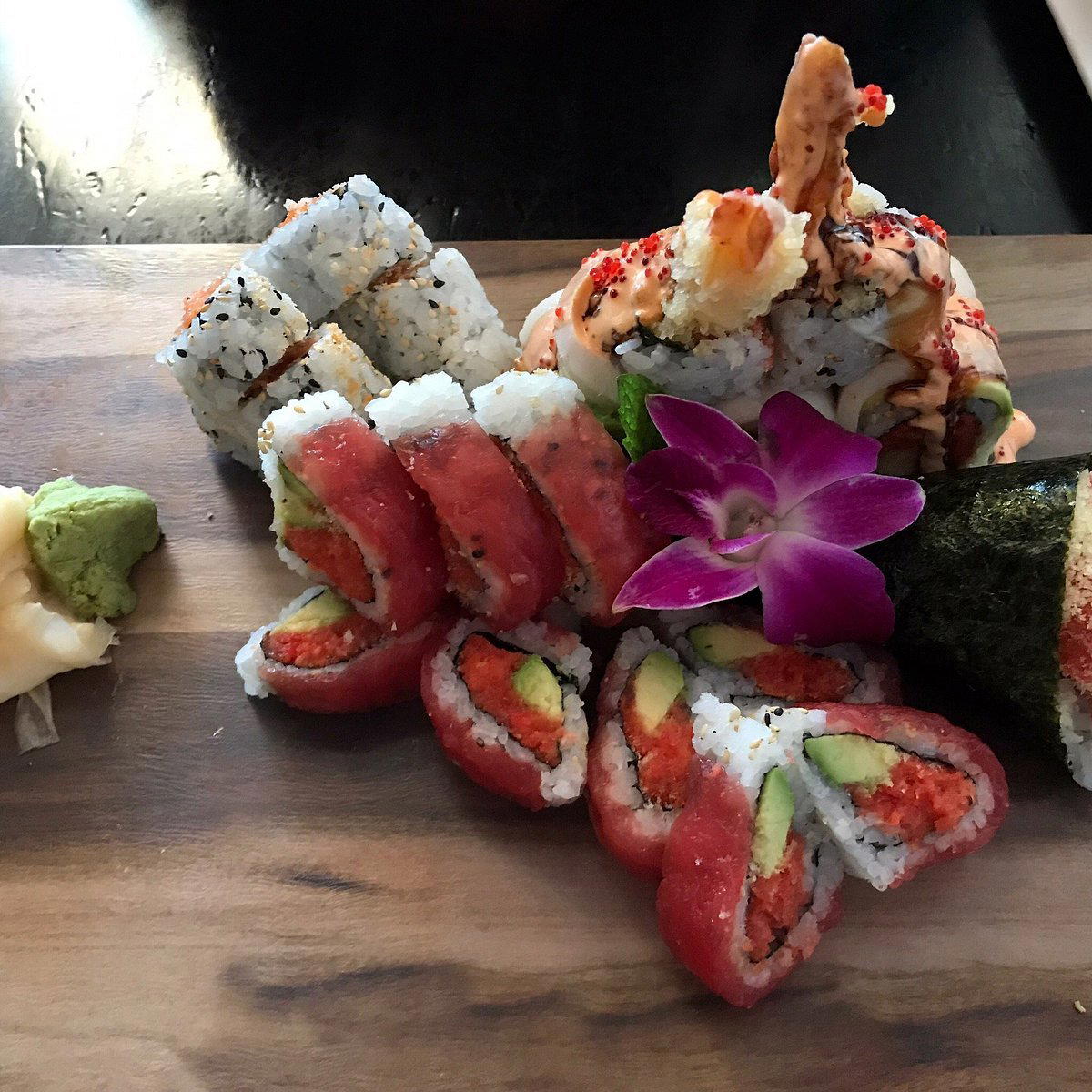
Sushi in a Landlocked City: Why Sourcing Defines the Category
Colorado sits roughly 1,000 miles from the nearest ocean coastline, a fact that shapes every serious sushi operation in the state more than any other variable. The question a diner should ask of any fish-focused restaurant in metro Denver is not whether the menu looks familiar, but how the kitchen is solving the logistics of freshness at altitude and distance. That problem, and how individual restaurants answer it, is what separates the category here from coastal markets where proximity to ports compresses the supply chain to hours rather than days.
Go Fish Sushi Broomfield operates at 2055 W 136th Ave, Suite B106, in the northern suburban corridor connecting Denver to Boulder. The address places it in a retail strip context typical of this part of Broomfield, a city that has grown fast enough over the past decade to sustain genuine dining diversity without yet producing the density of a full urban food district. For a frame of reference on what landlocked sushi operations compete against nationally, counters like ITAMAE in Miami and Atomix in New York City operate in markets where proximity to import hubs and coastal suppliers compresses the cold chain dramatically. The calculus in Broomfield is different, and kitchens that acknowledge that difference tend to make smarter sourcing decisions than those that simply replicate a coastal menu template.
The Strip-Mall Counter and What It Signals
There is a well-established tradition in American Japanese dining of serious kitchens occupying unglamorous retail spaces. The format is not incidental. Lower overhead in suburban strip-mall locations historically allowed Japanese-American sushi operators to keep price points accessible while directing resources toward fish quality rather than interior design budgets. Some of the most technically precise sushi in mid-sized American cities lives behind nondescript storefronts, and the Broomfield location at West 136th Avenue follows that spatial logic.
The surrounding neighborhood is predominantly residential and commercial, serving the northern Denver suburbs that have absorbed significant population growth since 2010. Dining options in this corridor tend toward the practical rather than the destination-driven, which positions a sushi counter differently than it would be positioned in, say, the LoHi or RiNo districts of Denver proper. Nearby, Hickory & Ash and Miya Moon represent different points on the Broomfield dining spectrum. For a fuller picture of where this venue sits within the city's restaurant options, our full Broomfield restaurants guide maps the broader scene.
Ingredient Sourcing: The Central Editorial Question
For any sushi operation in Colorado, fish procurement is the variable that matters most and is most difficult to verify from the outside. The domestic seafood supply chain for Japanese-style raw fish typically runs through distributors in Los Angeles, Seattle, or Chicago, with overnight air freight bridging the gap to landlocked markets. Quality at the destination depends on how recently the fish was processed, how consistently the cold chain was maintained, and whether the kitchen is receiving daily deliveries or working from inventory held over multiple days.
Operations that import directly from Japan, or that work with distributors sourcing from Tsukiji or Toyosu market networks, typically carry that credential visibly since it is a meaningful differentiator in markets where the alternative is generic broadline distribution. At altitude and distance, the difference between a kitchen running tight daily sourcing versus one working from extended inventory shows up quickly in texture and flavor, particularly in fatty fish like toro or salmon belly where lipid oxidation accelerates at higher temperatures and over time.
The broader national conversation about sourcing integrity in sushi has been shaped by operations like Le Bernardin in New York City and Providence in Los Angeles, where documented supplier relationships and seafood sourcing philosophies form part of the public identity of the restaurant. Farm-to-table sourcing has similarly defined destination kitchens including Blue Hill at Stone Barns in Tarrytown, Single Thread Farm in Healdsburg, Smyth in Chicago, and Lazy Bear in San Francisco. At that tier, sourcing transparency is a competitive signal. At the neighborhood sushi level in suburban Colorado, the same principle applies, even if the scale and documentation differ considerably.
Locally within the Colorado market, Frasca Food & Wine in Boulder and The Wolf's Tailor in Denver have demonstrated that ingredient provenance can be a primary editorial and commercial identity even in a landlocked state. The sushi category in metro Denver has been slower to adopt that transparency, which means the kitchens that do articulate their sourcing clearly tend to attract the most repeat custom from diners who have learned to ask the question.
The Broader Denver-Area Sushi Context
Metro Denver's sushi market has expanded considerably over the past fifteen years, driven by population growth, rising per-capita income in the northern suburbs, and increased familiarity with Japanese cuisine across the demographic base. The market has stratified into three loose tiers: all-you-can-eat operations built on volume economics, mid-range neighborhood counters offering a familiar range of rolls and nigiri, and a smaller upper tier of omakase or premium nigiri-focused restaurants that price against quality rather than convenience.
Broomfield sits between the Boulder and Denver markets and has developed its own dining infrastructure independently of both. National reference points for what premium Japanese dining can look like at the leading end include The French Laundry in Napa, Addison in San Diego, The Inn at Little Washington, Emeril's in New Orleans, and Atelier Moessmer Norbert Niederkofler in Brunico, all of which operate with documented sourcing programs as a core part of their identity. The Broomfield sushi category operates at a different price point and scale, but the underlying principle that ingredient origin determines ceiling quality applies regardless of format.
Planning Your Visit
Go Fish Sushi Broomfield is located at 2055 W 136th Ave, Suite B106, in a retail center accessible by car from both US-36 and I-25, making it convenient for diners arriving from Boulder, central Denver, or the northern suburbs. Current hours, pricing, and booking details are best confirmed directly with the venue before visiting, as this information was not available at time of publication. The format and price positioning suggest a casual, accessible operation rather than a reservation-required counter, but verifying that directly will save a wasted trip.
Frequently asked questions
Is Go Fish Sushi Broomfield suitable for children?
The suburban Broomfield location at 2055 W 136th Ave places Go Fish Sushi squarely in a family-oriented retail corridor. Casual sushi counters in this part of the north Denver metro typically see a mix of families and solo diners. No formal age restrictions or adults-only policies are indicated by the available venue data.
Is Go Fish Sushi Broomfield formal or casual?
Go Fish Sushi Broomfield operates from a strip-mall suite — Suite B106 on W 136th Ave — which puts it firmly in the casual register. Come as you are; this is a neighborhood counter, not a ticketed omakase room.
How does Go Fish Sushi Broomfield compare to other sushi options in the north Denver metro?
Go Fish Sushi Broomfield sits in a fast-growing corridor between US-36 and I-25, a stretch of Broomfield that has absorbed significant residential and commercial development over the past decade. Metro Denver's sushi market has expanded alongside that growth, giving diners more options at varying price points than existed fifteen years ago. Without documented awards or published credentials on file for Go Fish, the most direct comparison comes down to proximity and format — it is a casual, accessible counter in a convenience-first suburban setting.
What dish is Go Fish Sushi Broomfield famous for?
In Colorado's landlocked sushi market — roughly 1,000 miles from the nearest coastline — the more useful question to ask any counter is how they source their fish, a detail worth confirming directly with the restaurant.
Comparison Snapshot
| Venue | Cuisine | Price | Awards | Notes |
|---|---|---|---|---|
| Go Fish Sushi BroomfieldThis venue — the venue you are viewing | Japanese Sushi | Not listed | Not listed | Not listed |
| Le Bernardin | French Seafood Fine Dining | $300–500 | 3 Michelin Stars · World's 50 Best #13 | French, Seafood |
| Lazy Bear | Modern American Tasting Menu | Not listed | 2 Michelin Stars · World's 50 Best #25 | Progressive American, Contemporary |
| Atomix | Modern Korean Tasting Menu | $300–500 | 2 Michelin Stars · World's 50 Best #7 | Modern Korean, Korean |
| Per Se | French Fine Dining Tasting Menu | $300–500 | 3 Michelin Stars · World's 50 Best #40 | French, Contemporary |
| Masa | Traditional Japanese Omakase | $500+ | 2 Michelin Stars · World's 50 Best #27 | Sushi, Japanese |
Continue exploring
More in Broomfield
Restaurants in Broomfield
All restaurants in Broomfield →
Bars in Broomfield
All bars in Broomfield →

Go Fish Sushi Broomfield
The wine
- Wine program
- Curated wine list
- Sake program
- Craft cocktails
Details
- Modern
- Trendy
- Casual Hangout
- Family
- Open Kitchen
- Sake Program
- Craft Cocktails
- A La Carte
- Sake Program
- Vegetarian Friendly
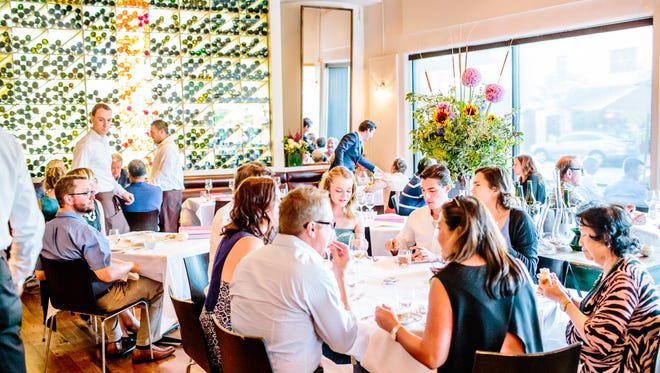
Modern decor with a casual fine dining atmosphere.