On Via dei Tribunali, one of the oldest streets in Naples' historic centre, Gino e Toto Sorbillo operates at the heart of a pizza tradition that predates most of Italy's fine-dining conversation. The address draws long queues on most days, placing it in a comparable set defined by reputation rather than price. For Neapolitan pizza in its most debated and celebrated form, this is the reference point the city keeps returning to.
Pearl is the En Primeur Club membership app — saves, bookings, and concierge access live there. Same editors, same standards.
- Address
- Via dei Tribunali, 32, 80138 Napoli NA, Italy
- Phone
- +39 081 446643
- Website
- sorbillo.it
- Directions
- Get directions
 Saves & bookings on Pearl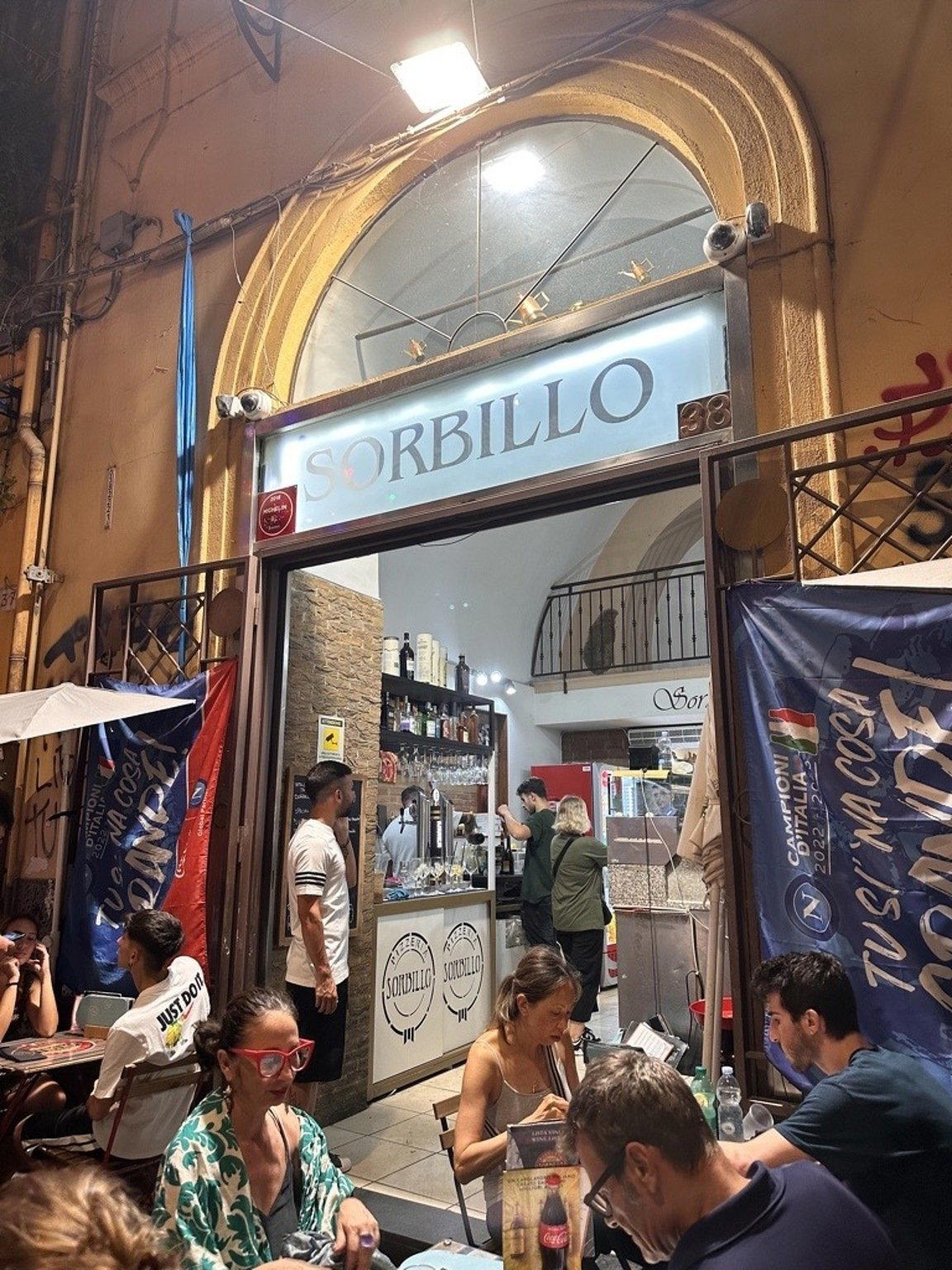
Via dei Tribunali and the Weight of a Street
Approach Via dei Tribunali on a weekend afternoon and the queue tells you something before the pizza does. The street itself, part of the ancient Greek-Roman grid that still organises Naples' centro storico, has been a commercial artery for more than two millennia. Sorbillo sits at number 32, in a stretch that functions as something close to an open-air argument about which pizzeria deserves the neighbourhood's loyalty. The smell of wood smoke and fior di latte reaches the pavement. The noise inside, once you get through the door, is the kind that belongs to rooms that have been full for decades: raised voices, ceramic plates, the flat slap of dough.
This is not a room designed for quiet consideration. It is designed for pizza, eaten fast, at tables that turn. That format, common across Naples' historic centre, places Sorbillo in a tradition where the food absorbs all the prestige and the setting absorbs none. Visitors accustomed to the restrained interiors of, say, George Restaurant or the considered Campanian cooking at Veritas will find the register here entirely different. That difference is the point.
What Neapolitan Pizza Actually Argues About
Naples takes pizza seriously in a way that occasionally tips into doctrine. The city has been producing the dish in recognisable form since at least the eighteenth century, and the debate about what constitutes a correct Neapolitan pizza, including the hydration of the dough, the temperature of the wood-fired oven, the sourcing of San Marzano tomatoes and buffalo mozzarella, has occupied local opinion for generations. The Associazione Verace Pizza Napoletana has codified standards since 1984, and the art of Neapolitan pizzaiuolo was inscribed on UNESCO's Intangible Cultural Heritage list in 2017.
Within that tradition, the Sorbillo name carries documented weight. The family's association with pizza-making in Naples spans multiple generations, and Gino e Toto Sorbillo on Via dei Tribunali sits within that lineage, making it one of the addresses the city itself uses as a reference when discussing what the category should taste like. That is a different kind of credential than a Michelin star, and in Naples, a more locally meaningful one. For Italy's decorated fine-dining circuit, look to venues like Osteria Francescana in Modena or Piazza Duomo in Alba. Sorbillo operates by a different logic entirely. It is a casual Neapolitan pizza restaurant at Via dei Tribunali, 32, Napoli, where the focus is on wood-fired pies rather than formal dining.
The Sensory Register: What You Are Actually Encountering
The pizza that arrives on a Neapolitan table at this level of the tradition is a specific object with specific characteristics. The cornicione, the raised outer crust, should show char in places and retain a softness at the centre. The base, especially on a margherita or marinara, should be wet enough that it folds rather than snaps. This is not a structural failing. It is the intended outcome of a dough fermented at length and cooked at high temperature for a short time, around 90 seconds in a correctly managed wood-fired oven. Getting that balance right, consistently, across a full service in a busy room, is the technical task that separates the serious operators on Via dei Tribunali from the ones that coast on the street's reputation.
The sensory experience here is dense and sequential: the char on the crust, the acidity of a good San Marzano reduction, the pull of stretched mozzarella, the faint sweetness of basil that has just wilted rather than cooked. These are not flourishes. They are the checklist by which Neapolitans evaluate whether a pizza has been made properly. Visitors who arrive from the context of broader Italian gastronomy, including Enoteca Pinchiorri in Florence or Enrico Bartolini in Milan, will find that Naples operates in a register where those reference points simply do not apply.
Where Sorbillo Sits in the Naples Pizza Conversation
Immediate comparable set on and around Via dei Tribunali includes L'Antica Pizzeria da Michele, which has occupied a similarly debated position since 1870, and a constellation of neighbourhood addresses that each claim some version of the definitive Neapolitan approach. What distinguishes Sorbillo's position is the combination of institutional visibility and continued local use: the queue is not composed entirely of tourists. That mix, which any regular visitor to Naples can observe on an ordinary weekday, is one signal of how the address is regarded within the city.
For context elsewhere in the Naples food conversation, the city's creative side runs through venues like 12 Morsi and 177 Toledo, while the fried pizza tradition has its own specialist address at 1947 Pizza Fritta. Italy's broader fine-dining geography, from Dal Pescatore in Runate to Quattro Passi in Marina del Cantone and Uliassi in Senigallia, operates in a different register to what Via dei Tribunali offers. Sorbillo is not competing with those addresses, and they are not competing with it. The category distinction matters.
For readers building a wider Italy itinerary, the range runs from Le Calandre in Rubano and Reale in Castel di Sangro to Atelier Moessmer Norbert Niederkofler in Brunico. And for those approaching from North American itineraries, the shift from Le Bernardin in New York City or Lazy Bear in San Francisco to a Neapolitan pizzeria queue is precisely the kind of recalibration that makes travel useful.
Practical: Arriving and Timing
Via dei Tribunali, 32 is in the heart of the centro storico, walkable from the main archaeological museum and from Spaccanapoli. The area is most animated from late morning through the afternoon and again in the evening. Queues at Sorbillo extend onto the pavement during peak hours, particularly on weekends and during summer months when tourist volume in the centro storico peaks. Arriving earlier in the lunch service or in the late afternoon between services reduces wait time. The format is casual, the price point is low relative to any comparable European city, and the meal is fast. Plan for under an hour at the table, and treat the queue itself as part of the experience rather than an obstacle to it.
Comparable Spots
Comparable venues nearby, for context on price, style, and recognition.
| Venue | Cuisine | Price | Notes |
|---|---|---|---|
| Gino e Toto SorbilloThis venue — the venue you are viewing | Neapolitan Pizza | $ | Not listed |
| Vomero Fried Food | Neapolitan Fried Street Food | $ | Vomero |
| Ventimetriquadri - Specialty Coffee | Specialty Coffee & Cafe | $$ | Vomero |
| Sombrero - Vino e Panini | Italian Panini and Wine Bar | $$ | S.strato di Posillipo |
| Trattoria da Nennella | Traditional Neapolitan Trattoria | $ | Vomero |
| Bro. | Modern Neapolitan Pizza | $$ | Mercato |
Continue exploring
More in Naples
Restaurants in Naples
Browse all →
Bars in Naples
Browse all →
Hotels in Naples
Browse all →

At a Glance
- Rustic
- Lively
- Well Known
- Casual Hangout
- Historic Building
Current opening hours
- Monday
- 12–11:30 PM
- Tuesday
- 12–11:30 PM
- Wednesday
- 12–11:30 PM
- Thursday
- 12–11:30 PM
- Friday
- 12–11:30 PM
- Saturday
- 12–11:30 PM
- Sunday
- Closed
Hours can change for holidays and private events. Last verified .
Simple, rustic surroundings with authentic Neapolitan energy, casual décor, and a lively, unpretentious atmosphere.