Google: 4.8 · 867 reviews

Genuss-Atelier holds a Michelin star for the second consecutive year (2024 and 2025), placing it among Dresden's small cohort of formally recognised modern cuisine addresses. Chef Marcus Blonkowski operates from Bautzner Strasse 149 in the Neustadt district, at the €€€ price tier. A Google rating of 4.8 across 808 reviews points to consistent execution rather than occasional brilliance.
 Discover on Pearl
Pearl is the En Primeur Club membership app — saves, bookings, and concierge access live there. Same editors, same standards.
Neustadt's Quiet Concentration
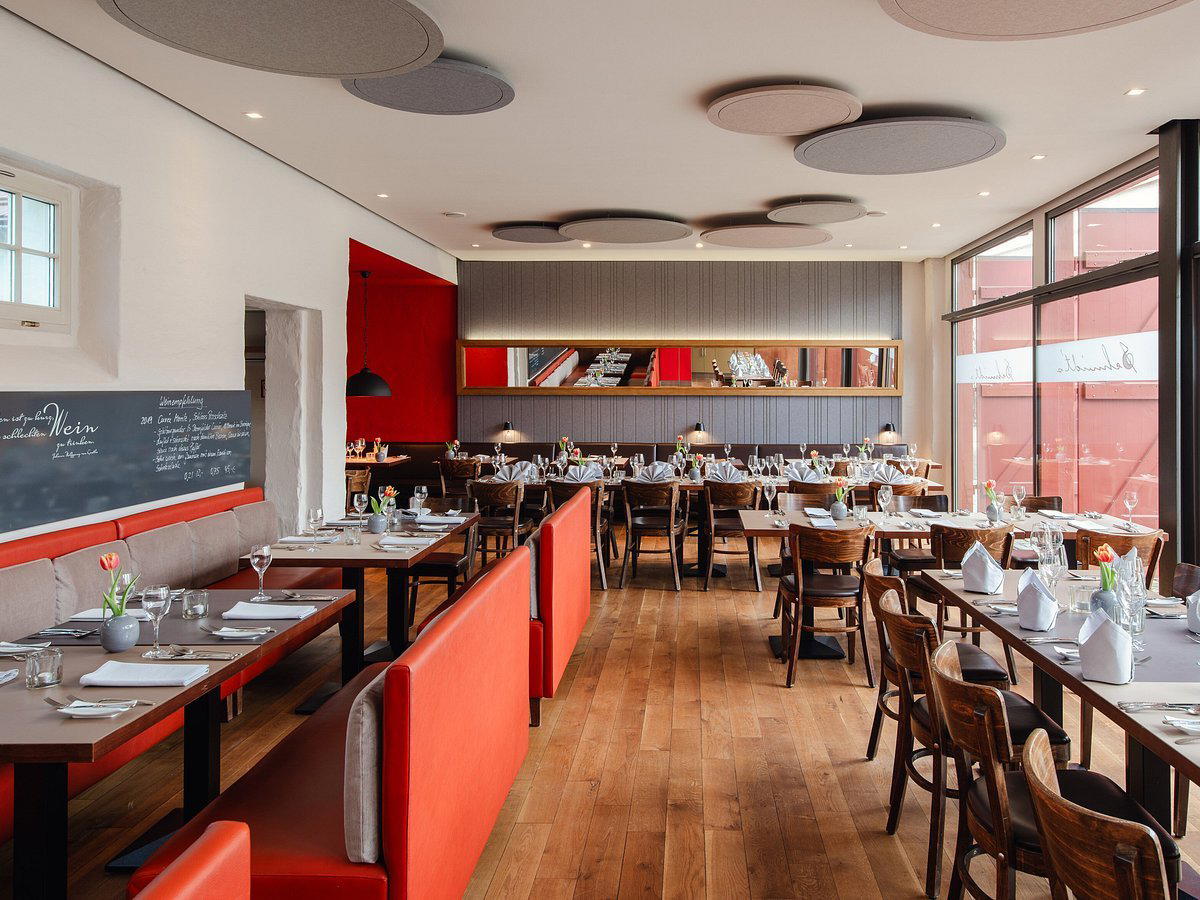
Dresden's fine dining scene has historically clustered around the Altstadt, where hotel restaurants and grand interiors carry the weight of expectation. The Neustadt, across the Elbe, developed differently: more porous, more experimental, less monumental. Bautzner Strasse sits at the northern edge of that quarter, where the density of the inner Neustadt gives way to a quieter, more residential rhythm. It is in this context that Genuss-Atelier operates, occupying a position that contrasts with the ceremonial register of old-town fine dining. The address is not accidental. A one-Michelin-star restaurant choosing this part of Dresden signals something about intent: formality calibrated differently, the dining room as atelier in the literal sense, a working space rather than a stage set.
That atmospheric register, where concentration replaces grandeur, is increasingly the mode of Germany's mid-tier Michelin addresses. Restaurants such as ES:SENZ in Grassau and JAN in Munich share a similar sensibility: technically serious kitchens in settings that do not announce themselves through scale or spectacle. Genuss-Atelier fits that pattern, and Dresden, with its developing reputation for thoughtful modern cooking, provides the right city context for it.
What the Star Means in Practice
Michelin awarded Genuss-Atelier a star in both 2024 and 2025, making the recognition a sustained verdict rather than a debut spike. In Germany's Michelin structure, retaining a first star across consecutive years carries weight: the guide's inspectors return, and consistency under scrutiny is the bar. At the €€€ price tier, Genuss-Atelier positions itself in the mid-range of Germany's starred restaurants, below the multi-star expense of addresses like Aqua in Wolfsburg or Vendôme in Bergisch Gladbach, but operating at the same level of critical scrutiny.
Within Dresden specifically, Genuss-Atelier shares the one-star tier with elements, which operates at the higher €€€€ price point, and Heiderand, which matches the €€€ bracket. The three restaurants together constitute Dresden's Michelin-starred cohort for modern cuisine, a small enough group that each retains a distinct identity rather than competing for the same table. The city has not yet developed the critical mass of starred addresses seen in Munich or Hamburg, which means each recognition carries proportionally more signal about where Dresden's serious dining is heading.
A Google score of 4.8 across 808 reviews reinforces the Michelin data from a different angle. A large review base at that rating suggests that the kitchen's output lands consistently for a general audience as well as for inspectors, which is not always the case with technically demanding modern cooking. Some one-star restaurants generate admiration from critics and polite indifference from the public; here, the two signals align.
Chef Marcus Blonkowski and the Modern Cuisine Frame
Modern cuisine, as a Michelin classification, is deliberately broad. It captures kitchens that apply technique to seasonal produce without committing to a single national tradition, and it describes a significant proportion of Europe's starred restaurants. What distinguishes individual practitioners within that frame is usually a combination of sourcing discipline, technical rigour, and a consistent point of view on how components relate on the plate. Chef Marcus Blonkowski operates within this classification at Genuss-Atelier, though the database does not provide specific dish descriptions or biographical detail beyond his name and role.
What the classification and the consecutive star retention do imply is a kitchen that has found a repeatable approach. Michelin's second star confirmation is not a formality; inspectors visit unannounced across different service moments. The consistency suggested by dual-year recognition, combined with the 4.8 Google average, points to a kitchen working from a stable creative position rather than chasing novelty. For comparison, CODA Dessert Dining in Berlin has built a similar reputation for structural consistency within an unconventional format; Genuss-Atelier operates in a more conventional modern cuisine register, but the discipline the star implies is comparable.
Germany's one-star modern cuisine tier also includes addresses such as Schwarzwaldstube in Baiersbronn, where the discipline runs through classical French foundations, and internationally, Frantzén in Stockholm and FZN by Björn Frantzén in Dubai demonstrate how the modern cuisine category scales across price tiers and geographies. Genuss-Atelier's position within that broader European context is one-star rigour at an accessible price point, in a city whose fine dining infrastructure is still consolidating.
The Sensory Register of the Atelier
The name itself carries editorial information. Atelier, in German as in French, refers to a working studio: a space defined by process rather than presentation. Applied to a restaurant, it implies that the experience is built around the kitchen's activity rather than around a theatrical dining room designed to impress on arrival. This framing aligns with the Neustadt location and the €€€ price point. The guest is invited into a working environment, not a finished monument.
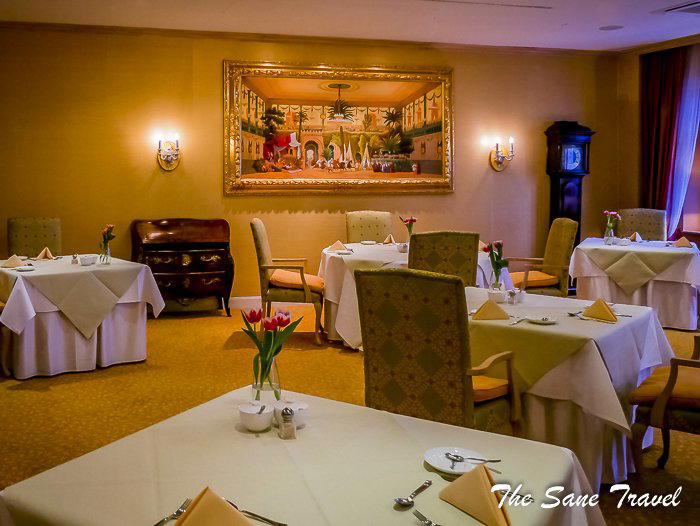
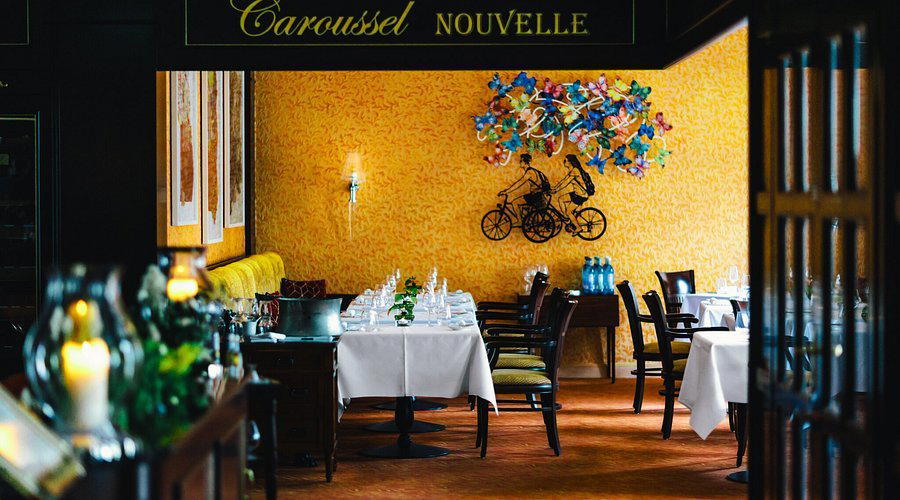
In practice, modern cuisine restaurants that adopt this atelier sensibility tend to prioritise the plate over the room. Sound levels, lighting, and spatial arrangement are calibrated to focus attention rather than to generate ambient excitement. The experience is quieter, more concentrated, more dependent on what arrives at the table than on what surrounds it. This is a different proposition from the grand hotel dining rooms of the Altstadt, such as Bülow Palais, where the architecture itself forms part of the offer, or Caroussel Nouvelle, which sits within a heritage setting. Genuss-Atelier's register is more internal, more concerned with what happens between kitchen and plate than with environmental spectacle.
For readers who have eaten at modern cuisine addresses in cities with denser starred scenes, this framing will be familiar. The template exists across Europe: a focused room, a kitchen-led format, and a price point that places the emphasis on the food rather than on the service architecture around it. What Dresden adds is a city context that is still building its reputation, which means the restaurant carries some of the energy of a scene in formation rather than one that has settled into established hierarchies.
Planning a Visit
Genuss-Atelier is located at Bautzner Strasse 149, 01099 Dresden, in the Neustadt district. The €€€ pricing sits at a level where a full tasting experience typically requires advance planning; at restaurants of this recognition level in Germany, booking windows of several weeks are standard, and the combination of a relatively intimate setting implied by the atelier format and consistent demand from the 808-review audience suggests that spontaneous visits are unlikely to succeed. Booking in advance is the practical approach.
Dresden's Neustadt is well connected by tram, and Bautzner Strasse is accessible from the city centre without requiring a taxi. For visitors combining Genuss-Atelier with broader Dresden dining, the city's full offer spans from the Michelin-starred modern cuisine tier down through contemporary formats like DELI and the farm-to-table register. EP Club's full Dresden restaurants guide maps those options across price tiers and neighbourhood. Visitors planning a longer stay can also consult the Dresden hotels guide, the bars guide, the wineries guide, and the experiences guide for a fuller picture of what the city offers across categories.
Price and Recognition
A quick peer list to put this venue’s basics in context.
| Venue | Price | Awards | Notes |
|---|---|---|---|
| Genuss-Atelier | €€€ | Michelin 1 Star | This venue |
| elements | €€€€ | Michelin 1 Star | Modern Cuisine, €€€€ |
| Heiderand | €€€ | Michelin 1 Star | Modern Cuisine, €€€ |
| Caroussel Nouvelle | €€€ | Contemporary, €€€ | |
| Schmidt's | €€ | Farm to table, €€ | |
| Bülow Palais | German Fine |
Continue exploring
More in Dresden
Restaurants in Dresden
Browse all →
Bars in Dresden
Browse all →
Hotels in Dresden
Browse all →
Wineries in Dresden
Browse all →
At a Glance
- Elegant
- Cozy
- Intimate
- Sophisticated
- Date Night
- Special Occasion
- Celebration
- Open Kitchen
- Extensive Wine List
- Local Sourcing
Cozy and elegant subterranean cellar with sandstone walls, brick vaults, warm lighting, relaxed yet sophisticated atmosphere.