Gasthaus im Feld

Michelin Plate
Our verdict
At 935 metres above the Uri valley floor, Gasthaus im Feld has been feeding travellers and locals for five generations from the same Dorfstrasse address. The wooden shingle facade gives way to two distinct dining rooms and a terrace with open mountain views. Lunch runs à la carte with dialect-named regional dishes; evenings shift to the multi-course "Äs" set menu.

Pearl is the En Primeur Club membership app, where members save venues, book tables and use the concierge.
The menu
What to order
- Rehrücken
- Wildgerichte
- Maroni-Creme Suppe
- Spargelsuppe mit Vanille
What the altitude tells you before you sit down
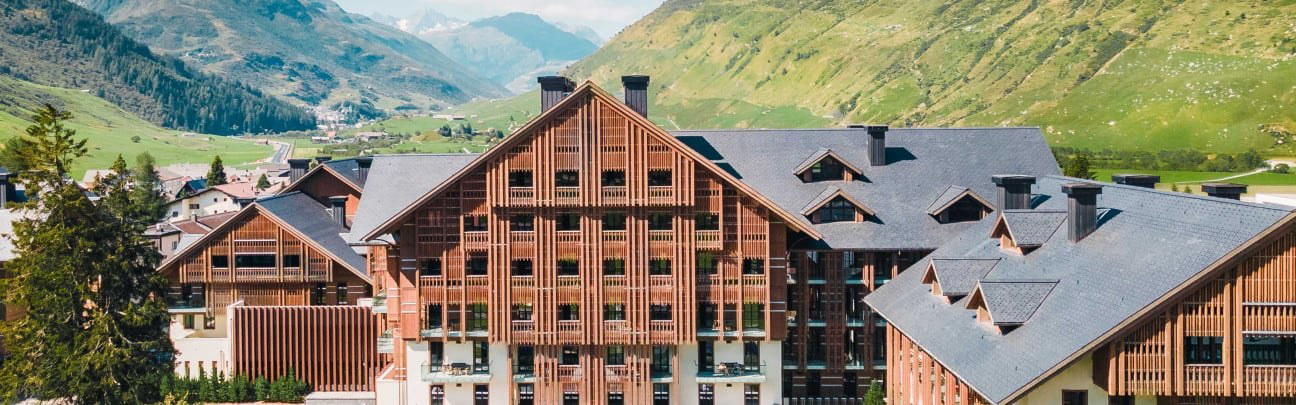
The road into Gurtnellen asks something of you. The village sits at 935 metres in the canton of Uri, above the Reuss valley that funnels traffic toward the Gotthard. Most drivers passing through never stop. That is, in part, what makes the cooking here legible: the kitchen serves a community and a landscape, not a passing trend. The wooden shingle facade on Dorfstrasse 56 is the architectural dialect of this valley, the same cladding you see on the hay barns and farmhouses lining the approach. Before you have read a menu, the building is already telling you something about where the ingredients come from.
Central Swiss mountain cooking at its most honest has always been structured around what does not need to travel far: freshwater fish from cold streams, veal from valley herds, root vegetables that store through alpine winters, potatoes prepared in ways that bear names in the local dialect. The dialect matters here. At lunchtime, the à la carte menu lists trout with Siiwgagglä (fried potatoes) and Gmiäs (vegetables), or Chalbschopfbäggli (veal chops) with Gschtunggetä Härdepfel (mashed potatoes) and Gmiäs. The use of Urner dialect in a printed menu is not affectation. It is a declaration that the dishes belong to a specific place, not to a generalised Swiss-German comfort-food category.
Five generations of the same kitchen logic
A restaurant that has operated on the same premises since the 19th century, with five consecutive generations of one family at the helm, is not common in any country. In Switzerland, where hospitality businesses are often passed through families, it still represents an unusual depth of continuity. Chef-owner Beat Walker represents that fifth generation, and the significance of that lineage is institutional rather than personal: it means the kitchen has absorbed decades of local supplier relationships, seasonal rhythms, and guest expectations that no amount of research or ambition can replicate in a newly opened room.
The sourcing logic this produces is worth understanding. Mountain communities at this altitude have historically kept close relationships with the people who raise animals and grow produce nearby, because the logistics of importing ingredients at scale were never direct. That structural dependency created a cooking culture built around the whole animal, preserved and fermented ingredients, and preparations that work with the texture and density of mountain-reared meat rather than against it. Chalbschopfbäggli is a cut that rewards slow attention; trout from cold alpine water has a firmness that differs from farmed lowland fish. The kitchen's history means it has been working with these specific raw materials long enough to know what they actually need.
Two rooms, one terrace, a clear hierarchy of occasion
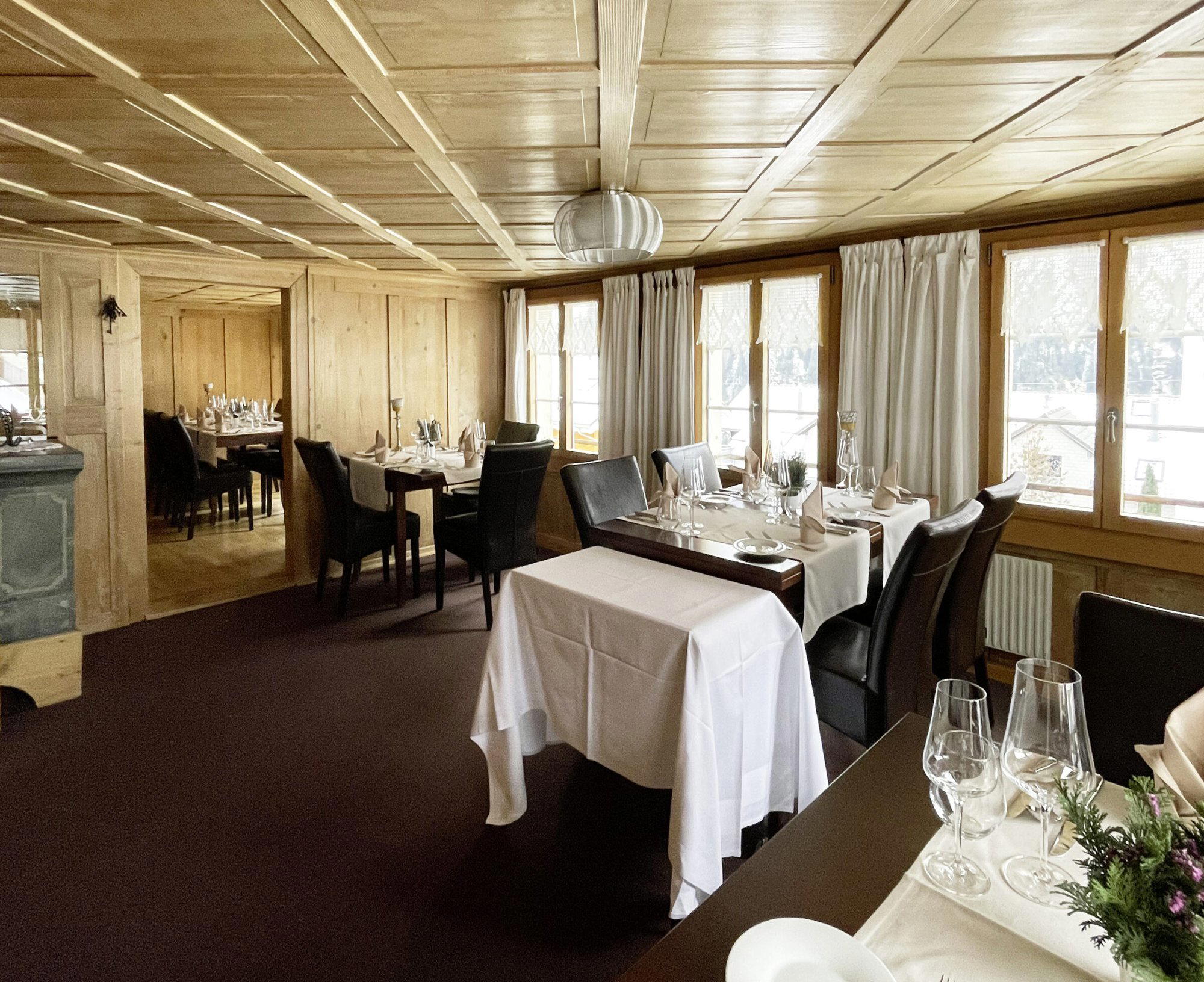
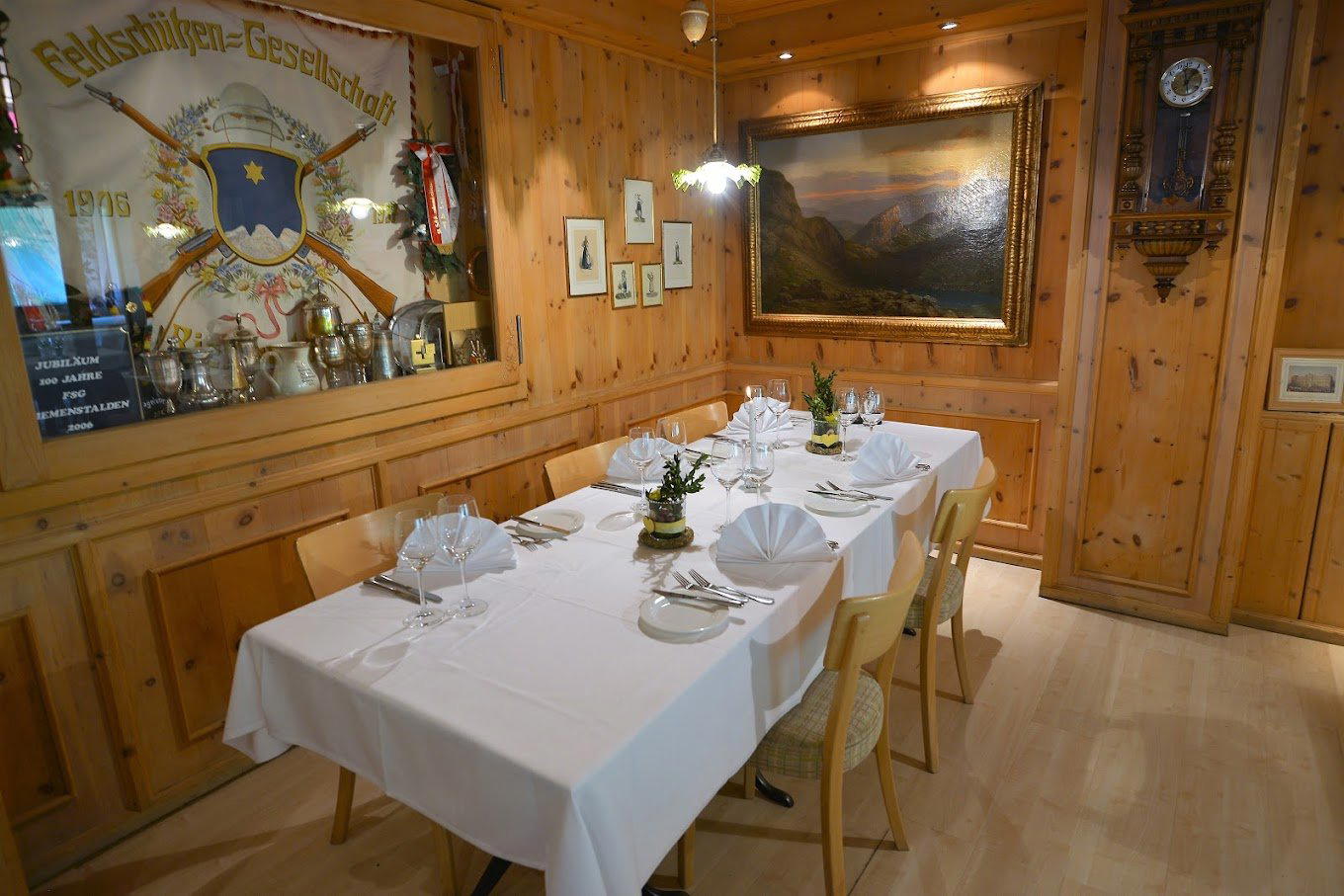
The building divides into a Gaststube on the ground floor and the wood-panelled Urnerstube on the first floor. This is a familiar Swiss division: the Gaststube functions as the everyday room, where locals stop for lunch and the atmosphere is unhurried and functional; the Urnerstube, with its more deliberate panelling and quieter register, is where you go for the evening set menu. The terrace completes the picture on days when the weather cooperates, with mountain views that form the backdrop to the cooking rather than a separate attraction.
Evening format is the "Äs" set menu, offered in four, five, or six courses. The name is Urner dialect for "it" or "something" and carries an intentional informality: the kitchen surprises rather than prescribes. In a region where fine dining tends to signal itself through French terminology and elaborate printed menus, this is a deliberate choice of register. It places the meal inside a tradition of mountain hospitality where the cook decides what is ready, not what the season's marketing requires. Compare this with the highly engineered set menus at properties like Schloss Schauenstein in Fürstenau or Memories in Bad Ragaz, where the tasting format is a precision instrument shaped by global fine-dining conventions. The "Äs" menu operates on a different logic entirely, rooted in what the valley produces rather than what the category demands.
Where this fits in Swiss alpine dining
Switzerland's premium restaurant tier is concentrated in urban centres and destination resorts: you find the dense Michelin count in Zurich, Geneva, and the Graubünden resort corridor. Properties like focus ATELIER in Vitznau and IGNIV Zürich by Andreas Caminada in Zurich operate within that internationally legible tier, signalling their position through formal recognition and destination-dining formats. Cheval Blanc by Peter Knogl in Basel and Hotel de Ville Crissier in Crissier anchor the French-influenced fine-dining tradition. Gasthaus im Feld occupies a different position entirely: it does not compete in that tier, and makes no effort to. Its authority comes from depth of place, not breadth of technique.
That distinction matters for the reader choosing where to spend a meal in central Switzerland. The canton of Uri has no significant restaurant scene in the conventional sense. Gurtnellen is not a destination built around dining. Which means this specific address, on Dorfstrasse in a village most people pass without stopping, carries the weight of representing something: that serious, place-rooted cooking can exist at altitude without the architecture of a resort or the signage of a Michelin entry. For context on how this compares with resort-anchored alpine dining, see 7132 Silver in Vals or Da Vittorio - St. Moritz in St. Moritz, where the mountain setting is framed as luxury backdrop rather than supply chain.
Planning the visit
Four guestrooms are available for those who want to stay overnight, which changes the calculus of the evening set menu considerably. A meal that would otherwise require a careful eye on the last road down the valley becomes a full evening. The rooms are described as cosy, which in this context means they fit the register of the building: functional, warm, and appropriate to the altitude rather than designed for a hospitality category.
Roland Gloor manages the dining room, and the combination of a fifth-generation kitchen and a front-of-house presence described in terms of genuine care for guests reflects a service model common to well-run Swiss mountain restaurants: attentive without ceremony, knowledgeable without performance. Lunch is à la carte; evenings require a decision between four, five, or six courses of the "Äs" menu. There is no website or phone number in the public record, which means the most reliable approach is to contact the restaurant directly through local channels or to arrive with flexibility built into your schedule. For broader planning in the area, our full Gurtnellen restaurants guide covers the surrounding options, and the Gurtnellen hotels guide maps accommodation nearby. If you are building a wider Uri valley itinerary, the bars guide, wineries guide, and experiences guide for Gurtnellen provide the remaining picture.
For those building a broader Swiss dining itinerary that moves between this kind of grounded regional cooking and the country's more internationally recognised fine-dining addresses, the contrast is instructive. Colonnade in Lucerne and La Brezza in Ascona represent the urban and lakeside poles of Swiss hospitality, while Gasthaus im Feld represents something that neither city nor resort can easily replicate: a kitchen shaped by a single valley over five generations.
Frequently asked questions
Can I bring kids to Gasthaus im Feld?
The Gaststube on the ground floor has the relaxed, everyday character typical of a Swiss country inn, which suits families more naturally than the wood-panelled Urnerstube upstairs. The à la carte lunch menu features straightforward regional dishes, trout, veal chops, fried potatoes, that translate well across generations. The terrace with mountain views adds another practical option for families wanting open space.
What should I expect atmosphere-wise at Gasthaus im Feld?
The building presents a wooden shingle façade characteristic of the Uri region, and the interior splits into two distinct registers. The ground-floor Gaststube is the everyday room: convivial, unpretentious, built for regulars. Upstairs, the Urnerstube operates at a quieter pitch, with wood panelling that signals this is where you linger over the evening 'Äs' set menu. Roland Gloor manages the dining room across both floors.
Does Gasthaus im Feld have a Michelin star or similar recognition?
Gasthaus im Feld has received recognition including: The journey up to the village of Gurtnellen, at an altitude of 935m, is well worth it! Chef-owner Beat Walker is the fifth generation of his family to run this charming restaurant dating back to the 19C. He is assisted by Roland Gloor, who ….
What should I eat at Gasthaus im Feld?
At lunch, the à la carte menu draws on Uri dialect dish names, Siiwgagglä (fried potatoes), Chalbschopfbäggli (veal chops), Gmiäs (vegetables), anchored to local and regional cooking traditions. In the evening, chef-owner Beat Walker runs the 'Äs' set menu in four, five, or six courses, with the specific composition varying by visit. The set menu format is the clearest expression of the kitchen's full range.
What's the address for Gasthaus im Feld?
Gasthaus im Feld is located at Dorfstrasse 56, Gurtnellen.
Do I need a reservation for Gasthaus im Feld?
The village of Gurtnellen sits at 935 metres in canton Uri, accessible only by a deliberate detour, which means walk-in trade is minimal and the dining room is structured around guests who have planned ahead. The evening 'Äs' set menu in particular warrants booking in advance, as it requires preparation across four to six courses. With only four guestrooms on site, overnight stays need to be arranged well ahead of any visit.
How It Stacks Up
Comparable venues nearby, for context on price, style, and recognition.
| Venue | Cuisine | Price | Awards | Notes |
|---|---|---|---|---|
| Gasthaus im FeldThis venue (the venue you are viewing) | Traditional Swiss Regional | $50–100 | Michelin Plate | Not listed |
| Landhaus Liebefeld | Traditional Swiss Gastropub | $50–100 | Michelin Plate | Liebefeld |
| Zum Kaiser Franz | Traditional Austrian | $50–100 | Michelin Bib Gourmand | Zug |
| Romantik Hotel zu den drei Sternen | Swiss Regional Natural Cuisine | $50–100 | Star Wine List | Brunegg |
| Restaurant Oepfelchammer | Traditional Swiss | $50–100 | Not listed | Fluntern |
| Gasthaus Höhwald | Alpine Austrian-Swiss Seasonal Cuisine | $50–100 | Michelin Plate | Monbiel |
Recognition history
Dated appearances from independent guides and award organizations, with the underlying list record or original source where available.
Michelin Plate
Michelin · 2026 Michelin Plate
Continue exploring
More in Gurtnellen
Restaurants in Gurtnellen
All restaurants in Gurtnellen →
Bars in Gurtnellen
Browse all →

Details
- Rustic
- Cozy
- Romantic
- Classic
- Date Night
- Special Occasion
- Historic Building
- Terrace
- Extensive Wine List
- Local Sourcing
- Mountain
- A La Carte
- Tasting Menu
Inviting and cozy atmosphere in a traditional wooden shingle building with tastefully decorated rooms, elegant paneled stube, and a relaxed, gemütlich feel.