Furka Pass
The Furka Pass cuts through the Urner Alps between Oberwald and Realp at 2,429 metres, making it one of the high Alpine crossings where the road itself is the destination. The surrounding Obergoms valley shapes everything from the approach to the sky, raw, spare, and architecturally defined by centuries of glacial work. Travellers planning a crossing should note the pass is closed to motor traffic in winter.

Pearl is the En Primeur Club membership app, where members save venues, book tables and use the concierge.
Where the Road Becomes the Architecture
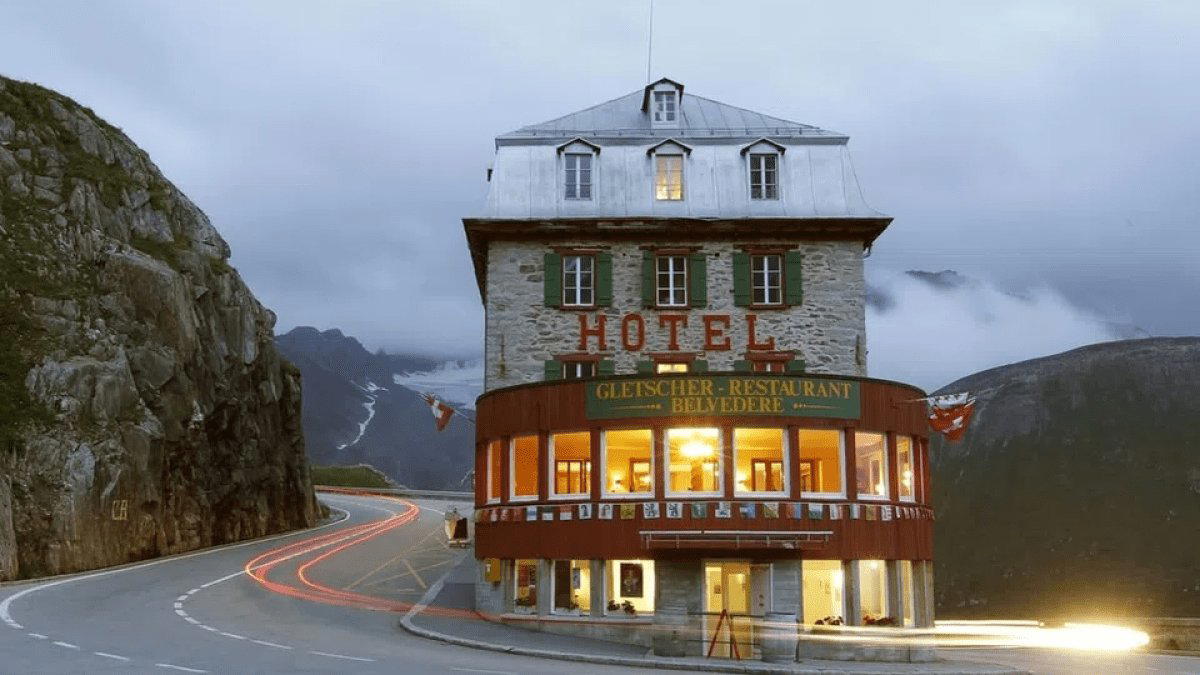
There is a category of Alpine place where human infrastructure recedes so completely that the geological forms take over as the dominant design language. The Furka Pass, rising to 2,429 metres in the Urner Alps above Oberwald in the canton of Valais, belongs to that category. The road does not wind through the mountains so much as it is inscribed into them, carved into switchbacks that read, from any elevation, as deliberate lines drawn across a near-vertical canvas of schist and snow. Arriving from the Obergoms valley floor, the scale shift is abrupt. Within a few kilometres of Oberwald, the valley compresses, the tree line drops away, and the road enters a register that is less travel infrastructure and more landscape intervention.
The pass sits in a part of Switzerland where the built environment has always had to negotiate with extreme conditions, and that negotiation has produced a kind of accidental architectural coherence. The stone shelters, the retaining walls, the gradient markers, everything at this altitude is pared back to function, and function at altitude produces a formal austerity that no amount of deliberate design philosophy could replicate. For travellers whose interest in place extends to the relationship between human making and natural scale, the Furka is more instructive than almost any designed interior in the country.
The Obergoms Setting and What It Demands
Oberwald, the small municipality at the foot of the pass in the upper Goms region, operates as the departure point for the ascent from the Valais side. The Goms valley itself has a character distinct from the more celebrated Swiss resort corridors. There is no major ski infrastructure here to soften the edges or impose a seasonal hospitality layer over the landscape. What remains is one of the more unmediated valley experiences in the Swiss Alps: a string of timber-framed villages at altitude, an agricultural rhythm that persists against geographic logic, and a proximity to the watershed divide between the Rhône and the Rhine that gives the area a quiet geographic significance most visitors do not register.
The Furka Pass road connects Oberwald on the Valais side to Realp in Uri, a crossing that has been made by travellers since the medieval period. The route gained its modern form in the nineteenth century, when the opening of the high Alpine passes to wheeled traffic became both an engineering ambition and a commercial imperative. The Furka's position as a connector between the major Swiss cantons means it has always been a working road rather than a scenic diversion, and that function is legible in its design. The switchbacks are built for efficiency; the road surface is maintained for utility. The drama is incidental, or rather, it accrues from the terrain rather than from any attempt to frame it.
The Glacier and the Steam Railway
The Rhône Glacier, which descends from the Dammastock massif near the pass summit, has defined the visual and cultural identity of the Furka crossing for two centuries. In the nineteenth century, glacier tourism was a serious European category, and the Furka was among the sites that drew visitors from across the continent to witness glacial ice at close range. The glacier has retreated substantially over the past century, a retreat that is now documented annually and that has altered the visual experience of the pass summit considerably. What was once an approach flanked by ice is now an approach to a glacier that must be sought slightly above the road.
Dampfbahn Furka-Bergstrecke, the historic steam railway that operates seasonally across the pass, represents the most architecturally ambitious human intervention in this landscape. Built in the early twentieth century and restored by volunteers after decades of abandonment, the narrow-gauge line includes infrastructure, tunnels, viaducts, retaining structures, that reads as genuinely extraordinary engineering given the conditions under which it was built and maintained. The railway operates between late June and early October, which also marks the window during which the pass road is accessible to motor traffic. Outside that period, the pass is closed, and the region settles back into a winter quiet that the road infrastructure alone cannot interrupt.
How the Furka Pass Sits Among Switzerland's High Crossings
Switzerland's high Alpine passes form a distinct category of travel destination, one where the experience is defined less by facilities than by gradient, exposure, and historical weight. The Furka belongs to a peer group that includes the Grimsel, which branches from Oberwald toward the Bernese Oberland, the Gotthard, which carries far greater traffic volume and infrastructure, and the Susten, which connects Uri to the Haslital. Within this group, the Furka occupies a middle position: more remote and less trafficked than the Gotthard, more historically loaded than the Susten, and closely paired with the Grimsel as a double crossing that many cyclists and motorcyclists treat as a single itinerary.
For travellers based at Swiss hotel properties and planning high-Alpine day routes, the Furka-Grimsel circuit from the Obergoms side is a well-established format. Properties in the broader region, from 7132 Hotel in Vals to CERVO Mountain Resort in Zermatt and The Alpina Gstaad, position themselves as bases for this kind of Alpine circuit travel, though the pass road itself demands a commitment to driving or riding at altitude that not all itineraries accommodate. Further afield, Swiss properties including Bürgenstock Resort, Grand Resort Bad Ragaz, and Badrutt's Palace Hotel in St. Moritz serve travellers who build multi-pass itineraries across several days.
Planning a Crossing: What to Know
The pass road is open to motor vehicles from approximately late June to mid-October, with the precise dates varying by snow conditions each year. Outside this window, the crossing requires the Furka rail tunnel, which carries cars and passengers on a shuttle service. The summit sits at 2,429 metres, which means afternoon cloud and temperature drops are common even in summer; early morning crossings tend to offer the clearest conditions and lightest traffic. The road is passable by standard vehicles but the gradient and tight switchbacks require attention, particularly for larger vehicles. There is no significant service infrastructure at the summit beyond the historic hotel, which operates seasonally and represents the only formal shelter at pass level.
Travellers approaching from the Valais side will find Oberwald as the last point with reliable fuel and basic supplies before the ascent. The village connects to the Matterhorn Gotthard railway, which links the region to Brig and onward connections to Beau-Rivage Geneva, Baur au Lac in Zurich, and Mandarin Oriental Palace, Luzern for those incorporating the Furka into a longer Swiss circuit. For broader Oberwald dining and accommodation context, see our full Oberwald restaurants guide.
Comparable Spots, Quickly
| Venue | Price | Awards |
|---|---|---|
| Furka PassThis venue (the venue you are viewing) | $100–200 | Not listed |
| Badrutt's Palace Hotel | Not listed | 3 Michelin Keys · World's 50 Best #36 |
| Four Seasons Hotel des Bergues | Not listed | 2 Michelin Keys · La Liste Top Hotels |
| Mandarin Oriental Palace, Luzern | $500–750 | 2 Michelin Keys · La Liste Top Hotels |
| The Ritz-Carlton Hotel de la Paix, Geneva | Not listed | 2 Michelin Keys · La Liste Top Hotels |
| Hotel President Wilson, A Luxury Collection Hotel | Not listed | La Liste Top Hotels · Forbes 4-Star |
Continue exploring
More in Oberwald
Hotels in Oberwald
All hotels in Oberwald →
Bars in Oberwald
Browse all →

Details
- Rustic
- Scenic
- Cozy
- Weekend Escape
- Ski In Ski Out
- Panoramic View
- Terrace
- Wi Fi
- Restaurant
- Garden
- Mountain
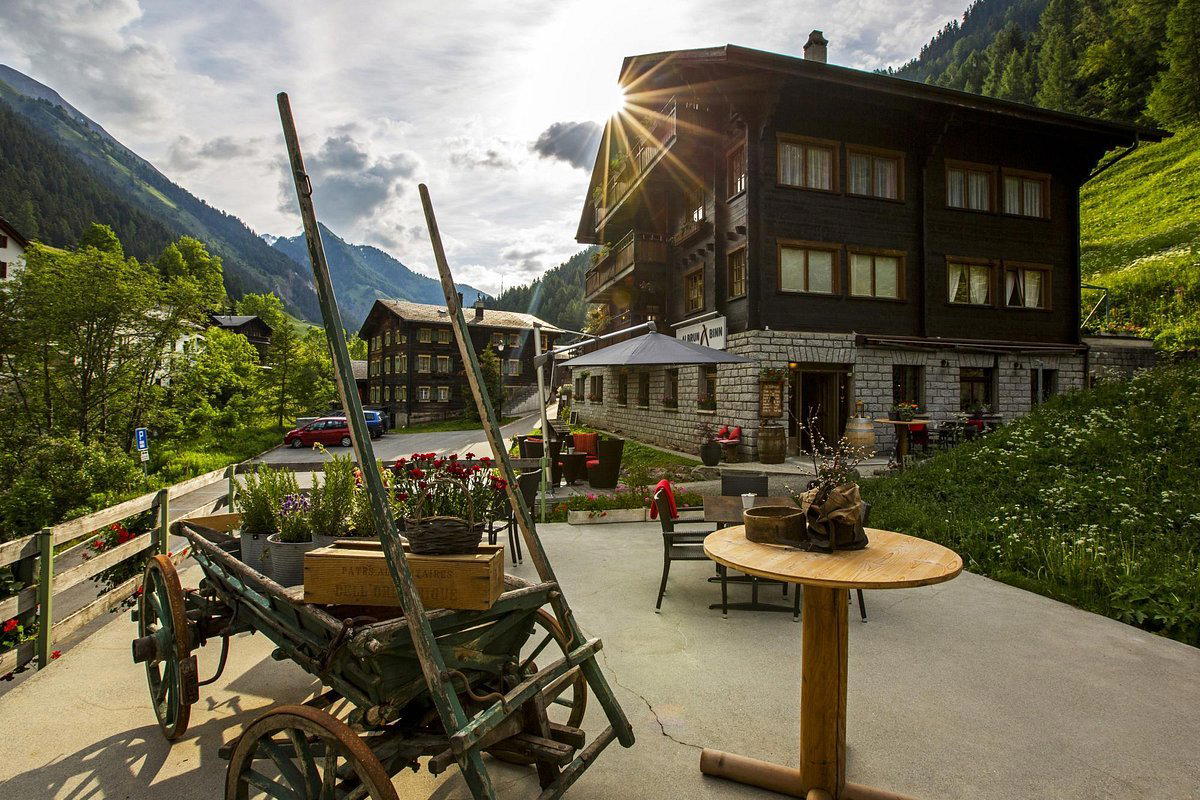
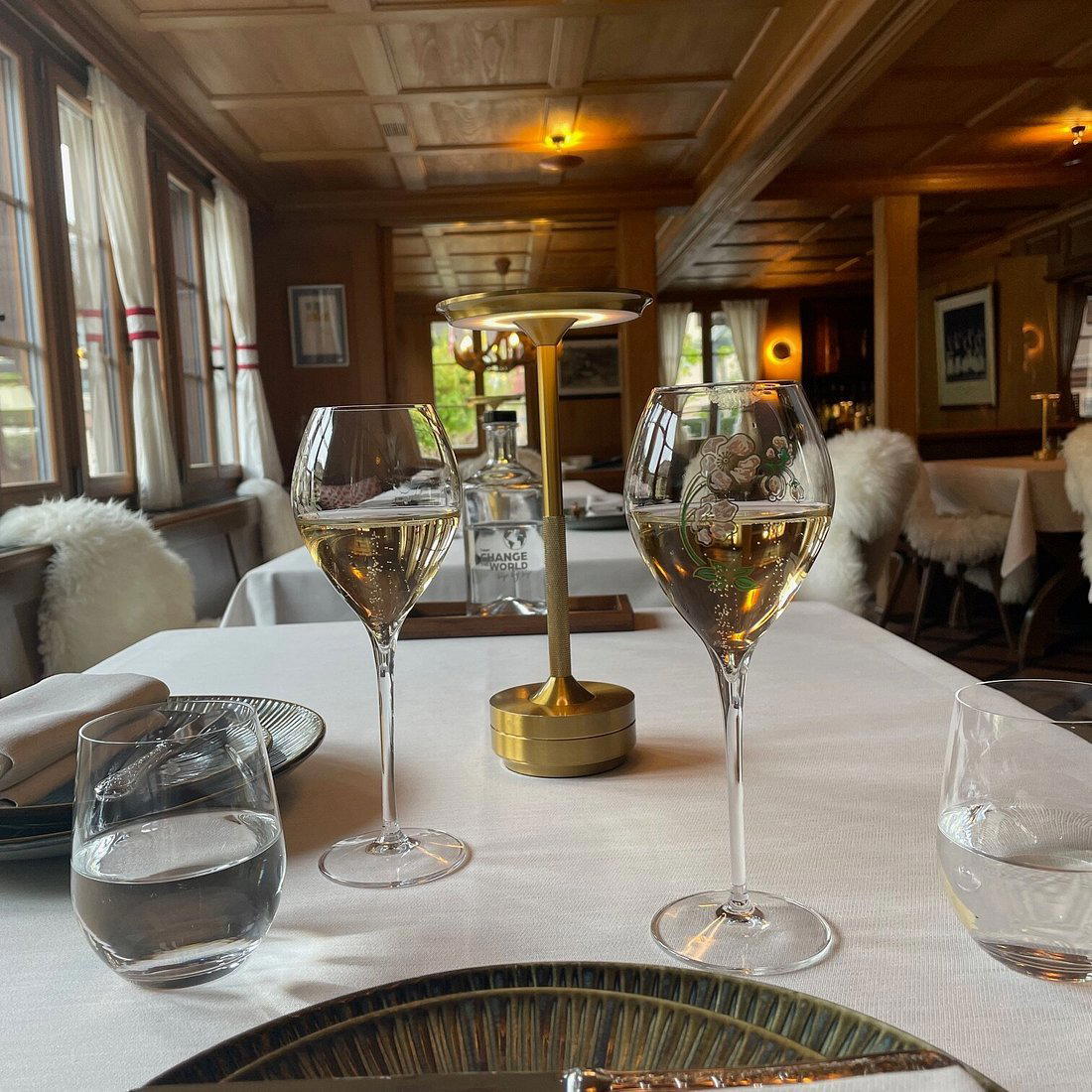
Rustic and welcoming alpine atmosphere ideal for relaxation after outdoor activities.