Tabelog 100 #93
Our verdict
A basement soup-curry address in Shinbashi, Ganesha belongs to Tokyo’s practical curry culture rather than its luxury dining circuit. Its repeated selection for Tabelog Curry TOKYO 100, including 2024, gives it a clear signal in a crowded category where office-district lunches and specialist kitchens compete on consistency, pace, and spice control.

Pearl is the En Primeur Club membership app, where members save venues, book tables and use the concierge.
The menu
What to order
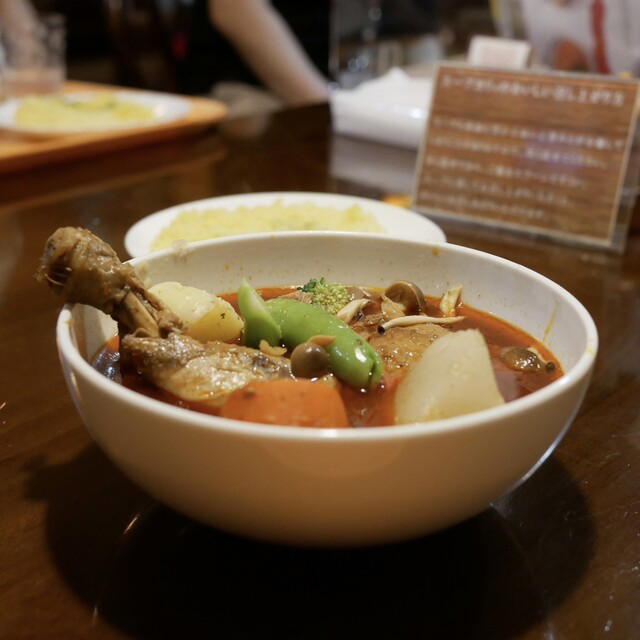
- Chicken and vegetable soup curry
- Lamb and vegetable soup curry
- Vegetable soup curry
- Soup curry half-size for party plans
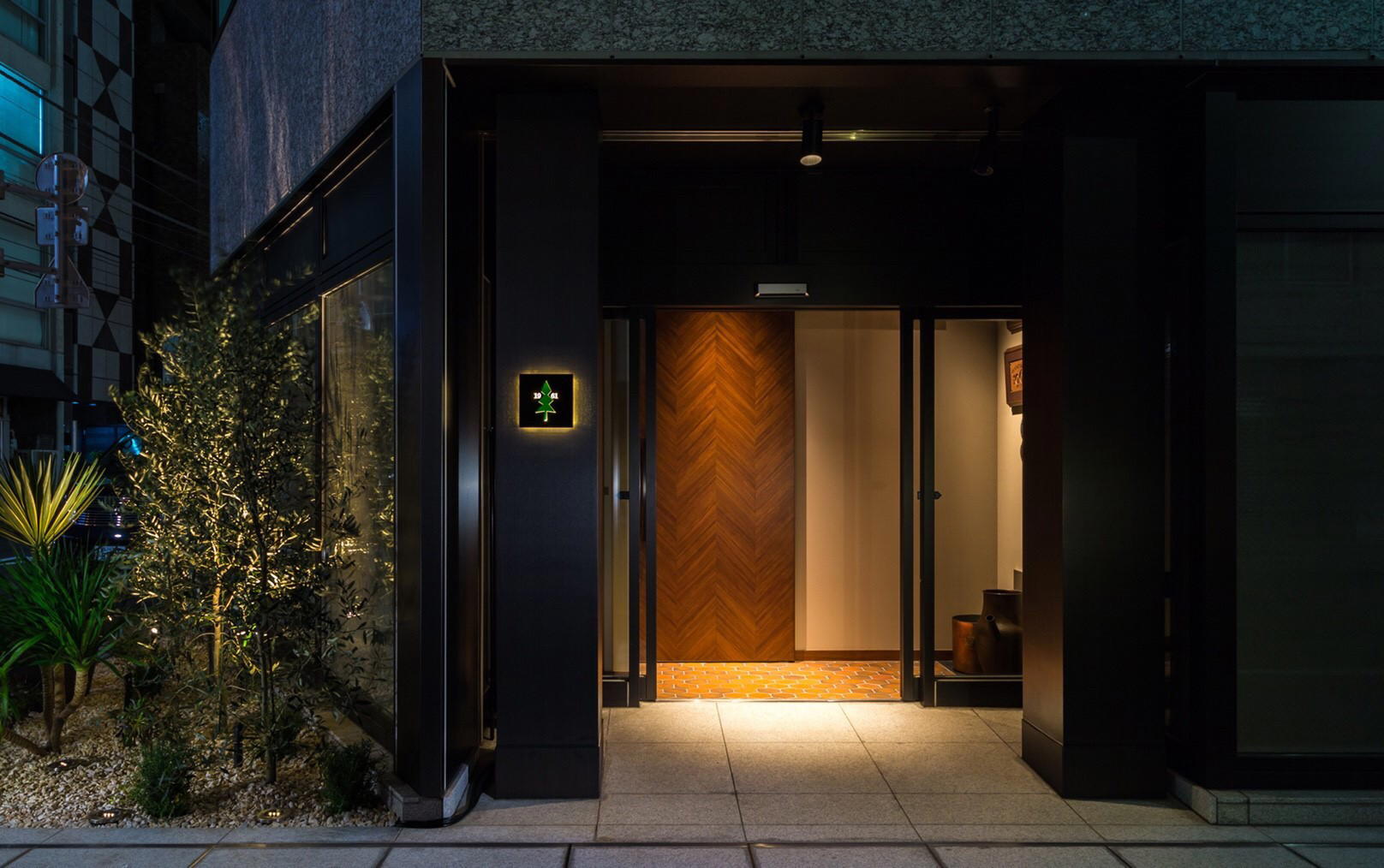
The approach is easy to misread: in Tokyo, a modest specialist room can announce itself quietly rather than with a grand arrival. That detail says much about Tokyo curry culture. Many serious specialist rooms are not built as showpieces; they are built for regulars, quick decisions, and kitchens keeping rhythm through lunch pressure and after-work traffic.
Soup curry has its own lane in Japan’s curry conversation: looser, more broth-driven, and more modular than the thick roux-based curry rice of chain counters and railway-station meals. In Tokyo, it is a specialist category with a following among diners seeking spice and structure without tasting-menu ceremony. Ganesha sits in that lane: a Tokyo soup-curry address recognised in the Tabelog Hyakumeiten source for 2024.
Soup curry as a Tokyo working-district format
Tokyo rewards restaurants that understand timing. Its food culture is shaped by office workers, railway movement, and the after-hours pull between casual drinking and fast specialist meals. Soup curry suits that setting because it can be lunch, dinner, comfort food, and spice fix without demanding a long format.
Recognition matters differently here than at a high-budget dining room. A Tabelog Hyakumeiten selection is not a white-tablecloth signal; it is a filter in a field crowded with small operators and sharply opinionated regulars. A score of 3.72 puts Ganesha in a competitive Tokyo curry tier where repeatability counts. The work is calibration, not spectacle: broth weight, heat level, rice balance, service pace, and the handoff between kitchen and floor.
With no public chef mythology needed to explain the appeal, the restaurant reads less as a personality project than a coordinated small operation. Soup curry depends on timing across stations: broth, toppings, rice, and service flow must align; the room must turn tables without rushing diners; practical pacing must absorb solo guests as naturally as small groups. In a compact room, that coordination is not decorative. It is the format.
Tokyo’s curry map divides into clear subcultures. A diner comparing curry-specific addresses can look across other Tokyo dining rooms without treating them as the same experience. The comparison matters because soup curry has a distinct identity, while Tokyo has made it a dense urban lunch-and-dinner proposition. Ganesha belongs to that Tokyo adaptation: compact, practical, and judged by execution over theatre.
A small room where service mechanics matter
The room is best understood through its pace rather than through decoration. Tokyo specialist restaurants often need to handle solo diners, pairs, and small groups in the same service window. That balance matters because soup curry attracts both destination eaters and routine local use. Awards can win attention once; flow keeps relevance.
The casual register places the room in recognisably everyday Tokyo dining rather than in a narrowly staged destination format. It does not need to behave like a bar or a ceremony; the interest is in how the kitchen keeps the soup-curry format clear, brisk, and satisfying across lunch and dinner budgets.
Accessibility in this category is part of the appeal. Tokyo curry specialists often sit between everyday dining and destination eating, and this one reads as approachable without becoming generic. The kitchen’s challenge is to manage seated guests and service rhythm without losing pace.
For travellers mapping Tokyo food beyond prestige categories, this is the point. Sushi, kaiseki, and French-influenced tasting menus dominate international planning, but curry is one of the city’s great everyday specialisms, where price, speed, and craft intersect more tightly than outsiders expect. A useful itinerary lets curry sit beside other categories. For a broader city view, start with Our full Tokyo restaurants guide, then compare hospitality and after-dark choices through Our full Tokyo hotels guide, Our full Tokyo bars guide, Our full Tokyo wineries guide, and Our full Tokyo experiences guide.
Where it fits in a Tokyo eating day
Ganesha is strongest as a targeted Tokyo stop, not a long-form destination meal. Its value is category fluency: a recognised soup-curry kitchen in a city where dining decisions are often compressed between train lines, work schedules, and evening plans. It is useful for travellers who want one curry meal with a credible Tokyo signal, not a generic bowl chosen by proximity.
The practical case is clear. It does not behave like polished hotel dining, and the listed budget keeps it in the everyday-specialist range: dinner and lunch are both shown at JPY 1,000 - JPY 1,999. For planning, the most reliable details are the city, the category, the phone number, and the recognition trail rather than any elaborate claim of ceremony.
Keep Tokyo comparisons honest. This is not competing in the same planning lane as Umezu, Sugita, or 鮨 和美. It sits in the city’s specialist everyday dining layer, alongside other focused Tokyo addresses across categories. The same editorial logic applies more broadly to category-led stops elsewhere: know the format, understand the price band, and judge the place by how precisely it delivers its own lane.
The verdict is simple: choose it for Tokyo soup curry with a credible recognition trail, compact feel, and the working-district efficiency that gives everyday Tokyo dining its character. It is not a ceremony; it is a specialist meal that knows its lane.
Frequently asked questions
How do I find Ganesha?
Ganesha is located in Tokyo.
What does dinner at Ganesha typically cost?
Pricing at Ganesha is listed as JPY 1,000 - JPY 1,999 JPY 1,000 - JPY 1,999.
Do they take walk-ins at Ganesha?
For current availability, the safest approach is to call +81-3-3433-0309 before going.
What is Ganesha known for?
Ganesha is known for soup curry in Tokyo, with Tabelog Hyakumeiten recognition in 2024 and a listed score of 3.72.
Where the Accolades Land
Comparable venues for cuisine and category context.
| Venue | Cuisine | Price | Awards | Notes |
|---|---|---|---|---|
| GaneshaThis venue (the venue you are viewing) | Sapporo-style soup curry | $10–20 | Tabelog 100 #93 | Not listed |
| Chirimulo | Dessert and cake shop | Not listed | Tabelog 100 #5 | Shibuya |
| Tomo Rakunou 63℃ | Soft-serve ice cream & gelato shop | $1–10 | Tabelog 100 #7 | Sumida |
| ENTUKO | Artisan Bakery & Bread Shop | Not listed | Tabelog 100 #77 | Suginami |
| Dans Dix ans | Artisan Japanese Bakery | Not listed | Tabelog 100 #96 | Kichijoji |
| Atsunko Pan | Artisan bread and bagel bakery | $1–10 | Tabelog 100 #49 | Chiyoda |
Recognition history
Dated appearances from independent guides and award organizations, with the underlying list record or original source where available.
Tabelog 100 #93 · No. 93
Tabelog · Tabelog 100 - Curry - TOKYO - 2024