GamberoRosso
Our verdict
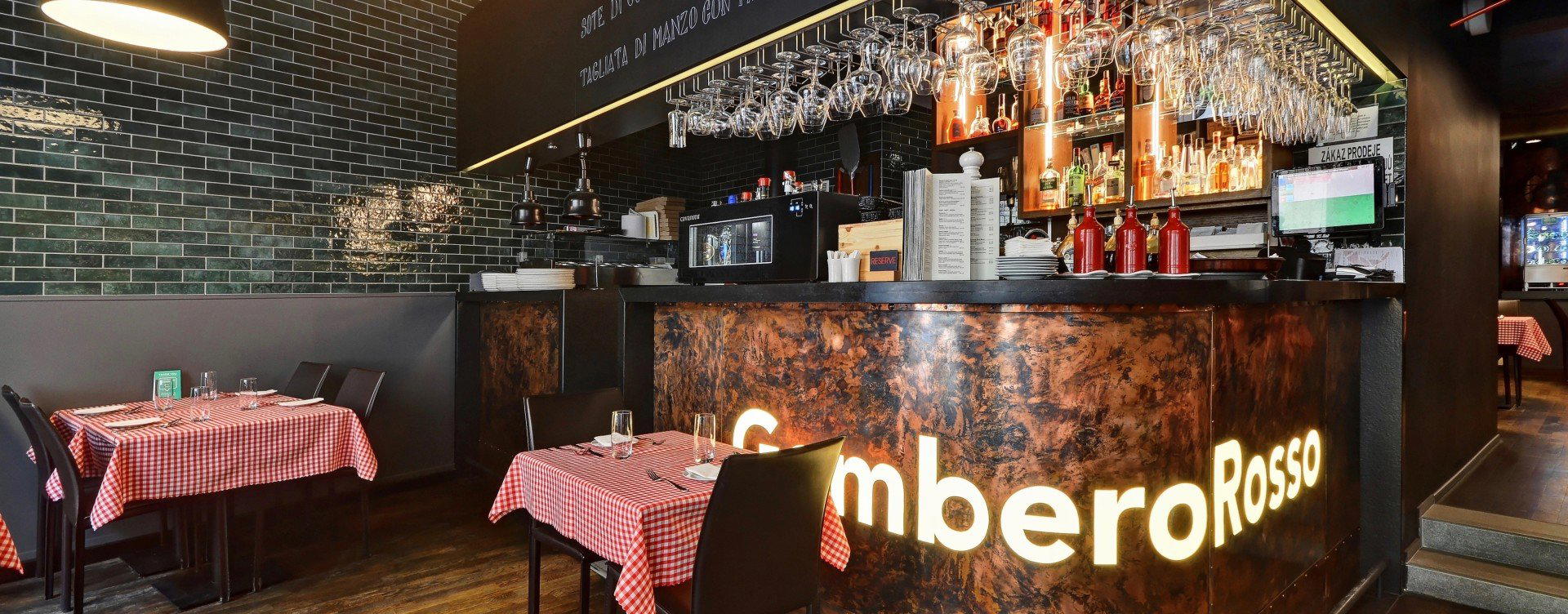
GamberoRosso occupies a medieval address on Jakubská in Prague's Old Town, placing it in the company of the city's more considered dining options. The name references the Italian red prawn, signalling a kitchen oriented toward Italian or Mediterranean cooking in a city where such commitments are less common than the tourist-facing Czech menu. Booking ahead is advisable given the neighbourhood's footfall and the restaurant's focused format.

Pearl is the En Primeur Club membership app — saves, bookings, and concierge access live there. Same editors, same standards.
- Address
- Jakubská 744/4, 110 00 Staré Město, Czechia
- Phone
- +420224829091
- Website
- gamberorosso.menu
- Directions
- Get directions
- Booking
- Book on the venue's website
The menu
What to order
- Pizza Napoletana
- Italian pasta dishes
Where Old Town Density Forces a Choice
Prague's Staré Město presents a particular problem for the serious diner: an extraordinary density of restaurants, the majority of which are calibrated entirely for tourist throughput rather than culinary conviction. Jakubská, the narrow lane running beside the Baroque facade of St James's Basilica, sits close enough to the Old Town Square to catch that footfall, yet the street itself operates at a different register. The buildings here carry the compressed verticality of medieval Prague — stone arches, deep thresholds, interiors that run longer and darker than their frontages suggest. It is the kind of address that rewards the diner willing to move slightly off the main current.
GamberoRosso is located at Jakubská 4 in this part of Staré Město. The name, Italian for red prawn, positions the restaurant within a dining tradition that Central Europe has absorbed selectively and unevenly. In Prague's competitive set, Italian cooking ranges from tourist-facing pasta houses near Charles Bridge to more focused operations that treat sourcing and preparation with the seriousness the tradition demands. The name alone signals intent and places the venue in the latter conversation, even before the menu enters the discussion.
The Italian Table in a Czech Context
Italian cuisine in Prague occupies a peculiar middle ground. The city has enough of a professional dining culture to support ambitious Italian kitchens — you can find that ambition at addresses like Alma or in the Italian-inflected work at Amano, but the category also absorbs a large number of operations that trade on recognisability rather than quality. The restaurants that distinguish themselves in this environment tend to do so through a commitment to the ritual of the Italian meal: its pacing, its sequencing from antipasto through primo and secondo, its insistence that the meal is a structured event rather than a transaction.
That ritual dimension matters more than any individual dish. The Italian dining tradition is not, at its core, about spectacle. It is about proportion, the right size of course, the right pause between them, a wine service that follows the logic of the food rather than leading it. In a city where the dominant dining rhythm is either the fast-turn tourist meal or the tasting-menu format borrowed from French fine dining (as seen at La Degustation Bohême Bourgeoise and Alcron), a restaurant that holds to Italian meal structure offers something genuinely different in its category.
The Ritual of the Meal
The Italian approach to pacing is worth taking seriously as a dining framework, particularly for visitors accustomed to either the compressed efficiency of a two-course lunch or the drawn-out ceremony of a formal tasting menu. The structure of a properly sequenced Italian meal, aperitivo, antipasto, a single primo of pasta or risotto, a secondo with contorni served separately, dolce, creates a rhythm that demands a different kind of attention from the diner. You are not being guided through a chef's narrative. You are participating in a form whose grammar is already established, making choices within it.
For visitors to Prague who have spent an evening at a high-concept address like 420 Restaurant, GamberoRosso offers a deliberate counterpoint: less architecture on the plate, more attention to the sequence of the meal itself. The two modes of eating are not in competition, they serve different purposes, but understanding which one you want before you book will shape the experience considerably.
Italy's seafood-forward traditions, referenced directly in the name, have a particular logic in landlocked Central Europe. The commitment to sourcing fish and shellfish of sufficient quality to anchor a menu in a city far from any coast is not a small one. It speaks to supply chain discipline and to a kitchen willing to accept the constraints that come with honest ingredient-led cooking. Comparable commitments in the Czech context tend to appear at restaurants with explicit farm or producer partnerships, or at addresses like Cattaleya in Čeladná, where sourcing is treated as a primary editorial decision rather than a supporting detail.
Placing GamberoRosso in Prague's Dining Map
Prague's dining scene in the Old Town is stratified in ways that are not always obvious from the street. At the top tier sit Michelin-recognised addresses and their near peers. Below that is a substantial middle tier of restaurants with genuine kitchen ambition but without formal award recognition, places where the cooking is serious and the room is managed with care. GamberoRosso operates in this middle tier, in the company of Prague's considered independents rather than its flagship fine-dining destinations.
For visitors building a Prague itinerary that extends beyond the city, the restaurant's location in Staré Město makes it a natural anchor for an evening before or after exploring the wider Czech dining scene. The country's restaurant culture extends well beyond Prague: Pavillon Steak House in Brno, Na Spilce in Pilsen, and more rural addresses like Dvůr Perlová voda in Budyně nad Ohří and V Bezovém Údolí in Kryštofovo Údolí each represent a different register of Czech hospitality. Chapelle in Písek, Perk Restaurant in Šumperk, ARRIGŌ in Děčín, Long Story Short Eatery and Bakery in Olomouc, and Tlustá Kachna in Chrudim collectively show how far the country's independent dining culture now extends from the capital. Our full Prague restaurants guide maps the city's dining tiers in more detail for those planning a longer visit.
For international comparison, GamberoRosso's positioning within its city context parallels the challenge faced by serious independent Italian or seafood-focused kitchens in any major tourist city: the need to signal quality to a knowing audience without the benefit of formal award recognition as a shorthand. Restaurants like Le Bernardin in New York City and Lazy Bear in San Francisco represent the upper end of what a commitment to a defined culinary tradition can achieve within a competitive urban dining market, the structural principles, if not the price tier or the scale of recognition, are instructive for understanding what any seafood-focused kitchen in a landlocked city is working toward.
Planning Your Visit
GamberoRosso is at Jakubská 4 in Prague's Old Town, a short walk from the Old Town Square and within easy reach of the city's main metro connections at Náměstí Republiky and Staroměstská. The address is accessible on foot from most Old Town accommodation, and the Jakubská street itself is quiet enough in the evening to make the approach from the square feel like a deliberate departure from the tourist circuit. Given the restaurant's location and the neighbourhood's general demand, booking ahead for dinner is the prudent approach, particularly on weekends and during Prague's peak visitor months of May through September and December.
Frequently asked questions
Where is GamberoRosso in Prague?
GamberoRosso is located at Jakubská 744/4, 110 00 Staré Město, Czechia, Prague.
Is GamberoRosso a good option for Italian food near the Old Town Square in Prague?
GamberoRosso's address at Jakubská 4 puts it within a short walk of the Old Town Square, in a part of Staré Město where the restaurant offer ranges from tourist-facing Czech taverns to more seriously run kitchens. Italian cuisine in Prague's Old Town occupies a distinct middle ground — neither the approximations common in tourist corridors nor the fully import-led operations found in Vinohrady or Dejvice. GamberoRosso positions itself within the professional end of that Italian dining bracket for the area.
What do people recommend at GamberoRosso?
GamberoRosso sits within Prague's Old Town Italian dining tier, where the kitchen draws on Italian culinary tradition rather than Czech-Italian fusion. Regulars tend to favour the slower, course-led approach to the meal over à la carte grazing — the pacing itself is part of the point. Without a current published menu on record, the safest approach is to ask the floor staff what the kitchen is leading with on the day.
Do they take walk-ins at GamberoRosso?
GamberoRosso is at Jakubská 4 in Prague's Staré Město, a street that sees steady foot traffic from visitors moving between the Old Town Square and the city's northern districts. Walk-in availability in this part of Old Town varies sharply by day and season — weekend evenings in particular fill early across the neighbourhood. Calling ahead or checking on arrival mid-afternoon is a more reliable approach than arriving at peak dinner hour and hoping for a table.
Booking and Cost Snapshot
| Venue | Cuisine | Price | Awards | Notes |
|---|---|---|---|---|
| GamberoRossoThis venue — the venue you are viewing | Modern Italian Neapolitan Pizza | $20–30 | Not listed | Not listed |
| La Degustation Bohême Bourgeoise | Modern Czech Fine Dining | $100–150 | 1 Michelin Star · La Liste Top Restaurants | French-Czech |
| Alcron | Modern Central European with Plant-Forward Focus | $50–100 | Star Wine List | Modern European |
| Benjamin | Modern Czech Tasting Menu | $50–100 | Michelin Plate · Wine Spectator Award of Excellence | Modern Cuisine |
| Café Imperial | Classic Czech Brasserie | $30–50 | Michelin Plate | Traditional Cuisine |
| Dejvická 34 by Tomáš Černý | Modern Italian & Mediterranean | $30–50 | Michelin Bib Gourmand · Falstaff Restaurant - 93 Falstaff Points | Italian |