
Osaka’s Chinese dining scene is broader than quick gyoza counters and department-store banquet rooms, and Fukushima Koto belongs to the small-format end of that spectrum. The restaurant is selected for Tabelog 100 Chinese WEST 2026, works in a reservation-only chef’s-choice format, and keeps the room compact enough that planning matters as much as appetite.
Pearl is the En Primeur Club membership app — saves, bookings, and concierge access live there. Same editors, same standards.
- Address
- Japan, 〒531-0076 Osaka, Kita Ward, Oyodonaka, 3 Chome−3−25 西梅田第一マンション 一階
- Phone
- +81 6-6476-8668
- Website
- instagram.com
 Saves & bookings on Pearl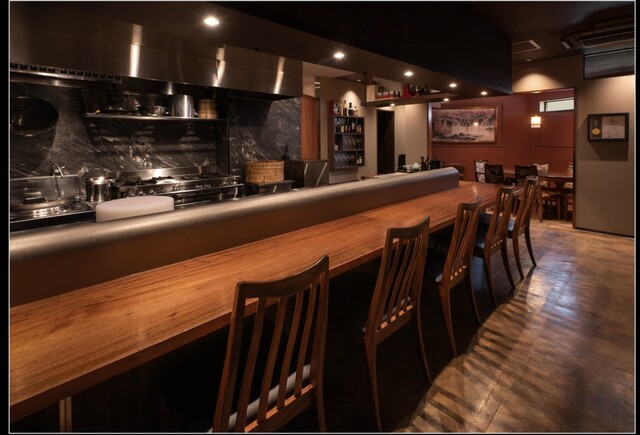
Oyodo sits just far enough from Osaka’s main-station churn for the evening to change register. The towers and rail lines are still part of the geography, but the dining mood is quieter: smaller rooms, fewer walk-ins, and restaurants built around set rhythms rather than casual drift. In that context, Fukushima Koto reads less like a neighbourhood Chinese restaurant and more like Osaka’s current answer to the compact, course-led counter: limited seats, fixed start times, and a room where the meal is structured before anyone opens a menu.
That matters because Chinese cuisine in Osaka is not a single category. At street level, the city often treats it as comfort food, from pork buns and takeaway counters to late-night stir-fry rooms. At the higher end, the model becomes more deliberate: Cantonese technique, wine rather than only beer or highballs, and courses paced with the discipline usually associated with kappo or sushi counters. Fukushima Koto sits in that latter lane, with Tabelog 100 Chinese WEST 2026 recognition giving it a clear signal inside western Japan’s competitive Chinese category.
A compact Cantonese-format room in a city built on appetite
The restaurant’s stated format is chef’s-choice Cantonese cuisine, with a course structure of around 15 dishes. That number is useful because it places the experience closer to a composed progression than a standard à la carte Chinese meal. Osaka diners know abundance well; the distinction here is control. A small kitchen and a small dining room shift attention from table variety to sequence, pacing, and how Cantonese technique can be adapted to a Japanese tasting-menu framework.
The room is listed at 12 seats, with counter seating and a semi-private room arrangement. That is not a decorative detail. In Osaka, where high-demand restaurants often operate in narrow spaces and rely on punctual seatings, capacity shapes the whole experience. A 12-seat restaurant cannot absorb indecision, late arrivals, or large groups casually. The reward is focus: fewer covers, a tighter service rhythm, and a format that gives Chinese cuisine the same close-range seriousness that Osaka has long granted to sushi, tempura, and kappo.
Wine listing is another quiet marker. Chinese fine dining in Japan has moved beyond the old binary of banquet-room Shaoxing wine or casual beer pairings, and wine now appears more often in small, course-led rooms where acidity, texture, and sauce weight need careful handling. Fukushima Koto’s wine orientation places it with that newer group, not with the broader, louder Chinese restaurant tradition built around shared plates and volume.
Why the recognition matters for planning, not bragging rights
Tabelog’s Hyakumeiten lists are useful in Japan because they capture a local dining culture that often moves faster than international guidebooks. Selection for Chinese WEST 2026 does not simply decorate the name; it identifies the restaurant as part of a regional field that includes Kansai’s serious Chinese kitchens, many of them small, reservation-led, and highly local in audience. For a traveller, that kind of recognition is practical intelligence. It tells you that this is not a fallback dinner near Osaka Station. It is a meal to plan around.
Opened in June 2025, the restaurant also reflects a recent Osaka pattern: ambitious dining moving into quieter pockets around major transport zones rather than relying on the densest nightlife blocks. Fukushima and Oyodo have the advantage of access without the constant theatre of Umeda. The area suits restaurants that want destination diners but not a showy street presence. That balance is increasingly common in Osaka’s serious dining rooms, where the commute is modest but the experience is intentionally contained.
Compared with the nearby field, the positioning is clear. Fukushima Koufukuya operates in a much lower price tier, while Sweet Basil occupies a more casual bracket. Korean Ryori Mugunfa sits closer on spend, though in a different cuisine. Yonemasu belongs to Osaka’s Japanese dining conversation rather than its Chinese one. Those comparisons matter because they prevent a common mistake: treating every hard-to-book small restaurant in Osaka as the same kind of occasion.
How it fits into a wider Osaka itinerary
Osaka rewards diners who separate categories rather than chase a single grand meal. A serious Chinese course dinner in Oyodo can sit alongside bakery stops, casual counters, and bars without trying to replace them. For broader mapping, EP Club’s full Osaka restaurants guide is the natural starting point, with city planning supported by the Osaka hotels guide, Osaka bars guide, Osaka wineries guide, and Osaka experiences guide.
The city’s range is visible in the contrast between compact specialist rooms and everyday addresses:.cafe, 52CHO-ME BAKERY, 551 Horai (551蓬莱), 99 Pizza Napoletana Gourmet, and a canto (Italian) all point to different Osaka appetites. Wider Japan comparisons can also be useful: -Grilled beef Sukiyaki- KAMAKURA TANUKIAN 鎌倉 たぬき庵 in Kamakura. 鮪と炭火焼き うお炭 秋葉原店 in Tokyo.know in Kumamoto, (Shoku) Vietnam in Kawasaki, [Curry Senmon Ten] Maruyama Kyoju. in Sapporo, and [ki:] in Kyoto show how specialist formats differ by city. Across the Pacific, Jōdo Saké Bar in Los Angeles and Onigiri Time in Pasadena underline the same point in another market: tightly defined concepts travel better than generic luxury.
The editorial call is simple. Choose this restaurant when the goal is a controlled Chinese course meal in Osaka, not a spontaneous night of shared plates. Its value is in specificity: Cantonese cooking, small-room pacing, wine, and recent regional recognition. In a city famous for appetite, that restraint is the point.
Compact Comparison
Comparable venues by price and recognition.
| Venue | Cuisine | Price | Notes |
|---|---|---|---|
| Fukushima KotoThis venue — the venue you are viewing | Kita, Cantonese Chinese | $$ | Not listed |
| Marusho Gyoza Ten Dai2 hanna ten | Not listed | $$ | Daito, Gyoza-focused Chinese dumpling shop |
| Bakabon | Kita, Ramen & Sichuan Chinese | $$ | Not listed |
| Tenpei | Kita, Bite-Sized Gyoza | $$ | Not listed |
| Miwa Tei | Not listed | $$ | Fukushima, Casual Chinese with Tantanmen & Seafood |
| Canton Ryori Minsei Hiruton puraza uesuto ten | Not listed | $$$ | Kita, Traditional Cantonese & Dim Sum in Hilton Plaza West |
Recognition history
Dated appearances from independent guides and award organizations, with the underlying list record or original source where available.
Tabelog 100 #89 · No. 89
Tabelog · Tabelog 100 - Chinese cuisine - WEST - 2026
Continue exploring
More in Osaka
Restaurants in Osaka
Browse all →




Bars in Osaka
Browse all →




Hotels in Osaka
Browse all →



Wineries in Osaka
Browse all →
At a Glance
- Quiet
- Cozy
- Date Night
- Business Dinner
- Group Dining
- Special Occasion
- Standalone
Current opening hours
- Monday
- Closed
- Tuesday
- 6:30–10 PM
- Wednesday
- 6:30–10 PM
- Thursday
- 6:30–10 PM
- Friday
- 6:30–10 PM
- Saturday
- 12–2 PM, 6–9:30 PM
- Sunday
- 12–2 PM, 6–9:30 PM
Hours can change for holidays and private events. Last verified .
Described as a calm, relaxed space in a quiet Oyodo neighborhood, offering a warm, unhurried atmosphere suited to enjoying Cantonese courses at a leisurely pace rather than a busy downtown Chinese restaurant vibe.