Our verdict
Frankie's Food Factory sits on Old Northern Road in Glenhaven, serving Sydney's Hills District as a neighbourhood family dining venue. Located roughly 45 to 60 minutes from the CBD, it operates in the outer-suburban casual tier, drawing primarily from its immediate local catchment. Specific menu and booking details are best confirmed directly with the venue before visiting.

Pearl is the En Primeur Club membership app — saves, bookings, and concierge access live there. Same editors, same standards.
- Address
- 609 Old Northern Rd, Glenhaven NSW 2156, Australia
- Phone
- +61298992299
- Hours
- Mon–Fri 8 AM–4 PMSat–Sun 8 AM–5 PM
- Website
- frankiesfoodfactory.com.au
- Directions
- Get directions
- Booking
- Book on the venue's website
The menu
What to order
- Chicken burger
- Baby back ribs
- Halloumi sunrise
A Neighbourhood Table on the Northern Fringe
The Hills District sits at Sydney's north-western edge, where the density of the inner suburbs gives way to wider blocks, school pick-up traffic, and a dining scene built more around community ritual than destination seeking. Along Old Northern Road in Glenhaven, the rhythm is unhurried and the clientele largely local. Frankie's Food Factory operates within that context: a family-oriented venue in a part of Sydney that visitors rarely reach unless they live nearby or have a specific reason to drive out. That positioning shapes everything about how the place functions, from its format to its audience to the expectations it is designed to meet.
Sydney's restaurant geography has long concentrated its critical attention on the inner east, the CBD fringe, and the lower north shore. Venues like Rockpool and Saint Peter define the city's benchmark tier, and they draw from a metropolitan catchment. The Hills District operates several tiers removed from that conversation. What it offers instead is accessibility, familiarity, and a format that prioritises volume and comfort over innovation. Frankie's Food Factory belongs firmly to that suburban dining category, which is a meaningful thing to understand before making the drive from the city.
The Scene and What It Signals
Suburban family dining in Sydney's outer north-west follows a recognisable template: generous portions, broad menus spanning multiple cuisines or covering crowd-pleasing categories, spaces designed to absorb noise from large groups, and pricing calibrated to the family budget rather than the expense account. This is the tier that makes a suburb function as a place people actually want to live in, and it fills a genuine gap in a city where the premium end absorbs most of the editorial oxygen.
The category is not without its own craft disciplines. Front-of-house consistency across high table-turn environments is genuinely difficult. Managing a broad menu without losing kitchen coherence is a team coordination challenge that restaurants at this format level face daily. Where fine-dining venues such as Brae in Birregurra or Attica in Melbourne concentrate their service energy on a small, choreographed experience, a venue like Frankie's in Glenhaven must deliver consistent hospitality at a faster pace and across a wider demographic range. That operational discipline rarely gets written about, but it is what keeps a suburban neighbourhood venue open for years.
Team Dynamics in a Volume Format
The editorial angle that most rewards attention at a venue operating in this tier is the interplay between kitchen output and floor management. In premium contexts, that dynamic is often framed around the chef-sommelier pairing or the ritual of a long tasting menu. At a suburban family restaurant, the equivalent conversation happens between a kitchen managing a broad ticket flow and a front-of-house team translating that to tables that may include young children, elderly guests, and groups celebrating occasions. The coordination required is different in character but not in seriousness.
Venues in this suburban format category across Sydney and its outer rings tend to live or die by whether the floor and kitchen are aligned on pace. When they are, the experience feels easy and generous. When they are not, a busy Friday night becomes stressful on both sides of the pass. Comparable venues across the region, from Ormeggio at The Spit in Mosman to Pipit in Pottsville, each solve the team coordination problem differently depending on their format. At the neighbourhood level, the solution is typically a well-drilled floor team and a kitchen menu engineered for reliability.
Context Within Sydney's Broader Dining Map
Sydney's dining scene is better understood in geographic segments than as a single hierarchy. The CBD and inner suburbs host venues competing at a national level, including award-tracked destinations that sit alongside peers like Botanic in Adelaide or Hentley Farm in Seppeltsfield in the broader Australian fine-dining conversation. The middle and outer suburban rings serve a different function entirely: they are the daily-use infrastructure of a city, providing accessible dining within reasonable distance of where most people actually live.
Glenhaven's position on Old Northern Road places it squarely in that outer-suburban infrastructure category. The drive from the CBD takes between 45 and 60 minutes depending on traffic, which means this venue serves its immediate catchment rather than drawing from across the metropolitan area. That is not a limitation so much as a design reality. Venues that understand their catchment and build for it tend to outlast those that reach for an audience they cannot sustain. For comparison, internationally recognised destination venues such as Le Bernardin in New York City or Lazy Bear in San Francisco occupy the opposite end of the draw-radius spectrum, pulling international visitors specifically to their address. Frankie's is serving the people who already live ten minutes away, and that is a coherent and legitimate business model.
Other Sydney venues within the inner-city orbit, such as 10 Pounds, 10 William St, and 1021 Mediterranean, each occupy distinct positions within a much denser competitive set. Glenhaven's dining scene has fewer direct competitors within its immediate radius, which gives a venue like Frankie's a local relevance that city-centre operators can rarely rely on. For a fuller picture of where Sydney's dining energy concentrates, the full Sydney restaurants guide maps the city's scene across all its tiers.
Planning Your Visit
| Factor | Frankie's Food Factory Glenhaven | Typical Inner-City Sydney (e.g. 10 William St) | Regional Destination (e.g. Pipit, Pottsville) |
|---|---|---|---|
| Drive from CBD | 45-60 min | 5-15 min | 90+ min |
| Primary audience | Local families, Hills District residents | Inner-city professionals, visitors | Regional and destination travellers |
| Format tier | Suburban casual dining | Mid-market urban | Premium regional |
| Walk-in likelihood | Higher off-peak | Varies by venue | Booking generally required |
| Booking method | Online platforms common | Direct or online |
Visitors coming from the city should account for travel time and confirm current trading hours directly with the venue before making the trip. Public transport options to Glenhaven are limited, and most visitors arrive by car.
Frequently asked questions
What's Frankie's Food Factory Glenhaven's location?
Frankie's Food Factory Glenhaven is located at 609 Old Northern Rd, Glenhaven NSW 2156, Australia, Sydney.
Is Frankie's Food Factory Glenhaven a good option for kids' birthday parties or group celebrations in the Hills District?
The venue's name and location at 609 Old Northern Rd in Glenhaven — at the heart of a predominantly family-oriented suburb — suggest a format set up for group occasions rather than intimate two-cover dining. Contacting the venue directly is the most reliable way to confirm group arrangements.
What should I order at Frankie's Food Factory Glenhaven?
The name and suburban Hills District setting point toward a broad, family-oriented menu built around variety and familiar formats rather than a narrow specialty. Arriving with an open brief tends to work well at venues operating in this category.
Do they take walk-ins at Frankie's Food Factory Glenhaven?
Venues at this address type in Glenhaven's outer north-west corridor generally have more capacity for walk-ins during mid-week off-peak periods than on Friday evenings or weekend lunch, when family traffic from the surrounding Hills District suburbs peaks. Calling ahead to 609 Old Northern Rd directly before a busy-period visit is the practical move.
What's the defining dish or idea at Frankie's Food Factory Glenhaven?
The 'Food Factory' framing in the venue name tends to signal volume-friendly, inclusive menus where accessibility across age groups and tastes carries more weight than a single chef-driven concept. That positioning is well matched to the Hills District's demographic, where family groups with mixed dietary preferences are the dominant dining party.
How does Frankie's Food Factory Glenhaven handle allergies?
Contact the restaurant at 609 Old Northern Rd, Glenhaven NSW 2156 directly before visiting, especially for serious allergens. Suburban family-format venues in Sydney's outer north-west generally accommodate common dietary requests, but written confirmation from the kitchen is advisable for medically significant restrictions.
A Pricing-First Comparison
| Venue | Cuisine | Price | Awards |
|---|---|---|---|
| Frankie's Food Factory GlenhavenThis venue — the venue you are viewing | Modern Australian Cafe | $20–30 | Not listed |
| Rockpool | Modern Australian Steakhouse | $150–200 | World's 50 Best #49 · La Liste Top Restaurants |
| Saint Peter | Modern Australian Seafood | $150–200 | World's 50 Best #66 · La Liste Top Restaurants |
| BENTLEY Restaurant & Bar | Modern Australian Fine Dining | $150–200 | La Liste Top Restaurants · Star Wine List |
| Bennelong | Modern Australian Fine Dining | $200–300 | La Liste Top Restaurants · Star Wine List |
| Bistecca | Florentine Steakhouse | $100–150 | Star Wine List |
Continue exploring
More in Sydney
Restaurants in Sydney
Browse all →
Bars in Sydney
Browse all →
Hotels in Sydney
Browse all →

Details
- Lively
- Trendy
- Family
- Casual Hangout
- Brunch
- Garden
- Local Sourcing
- Garden
- A La Carte
- Vegetarian Friendly
- Vegan Options
- Gluten Free Options
Current opening hours
- Monday
- 8 AM–4 PM
- Tuesday
- 8 AM–4 PM
- Wednesday
- 8 AM–4 PM
- Thursday
- 8 AM–4 PM
- Friday
- 8 AM–4 PM
- Saturday
- 8 AM–5 PM
- Sunday
- 8 AM–5 PM
Hours can change for holidays and private events. Last verified .
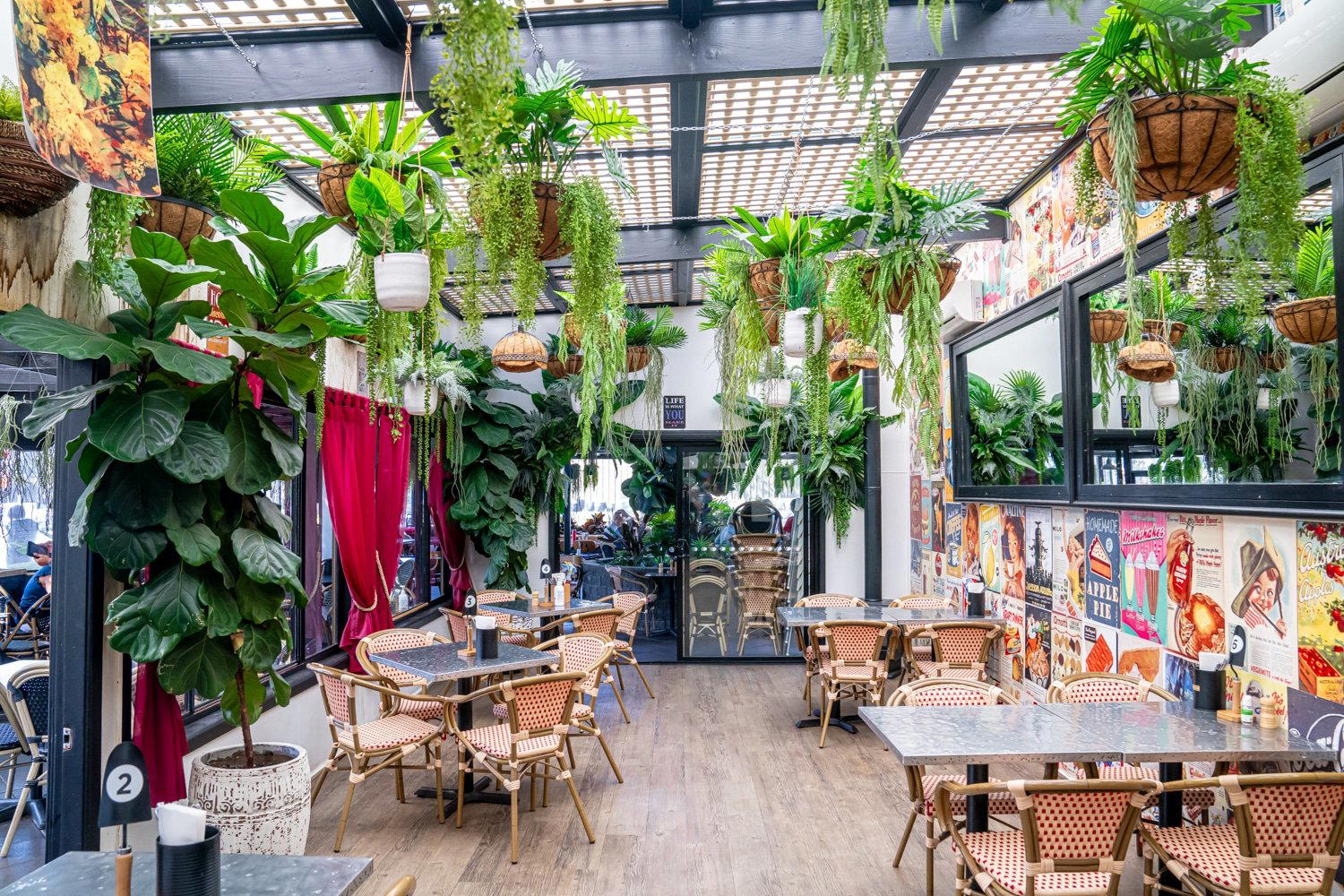
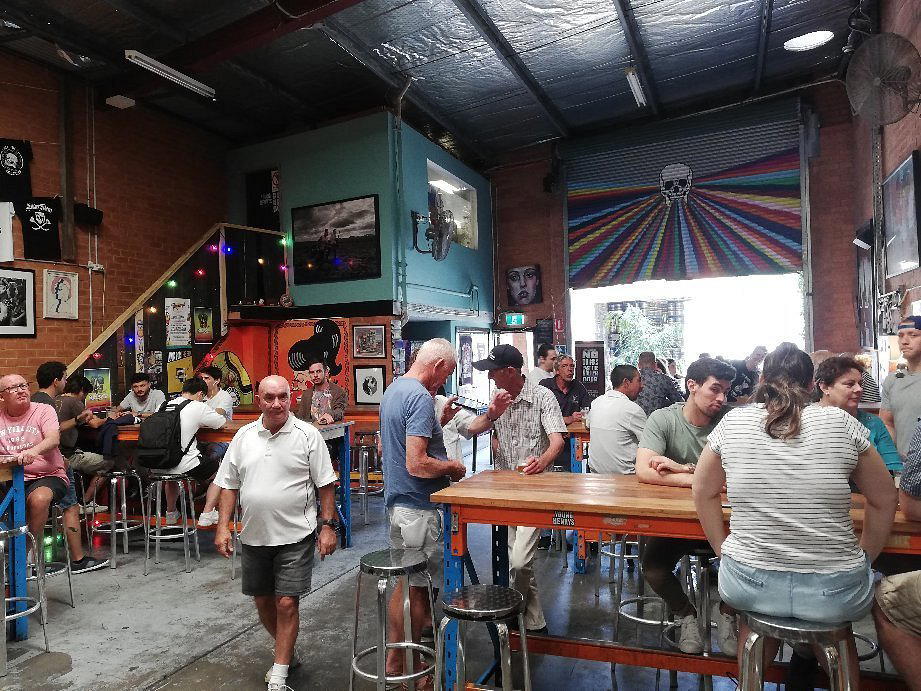
Noisy, lively open space with garden nursery surroundings and family-friendly energy.