Four Seasons Golden Triangle
Our verdict
The Four Seasons Golden Triangle occupies a rare position in northern Thailand's hospitality scene: a large-format luxury property set where the borders of Thailand, Myanmar, and Laos converge above the Mekong River. The surrounding region's agricultural and forested terrain shapes what arrives at the table, placing ingredient provenance at the centre of the dining conversation. For travellers reaching Chiang Saen, this is the area's most structured high-end base.

Pearl is the En Primeur Club membership app, where members save venues, book tables and use the concierge.
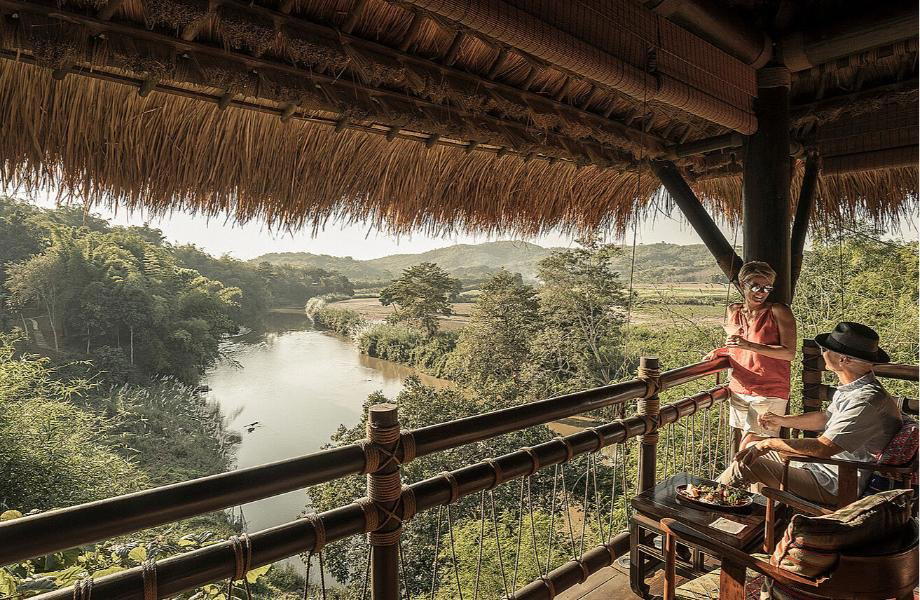
Where Three Borders Meet the Mekong
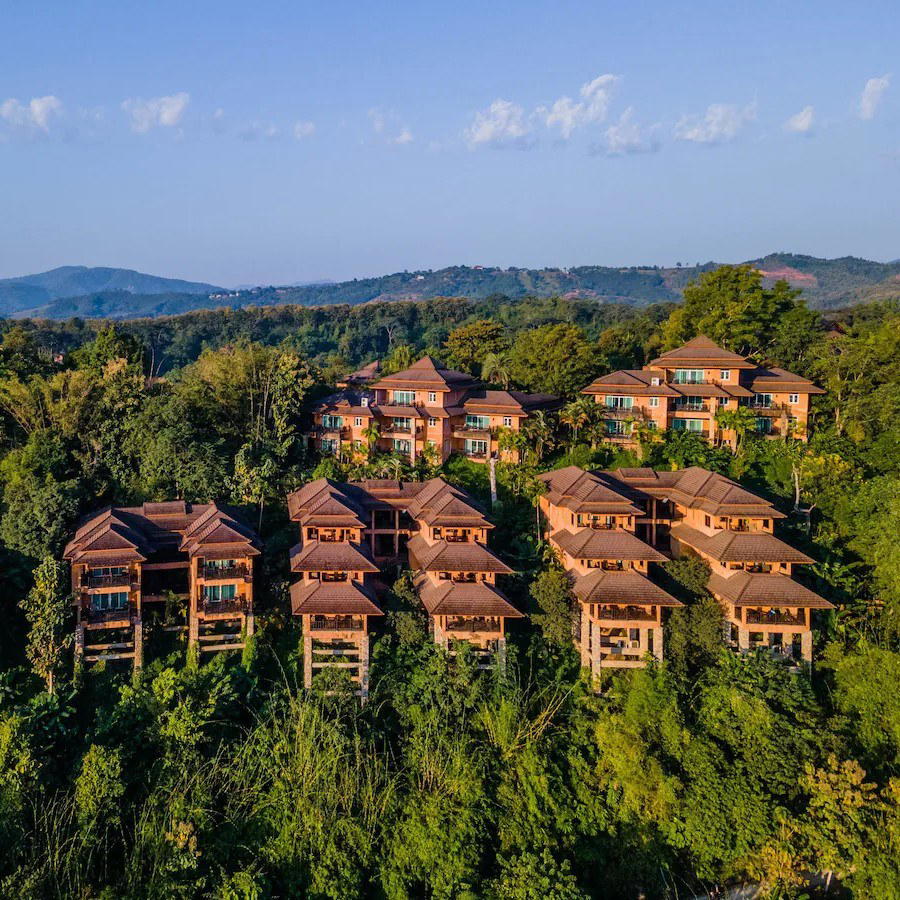
The Golden Triangle is one of Southeast Asia's most geographically specific addresses. The point where Thailand, Myanmar, and Laos converge above the Mekong River is not a metaphor for remoteness, it is a physical coordinate, and the Four Seasons property in Chiang Saen sits within that tri-border zone at an elevation that frames the river and its far bank as a permanent backdrop. Arriving here, whether by road from Chiang Rai or by a short transfer from the area's small airport, carries a sense of genuine distance from urban Thailand. That distance is the point. The property's location is not incidental to its dining character; it is the primary condition that shapes everything on the plate. For context on the broader Chiang Saen dining scene, see our full Chiang Saen restaurants guide.
The Ingredient Geography of the Golden Triangle
Northern Thailand's upper provinces sit within a foraging and farming corridor that has no close equivalent in the country's south or centre. The hill tribes of Chiang Rai province have cultivated mountain vegetables, heritage rices, and medicinal herbs across generations of smallholder agriculture. The Mekong itself supplies freshwater fish varieties that rarely travel far from their source. For a property positioned in this terrain, the sourcing argument writes itself: the supply chain is short, the producers are local in the strictest sense, and the ingredients reflect an ecology that Bangkok's top-tier restaurants often spend considerable effort and cost to replicate from a distance.
This contrasts meaningfully with what Thailand's most celebrated fine-dining restaurants are doing at the other end of the country. Sorn in Bangkok has built its reputation on southern Thai ingredients sourced through direct producer relationships, a model that required years of network-building precisely because Bangkok is far from its ingredient base. The Golden Triangle's geographic advantage is the inverse: proximity to source is structural, not achieved. Restaurants in this northern corridor, particularly those operating within large resort properties, have natural access to what urban fine-dining destinations spend heavily to secure.
The same dynamic plays out across Thailand's regional dining scene. PRU in Phuket has made farm-to-table sourcing a defining element of its identity in the south, while AKKEE in Pak Kret demonstrates how ingredient specificity can anchor a restaurant's reputation even on Bangkok's periphery. The northern highlands offer a different register entirely: cooler temperatures, distinct soil profiles, and access to Shan-influenced produce that crosses informally from Myanmar. These are not ingredients that appear on menus elsewhere in Thailand without significant logistical effort.
Luxury Resort Dining in a Remote Context
Large-format luxury properties in remote locations face a particular dining challenge: the captive audience effect. When guests cannot easily leave for dinner, the restaurants within the property bear the full weight of the dining experience across multiple days. This tends to produce one of two outcomes, a formulaic international menu designed to offend no one, or a genuine investment in regional cuisine that turns the location into an asset. The Four Seasons brand, operating in this tier of the international hospitality market, has historically leaned toward the latter approach at its more remote Southeast Asian outposts, where the surrounding environment is too distinctive to ignore.
Chiang Saen itself is a small town with deep historical roots, it was the seat of the ancient Lanna kingdom before Chiang Rai and Chiang Mai assumed regional dominance, but it offers limited independent dining infrastructure at the level a Four Seasons guest would typically seek. The property's restaurants therefore function as the primary fine-dining option for the immediate area, which concentrates both the opportunity and the responsibility. Travellers accustomed to the restaurant density of Chiang Mai or Bangkok should recalibrate expectations: this is a destination where the resort's kitchen matters more, not less, than it would in a city context.
The Regional Comparison Set
Thailand's upper north is underrepresented in international fine-dining coverage relative to its ingredient richness. The Michelin Guide's Thailand edition has historically concentrated its attention on Bangkok and Phuket, with Chiang Mai receiving incremental recognition in recent years. Chiang Saen and the Golden Triangle remain outside that formal recognition framework, which means properties here are not competing on star counts or award tallies but on experience quality and access. For travellers who have worked through Bangkok's ฿฿฿฿ tier, Sorn, Baan Tepa, Sühring, the Golden Triangle offers something structurally different: dining within a landscape rather than within a city, where the journey to the table is as considered as the table itself.
Regionally in Thailand, comparable ingredient-led approaches appear at different price points and formats. Anuwat in Phang Nga anchors its menu in southern coastal produce. Ayutthayarom in Phra Nakhon Si Ayutthaya draws on the central plains' agricultural heritage. The northern highlands represent a third distinct ingredient zone, one where the influence of Shan, Akha, and Lahu communities on local food culture creates a culinary profile that sits outside standard Thai regional categories. A resort property with genuine commitment to that local profile is positioned at the intersection of luxury hospitality and cultural specificity.
Planning a Visit
Chiang Saen is approximately 60 kilometres northeast of Chiang Rai, and most travellers arrive via Chiang Rai International Airport before transferring by road. The dry season, running broadly from November through February, brings cooler temperatures and clearer skies that make the Mekong views and any outdoor dining or terrace access considerably more rewarding than the wet months. Booking for peak season travel should be approached well in advance given the property's remote location and limited room inventory relative to demand. The Four Seasons Golden Triangle sits in a price tier consistent with the brand's Southeast Asian portfolio; travellers comparing options across Thailand's northern region will find limited alternatives at this format and standard within Chiang Saen itself. For a broader view of Thailand's regional dining beyond the north, the EP Club has documented options ranging from Baan Chik Pork Noodles in Udon Thani and Baan Heng in Khon Kaen in the northeast, to Chomjan in Ubon Ratchathani and Banmai Chay Nam in Nakhon Ratchasima, illustrating how widely ingredient character varies across Thailand's regional corridors. For those building a broader Thailand itinerary that includes coastal and island dining, Baan Suan Lung Khai in Ko Samui, Chom Tawan in Chon Buri, and Day and Night in Surat Thani provide useful reference points at different price tiers.
Frequently asked questions
Would Four Seasons Golden Triangle be comfortable with kids?
Four Seasons properties operate with dedicated children's programming as a global standard, and the Golden Triangle location in Chiang Saen adds a geographic dimension that holds genuine interest for older children, the convergence of three countries visible from the property is a concrete, mappable concept rather than an abstract amenity. The resort's remote setting northeast of Chiang Rai means activities tend to be nature- and culture-oriented rather than urban. Families travelling with younger children should confirm specific facilities directly with the property before booking, as programming can vary by season.
Is Four Seasons Golden Triangle better for a quiet night or a lively one?
Chiang Saen is a small district town roughly 60 kilometres northeast of Chiang Rai, and the surrounding area does not produce the nightlife density you would find in Chiang Mai or Bangkok. The resort sits within that remote context, which tends to orient the evening experience toward in-house dining, river views, and property-based programming rather than external bar-hopping. Guests seeking a lively social scene with multiple venue options should recalibrate expectations; those after a contained, unhurried evening will find the setting well-suited to that.
What makes the Four Seasons Golden Triangle location in Chiang Saen significant compared to other Thai resort stays?
The address at the convergence of Thailand, Myanmar, and Laos above the Mekong River is geographically specific in a way that few resort locations in Thailand can match, you are at an actual tri-border point, not a marketing reference to a broader region. Chiang Saen sits in Chiang Rai Province, which is underrepresented in international fine-dining and resort coverage relative to its cultural and ingredient richness. That combination of geographic rarity and relative obscurity on the international circuit is the distinguishing factor against more-trafficked Thai resort destinations like Phuket or Koh Samui.
What should I order at Four Seasons Golden Triangle?
What the location does reliably inform is the ingredient supply: northern Thailand's upper provinces sit within a foraging and farming corridor, hill tribe agriculture, riverside produce, and highland herbs, that shapes what appears on menus in this area. Asking kitchen staff or your server what is sourced locally or in season is the most direct way to eat to the region's strengths.
What's the address for Four Seasons Golden Triangle?
Four Seasons Golden Triangle is located at Vieng, 499 MOO1 T. Vieng, Chiang Saen District, Chiang Rai 57150, Thailand, Chiang Saen.
Side-by-Side Snapshot
| Venue | Cuisine | Price | Awards | Notes |
|---|---|---|---|---|
| Four Seasons Golden TriangleThis venue (the venue you are viewing) | Thai-Laotian-Burmese Fine Dining | $200–300 | Not listed | Not listed |
| Sorn | Fine Southern Thai | $200–300 | 3 Michelin Stars · World's 50 Best #12 | Southern Thai, ฿฿฿฿ |
| Baan Tepa | Creative Thai Fine Dining | $150–200 | 2 Michelin Stars · World's 50 Best #53 | Thai contemporary, ฿฿฿฿ |
| Côte by Mauro Colagreco | Riviera Mediterranean Fine Dining | $200–300 | 2 Michelin Stars · World's 50 Best #91 | Mediterranean, Modern Cuisine, ฿฿฿฿ |
| Gaa | Modern Indian Fine Dining with Thai Influences | $150–200 | 2 Michelin Stars · World's 50 Best #95 | Modern Indian, Indian, ฿฿฿฿ |
| Sühring | Modern German Fine Dining | $200–300 | 3 Michelin Stars · World's 50 Best #18 | German, ฿฿฿฿ |
Continue exploring
More in Chiang Saen
Restaurants in Chiang Saen
All restaurants in Chiang Saen →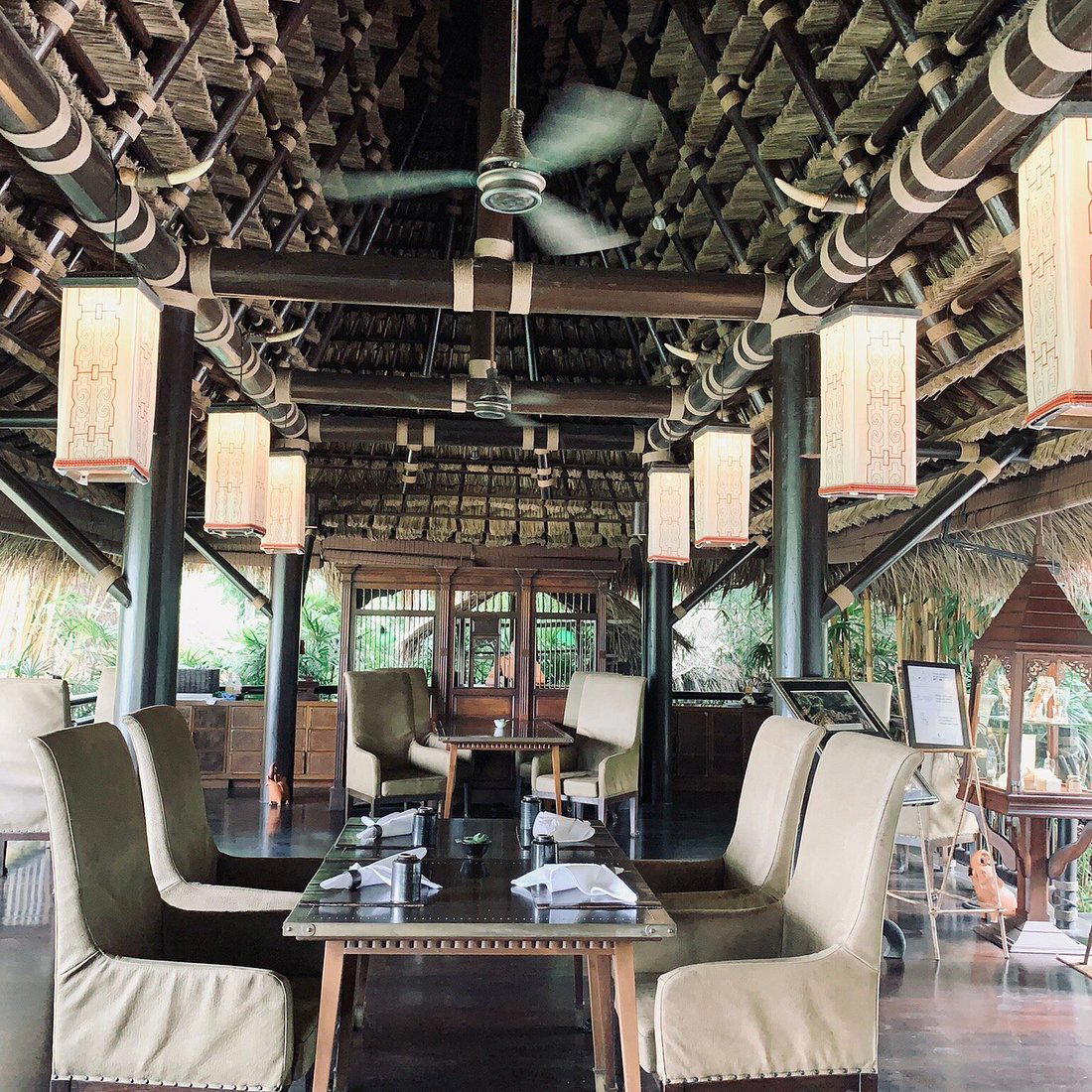
Details
- Scenic
- Elegant
- Rustic
- Intimate
- Special Occasion
- Date Night
- Celebration
- Waterfront
- Terrace
- Hotel Restaurant
- Open Kitchen
- Craft Cocktails
- Local Sourcing
- Mountain
- A La Carte
- Set Menu
- Craft Cocktails
- Vegetarian Friendly
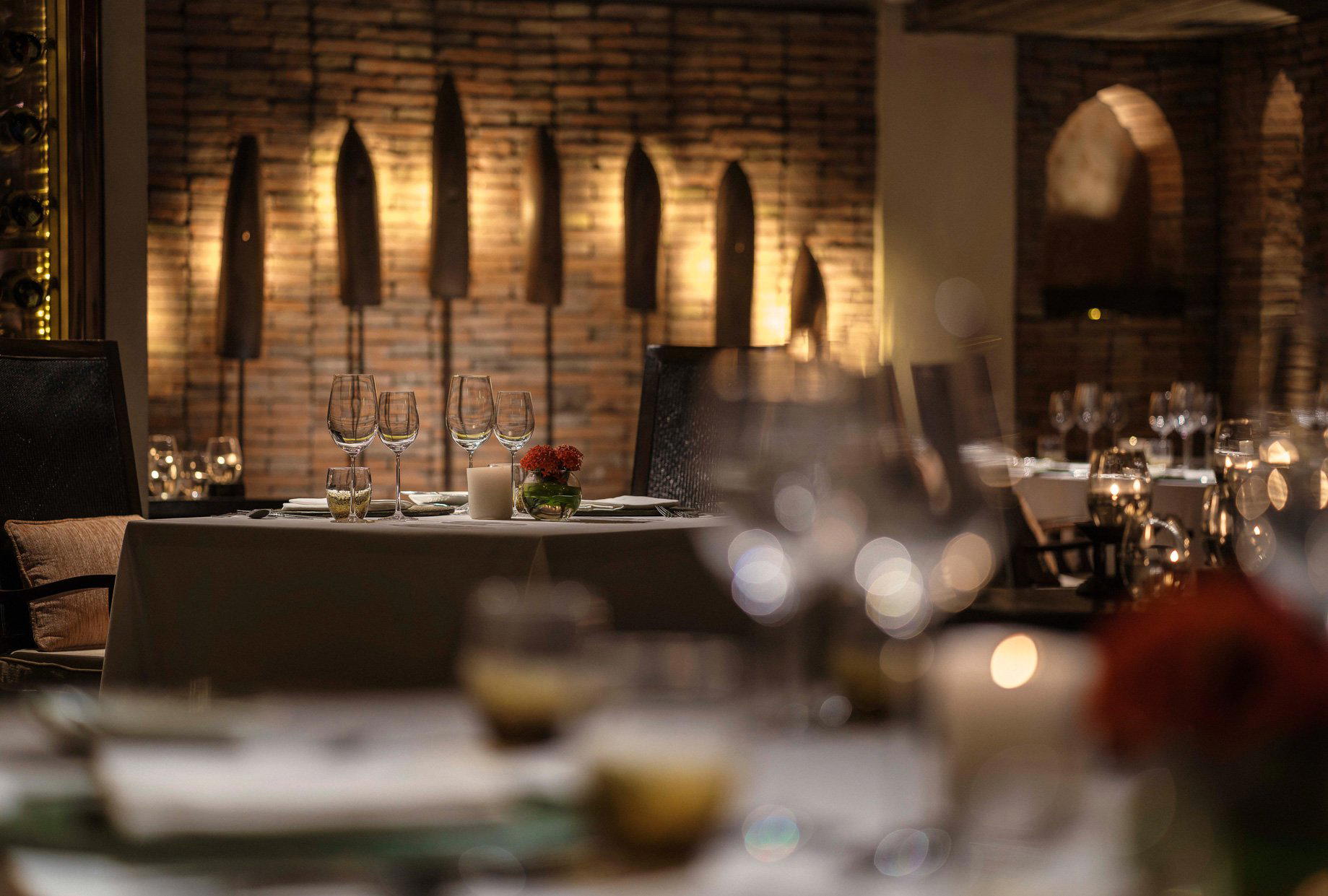
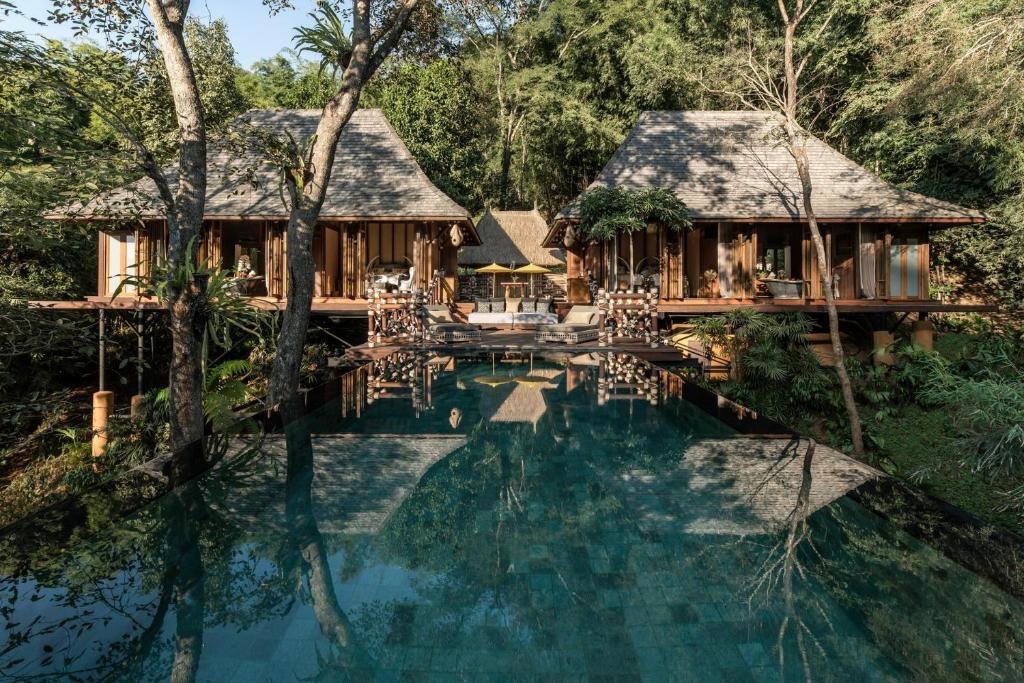
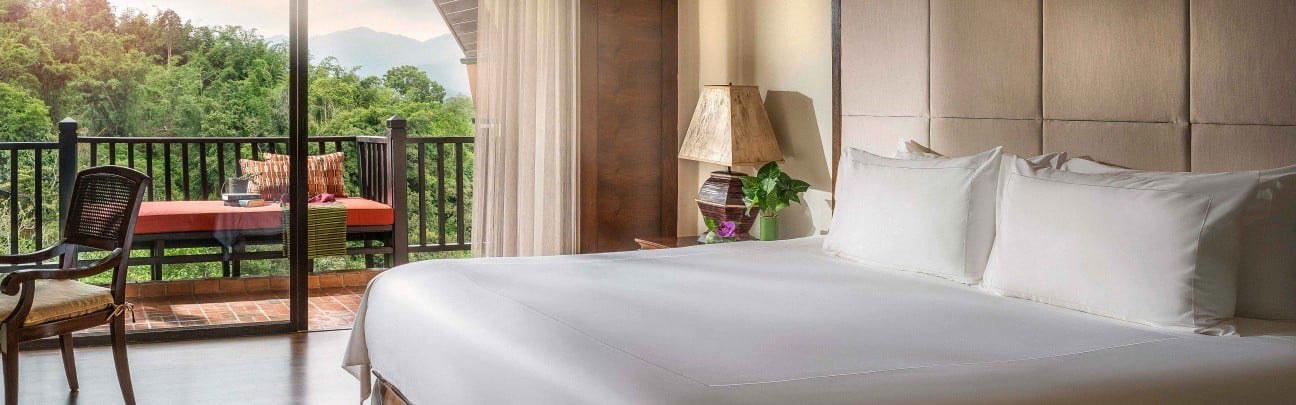
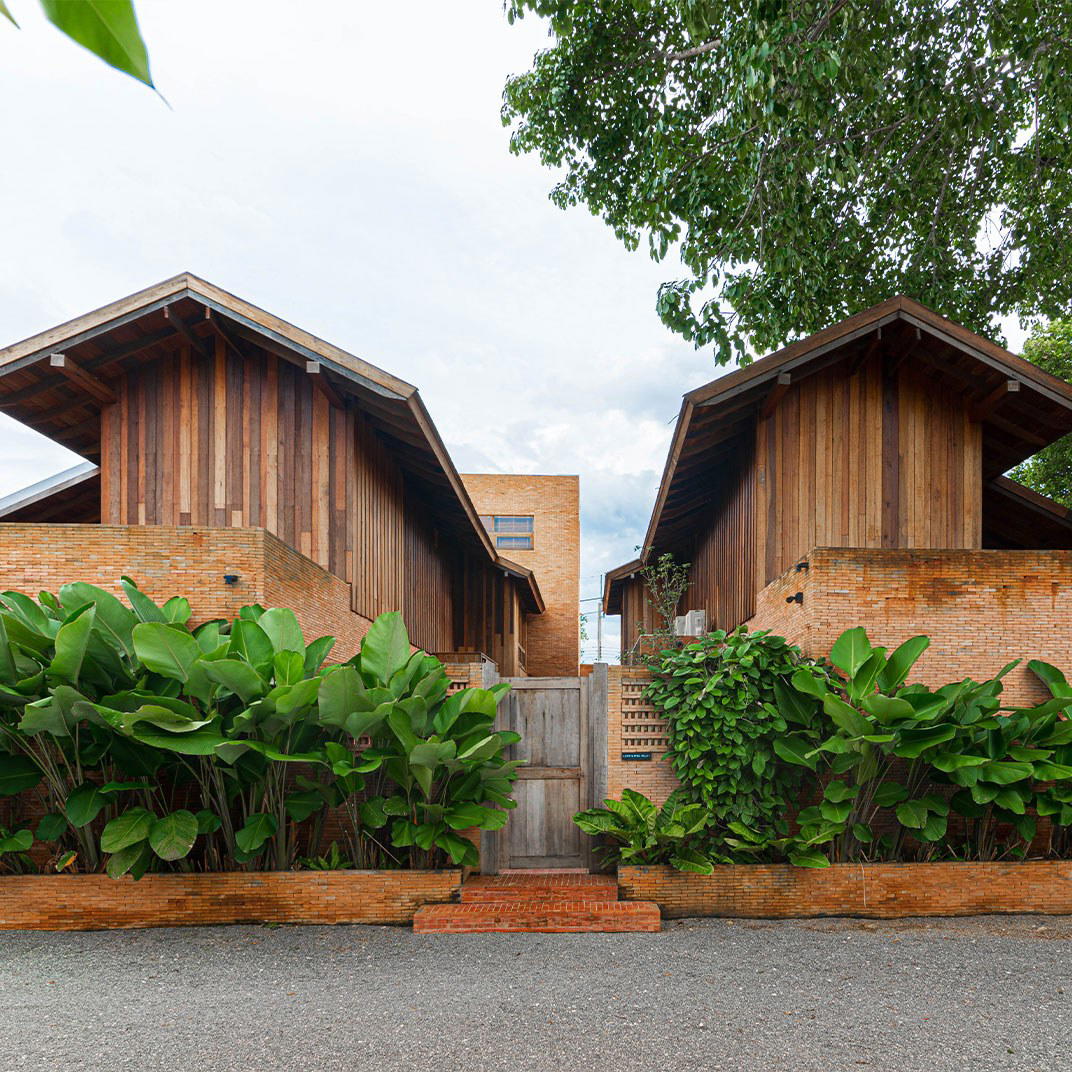
Rustic yet elegant atmosphere in a breezy open-air pavilion with hardwood floors, offering dramatic river and jungle views in a serene luxury tented camp setting.