Forty Nine Forty
Forty Nine Forty sits along Corrales Road in one of New Mexico's quietest agricultural villages, where the Rio Grande bosque meets irrigated farmland that has fed this valley for centuries. The address alone signals a different pace from Albuquerque's dining corridor, and the restaurant draws on that proximity to local producers in a state where farm-to-table is less a marketing phrase than a geographic fact.
 Discover on Pearl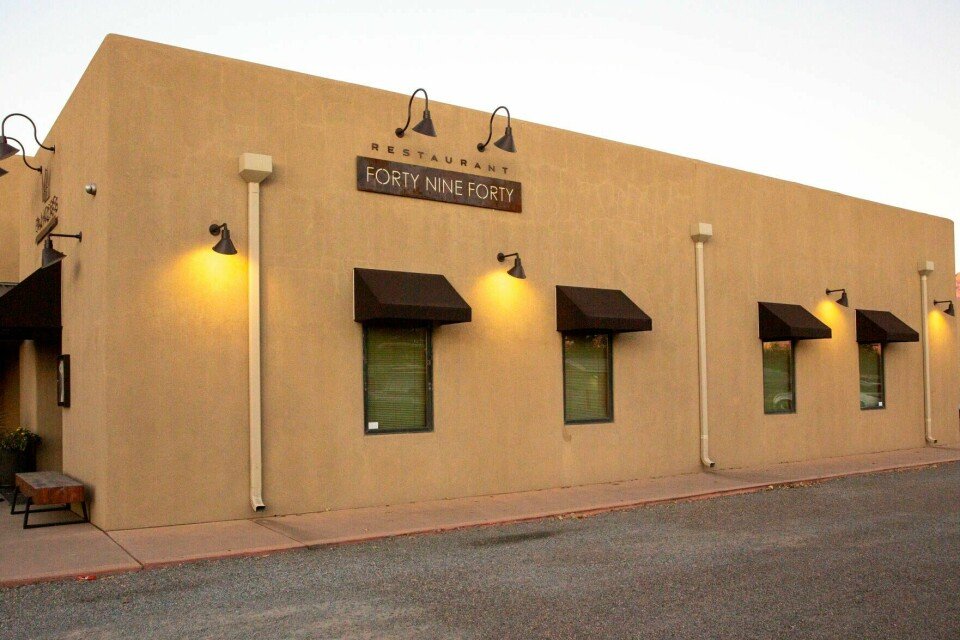
Corrales Road and What It Means to Eat Here
Corrales is not a suburb that happens to have farmland nearby. It is an agricultural village of acequia-fed plots and cottonwood-lined ditches where produce, chiles, and livestock have been raised continuously for generations — and Corrales Road is its main artery, threading past properties that have changed little in their essential character for decades. Forty Nine Forty, addressed at 4940 Corrales Rd, sits inside that continuity. The physical approach matters: arriving along this road, through a range of adobe walls and irrigation channels rather than strip malls, sets a frame that most American restaurant settings cannot replicate.
That setting is not incidental to how the food here should be understood. Across the American Southwest, a distinct category of ingredient-driven dining has developed in communities with direct access to small-scale agriculture — places where the supply chain between field and kitchen is measured in minutes rather than days. Corrales, with its position along the Rio Grande north of Albuquerque, belongs to that category in a more literal sense than most.
The shortlist, unlocked.
Hard-to-book tables, cellar releases, and concierge-planned trips.
Get Exclusive Access →New Mexico's Ingredient Geography
The ingredient story of New Mexico dining is, above all, a chile story. The state's Hatch Valley, roughly three hours south of Corrales, produces varieties of green and red chile that are so climate-specific they resist convincing replication elsewhere , the Sandia, the Big Jim, the Heritage 6-4 among them. But the Rio Grande corridor running through Corrales has its own agricultural character: stone fruit orchards, squash, corn, and the acequia-irrigated kitchen gardens that predate statehood by centuries. Restaurants operating in this geography face a different set of decisions than their counterparts in urban centers. The question is not how to source locally; the question is which local relationships to build and how to let those relationships shape a menu across seasons.
This is the context that frames ingredient-forward dining in the Southwest, and it places Corrales in a peer conversation with other small-town or rural American restaurant destinations where sourcing proximity is a structural condition rather than a choice. Properties like Single Thread Farm in Healdsburg and Blue Hill at Stone Barns in Tarrytown have made the farm-to-table supply chain the explicit architecture of the dining experience; in Corrales, that same proximity exists as a condition of the village itself, available to any kitchen willing to use it.
Where Forty Nine Forty Sits in the Corrales Scene
Corrales's dining options are deliberately limited. The village's population and zoning keep the restaurant count low, which means each address carries more weight than it would in a competitive urban corridor. Mulas is among the other destinations on this road; together, these few spots constitute what passes for a dining scene in a community that has resisted the commercial density of neighboring Albuquerque. Forty Nine Forty operates in that context , a village address with a village-scaled audience, where word-of-mouth and repeat local patronage matter more than visibility in national press.
That dynamic is worth understanding before booking. Corrales dining is not discovered the way a restaurant in a major metro is discovered , through aggregator lists, media coverage, or award cycles. It is found the way rural American dining often is: through local knowledge, through the our full Corrales restaurants guide, and through the kind of deliberate trip-planning that treats a meal as a reason to visit a place rather than an afterthought inside a city itinerary.
The Broader Frame: Farm-Proximate Dining in American Fine Dining
Nationally, the ingredient-sourcing conversation in premium American dining has matured considerably. What once read as a novelty positioning , listing farm names on menus, featuring heirloom varieties , has been absorbed into the baseline expectations of serious restaurants. Smyth in Chicago, Lazy Bear in San Francisco, and The Wolf's Tailor in Denver have each built distinct identities around sourcing specificity, but they do so in competitive urban markets where that positioning must work harder to differentiate. Oyster Oyster in Washington, D.C. has pushed this further into a plant-forward register that foregrounds regional ingredient identity as the organizing principle of the menu.
In a rural setting like Corrales, sourcing proximity is less a differentiator and more a baseline condition. The question shifts from whether a kitchen sources locally to what it does with the ingredients that are seasonally available in the high-desert Rio Grande corridor. New Mexico's climate imposes real constraints , and real gifts. The growing season is shaped by altitude and aridity; green chile harvest runs roughly August through October, and that calendar becomes the calendar of the kitchen whether or not a restaurant makes it explicit.
For comparison, Frasca Food and Wine in Boulder has built a two-decade reputation on bringing Northern Italian ingredient discipline to a Rocky Mountain supply context , a model that Corrales kitchens could plausibly reference, given the shared high-altitude agricultural conditions and the similar dynamic of European culinary tradition meeting Western American produce.
Planning a Visit
Corrales is a twenty-minute drive from central Albuquerque, making it a practical destination for a dedicated meal rather than a casual walk-in. The village has no meaningful public transport connection; a car is the only practical option. Corrales Road itself has limited parking infrastructure compared to urban restaurant strips, so arriving with some flexibility in timing is advisable. Given the limited information currently available about Forty Nine Forty's hours, booking method, and current format, contacting the restaurant directly before visiting is the clearest course of action , rural New Mexico restaurants can operate on schedules that differ from urban norms, and confirming current service days before making the drive is direct good sense.
Visitors combining this stop with a broader New Mexico itinerary might also look toward Albuquerque's more documented dining corridor, or use the trip as a reason to explore the northern Rio Grande valley toward Santa Fe, which carries its own separate layer of food culture and a longer history of attracting serious kitchens.
For readers building a broader picture of American ingredient-driven dining, the frame here connects outward to Addison in San Diego, Providence in Los Angeles, The French Laundry in Napa, Le Bernardin in New York City, Emeril's in New Orleans, ITAMAE in Miami, Atomix in New York City, Atelier Moessmer Norbert Niederkofler in Brunico, and The Inn at Little Washington in Washington , restaurants where the relationship between sourcing and menu identity has been developed over years into something deliberate and documentable. Corrales operates at a different scale and with a different level of national visibility, but the underlying agricultural logic connects to the same conversation.
Frequently Asked Questions
- What kind of setting is Forty Nine Forty?
- Forty Nine Forty is on Corrales Road in Corrales, New Mexico , a small agricultural village along the Rio Grande north of Albuquerque. The setting is rural rather than urban, with the character of a working farming community rather than a city dining district. Without confirmed pricing or award data on record, it is difficult to place it precisely in a price tier, but the village context and limited dining competition in Corrales suggest an audience built on local regulars and intentional visitors from the Albuquerque area.
- Is Forty Nine Forty suitable for children?
- Corrales as a village has a relaxed, community-oriented character that generally skews family-friendly compared to urban fine-dining corridors. Without confirmed details on Forty Nine Forty's format, price point, or service style, it is reasonable to assess suitability based on your children's comfort with sit-down dining and the practical logistics of a twenty-minute drive from Albuquerque. Calling ahead to confirm the current atmosphere and format is the most reliable approach before bringing young children.
- What should I eat at Forty Nine Forty?
- No confirmed menu, signature dishes, or chef credentials are on record for Forty Nine Forty, so specific dish recommendations are not something EP Club can verify at this time. What the Corrales context does suggest is that any kitchen operating here has access to some of the Southwest's most distinctive ingredients , high-desert produce, Rio Grande valley stone fruit, and New Mexico chile in season. Asking the kitchen directly what is currently sourced locally is likely to yield the most useful answer.
- Does Forty Nine Forty reflect a specifically New Mexican culinary identity?
- The address in Corrales places the restaurant inside one of the state's oldest agricultural corridors, where acequia irrigation has supported continuous farming since before statehood. New Mexico's culinary identity is anchored in its chile traditions, its Pueblo and Spanish colonial food heritage, and the high-altitude growing conditions of the Rio Grande valley , all of which are available as direct sourcing opportunities for a kitchen at this address. Whether Forty Nine Forty draws explicitly on that regional identity is leading confirmed with the restaurant, but the geographic conditions make it a plausible and natural frame for the food.
Comparison Snapshot
These are the closest comparables we have in our database for quick context.
| Venue | Cuisine | Price | Awards | Notes |
|---|---|---|---|---|
| Forty Nine Forty | This venue | |||
| Le Bernardin | French, Seafood | $$$$ | Michelin 3 Star | French, Seafood, $$$$ |
| Lazy Bear | Progressive American, Contemporary | $$$$ | Michelin 2 Star | Progressive American, Contemporary, $$$$ |
| Atomix | Modern Korean, Korean | $$$$ | Michelin 2 Star | Modern Korean, Korean, $$$$ |
| Per Se | French, Contemporary | $$$$ | Michelin 3 Star | French, Contemporary, $$$$ |
| Masa | Sushi, Japanese | $$$$ | Michelin 3 Star | Sushi, Japanese, $$$$ |
Need a table?
Our members enjoy priority alerts and concierge-led booking support for the world's most difficult tables.
Get Exclusive AccessThe shortlist, unlocked.
Hard-to-book tables, cellar releases, and concierge-planned trips.
Get Exclusive Access →