Our verdict
Sushi in Caparica sits at an interesting remove from Lisbon's restaurant mainstream, and Fidalgue Sushi on Rua dos Três Vales operates in that gap. The address places it squarely in the residential fabric of Almada's Atlantic-facing side, where the ingredient question — how fresh, from where, handled how — carries more weight than any dining-room theatrics. A local counter worth understanding in context.

Pearl is the En Primeur Club membership app — saves, bookings, and concierge access live there. Same editors, same standards.
- Address
- R. dos Três Vales n° 83 B, 2825-162 Caparica, Portugal
- Phone
- +351960235965
- Hours
- Mon–Thu 12–3 PM, 6:30–11 PMFri–Sun 12–3 PM, 6:30 PM–4 AM
- Website
- opentable.com
- Directions
- Get directions
- Booking
- Book on OpenTable
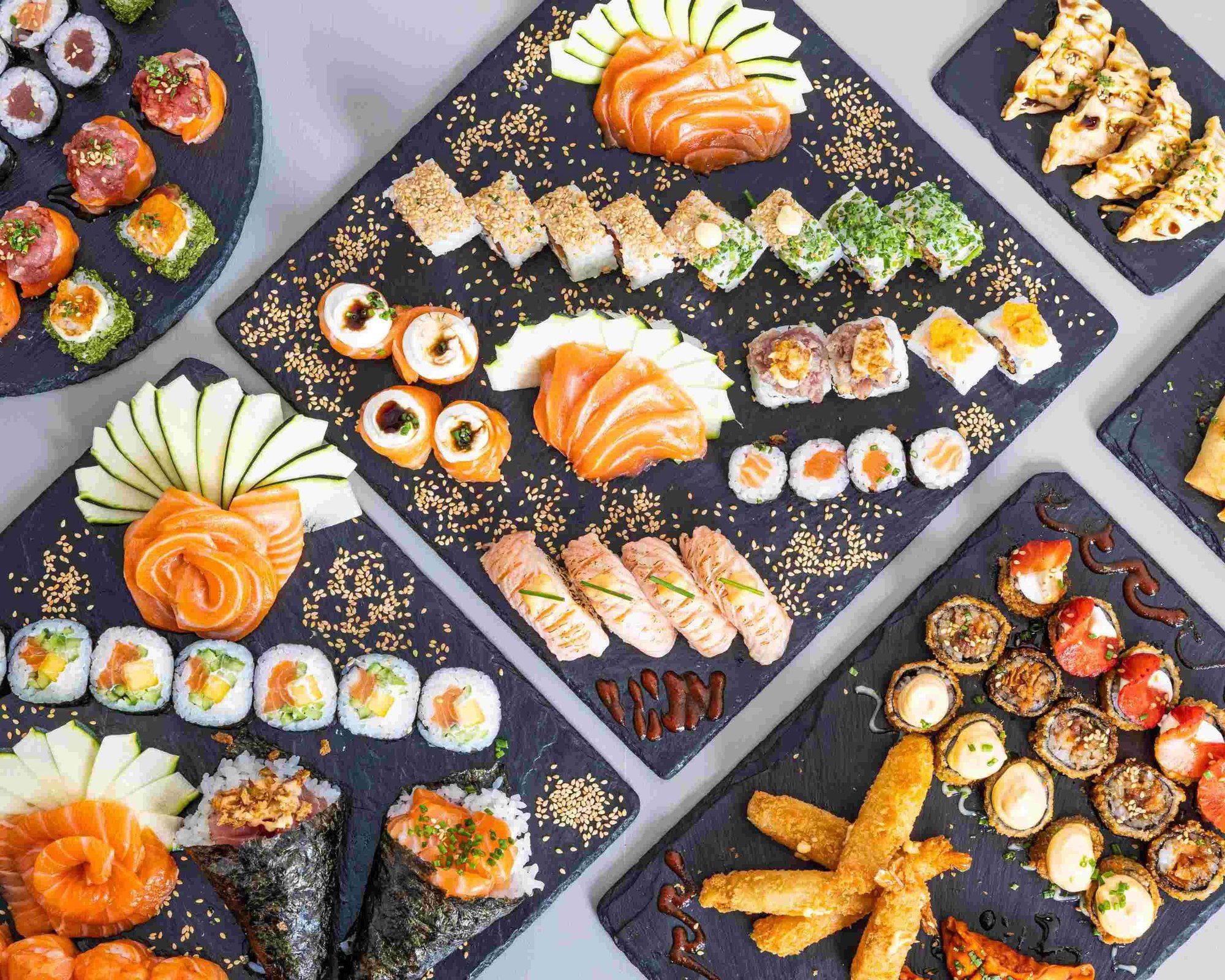
Sushi at the Edge of the Atlantic: What Caparica's Position Means for the Plate
Portugal's relationship with raw and cured fish predates any Japanese influence by centuries. The country's fishing infrastructure, particularly along the Atlantic coast south of the Tagus, has always oriented itself around freshness as a baseline rather than a selling point. That context matters when considering sushi in a place like Caparica. The ingredient chain here is short in ways that differ structurally from what a city-centre sushi restaurant can claim — the Atlantic is not a backdrop but a working coastline, and its proximity to any kitchen on this side of Almada is a material fact, not a marketing frame.
Fidalgue Sushi sits on Rua dos Três Vales in the 2825 postal district of Caparica, an address that places it inside a residential neighbourhood rather than a tourist corridor or dining district. That positioning carries its own logic. Neighbourhood sushi counters in coastal towns operate under different pressures than their urban counterparts: the customer base is local and repeat-oriented, which tends to sharpen the kitchen's accountability around consistency and sourcing over novelty or presentation spectacle.
Where Almada Fits in Portugal's Dining Picture
Almada sits directly across the Tagus from Lisbon, close enough to feel the capital's gravitational pull but far enough to maintain a distinct pace. The dining scene here does not compete with Lisbon on starred ambition — restaurants like Belcanto in Lisbon or Casa de Chá da Boa Nova in Leça da Palmeira occupy a different tier entirely, one defined by tasting menus, cellar depth, and sustained critical attention. Almada's offer is more granular: neighbourhood restaurants serving a local population that knows what it wants and returns when it gets it.
That structure benefits a venue like Fidalgue Sushi. Across Portugal, the Michelin constellation has concentrated in specific corridors, Lisbon's Chiado and Bairro Alto, the Algarve's resort belt where Ocean in Porches and Bon Bon in Lagoa operate, Porto's historic centre anchored by Antiqvvm, and the wider Algarve where Vila Joya in Albufeira and Al Sud in Lagos hold their respective positions. Almada sits outside those circuits, which means its restaurants are judged by a different standard: not credential accumulation but day-to-day delivery to a community that eats there regularly.
For a broader picture of where Fidalgue Sushi sits among Almada's options, the full Almada restaurants guide maps the neighbourhood's range across cuisines and formats. Other addresses worth cross-referencing in the area include Ataoka Ramen Lab, which occupies the Asian-cuisine tier from a different angle, and Ponto Final, whose position on the Tagus waterfront makes it a reference point for understanding how geography shapes a dining experience on this side of the river.
The Ingredient Question in Coastal Sushi
The editorial angle on any sushi restaurant operating along Portugal's Atlantic coast begins with fish supply. Japan's great sushi traditions are built on rigorous sourcing networks, specific fish markets, specific auction slots, specific relationships between supplier and kitchen. Portugal's Atlantic coast offers a different but comparably serious raw-material base: Atlantic bluefin tuna from the straits near the Algarve, sea bass and bream from aquaculture operations with traceability standards that have improved markedly over the past decade, and wild-caught local species that appear on no Japanese template but work well under similar preparation logic.
The question for any sushi operation in this geography is whether it engages seriously with that local supply or defaults to imported product standardised for the European market. The former approach produces something genuinely place-specific; the latter produces a product indistinguishable from what you'd find in any mid-tier sushi chain across the continent. Caparica's coastal position creates the conditions for the former, whether Fidalgue Sushi exploits that position is the operative question for anyone choosing it over alternatives.
For comparison, the sourcing standards at the Michelin-level end of Portuguese dining, A Ver Tavira in Tavira, Fortaleza do Guincho in Cascais, or The Yeatman in Vila Nova de Gaia, involve documented supplier relationships and seasonal menu shifts tied directly to what the coastline or hinterland produces. That level of rigour is the reference bar. Neighbourhood operations like Fidalgue Sushi work at a different scale, but the underlying logic of coastal sourcing applies at any price point.
International Reference Points for the Format
Sushi as a global format has stratified significantly over the past fifteen years. At one end sit the high-stakes omakase counters, restaurants like Atomix in New York City operate in a tier defined by tasting menus, reservation scarcity, and per-head prices that reflect both ingredient cost and the chef's credentialed lineage. At the other end, neighbourhood sushi has proliferated across every European city, often at accessible price points but with variable attention to sourcing provenance. The interesting middle ground is occupied by serious neighbourhood counters in cities with genuine access to quality fish supply, places where proximity to the water creates a natural quality floor that the format then either honours or squanders. Caparica, with the Atlantic directly accessible and Lisbon's wholesale markets within reach, sits in that middle-ground geography.
The standard for serious fish-forward cooking at the technical level in the Atlantic context is set by places like Le Bernardin in New York City, a restaurant whose entire programme is built on the argument that fish demands as much care as any other premium ingredient category. That argument translates directly to what any sushi counter in a coastal city should be asking of its supply chain.
Planning a Visit
Fidalgue Sushi is located at Rua dos Três Vales n° 83 B, 2825-162 Caparica, in the Almada municipality south of Lisbon. The address is residential, not commercial-strip, so approach expectations accordingly: this is a neighbourhood restaurant, not a destination dining room. Caparica is accessible from Lisbon by ferry to Cacilhas followed by local bus, or directly by car across the 25 de Abril Bridge. Those planning a broader Almada dining day can reference A Cozinha in Guimarães and G Pousada in Bragança for the contrast between destination-format dining elsewhere in Portugal and the neighbourhood-scale experience that Almada's south bank represents.
Frequently asked questions
Is Fidalgue Sushi a family-friendly restaurant?
The address on Rua dos Três Vales in the residential Caparica area suggests a neighbourhood-scale venue rather than a high-volume tourist operation, which typically means a quieter, more relaxed environment. Sushi restaurants in this format tend to work well for families comfortable with Japanese cuisine, though younger children who require adapted menus may find the format less accommodating. Confirming specific provisions directly with the venue before visiting is advisable.
What's the vibe at Fidalgue Sushi?
Fidalgue Sushi is on a residential street in Caparica, Almada — south of Lisbon and away from the capital's tourist circuits. That address signals a local, neighbourhood-facing operation rather than a scene-driven dining room. Expect a pace set by regulars rather than passing visitors.
How does Fidalgue Sushi's location in Caparica compare to sushi restaurants in central Lisbon?
Fidalgue Sushi sits in Caparica within the Almada municipality, across the Tagus from Lisbon's centre — a location that keeps it outside the concentrated dining competition of neighbourhoods like Chiado or Príncipe Real. Restaurants operating in Almada typically serve a more local clientele and carry lower overheads than central Lisbon venues, which can influence both pricing and atmosphere. For visitors staying in Lisbon, Caparica is reachable via ferry and bus connections from the capital.
What's the signature dish at Fidalgue Sushi?
What the location does indicate is geographic proximity to Portugal's Atlantic fishing supply, which places the restaurant within reach of ingredients that distinguish coastal sushi in this country from landlocked or import-dependent operations. The specific menu requires confirmation with the venue directly.
Where do I go for Fidalgue Sushi?
Fidalgue Sushi is located at R. dos Três Vales n° 83 B, 2825-162 Caparica, Portugal, Almada.
Comparable Spots, Quickly
Comparable venues nearby, for context on price, style, and recognition.
| Venue | Cuisine | Price | Notes |
|---|---|---|---|
| Fidalgue SushiThis venue — the venue you are viewing | Japanese Sushi | $30–50 | Not listed |
| Ataoka Ramen Lab | Japanese Ramen | $10–20 | Pragal |
| Ponto Final | Traditional Portuguese Seafood | $20–30 | Cacilhas |
| Hikidashi Taberna Japonesa | Japanese Sushi Fusion | $50–100 | Estrela |
| Café Social Eatery | Lebanese-Inspired Middle Eastern | $10–20 | Belém |
| R. Rodrigues de Faria 103 | Healthy Modern Cuisine | Not listed | Alcantara |
Continue exploring
More in Almada
Restaurants in Almada
Browse all →
Bars in Almada
Browse all →
Hotels in Almada
Browse all →

Details
- Casual Hangout
- Group Dining
- Standalone
- A La Carte
- Pescatarian Friendly
Current opening hours
- Monday
- 12–3 PM, 6:30–11 PM
- Tuesday
- 12–3 PM, 6:30–11 PM
- Wednesday
- 12–3 PM, 6:30–11 PM
- Thursday
- 12–3 PM, 6:30–11 PM
- Friday
- 12–3 PM, 6:30 PM–4 AM
- Saturday
- 12–3 PM, 6:30 PM–4 AM
- Sunday
- 12–3 PM, 6:30 PM–4 AM
Hours can change for holidays and private events. Last verified .
Casual dining atmosphere; further details on lighting or guest-described ambiance were not available.