Hikidashi Taberna Japonesa brings Japanese kitchen sensibility to a quiet residential stretch of Lisbon's Campo de Ourique, positioning itself at some distance from the high-wattage tasting-menu circuit that defines the city's top dining tier. The address on Rua Coelho da Rocha places it in a neighbourhood better known for local grocers and neighbourhood cafes than for destination restaurants, which is part of the point.
Pearl is the En Primeur Club membership app — saves, bookings, and concierge access live there. Same editors, same standards.
- Address
- R. Coelho da Rocha 20A, 1250-088 Lisboa, Portugal
- Phone
- +351 21 395 5555
- Website
- instagram.com
- Directions
- Get directions
 Saves & bookings on Pearl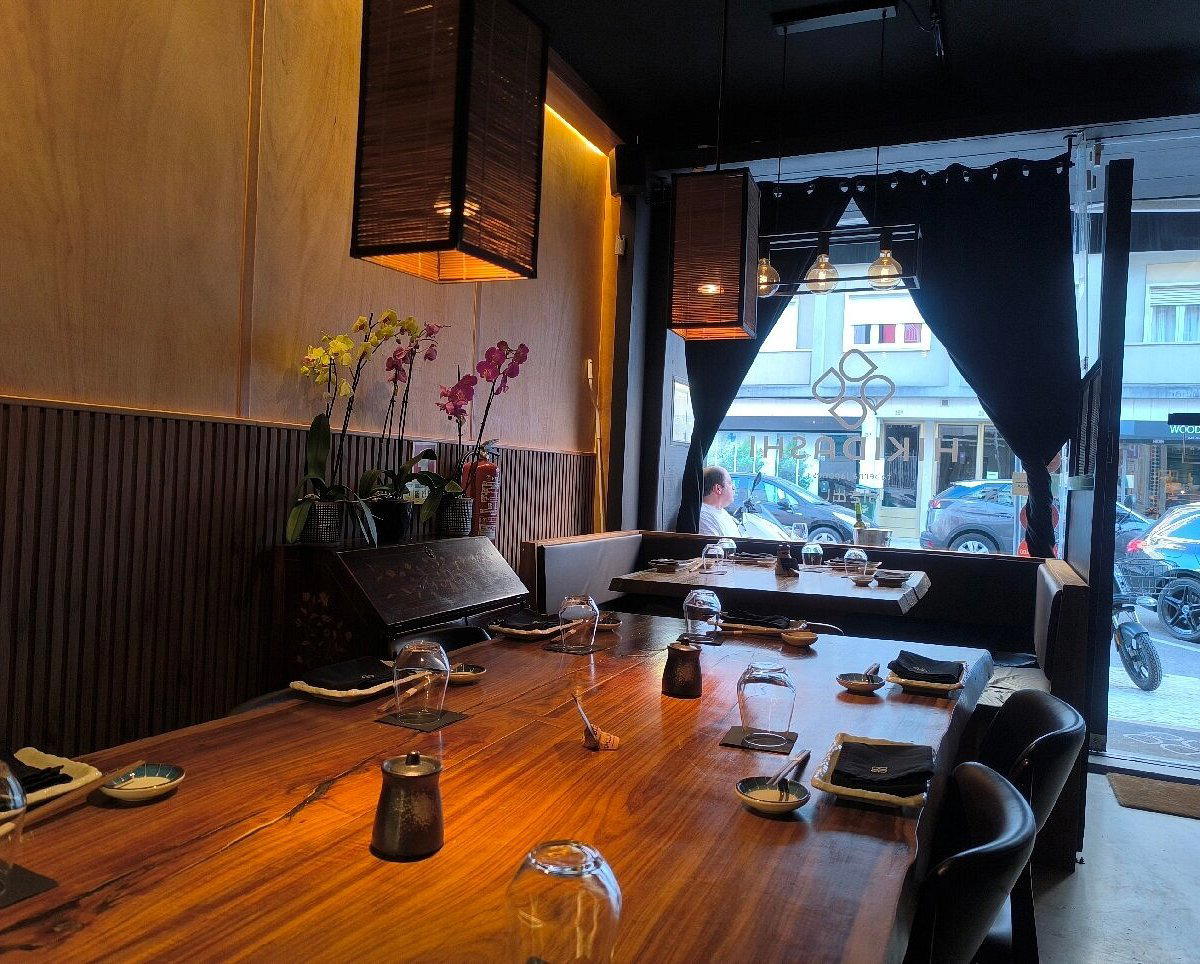
A Japanese Table in Lisbon's Quieter Quarter
Campo de Ourique is the kind of Lisbon neighbourhood that doesn't announce itself. Its streets run at a slight gradient from the city's main arteries, lined with tiled facades, family-run mercearias, and the occasional esplanada that empties early on weekday evenings. It is not where Lisbon's foreign press tends to look when mapping the city's fine-dining story, and that relative invisibility has allowed a different kind of restaurant to take root. Hikidashi Taberna Japonesa, at Rua Coelho da Rocha 20A, occupies that space: a Japanese-inflected taberna in a city where the dominant critical conversation runs through Portuguese-rooted tasting menus at addresses like Belcanto, CURA, and Eleven.
The word hikidashi translates roughly as drawer or compartment, suggesting something held in reserve, retrieved carefully. As a name for a restaurant in this context, it signals an approach built on restraint and precision rather than spectacle — values that sit close to the sustainability ethic that has reshaped how serious kitchens think about ingredients, waste, and supply chains over the past decade.
Japanese Kitchen Ethics and the Sustainability Shift
Across Europe's more considered restaurant tier, the conversation around environmental responsibility has moved from virtue signalling to operational reality. Chefs with Japanese training have often been ahead of that curve, partly because the Japanese culinary tradition — particularly in its treatment of dashi, offcuts, and whole-ingredient cookery, builds waste reduction into technique rather than appending it as philosophy. A kitchen that makes broth from kombu and bonito shavings, then applies the spent kombu as a vegetable component in the next course, isn't making a political statement. It's following a logic that predates the current sustainability conversation by several centuries.
Lisbon's dining scene has been slower than London, Copenhagen, or even Porto to formalise this ethic into a recognisable restaurant identity, though there are signals of change. The city's premium tier, represented by addresses holding Michelin recognition, from Vila Joya in Albufeira to Casa de Chá da Boa Nova in Leça da Palmeira and Ocean in Porches, has increasingly leaned on Portuguese terroir as its ethical foundation, sourcing from specific producers and fishing communities. A Japanese taberna in Campo de Ourique approaches similar principles from a different cultural angle: the discipline of the Japanese pantry, with its emphasis on fermentation, long-aged condiments, and the full use of an ingredient, maps naturally onto the waste-reduction framework that Lisbon's more progressive restaurants are still constructing.
The Neighbourhood as Context
Location shapes identity as much as cuisine does. Campo de Ourique's residential character means that Hikidashi's likely audience includes locals eating regularly rather than tourists making a single occasion of it. That frequency of visit changes what a kitchen prioritises: consistency, seasonal adjustment, and value across multiple sittings matter more than the single dramatic impression of a set-piece tasting menu. It is a different kind of pressure than the one faced by high-production addresses like 50 Seconds from Martin Berasategui or the creative formats at 2Monkeys, and it tends to produce more honest cooking.
Across Portugal, the spread of serious restaurant-keeping beyond Lisbon's central tourist circuit reflects a broader maturation of the dining public. Antiqvvm in Porto, Ó Balcão in Santarém, and Fortaleza do Guincho in Cascais are all operating at serious levels outside the obvious capital postcodes. A Japanese taberna in Campo de Ourique fits that pattern: restaurants finding their audience where people actually live, rather than where tourists arrive.
Japanese Dining in Lisbon: A Small but Growing Cohort
Portugal's relationship with Japan has historical weight, the Portuguese were among the first Europeans to trade directly with Japan in the sixteenth century, and the tempura technique is widely attributed to Portuguese missionary influence on Japanese cooking. That makes the presence of Japanese restaurants in Lisbon feel less like a transplant and more like a slow return. In practice, Lisbon's Japanese dining offer has remained relatively underdeveloped compared to the city's Spanish, Italian, and North African influences, which means a kitchen operating in this territory has space to define its own register without competing against a dense field of established alternatives.
The taberna format is significant. Rather than adopting the kaiseki or omakase structures that command premium pricing at Japanese restaurants in London, New York, or Tokyo, or at internationally oriented tables like Le Bernardin in New York City, a taberna framing suggests a more relaxed, sharing-friendly mode. It borrows the informality and approachability of the Portuguese tasca while applying Japanese culinary logic: short ingredient lists, technical precision at the preparation stage, and a drink culture that likely spans sake and natural Portuguese wine in equal measure. For more on how this sits within Lisbon's wider restaurant picture, the EP Club Lisbon restaurants guide covers the full spectrum from neighbourhood tables to the city's Michelin tier.
Planning a Visit
Hikidashi Taberna Japonesa is at Rua Coelho da Rocha 20A in Campo de Ourique, a neighbourhood most easily reached on foot from the Rato or Príncipe Real areas, or via the Campo de Ourique market tram stop. Because verified booking, hours, and pricing data are not currently available through EP Club's database, the practical advice is to check directly with the restaurant before visiting. This is consistent with how neighbourhood restaurants of this type tend to operate: smaller capacity, variable hours depending on season, and booking practices that can shift. Those planning a broader Lisbon food itinerary should note that the city's top-tier restaurants, including those at Michelin level, typically require advance reservation weeks or months out, and that Campo de Ourique addresses operate at a different rhythm from the tourist-circuit restaurants. For comparison of how pricing and format tiers work across the Portuguese scene, addresses like Il Gallo d'Oro in Funchal, Gusto by Heinz Beck in Almancil, and The Yeatman in Vila Nova de Gaia offer useful reference points for what the country's premium dining tier looks and costs like, against which a neighbourhood taberna in Campo de Ourique will read as a substantially more accessible option. Similarly, community-driven formats like Lazy Bear in San Francisco show how informality and serious cooking can coexist at the neighbourhood scale, a model that Hikidashi's taberna framing appears to share. A visit to Al Sud in Lagos on a wider Portugal trip illustrates how Japanese and Mediterranean influence has filtered through different regions of the country with quite distinct results.
Continue exploring
More in Lisbon
Restaurants in Lisbon
Browse all →
Bars in Lisbon
Browse all →
Hotels in Lisbon
Browse all →

At a Glance
- Intimate
- Cozy
- Trendy
- Date Night
- Casual Hangout
- Chefs Counter
- Open Kitchen
- Sake Program
- Local Sourcing
Current opening hours
- Monday
- Closed
- Tuesday
- 12:30–3 PM, 7:30–11 PM
- Wednesday
- 12:30–3 PM, 7:30–11 PM
- Thursday
- 12:30–3 PM, 7:30–11 PM
- Friday
- 12:30–3 PM, 7:30–11 PM
- Saturday
- 12:30–3 PM, 7:30–11 PM
- Sunday
- 12:30–3 PM, 7:30–11 PM
Hours can change for holidays and private events. Last verified .
Cozy wooden interior with a long communal table and open sushi counter creating a relaxed yet sophisticated atmosphere.
Know Before You Go
- Getting there
- R. Coelho da Rocha 20A, 1250-088 Lisboa, Portugal