Our verdict
Ataoka Ramen Lab occupies a quiet address in Almada, across the Tagus from Lisbon, where ramen culture in Portugal is still finding its footing. The format signals a kitchen that takes broth seriously, operating in a city better known for grilled fish and tascas than Japanese noodle traditions. For anyone tracking where Asian food culture is taking root in Greater Lisbon, Almada is worth watching.

Pearl is the En Primeur Club membership app — saves, bookings, and concierge access live there. Same editors, same standards.
- Address
- R. Marcos de Assunção 4F, 2805-290 Almada, Portugal
- Phone
- +351 21 822 9605
- Hours
- Mon–Fri 12–2:30 PM, 7–10 PMSat–Sun Closed
- Website
- instagram.com
- Directions
- Get directions
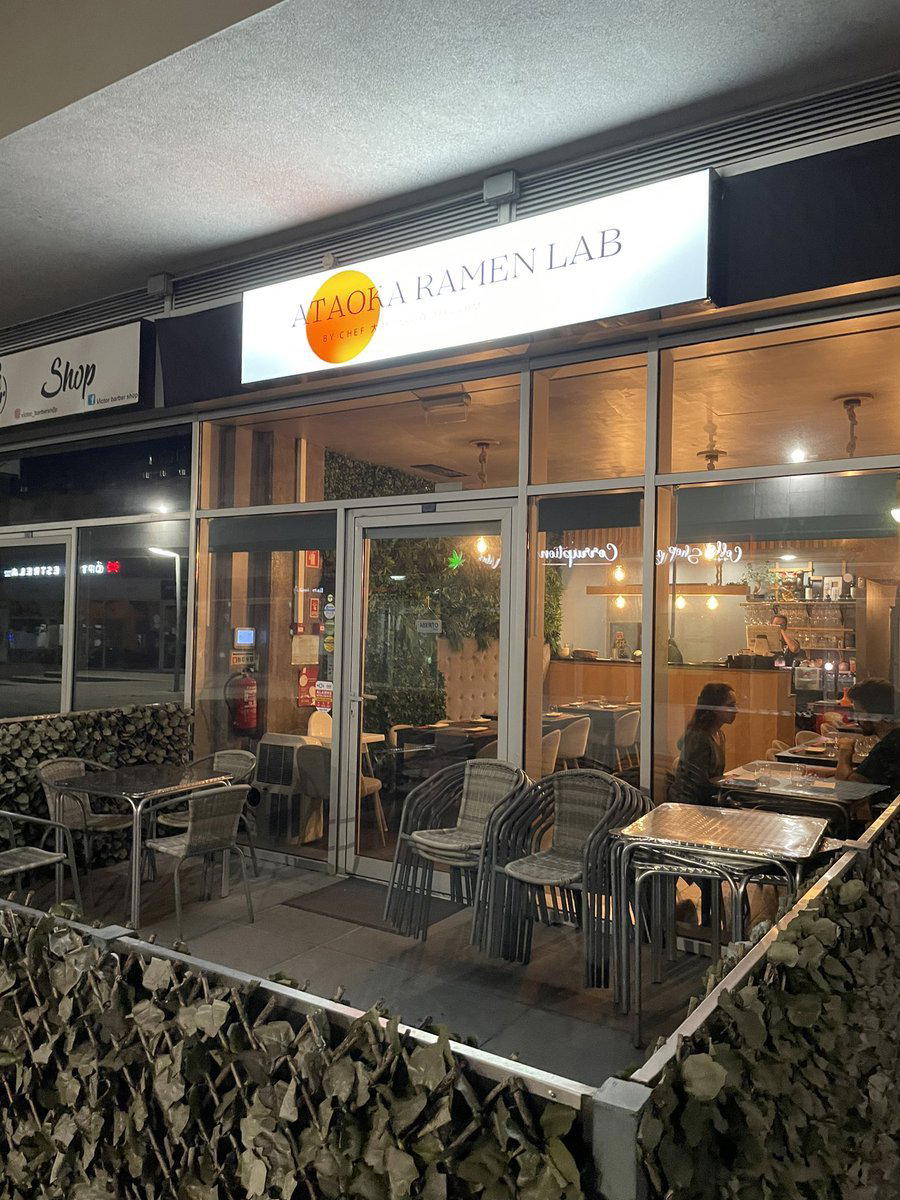
Ramen in the Margins: Why Almada Is an Interesting Place to Find a Lab
The name itself signals something deliberate. Across Japan and in the cities where ramen culture has transplanted most seriously, the word "lab" in a restaurant name points to a specific posture: iterative, ingredient-focused, closer to a kitchen workshop than a neighbourhood canteen. That framing matters more in Almada than it might in Tokyo or London, because Almada is not a city with an established ramen infrastructure to push against. The south bank of the Tagus remains far better mapped for bacalhau, grilled sardines, and the kind of riverside dining that draws visitors to spots like Ponto Final — a terrace table with a Lisbon skyline and a glass of Vinho Verde. Against that backdrop, a ramen kitchen operating under a lab methodology is a minor act of culinary positioning.
Portugal's broader fine dining identity runs through Michelin-recognised addresses like Belcanto in Lisbon, Vila Joya in Albufeira, and Ocean in Porches, all of which anchor their identity in Portuguese produce expressed through high-technique European frameworks. Ataoka Ramen Lab sits in a different register entirely — informal, noodle-centred, Japanese in reference, which places it outside that starred-restaurant conversation and into a smaller, more specific one: where does serious ramen fit in a country where the culinary confidence has historically been rooted in Atlantic seafood and preserved ingredients rather than long-cooked animal broths?
The Ingredient Logic Behind Serious Ramen
Ramen's reputation as fast food is, in the context of any kitchen that takes it seriously, somewhat misleading. The broth at the centre of a tonkotsu, a shio, or a shoyu bowl can require twelve to eighteen hours of simmering. Chashu pork needs brining, slow-cooking, pressing, and often a secondary glaze. Tare, the concentrated seasoning base that differentiates one bowl from another at the same counter, is built separately and in advance. The sourcing logic for a ramen kitchen is therefore more like a charcuterie or a stocks-based French kitchen than it resembles a noodle stall: the quality of the finished bowl is determined primarily by decisions made long before service begins.
In Portugal, that sourcing question takes on additional texture. The country produces pork of considerable quality, particularly from the Alentejo, where black pigs grazed on acorns produce meat with a fat profile closer to Ibérico than to standard commercial pork. Whether a kitchen in Almada draws on that regional supply chain or sources more conventionally is the kind of detail that separates a genuinely ingredient-driven operation from one that borrows the vocabulary without the commitment. Comparable questions arise in the broader Portuguese dining scene: Casa de Chá da Boa Nova in Leça da Palmeira and Antiqvvm in Porto both make regional sourcing a visible pillar of their identity, even within high-formal European frameworks. A ramen kitchen applying equivalent rigour to its protein and kombu supply chain would be operating in the same philosophical territory, even if the format looks entirely different.
Almada's own food scene has a parallel example worth noting: Fidalgue Sushi demonstrates that Japanese culinary reference points can find a committed audience on the south bank. The appetite for precision-driven Asian formats exists here, even if the density of options remains lower than across the river.
Context: Where Almada Sits in Greater Lisbon's Dining Map
Almada is not Lisbon, and that distinction shapes what restaurants there can reasonably attempt. The city sits directly across the Tagus, accessible by ferry from Cais do Sodré in roughly ten minutes, and the connection is central to how the south bank operates culturally and economically. Dining venues here tend toward the neighbourhood-serving end of the spectrum rather than the destination-restaurant model that draws visitors specifically to cross the river. That context makes an address like R. Marcos de Assunção 4F worth understanding on its own terms: it is not competing with the Michelin infrastructure of central Lisbon, nor with international-scale Japanese operations in cities like London or Paris. It is, more usefully, participating in a gradual diversification of what south-bank Almada offers to locals and to the curious visitor who has already eaten their way through the more obvious Lisbon options.
For a broader orientation to what Almada offers across price points and formats, our full Almada restaurants guide maps the area in more detail.
How Ataoka Ramen Lab Fits the Wider Portuguese Scene
Portugal's dining ambition in the past decade has been notable. Addresses like Gusto by Heinz Beck in Almancil, Fortaleza do Guincho in Cascais, Il Gallo d'Oro in Funchal, Ó Balcão in Santarém, Palatial in Braga, and Al Sud in Lagos reflect a country that has built international recognition across multiple regions, not just Lisbon. Even in the creative Spanish crossover space, Lab by Sergi Arola in Sintra has helped establish that technically ambitious, format-driven restaurants can find traction in Greater Lisbon's orbit. The Yeatman in Vila Nova de Gaia shows how destination dining can work in a city positioned against a larger neighbour, a model Almada could, in time, begin to replicate at a different price point.
Internationally, the ramen-as-serious-kitchen proposition has already been validated at the high end. Restaurants like Le Bernardin in New York City and format-driven operations like Lazy Bear in San Francisco demonstrate that the "lab" framing, when backed by genuine sourcing and technique discipline, can sustain a distinct culinary identity over time. The translation of that ambition to a mid-sized Portuguese city south of Lisbon is the more experimental proposition, and the one worth tracking.
Planning Your Visit
Ataoka Ramen Lab is located at R. Marcos de Assunção 4F, 2805-290 Almada. The ferry from Cais do Sodré in Lisbon to Cacilhas takes approximately ten minutes and connects easily with onward transport into Almada proper, making a cross-river dinner a practical option rather than a commitment.
Frequently asked questions
Is Ataoka Ramen Lab formal or casual?
Almada sits outside Lisbon's high-formal dining circuit, and a ramen lab format reinforces that — the name itself signals an experimental, process-focused approach rather than a white-tablecloth one. Expect a casual register closer to a specialist ramen counter than to a conventional restaurant. The address on R. Marcos de Assunção places it in a residential part of Almada, which further points toward an unpretentious, neighbourhood-focused operation.
How far is Ataoka Ramen Lab from central Lisbon, and is it easy to reach?
Ataoka Ramen Lab is located at R. Marcos de Assunção 4F in Almada, directly across the Tagus from Lisbon. The ferry from Cais do Sodré to Cacilhas takes approximately ten minutes, making it one of the more straightforward cross-river trips in the Greater Lisbon area. For visitors already in Almada, the address is in the 2805-290 postal district and reachable on foot or by local transit from the Cacilhas ferry terminal.
What should I order at Ataoka Ramen Lab?
What applies broadly to any kitchen calling itself a ramen lab is that the broth is the point — whether tonkotsu, shoyu, or shio — and ordering around it is generally the right instinct. Asking staff what is in rotation on the day is the most reliable approach.
How do I find Ataoka Ramen Lab?
Ataoka Ramen Lab is located at R. Marcos de Assunção 4F, 2805-290 Almada, Portugal, Almada.
Fast Comparison
| Venue | Cuisine | Price | Awards | Notes |
|---|---|---|---|---|
| Ataoka Ramen LabThis venue — the venue you are viewing | Japanese Ramen | $10–20 | Not listed | Not listed |
| Belcanto | Contemporary Portuguese Fine Dining | $200–300 | 2 Michelin Stars · World's 50 Best #42 | Modern Portugese, Creative |
| Casa de Chá da Boa Nova | Modern Portuguese Seafood | $50–100 | 2 Michelin Stars · La Liste Top Restaurants | Portugese, Seafood |
| Ocean | Modern Portuguese Fine Dining | $200–300 | 2 Michelin Stars · La Liste Top Restaurants | Contemporary European, Creative |
| Lab by Sergi Arola | Modern Mediterranean Fine Dining | $200–300 | 1 Michelin Star | Progressive Spanish, Creative |
| Midori | Japanese-Portuguese Fusion | $150–200 | 1 Michelin Star | Japanese |
Continue exploring
More in Almada
Restaurants in Almada
Browse all →
Bars in Almada
Browse all →
Hotels in Almada
Browse all →

Details
- Casual Hangout
- A La Carte
- Vegan Options
Current opening hours
- Monday
- 12–2:30 PM, 7–10 PM
- Tuesday
- 12–2:30 PM, 7–10 PM
- Wednesday
- 12–2:30 PM, 7–10 PM
- Thursday
- 12–2:30 PM, 7–10 PM
- Friday
- 12–2:30 PM, 7–10 PM
- Saturday
- Closed
- Sunday
- Closed
Hours can change for holidays and private events. Last verified .
Casual ramen shop with terrific staff service.