Fatimata Restaurant
Our verdict
Fatimata Restaurant operates in Kindu, the provincial capital of Maniema in the Democratic Republic of Congo, where proximity to the Congo River and surrounding forest determines what reaches the kitchen. In a city where supply chains are shaped by geography rather than logistics networks, the cooking here reflects what the region actually produces. For travellers passing through one of central Africa's least-visited provincial capitals, it represents a direct encounter with Maniema's food culture.

Pearl is the En Primeur Club membership app — saves, bookings, and concierge access live there. Same editors, same standards.
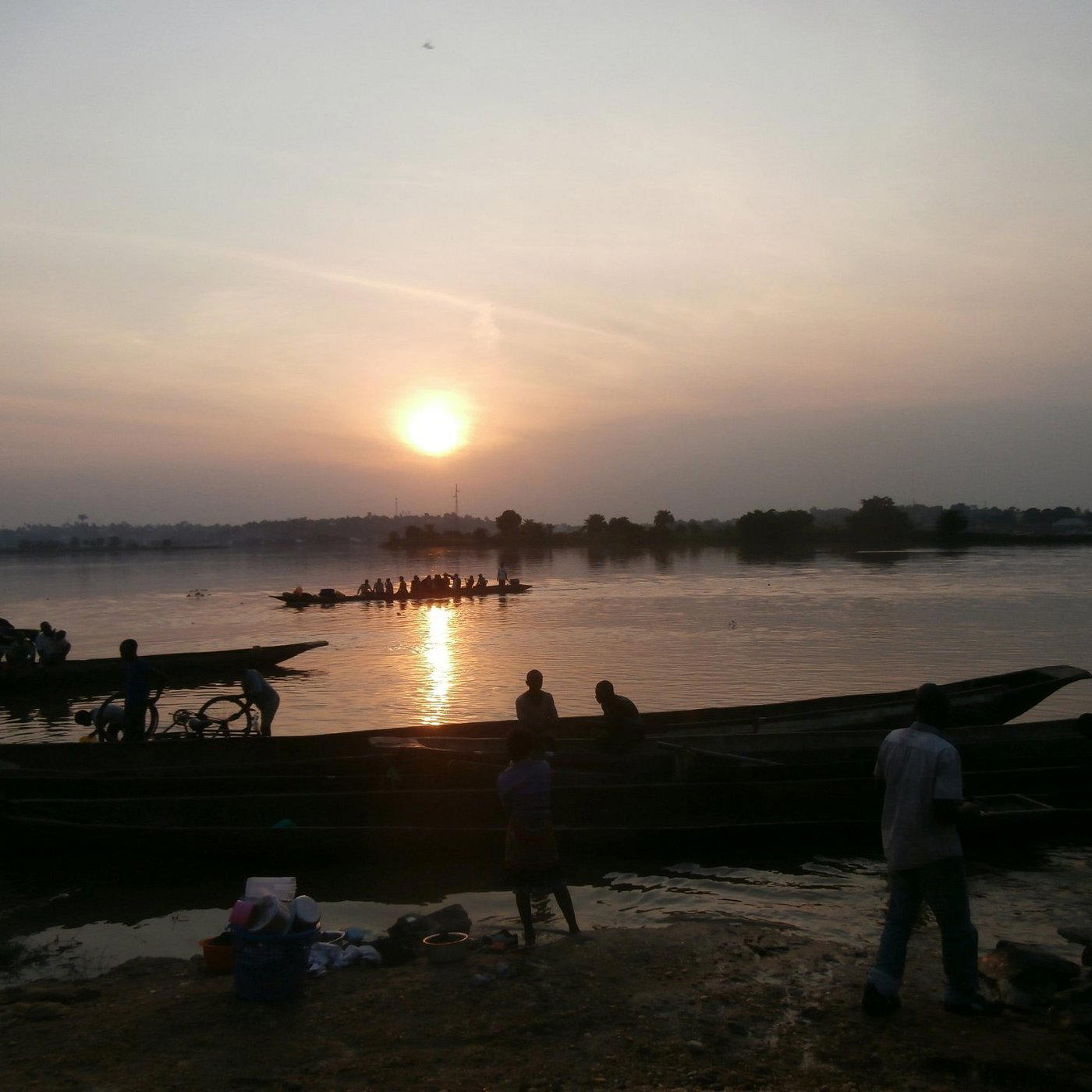
Kindu sits at the edge of navigable Congo River territory, a provincial capital where the rhythm of daily life is still set by water. The town's market runs parallel to the riverbank, and the produce that arrives there, whether carried by pirogue from upstream communities or brought in from the surrounding equatorial forest, determines what cooks in the city's kitchens that day. Arriving at Fatimata Restaurant, you are entering a space shaped entirely by that geography. There is no buffer of industrial supply chains here, no produce flown in from a distant agricultural zone. The ingredient sourcing is, by necessity and by tradition, as local as it gets.
What Maniema Puts on the Plate
Maniema Province occupies a belt of equatorial forest and river basin that produces ingredients rarely seen outside central Africa. Cassava in its many processed forms, smoked freshwater fish from the Congo and its tributaries, plantain, palm oil pressed from local fruit, and forest greens that have no equivalent in European or East Asian culinary vocabularies — these are the building blocks of Maniema cooking. In a city like Kindu, which lacks the import infrastructure of Kinshasa or Lubumbashi, restaurants work almost entirely within that local larder. That constraint, which would register as a limitation elsewhere, produces food with a directness and regional specificity that more connected cities often lose.
The broader pattern of Congolese cuisine is one that international food culture has been slow to engage with, despite the country's enormous culinary range across its provinces. Where globally recognised restaurants, whether Le Bernardin in New York City or HAJIME in Osaka, operate within dense networks of specialist suppliers and documented provenance, kitchens in Kindu operate in the opposite condition: radical proximity to source, with everything that implies about freshness, seasonality, and the absence of year-round consistency.
Reading the Room
The physical environment at Fatimata Restaurant reflects the material realities of Kindu. The city itself is modest in scale, its infrastructure shaped by decades of underinvestment in the eastern DRC interior. Restaurants here do not occupy the kind of purpose-built dining architecture you would find in a regional capital with stronger economic links to the outside. What you encounter instead is a space that functions as a genuine neighbourhood anchor, the kind of establishment where the atmosphere is generated by the people using it rather than by designed mood. In cities across central and west Africa, this format, unpretentious, community-facing, ingredient-led by default, is where the most coherent regional food traditions survive.
Contrast that with the trajectory of chef-driven restaurants in Europe and North America, where venues like Reale in Castel di Sangro or Atelier Moessmer Norbert Niederkofler in Brunico have built reputations specifically by returning to hyper-local, regional-sourcing principles after decades of globalised fine dining. In Kindu, that return never needed to happen. The sourcing was always local. The question for the traveller is whether they can read that value without the framing devices, the tasting menus, the named suppliers, the press coverage, that usually signal it.
Kindu in Context
Kindu is not a city that appears in most travel itineraries for the DRC. Visitors who reach it tend to be passing through on river journeys, working in the humanitarian or development sectors, or engaged in the kind of deliberate off-route travel that treats infrastructure difficulty as a filter rather than a deterrent. The restaurant scene here has no Michelin presence, no listing in the 50 Best infrastructure, and no meaningful international editorial coverage to calibrate expectations against. What that means in practice is that the visitor is working without the usual trust signals.
For those who have spent time in similarly positioned cities, whether in the DRC's Tshopo Province around Boyoma Falls or in comparable interior African cities, the framework for assessment shifts. You stop asking whether the kitchen meets an international reference point and start asking whether it accurately expresses the food culture of the place. By that measure, a kitchen drawing on Congo River fish, Maniema forest produce, and locally pressed palm oil is doing something that restaurants in better-connected cities frequently cannot: serving food that could only come from here.
Ingredient Logic in an Isolated Kitchen
The sourcing conditions in Kindu carry practical implications for anyone planning a visit. Consistency across visits is not guaranteed in the way it would be at a restaurant with stable supplier relationships and a fixed menu format. Dishes available on one day may not be available on another, not because of kitchen decision-making, but because of what the market produced that morning. Travellers who have eaten at places like Uliassi in Senigallia, where the menu shifts with Adriatic catch, or Quattro Passi in Marina del Cantone, where coastal sourcing drives the offer, will recognise the underlying logic, even if the execution context differs enormously.
That variability is also what makes early-day visits more reliable. Markets in Kindu, as in most Congolese interior cities, run in the morning, and kitchens are better stocked earlier in the day. If you are visiting as part of a longer Congo River journey, midday is a more predictable window than evening.
Planning a Visit
Reaching Kindu involves either a river journey along the Congo from Kisangani, a route that can take several days depending on vessel and season, or one of the irregular flight connections that serve the city's airstrip. Neither option places Kindu within easy reach, and that access difficulty is the primary reason the city sees limited tourist traffic. Fatimata Restaurant's address is recorded at 2WXC+X2V, Kindu, which in a city of this size and mapping coverage is a plus-code reference rather than a street address in the conventional sense. Phone and website details are not currently available, so visit planning is leading done through local contacts or accommodation hosts in Kindu, who will have current information on operating days and hours. Price information is not published, but in the context of a Maniema provincial city, costs will reflect local economic conditions rather than international restaurant pricing.
Travellers who appreciate the kind of hyper-regional specificity that drives the reputations of places like Jordnær in Gentofte or Arzak in San Sebastián will find the underlying principle here familiar, even if the context is entirely different. For a broader view of where Fatimata fits within Kindu's food options, see our full Kindu restaurants guide.
Frequently asked questions
Is Fatimata Restaurant child-friendly?
No specific family policy is documented for Fatimata Restaurant, but Kindu operates as a working river city rather than a tourist destination, and dining rooms in this context tend toward casual, community-oriented environments where families eat without ceremony. The address places it within the city proper, which suggests a neighbourhood setting rather than a formal dining room with restrictions. Confirm directly on arrival, as no booking infrastructure is publicly listed.
What should I expect atmosphere-wise at Fatimata Restaurant?
Fatimata sits in Kindu, a city shaped by river trade and provincial administration rather than tourism, so the atmosphere reflects that reality: functional, local, and without performance. The physical setting will be modest by the standards of larger Congolese cities like Kinshasa or Lubumbashi. Visitors passing through on Congo River journeys or aid work tend to make up the non-local share of customers, which keeps the room grounded in everyday Maniema life rather than any expatriate dining scene.
Is Fatimata Restaurant one of the only sit-down dining options in Kindu?
Kindu has very limited documented restaurant infrastructure given its scale and relative isolation within Maniema Province, making any established sit-down venue notable by default in the region. Travellers reaching the city by river from Kisangani or by occasional air connection report few formal dining alternatives.
What's the must-try dish at Fatimata Restaurant?
No specific menu items are documented for Fatimata Restaurant at this time. What is known is that Maniema Province produces equatorial forest ingredients — cassava, river fish, and forest greens — that form the backbone of the region's cooking, and any kitchen operating in Kindu works within that supply. Ask staff what arrived fresh that day, since sourcing consistency in an isolated river city is dictated by seasonal availability rather than a fixed menu.
What's Fatimata Restaurant's location?
Fatimata Restaurant is located at 2WXC+X2V, Kindu, Congo - Kinshasa, Kindu.
Details
- Casual Hangout
- A La Carte