Far East Cafe
On Grant Avenue in the heart of San Francisco's Chinatown, Far East Cafe occupies a different register from the city's high-ticket tasting-menu circuit. Where Benu and Atelier Crenn work through French-inflected precision, Far East trades in the kind of long-established Cantonese banquet tradition that built this neighbourhood's dining identity. It is a reference point for understanding how Chinatown's restaurant culture has persisted across generations.
Pearl is the En Primeur Club membership app — saves, bookings, and concierge access live there. Same editors, same standards.
- Address
- 631 Grant Ave, San Francisco, CA 94108
- Phone
- +1 415 982 3245
- Website
- fareastcafesf.com
- Directions
- Get directions
 Saves & bookings on Pearl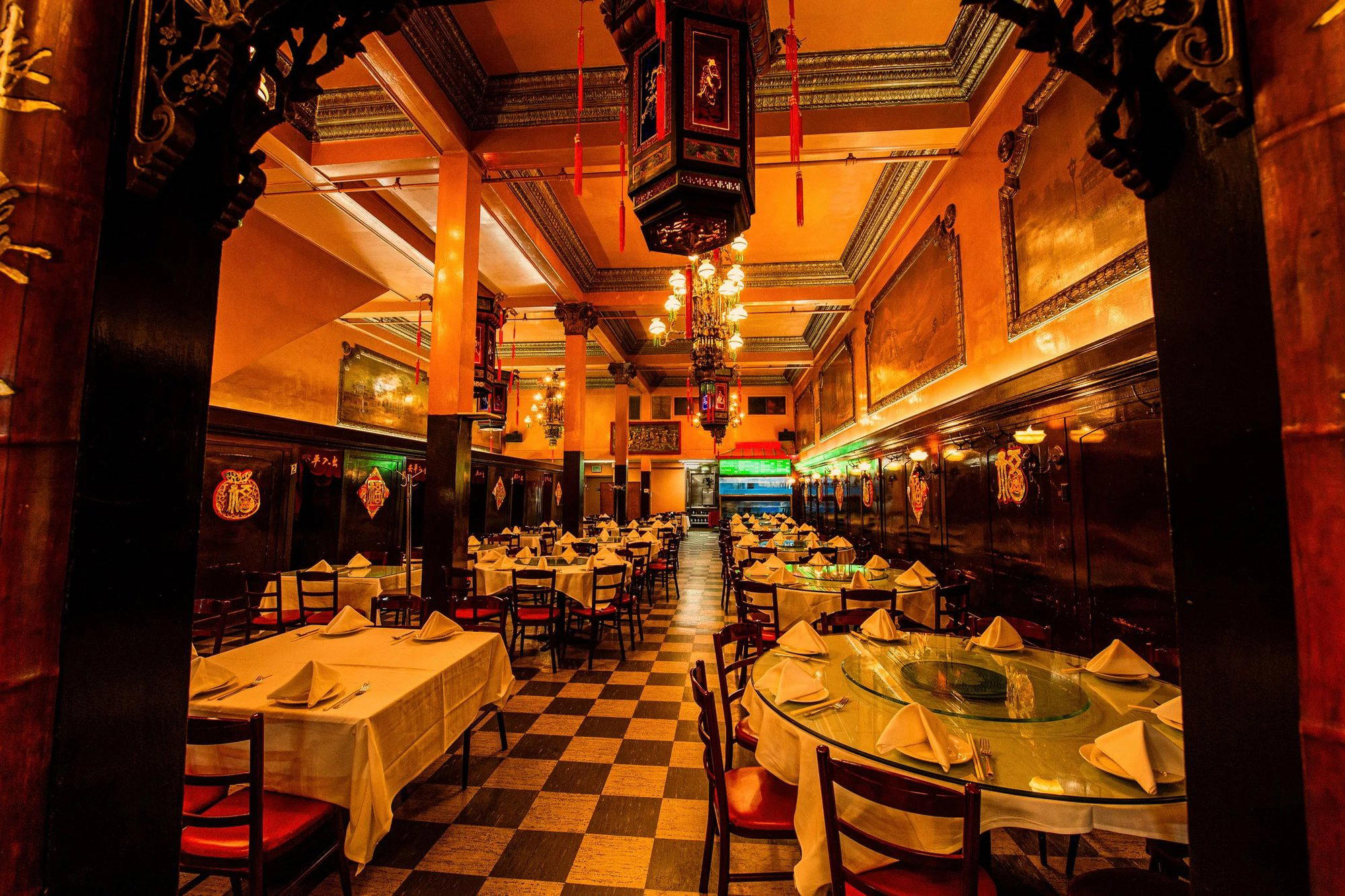
Grant Avenue and the Grammar of Chinatown Dining
San Francisco's Chinatown is the oldest in North America, and Grant Avenue has been its commercial spine for well over a century. The restaurants along this corridor do not compete with the city's tasting-menu tier, the Lazy Bear and Atelier Crenn bracket operates in an entirely separate economy of reservation windows and per-head minimums. Chinatown dining, by contrast, runs on a different logic: large tables, shared plates, and menus whose authority comes from continuity rather than reinvention. Far East Cafe at 631 Grant Ave sits inside that tradition, occupying a building and a format that most of the neighbourhood's newer arrivals have not attempted to replicate.
Walking Grant Avenue toward the venue, the physical cues are legible before you reach the door. The facade carries the visual language of mid-century Chinatown commercial architecture, painted signage, lantern detailing, the density of a street that was designed for foot traffic rather than car-oriented dining strips. Inside, the scale shifts to something closer to a banquet hall than a contemporary restaurant room: large round tables configured for communal dining, private rooms partitioned by carved screens, and a ceiling height that gives the space a civic rather than intimate quality. This is not an accident of era. The banquet-hall format was the standard infrastructure of Cantonese restaurant culture in diaspora communities, built to serve family gatherings, association dinners, and celebratory meals that required space and shared plates rather than individual tasting sequences.
The Meal as a Shared Progression
The editorial angle most useful for reading a Chinatown banquet restaurant is not the tasting-progression model that structures a meal at Benu or Quince, where a single chef dictates pace, temperature, and sequence to each individual seat. In a Cantonese banquet format, the progression is collective and negotiated. Dishes arrive at the centre of the table in an order shaped partly by kitchen timing and partly by the logic of the cuisine itself: lighter, cleaner preparations tend to precede richer, sauce-forward dishes; whole proteins arrive as focal points rather than as one element among many composed plates. The diner's role is active rather than passive, you are choosing, passing, and pacing as a group rather than receiving a predetermined sequence.
That distinction matters when comparing Far East Cafe to the broader San Francisco dining conversation. The city's most-discussed restaurants, Saison among them, have built their reputations on chef-controlled progression, where the arc of the meal is designed and protected. The banquet format does not work that way, and evaluating it by tasting-menu standards is a category error. What the format offers instead is a different kind of coherence: the coherence of a cuisine where the relationships between dishes have been established over decades, where the whole roast duck and the steamed fish and the clay-pot preparations carry their own internal logic without needing a single authorial hand to sequence them.
Chinatown's Position in San Francisco's Restaurant Geography
San Francisco's restaurant geography has become increasingly stratified. At the summit of the price tier, a cluster of tasting-menu destinations competes nationally, the kind of venues that appear alongside The French Laundry in Napa, Le Bernardin in New York City, and Providence in Los Angeles in year-end critical rankings. Below that tier, the city's neighbourhood dining culture remains varied and price-accessible, but increasingly subject to the pressures that have reshaped urban restaurant economics across the country: rising rents, labour costs, and the consolidation of dining media attention around a smaller number of high-profile openings.
Chinatown has been partially insulated from some of those pressures by its concentrated local patronage and its status as a tourist destination, though tourism and neighbourhood dining serve different masters. The restaurants that have lasted on Grant Avenue and its surrounding blocks have done so by maintaining relevance to the community that built the neighbourhood, not by repositioning for the food-media cycle. That's a different kind of durability than the kind that wins awards at the level of Smyth in Chicago or Addison in San Diego, but it's durability of a measurable kind.
Comparative reference points at the regional level are instructive. Farm-to-table formats like Single Thread Farm in Healdsburg or mission-driven restaurants like Blue Hill at Stone Barns in Tarrytown have built their identities around a specific, articulated sourcing philosophy. The Chinatown banquet tradition does not position itself that way, its authority is generational and communal rather than programmatic. That's not a weakness; it's simply a different axis of identity, one that connects to a longer timeline than most of the restaurants currently generating critical attention in the United States.
Planning Your Visit
Far East Cafe is located at 631 Grant Ave in San Francisco's Chinatown, within walking distance of the BART Civic Center and Powell Street stations, making it accessible without a car from most central San Francisco hotels. The venue's banquet-hall format means it accommodates large groups more naturally than most contemporary restaurant rooms, if you're visiting with six or more, the shared-table format works in your favour. Smaller parties should note that the communal plate format still applies; ordering fewer than four or five dishes for a table of two will limit the range of what you're able to experience across the menu's different registers.
A Lean Comparison
Comparable venues nearby, for context on price, style, and recognition.
| Venue | Cuisine | Price | Notes |
|---|---|---|---|
| Far East CafeThis venue — the venue you are viewing | Chinatown, Cantonese & Szechuan | $$ | Not listed |
| Young's Cafe | Chinatown, Chinese-American | $$ | Not listed |
| Yuet Lee | Chinatown, Cantonese Seafood | $$ | Not listed |
| Ton Kiang | Richmond, Hakka Dim Sum | $$ | Not listed |
| Fang | Not listed | $$ | Financial District/South Beach, Modern Chinese |
| Dumpling Time Design District | Mission Bay, Modern Cal-Asian Dumplings | $$ | Not listed |
Continue exploring
More in San Francisco
Restaurants in San Francisco
Browse all →
Bars in San Francisco
Browse all →
Hotels in San Francisco
Browse all →
At a Glance
- Classic
- Cozy
- Well Known
- Group Dining
- Family
- Casual Hangout
- Historic Building
- Private Dining
Current opening hours
- Monday
- 11:30 AM–2:30 PM, 4–9 PM
- Tuesday
- Closed
- Wednesday
- 11:30 AM–2:30 PM, 4–9 PM
- Thursday
- 11:30 AM–2:30 PM, 4–9 PM
- Friday
- 11:30 AM–2:30 PM, 4–9 PM
- Saturday
- 11:30 AM–2:30 PM, 4–9 PM
- Sunday
- 11:30 AM–2:30 PM, 4–9 PM
Hours can change for holidays and private events. Last verified .
Cozy atmosphere with Chinese lanterns, painted murals, carved screens, and antique palace chandeliers creating an old-world Oriental grandeur.