Google: 4.7 · 460 reviews



Essigbrätlein holds two Michelin stars and a place in Opinionated About Dining's top 60 European restaurants, making it the most decorated table in Nuremberg. Yves Ollech and Andree Köthe run a tightly focused modern German menu from a medieval address on the Weinmarkt. Wednesday through Saturday, lunch and dinner services operate on strict hours, with no walk-in culture at this level.
 Discover on Pearl
Pearl is the En Primeur Club membership app — saves, bookings, and concierge access live there. Same editors, same standards.
A Medieval Square, a Very Specific Kind of Meal
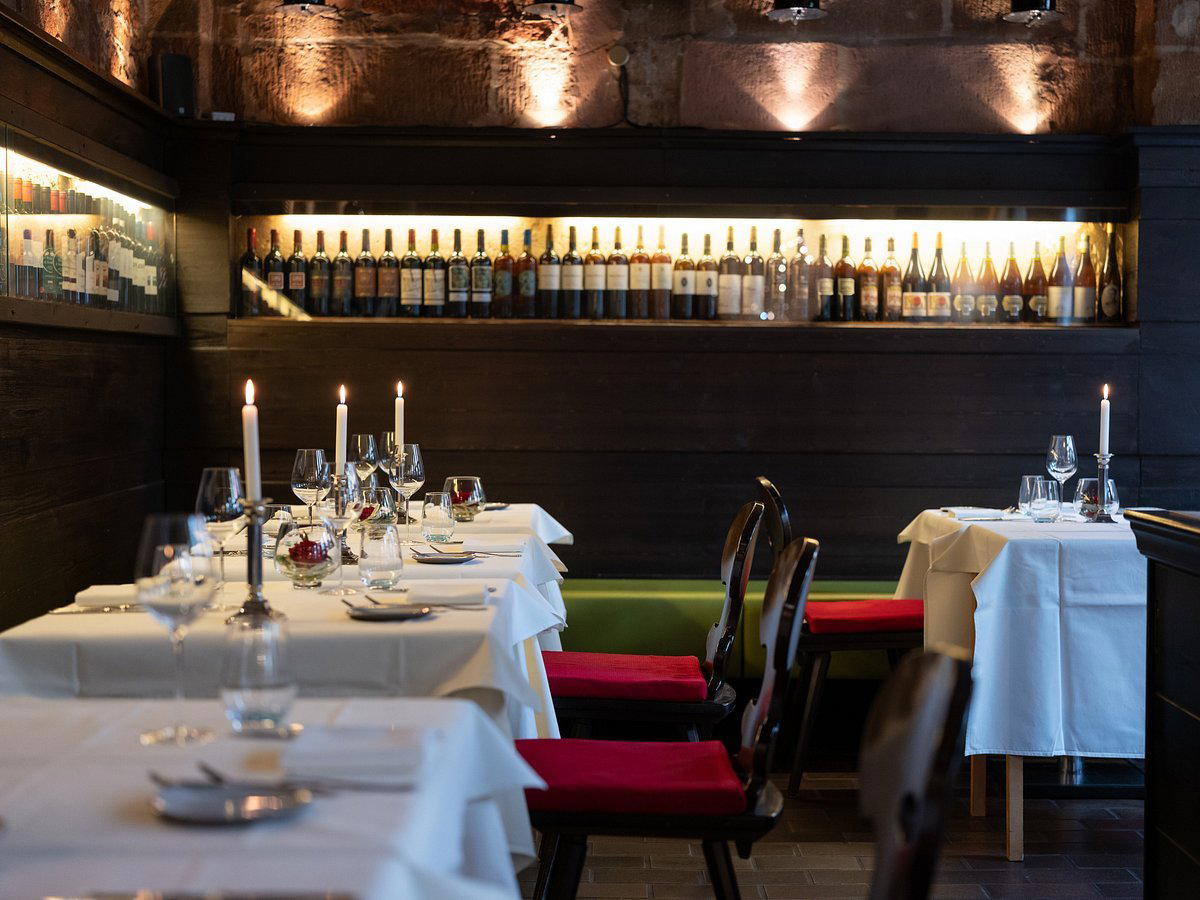
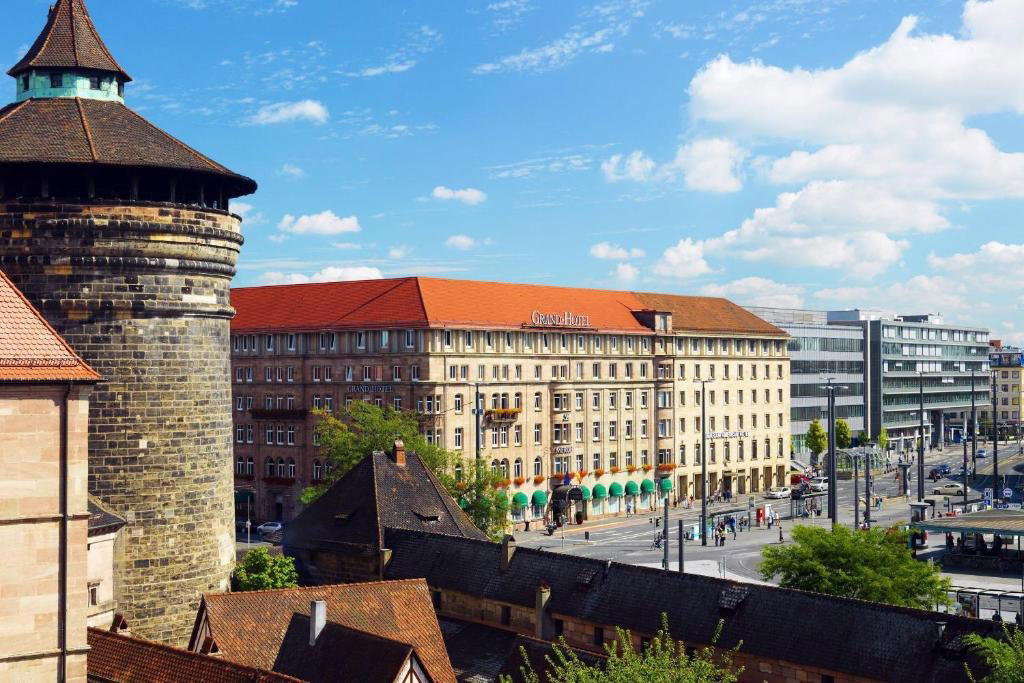
The Weinmarkt is one of Nuremberg's older commercial squares, a few minutes from the Hauptmarkt but quieter, its architecture compressed and particular. Arriving at number three, there is no grand entrance sequence, no doorman theatre. The building reads as civic and old; what happens inside reads as the opposite of casual. This contrast between the unremarkable exterior and the precision of the meal that follows is, in the broader German fine dining tradition, almost a signature move. The country's serious kitchens have long resisted the kind of performative arrival experience that Parisian or Tokyo counterparts sometimes lean on. The room, not the forecourt, is the statement.
Essigbrätlein sits at the narrower, more demanding end of the Nuremberg dining spectrum. Where etz, also two-starred, operates with a creative brief that signals ambition through volume and variety, and where Tisane and Entenstuben occupy the single-star tier at comparable price points, Essigbrätlein under Yves Ollech and Andree Köthe has consistently held the city's highest ranking position in the international review circuit. Opinionated About Dining, which aggregates critic and enthusiast data into ranked lists, placed it 59th in Europe in 2025 and 64th in 2024. La Liste, the Paris-based global ranking, awarded 85 points in 2026, up from 83.5 in 2025. These are not local accolades. They are comparisons against the full European field.
The Architecture of the Meal
German fine dining has developed a particular approach to the meal's pacing that distinguishes it from, say, the tasting menu logic dominant in Scandinavia or the multi-hour omakase formats of Japan. At the upper end of the German market, the meal tends toward deliberate sequencing without theatrical interruption: courses arrive with explanation rather than performance, the wine conversation is expected to be substantive, and the overall rhythm leans toward the guest rather than the kitchen's preferred tempo. This is the tradition Essigbrätlein operates within.
The hours reflect that discipline. Wednesday through Saturday, the kitchen runs a lunch service from noon to 3pm and an evening service from 7pm to midnight. Sunday through Tuesday the restaurant is closed entirely. This four-day, two-service structure is a conscious constraint. At this tier of German cooking, closures are not gaps in commercial ambition; they are part of the quality signal. Aqua in Wolfsburg and Schwarzwaldstube in Baiersbronn operate under similarly compressed schedules. The scarcity of seats and service windows is itself a form of editorial curation.
The modern German tasting format at this price tier (€€€€, the ceiling bracket shared with etz, Tisane, and Entenstuben across Nuremberg's fine dining scene) typically runs between six and ten courses, with options for wine pairing that can double the per-person spend. The meal is not designed to be consumed quickly. The midnight closing time on evening services signals that the kitchen expects to be feeding guests well into the later hours, a rarity in German dining where 10pm kitchen closes are more common in the two-star bracket. That late finish is an operational commitment to a full, unhurried experience.
Modern German, Defined
Cuisine designation here, Modern German with an Innovative qualifier, places Essigbrätlein in a specific critical category. This is not the regional German cooking of sausage, schmaltz, and Franconian tradition, though the address in Franconia invites those associations. Modern German at the two-star level means the kitchen takes regional ingredients and classical German technique as its raw material and processes them through a contemporary lens: fermentation, reduction, precise temperature work, and the kind of sourcing specificity that treats a particular farm or producer as a menu credit rather than a background variable.
German fine dining cohort internationally includes places like JAN in Munich, Vendôme in Bergisch Gladbach, and ES:SENZ in Grassau, all of which share the two- and three-star territory and the modern-German-with-a-personal-vocabulary premise. Essigbrätlein's OAD position in the European top 60 places it in a peer set that extends well beyond Germany: that ranking sits alongside French, Spanish, and Nordic restaurants in its tier. The 442 Google reviews at a 4.7 average provide a more democratic data point alongside the critical consensus, and the consistency between public sentiment and professional review is itself notable in a format where the gap between the two is often wide.
Yves Ollech and Andree Köthe: Credentials as Context
Kitchen is co-led by Yves Ollech and Andree Köthe. In the European fine dining structure, a shared kitchen leadership is less common than the single-named-chef model and typically implies a genuine creative partnership rather than a hierarchy with a figurehead. The result, at places where this model functions well, tends to be menus with more internal debate: flavour combinations that have been argued over and refined rather than handed down from a single authority. Whether that dynamic is the reason for Essigbrätlein's consistent upward movement in the rankings (OAD recognised it as one of the leading new European restaurants in 2023, which implies a relatively recent recalibration rather than a decades-long incumbency) is a reasonable inference from the data, though not a provable one.
What the award trajectory does confirm: the kitchen has been improving on a measurable curve. The OAD new-restaurant recognition in 2023, the 2024 and 2025 Michelin two-star retentions, and the La Liste point increase from 2025 to 2026 are three independent data sources pointing in the same direction. That kind of alignment across different methodologies (Michelin uses anonymous inspector visits; OAD aggregates informed enthusiast reviews; La Liste incorporates multiple international guide sources) is not accidental.
Nuremberg in the German Fine Dining Map
Nuremberg is not where most international visitors first think to eat seriously in Germany. Munich, Berlin, Hamburg, and the Rhine-Ruhr corridor have stronger reputations in the food press. Nuremberg's culinary identity has historically been anchored in its regional specifics: Franconian sausage, gingerbread, the local brewing tradition. The emergence of a European-top-60 restaurant in this context is a city-level statement. Koch und Kellner and Veles further down the price and recognition scale suggest the city is developing a broader fine dining infrastructure rather than relying on a single outlier. For anyone building a German dining itinerary, Nuremberg now warrants inclusion as a serious stop rather than a regional curiosity.
The city's position in the Franconian wine region also gives the restaurant a geographic wine logic: Franconian Silvaner and Müller-Thurgau are among the most food-specific wines in Germany, built for the table rather than the tasting note. At a kitchen with this level of sourcing precision, the local wine geography is likely more than incidental to the beverage program, though specific pairings are not confirmed in available data.
Planning the Visit
Essigbrätlein is at Weinmarkt 3 in Nuremberg's Altstadt, walkable from the central station and from most of the city's hotel stock. The Wednesday-to-Saturday service window means visit planning requires date flexibility; anyone arriving for a weekend trip should account for the Sunday closure. At the €€€€ price tier with Michelin two-star recognition, bookings at this level of German dining typically require advance reservation of several weeks, particularly for the dinner service. The OAD and La Liste rankings have increased international visibility, which will have tightened availability further since the 2025 and 2026 list publications.
For broader Nuremberg planning, the EP Club guides cover restaurants, hotels, bars, wineries, and experiences across the city. For German fine dining context elsewhere in the country, CODA Dessert Dining in Berlin offers a structurally different but equally serious format. For international comparisons in the two-star, tasting-format tier, Le Bernardin in New York and Atomix in New York operate in the same bracket of critical regard, different city and cuisine, same expectation of total meal commitment from the guest.
A Tight Comparison
A short peer set to help you calibrate price, style, and recognition.
| Venue | Notes | Price |
|---|---|---|
| Essigbrätlein | This venue | €€€€ |
| Tisane | Modern European, Modern Cuisine, €€€€ | €€€€ |
| etz | Creative, €€€€ | €€€€ |
| Entenstuben | Modern Cuisine, €€€€ | €€€€ |
| Veles | Modern Cuisine, €€€ | €€€ |
| Zirbelstube | German Regional, Country cooking, €€€ | €€€ |
Continue exploring
More in Nuremberg
Restaurants in Nuremberg
Browse all →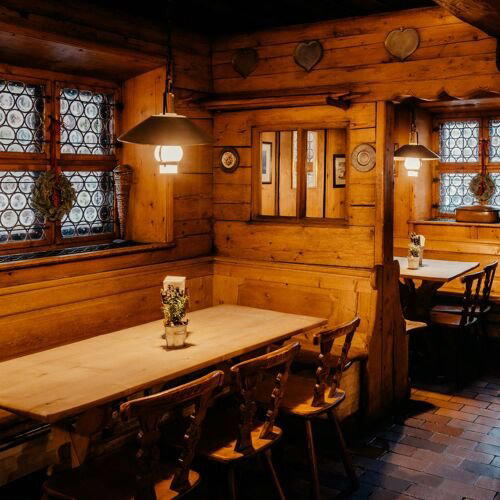
Bars in Nuremberg
Browse all →
At a Glance
- Cozy
- Intimate
- Elegant
- Classic
- Hidden Gem
- Date Night
- Special Occasion
- Historic Building
- Extensive Wine List
- Sommelier Led
- Farm To Table
- Organic
- Local Sourcing
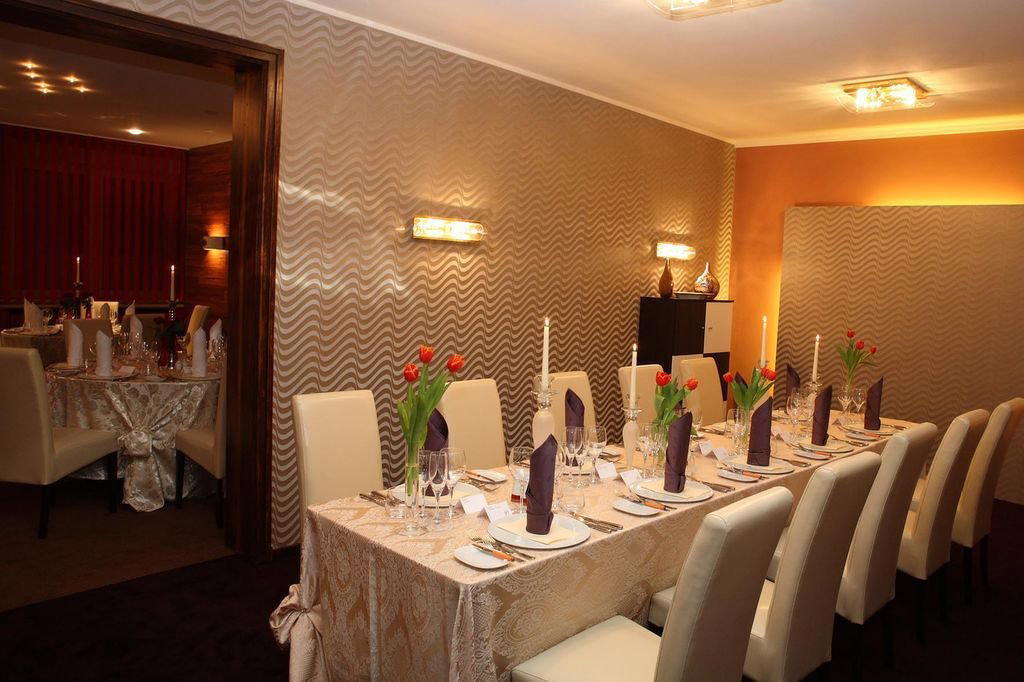
Cosy and inviting historic atmosphere with warm, intimate lighting in an old picturesque building.