Emilia



Michelin Bib Gourmand · SquareMeal UK Top 100 Restaurants #77 · The Good Food Guide GFG Good
Our verdict
A Michelin Bib Gourmand-awarded osteria in a converted Ashburton bank, Emilia draws its identity from the cooking traditions of Emilia-Romagna. Daily-changing menus feature house-made pasta, a regular offal dish, and small plates with Italian-inflected flavours, all priced at the more accessible end of Devon's serious dining scene. The wine store behind the curtain doubles as retail, stocking regional Italian bottles rarely seen on local lists.

Pearl is the En Primeur Club membership app, where members save venues, book tables and use the concierge.
The menu
What to order
- House salami
- Ricotta agnolotti
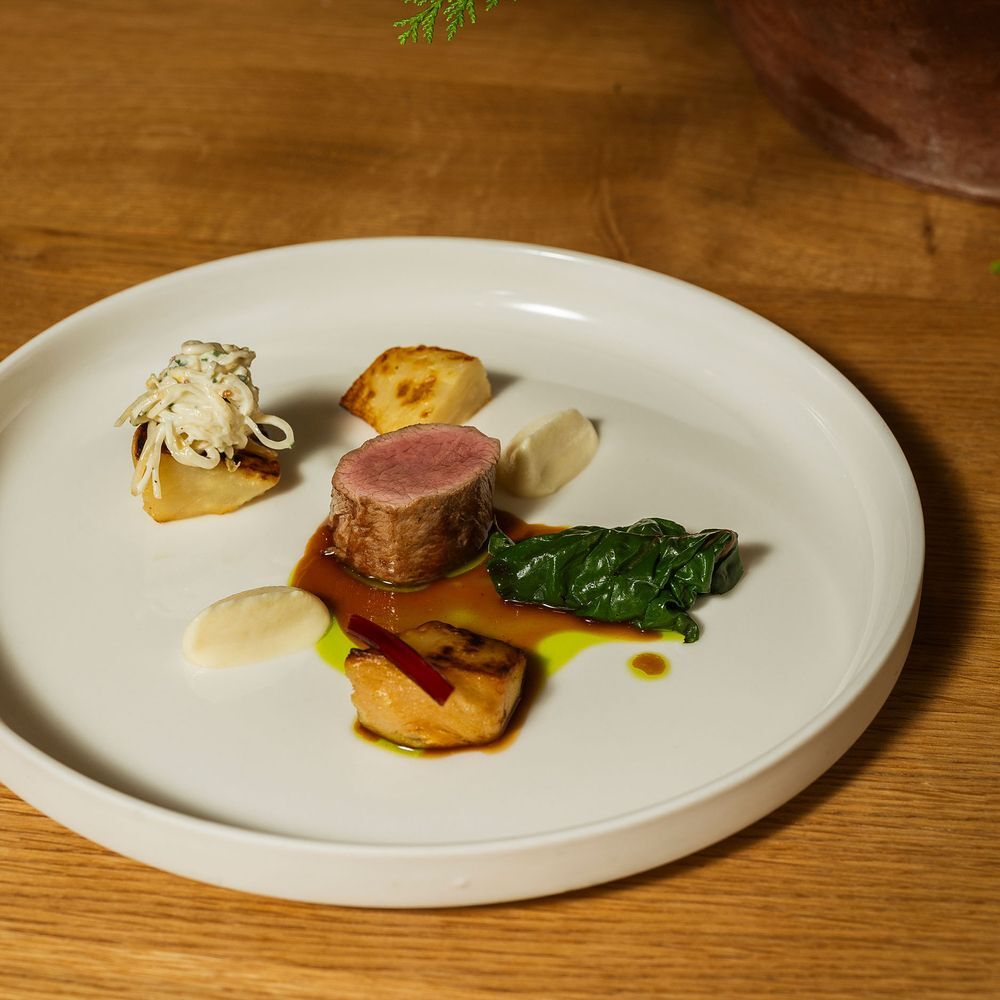
- Lamb chops
A Former Bank Vault, a Chalked Menu, and the Logic of Emilia-Romagna
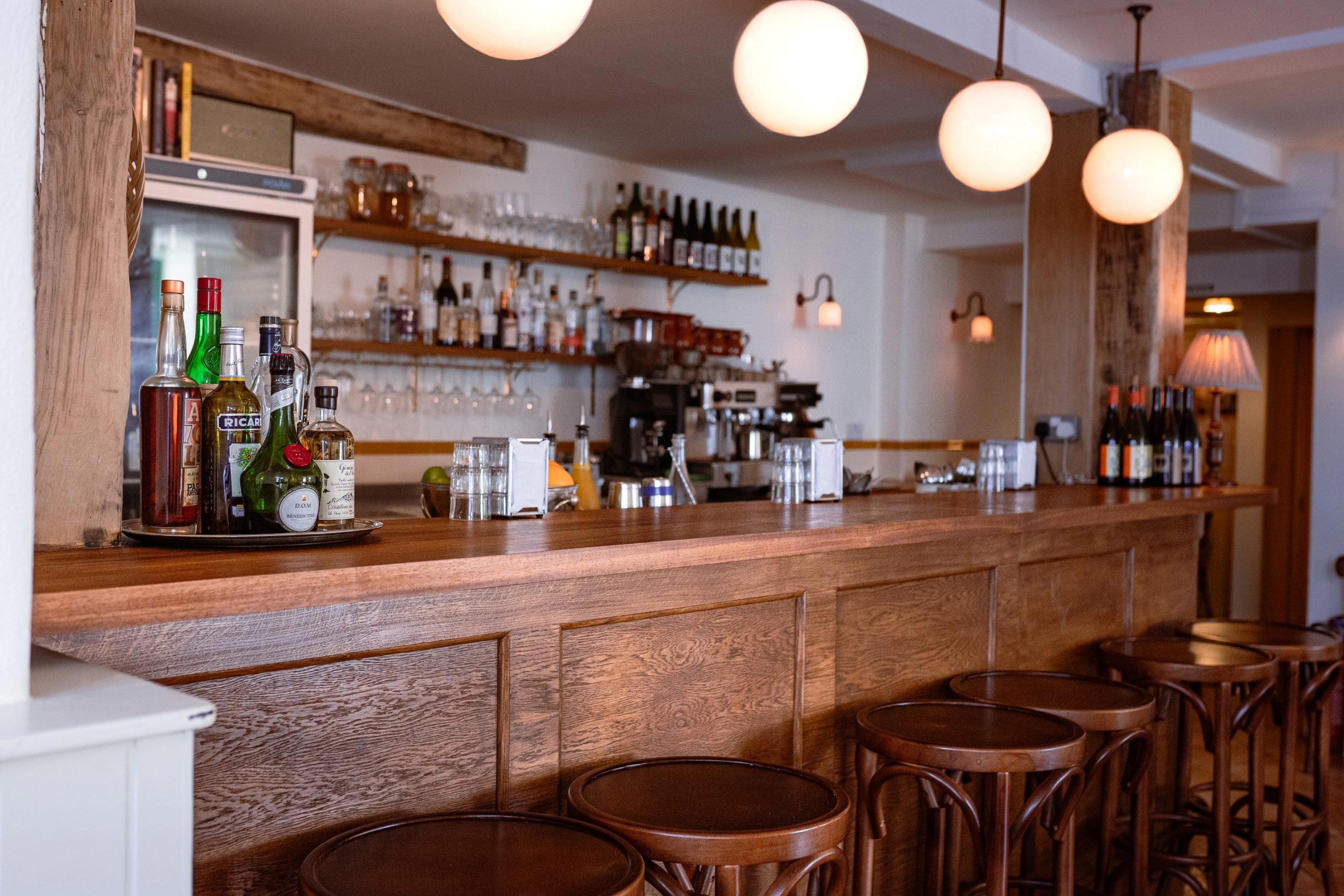
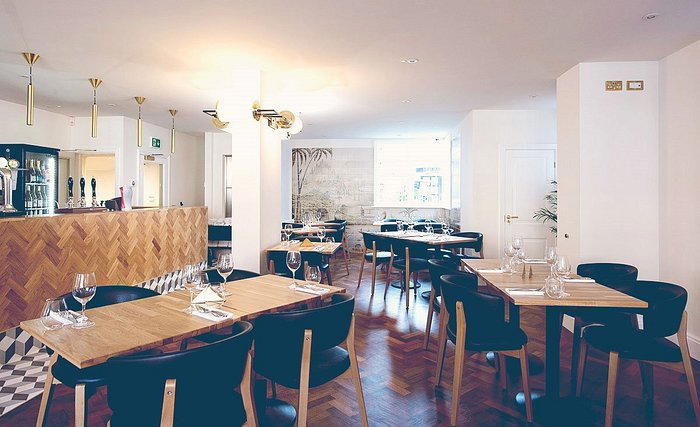
The building announces its previous life without apology. The old vault door still hangs at the back of the room, repurposed now as the frame around a wine store, and the daily menu is chalked directly onto it, a detail that captures something deliberate about how this place operates. Emilia sits on the T-junction at the centre of Ashburton, a small Dartmoor market town whose food scene has developed quietly but with genuine seriousness over the past decade. The room is compact: square tables, some arranged for sharing, wicker counter stools at the window that reward a certain tolerance for perching, and a half-curtained wine store that doubles as retail. The buzz is real, not performed.
The culinary reference point is specific. Emilia-Romagna, the northern Italian region that stretches from the Apennines to the Adriatic, is not the Italy of Naples or Rome or Tuscany. It is the Italy of mortadella, hand-rolled pasta, slow-braised ragù, and a broadly ingredient-led approach that resists flashiness. Bologna's cooking culture is sometimes called la grassa, the fat one, but the better reading is generous: generous with technique, with produce, with time. Emilia the restaurant holds to that register. The pasta is made in-house, the menu changes daily, and the kitchen maintains what the Michelin inspectors, who awarded it a Bib Gourmand in both 2024 and 2025, characterised as flavoursome and generously priced dishes that feel, in their phrase, like they are doing you good.
How This Kitchen Positions Itself in the Devon Dining Scene
Devon's higher-end restaurant tier is anchored by places like Gidleigh Park in Chagford, which operates on a different scale and price point entirely. Emilia sits well below that bracket, priced at ££, and is not competing for the same occasion. The more useful comparison is with the broader category of serious, independently run, produce-led small restaurants in British market towns, a category that has expanded noticeably in the past fifteen years as experienced London operators have moved to smaller settlements and applied urban standards of sourcing and technique to genuinely local ingredients.
Clare Lattin and Tom Hill, previously of Ducksoup in Soho, represent exactly that pattern. Ducksoup was a Soho institution known for a no-reservations format, natural wines, and a kitchen that worked from a short, market-driven menu, the kind of cooking that treats simplicity as a position rather than a limitation. Translating that approach to sub-Dartmoor south Devon produces a restaurant that serves the local population as a neighbourhood osteria while drawing visitors who know what the Bib Gourmand signal actually means: good food at a price that doesn't require occasion-level justification.
For context on how Italian regional cooking is interpreted at the other end of the seriousness spectrum, 8½ Otto e Mezzo Bombana in Hong Kong represents the full-formality end of Italian fine dining outside Italy, and cenci in Kyoto shows how Italian technique travels when filtered through a different culinary culture entirely. Emilia is neither of those things. It is a working osteria with a direct relationship to a specific regional tradition, operating at a scale where the daily offal dish and the house pasta are the editorial spine of the menu, not garnishes around a tasting format.
The Menu in Practice
The Emilia-Romagna template shapes the kitchen's priorities in legible ways. House-made pasta is non-negotiable in that tradition, and it appears here accordingly, broad ribbons of pappardelle have appeared with ox cheek ragù and black olives, a combination that works within the long-cooked, strong-flavoured register that defines the region's meat cookery. The daily offal dish is equally consistent with northern Italian culinary culture, where nose-to-tail cooking predates its recent fashionability in British restaurants by several centuries.
The small-plates format allows the kitchen to range more freely: marinated gurnard with golden raisins, almonds and saffron sits in a tradition of agrodolce, sweet-sour, preparation that has deep roots in northern Italian coastal and Jewish cooking. A hanger steak served red-rare over roasted Tropea onions with salted ricotta, capers and oregano is the kind of dish that looks simple on a chalk board and requires confidence and good sourcing to execute. Appetisers have included white Gorgonzola with lightly pickled pear, and shaved pickled fennel with oregano and chilli, restrained, acid-forward, in the mode of Italian antipasti that prepare the palate rather than satisfy it.
Dessert selection runs short, which in practice creates the kind of two-option decision that generates genuine difficulty. A blood-orange and pistachio tart with crème fraîche represents the citrus-and-nut pairing that appears across southern Italian pastry traditions but works equally well in a northern Italian osteria context.
The Wine Store Behind the Curtain
Wine operation is both retail and list, with only a selection from the store making it onto the restaurant menu. The bottles that do emerge tend to reflect Italian regional specificity: a Merlot-based Gambellara from the Veneto, a skin-contact Sicilian from Grecanico and Inzolia grapes. Neither is a mainstream choice. Gambellara is a DOC in the Veneto more commonly associated with Garganega whites; finding a red from there on a Devon wine list requires someone with a particular interest in the less-charted corners of Italian ampelography. The skin-contact Sicilian reflects the broader natural wine tendency that Clare Lattin and Tom Hill brought from Ducksoup. Aperitifs include a rhubarb-inflected take on the Bellini, a nod to Venice while the rest of the menu tilts more solidly toward Bologna.
Visitors who want to explore what else Ashburton offers in terms of wine and food can consult our full Ashburton bars guide and our full Ashburton wineries guide. For French bistro cooking in the same town, Le Vin Perdu represents the adjacent category. If accommodation is relevant, our Ashburton hotels guide covers the local options, and our experiences guide maps the broader area.
Where It Sits Against the Wider British Restaurant Field
The Michelin Bib Gourmand is a specific signal: it identifies restaurants where the inspectors believe the cooking exceeds what the price would lead you to expect. It is deliberately distinct from the star system, which operates on a different set of criteria and attracts a different dining motivation. Emilia has held the Bib Gourmand for consecutive years (2024 and 2025), which indicates consistency rather than a single strong inspection cycle. That consistency matters more than the award itself, because the daily-changing format means the kitchen is not coasting on a fixed menu.
The British market-town restaurant that takes technique seriously while maintaining accessible pricing is a format that appears in a handful of places nationally. It sits at a different altitude from the destination fine-dining tier represented by places like L'Enclume in Cartmel, Moor Hall in Aughton, or The Fat Duck in Bray, and from the London heavyweights like The Ledbury or Midsummer House in Cambridge. It is also distinct from the rural luxury format of Le Manoir aux Quat'Saisons or Restaurant Andrew Fairlie. The relevant comparison set is smaller, less visible, and often found in towns that don't attract food-destination traffic as a first instinct. The Hand and Flowers in Marlow and hide and fox in Saltwood operate in the same general category of serious cooking in non-metropolitan settings. Emilia belongs in that conversation, with the additional specificity of a genuine regional Italian identity rather than a broader European or British idiom.
Planning a Visit
Emilia is located at 2 East St in Ashburton, on the T-junction at the town's centre, the address is essentially self-locating in a town this size. The price range sits at ££, which in practice means the kitchen's generosity shows up in portion and quality rather than in a price-to-occasion mismatch. The menu changes daily, so there is no fixed list to consult in advance; arriving without a specific dish in mind is the correct approach. The wine store behind the curtain is available for retail as well as table service, which makes a post-dinner purchase plausible. Given the small room and the Bib Gourmand profile, booking ahead is the sensible move, particularly for weekend lunches or evenings. For a fuller picture of what Ashburton offers across categories, the complete Ashburton restaurant guide provides the broader context.
Frequently asked questions
Is Emilia more mid-range or high-end?
Pricing at Emilia is listed as ££.
At-a-Glance Comparison
| Venue | Cuisine | Price | Awards | Notes |
|---|---|---|---|---|
| EmiliaThis venue (the venue you are viewing) | Modern Italian Osteria | $30–50 | Michelin Bib Gourmand · SquareMeal UK Top 100 Restaurants #77 | Not listed |
| The Ledbury | Modern British Fine Dining | $300–500 | 3 Michelin Stars · World's 50 Best #42 | Modern European, Modern Cuisine |
| Sketch, The Lecture Room and Library | Modern French Fine Dining | $200–300 | 3 Michelin Stars · World's 50 Best #18 | Modern French |
| CORE by Clare Smyth | Modern British Fine Dining | $150–200 | 3 Michelin Stars · World's 50 Best #97 | Modern British |
| Restaurant Gordon Ramsay | French Fine Dining | $200–300 | 3 Michelin Stars · World's 50 Best #13 | Contemporary European, French |
| Dinner by Heston Blumenthal | Modern British, Traditional British | Not listed | Michelin 2 Star | Not listed |
Recognition history
Dated appearances from independent guides and award organizations, with the underlying list record or original source where available.
Michelin Bib Gourmand
Michelin
SquareMeal UK Top 100 Restaurants #77
SquareMeal
The Good Food Guide GFG Good
The Good Food Guide
Full recognition history (5 entries)
Michelin Bib Gourmand
Michelin
Michelin Bib Gourmand
Michelin
Continue exploring
More in Ashburton
Restaurants in Ashburton
All restaurants in Ashburton →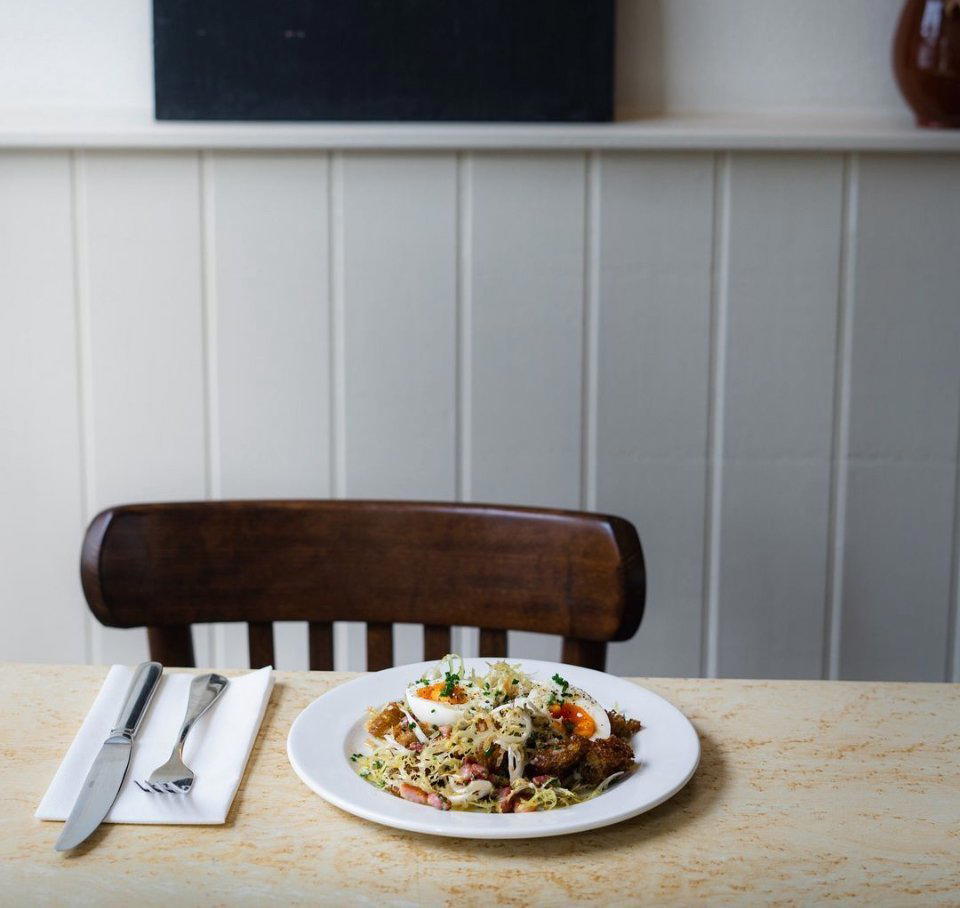

Bars in Ashburton
Browse all →

Details
- Cozy
- Intimate
- Rustic
- Trendy
- Date Night
- Special Occasion
- Group Dining
- Open Kitchen
- Natural Wine
- Local Sourcing
- Small Plates
- A La Carte
- Vegetarian Friendly
Current opening hours
- Monday
- Closed
- Tuesday
- 5:30–10 PM
- Wednesday
- 12–4 PM, 5:30–10 PM
- Thursday
- 12–4 PM, 5:30–10 PM
- Friday
- 12–4 PM, 5:30–10 PM
- Saturday
- 12–4 PM, 5:30–10 PM
- Sunday
- 12–4 PM
Hours can change for holidays and private events. Hours as of .
Cosy and intimate with relaxed atmosphere, open kitchen view, and agreeable buzz from a small room.