Boringdon Hall


Michelin Selected · Condé Nast Johansens Best Hotel Spa
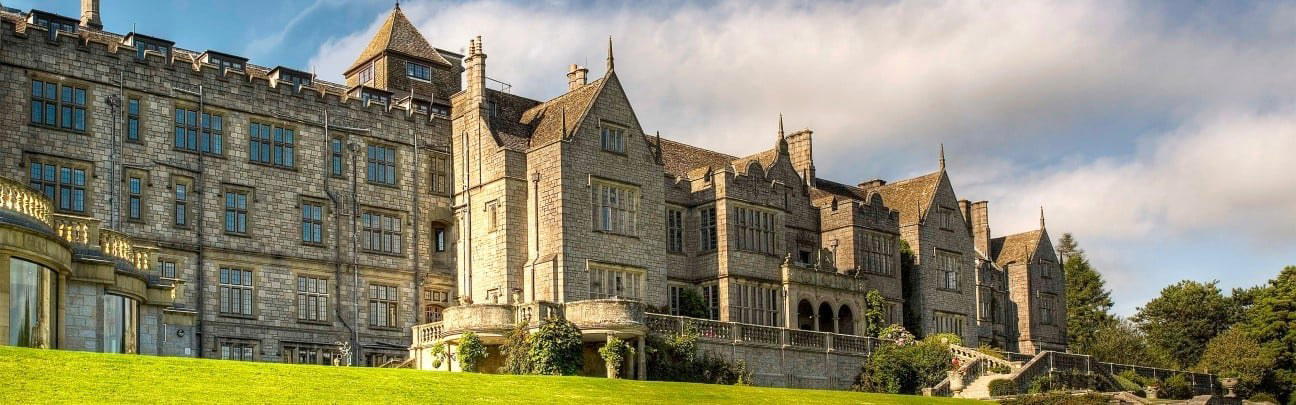
A Grade I listed Elizabethan manor on the edge of Dartmoor, Boringdon Hall earned MICHELIN Selected status in 2025, placing it among a small cohort of historic country houses that have converted architectural heritage into credible hospitality. The property sits above Plymouth with moorland views that frame the stone façade dating to the sixteenth century, making it the region's most historically grounded hotel option.

Pearl is the En Primeur Club membership app — saves, bookings, and concierge access live there. Same editors, same standards.
- Address
- Boringdon Hall Hotel, Plymouth PL7 4DP, United Kingdom
- Phone
- +44 1752 344455
- Website
- boringdonhall.co.uk
- Directions
- Get directions
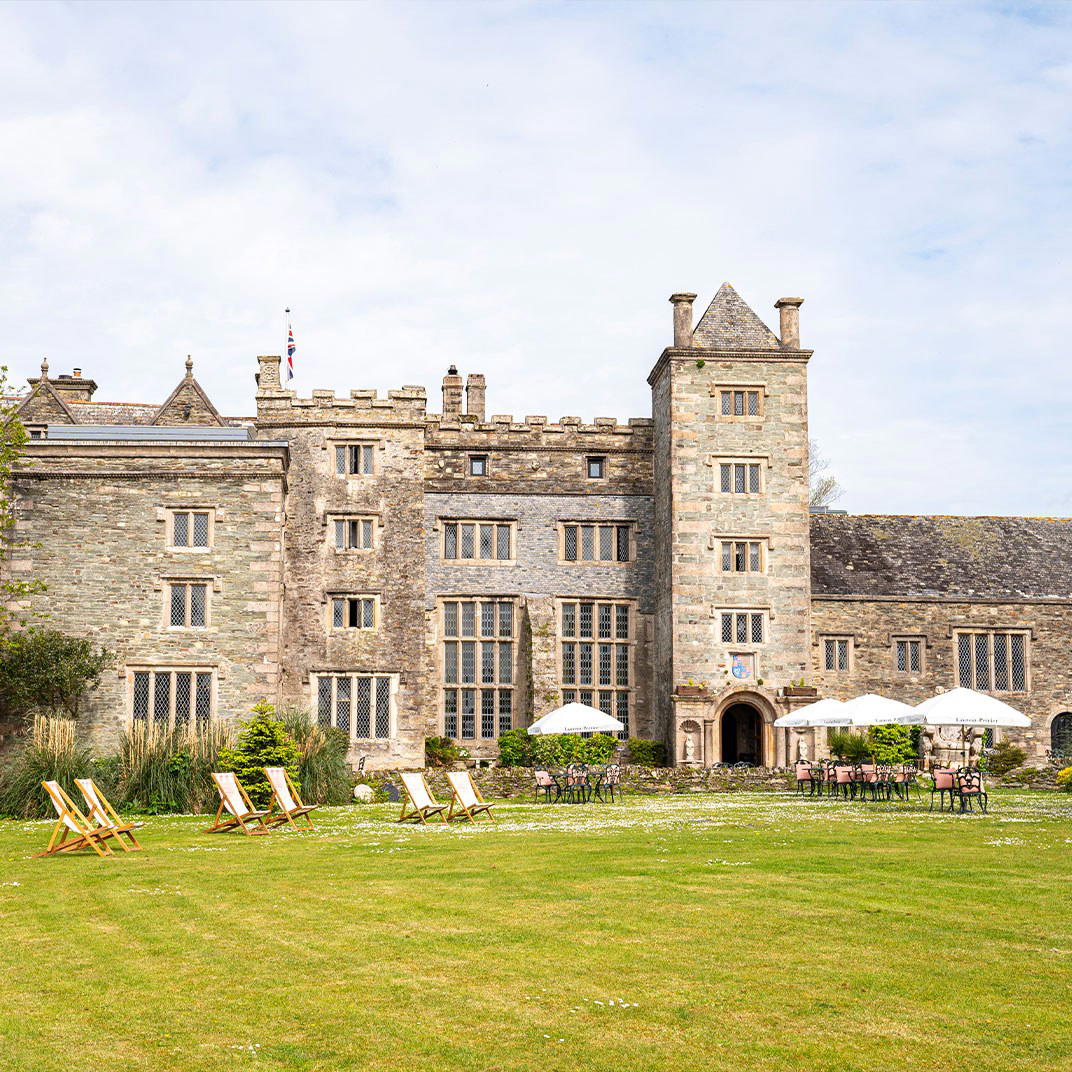
Stone, Symmetry, and Six Centuries of Structure
Country house hotels in England occupy a crowded field, but within that field there is a meaningful hierarchy between properties that happen to occupy old buildings and those where the architecture actively shapes the experience. Boringdon Hall belongs to the second category. The Grade I listed Elizabethan manor on Boringdon Hill, positioned at the southern edge of Dartmoor above Plymouth, is one of the oldest continuously inhabited structures in Devon. The stone exterior, the proportioned fenestration, and the great hall interior are not restoration projects or themed additions — they are the building as it was originally constructed in the sixteenth century, adapted over the decades but never fundamentally altered in character.
That distinction matters when assessing what kind of stay Boringdon Hall actually delivers. Properties of this architectural classification are relatively rare in English hospitality: Grade I listing covers only around two percent of all listed buildings in England, indicating structures of exceptional interest. Arriving via the approach road that climbs Boringdon Hill, the visual sequence — wooded hillside giving way to the stone façade against a moorland backdrop, is the kind of architectural framing that most contemporary hotel designers spend considerable effort attempting to replicate. Here, it is simply the site.
Where Boringdon Hall Sits in the Regional Context
Plymouth is not a city typically associated with luxury hotel accommodation. Its hospitality offer has historically skewed toward transit and budget, shaped by its role as a naval port and ferry hub rather than a leisure destination. Boringdon Hall operates as a clear outlier within that context, drawing comparison not to other Plymouth properties but to a broader set of Devon and Somerset country houses. Properties such as The Newt in Somerset or Longueville Manor in Jersey illustrate the standard that heritage-led properties in the wider Southwest region now compete against: grounds programming, spa investment, and food and beverage offers that justify destination travel rather than incidental stopover.
The Michelin Guide's 2025 hotel selection, which included Boringdon Hall, applies a framework that rewards properties where the physical experience, service coherence, and sense of place combine at a consistently high level.
The Architecture as the Program
Historic country houses in England face a consistent design tension. The original structures were built for domestic habitation at a period when hospitality meant entertaining a small circle of guests; converting them to commercial hotel use without disrupting the spatial integrity of the architecture requires discipline. The most successful conversions, and Boringdon Hall is considered among them, resist the temptation to insert contemporary hotel infrastructure in ways that read as incongruous against sixteenth-century stonework. The great hall, the principal reception rooms, and the vaulted and panelled spaces that define the interior character of an Elizabethan manor are precisely the features guests are paying to occupy. When those spaces work, they function as the amenity; no quantity of modern additions can replicate what the building itself provides.
This approach places Boringdon Hall in a similar position to properties such as Crossbasket Castle in High Blantyre or Farlam Hall Hotel in the Lake District, where the building's age and classification are the primary differentiator rather than a contemporary design gesture. The difference at Boringdon is the Dartmoor setting: the moorland edge location gives the property a landscape context that many English manor hotels, positioned in more managed estate grounds, do not have. The combination of architectural age and wild adjacency is relatively uncommon in the Southwest.
Spa and Wellness Within a Heritage Shell
One of the more difficult integrations in heritage hotel development is spa provision. Modern spa infrastructure, hydrotherapy pools, treatment rooms, relaxation spaces, carries physical requirements that conflict with the structural logic of an Elizabethan building. Properties that manage this integration well tend to either build sympathetic extensions that read as deliberate additions rather than imitations, or they repurpose secondary structures on the estate. Boringdon Hall has spa facilities on site, representing the kind of investment that moves a historic property from pure heritage experience toward the full-service country house offer that now defines competition in the premium leisure segment in England. For context, spa provision is increasingly a baseline expectation at this level of country house hotel, with properties like Thornton Hall Hotel and Spa in Heswall and The Vineyard Hotel and Spa in Newbury illustrating how central wellness programming has become to the country house proposition across England.
Planning a Stay: What to Know
Boringdon Hall sits at Boringdon Hill, Plymouth, accessible from the A38 Devon Expressway, which connects the property to the national road network and places it within reasonable distance of both Plymouth city centre and the northern Dartmoor access points. For guests arriving by rail, Plymouth station is the nearest mainline stop, with the journey from London Paddington typically running under three and a half hours via Great Western Railway. The property's position above the city means that driving is the practical mode of arrival for most guests; the approach road itself forms part of the experience.
Given the MICHELIN Selected status confirmed for 2025, demand for rooms at Boringdon Hall in the leisure season, spring through autumn, and particularly during the summer months when Dartmoor access peaks, is unlikely to leave significant availability for late booking. The standard approach for properties at this level is to book well in advance for weekend stays and holiday periods. For those comparing options across the wider UK country house market, the EP Club's guides to properties including Gleneagles in Auchterarder and Oddfellows on the Park in Manchester provide useful reference points across different price tiers and geographies. For broader Plymouth context, see our full Plymouth restaurants guide, which covers the city's wider dining and hospitality offer.
Internationally minded travellers comparing English country house standards against European and American luxury tiers will find useful points of reference in properties such as Badrutt's Palace Hotel in St. Moritz or Hôtel de Paris Monte-Carlo, which operate at the apex of their respective formats. Within the UK, The Savoy in London and The Rutland in Edinburgh represent urban alternatives for those whose itinerary spans city and country.
A Quick Peer Check
Comparable venues nearby, for context on price, style, and recognition.
| Venue | Cuisine | Price | Awards | Notes |
|---|---|---|---|---|
| Boringdon HallThis venue — the venue you are viewing | Historic Elizabethan manor house blending old-world charm with modern luxury | Not listed | Michelin Selected · Condé Nast Johansens Best Hotel Spa | Not listed |
| The Randolph Hotel Oxford, a Graduate by Hilton | Historic landmark with modern updates | $200–300 | Michelin Selected | Oxford City Centre |
| Sun Street Hotel Shoreditch | Georgian townhouses with modern extension | Not listed | Michelin Selected | Shoreditch |
| Kaya Great Northern Hotel | Historic boutique hotel with railway heritage | Not listed | Michelin Selected | King's Cross |
| The Lowry Hotel | Contemporary luxury hotel blending Manchester's industrial heritage with Scandinavian minimalism, positioned as the city's premier five-star destination. | $200–300 | Michelin Selected | Chapel Wharf, Salford |
| The Old Manse of Blair | Restored Regency-style manor on a 10-acre estate in Cairngorms National Park | $300–500 | Michelin Selected | Blair Atholl |
Recognition history
Dated appearances from independent guides and award organizations, with the underlying list record or original source where available.
Michelin Selected
Michelin
Condé Nast Johansens Best Hotel Spa
Condé Nast Johansens
Continue exploring
More in Plymouth
Details
- Romantic
- Quiet
- Elegant
- Classic
- Sophisticated
- Romantic Getaway
- Wellness Retreat
- Anniversary
- Weekend Escape
- Historic Building
- Destination Spa
- Spa
- Pool
- Wi Fi
- Room Service
- Garden
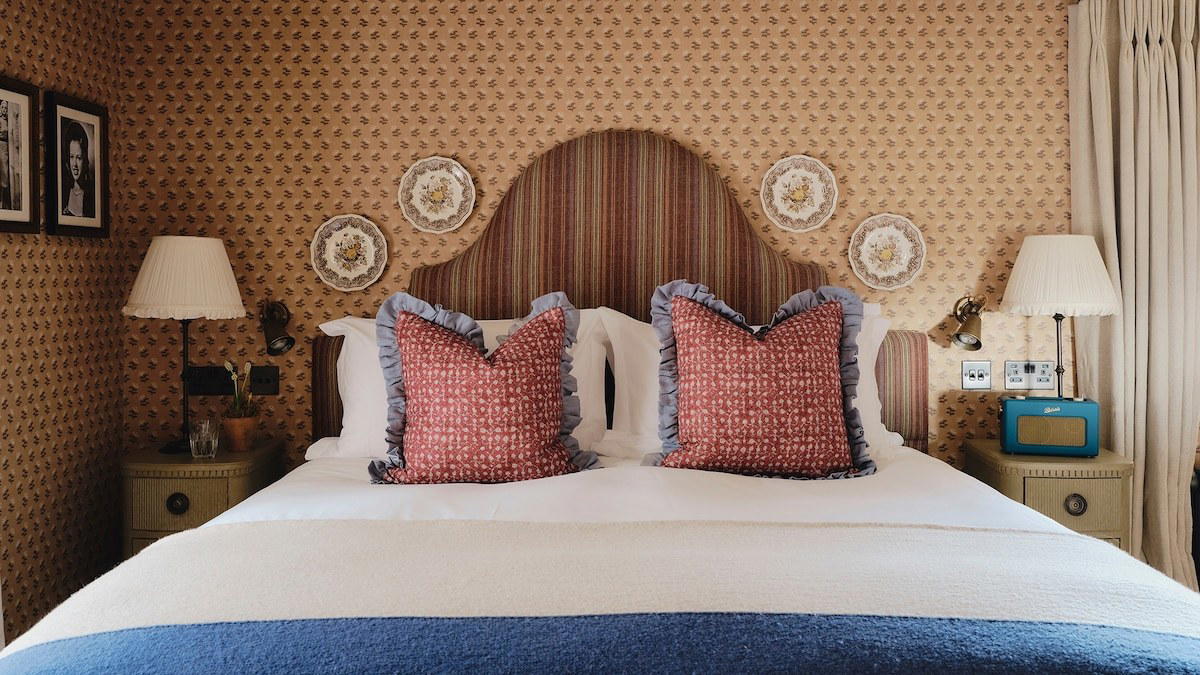
Traditional elegance with quiet, peaceful historic charm featuring regal atmosphere, decorative moldings, and centuries-old tapestries.