El Palacio de los Jugos
El Palacio de los Jugos on SW 27th Avenue is one of Miami's most enduring Cuban market-cafeteria hybrids, where freshly pressed tropical juices, roasted pork, and steam-table staples draw a cross-section of the city from early morning through late afternoon. The sourcing is unapologetically local and seasonal, tethered to South Florida's Caribbean produce networks. No reservations, no frills, no apologies.
Pearl is the En Primeur Club membership app — saves, bookings, and concierge access live there. Same editors, same standards.
- Address
- 1545 SW 27th Ave, Miami, FL 33145
- Phone
- +1 786 616 8913
- Website
- elpalaciodelosjugos.com
- Directions
- Get directions
 Saves & bookings on Pearl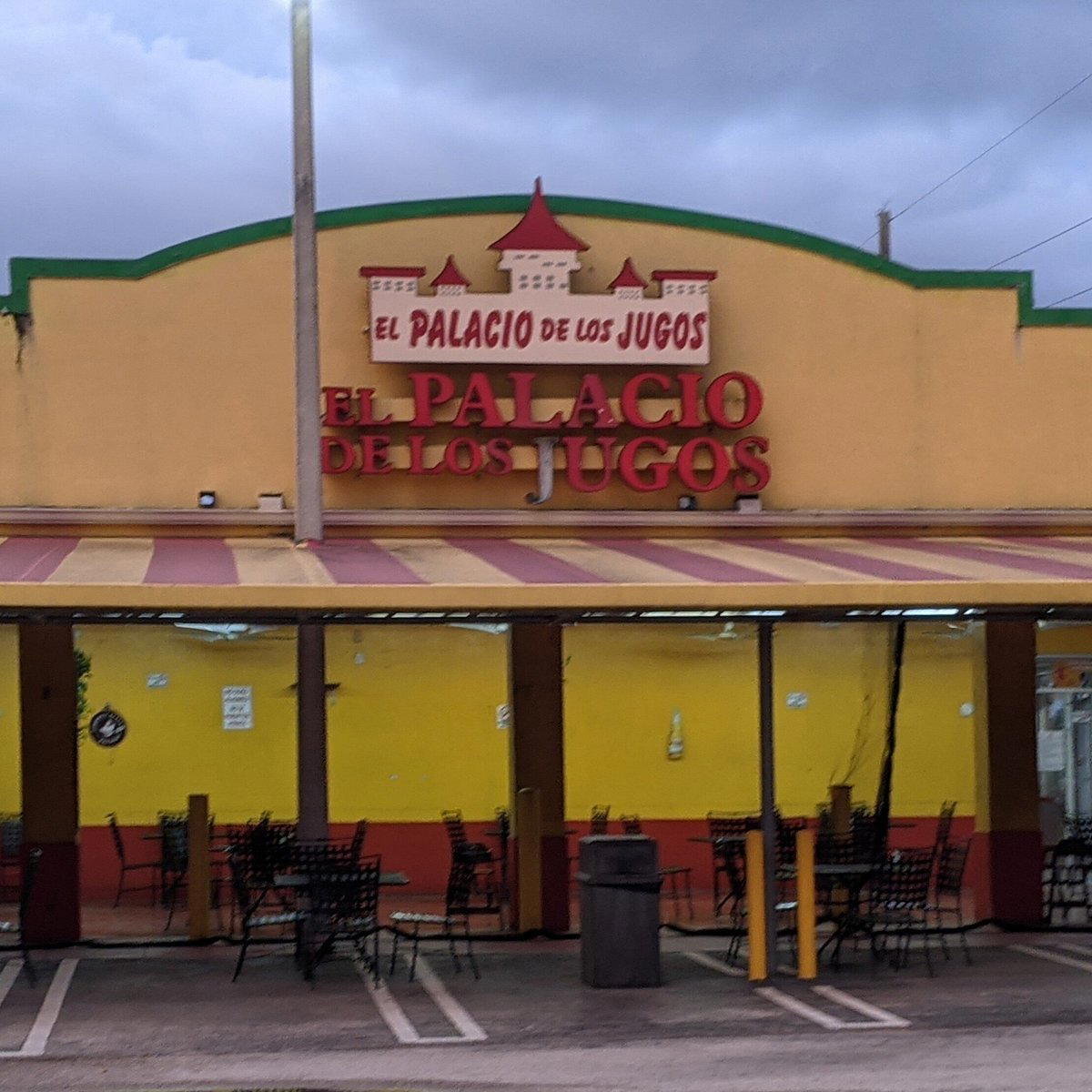
Where Miami's Cuban Market Tradition Holds Its Ground
Step off SW 27th Avenue on a weekday morning and the sensory information arrives before you reach the entrance: the smell of roasting pork, the percussion of a cleaver on a wooden block, the tower of papayas and mamey stacked near the door. El Palacio de los Jugos operates somewhere between a produce market, a juice counter, and a Cuban cafeteria, and that refusal to be one thing is precisely what has kept it relevant across decades of Miami's rapid demographic and culinary change. This is not a nostalgic novelty. It is a working institution that feeds a real cross-section of the city every day.
Miami's Cuban food scene has always split between the formal sit-down restaurants of Calle Ocho and the utilitarian counters that serve the working community without ceremony. El Palacio occupies the latter category at a scale few others have matched. Where spots like Ariete and Boia De represent Miami's contemporary chef-driven evolution, El Palacio represents something older and arguably harder to replicate: a sourcing model built around South Florida's tropical produce supply chain, maintained over time without the incentive of press coverage or award cycles.
The Sourcing Logic Behind the Steam Table
The editorial angle that most American food media misses about places like El Palacio is that the food is only as good as the produce networks feeding it. South Florida sits at a geographic intersection that gives Miami kitchens access to tropical fruit and root vegetables unavailable at this scale almost anywhere else in the continental United States. Mamey sapote, sugar cane, calabaza, yuca, boniato, plantains at every stage of ripeness: these are not imported for novelty. They arrive through established South Florida and Caribbean agricultural channels that have supplied the Cuban exile community since the 1960s.
The juice operation at El Palacio is the most direct expression of that sourcing logic. The drinks are pressed to order from whole fruit, which means the menu shifts with what is in season and what arrived that morning. In peak summer, tropical fruits dominate. In cooler months, the citrus component strengthens. This is seasonal cooking in its most untheorized form, not a chef's philosophical statement but a simple function of what the market provides. Contrast this with the hyper-controlled sourcing narratives at farm-to-table properties like Blue Hill at Stone Barns or SingleThread Farm in Healdsburg, and El Palacio's version looks less curated but no less rigorous in its own way. The supply chain is just less legible to outsiders.
Cooked food follows the same market-driven rhythm. Roasted pork, black beans, white rice, fried plantains, tamales, croquetas: these are the stable core, but the peripheral steam-table items rotate with availability. Yuca preparations shift with harvest timing. The depth of the black bean pot varies by batch. Nothing is standardized in the way a chain operation would demand, and that variability is a feature, not a quality control failure.
The Miami Context: What This Counter Represents in a Changing City
Miami's dining scene has spent the last decade pulling toward the high end. L'Atelier de Joël Robuchon arrived. Cote Miami brought its Korean steakhouse format from New York. The Wynwood and Design District corridors filled with concept-driven rooms priced above what most of the city's residents spend on a meal. In that context, a counter operation running on produce economics and volume becomes a different kind of statement about what Miami actually eats, as opposed to what it performs eating for an outside audience.
The address on SW 27th Avenue places El Palacio in the Little Havana corridor, a neighborhood that has absorbed enormous tourist curiosity without fully accommodating it. The clientele on any given afternoon runs from Cuban-American families doing a weekly produce run to construction workers on a lunch break to food-curious visitors who read about the place in a travel piece. The mix is not curated. It is simply what happens when a place prices at the community level and sources from community networks.
For comparison, the Peruvian counter tradition has found a Miami expression at Itamae, which similarly uses tropical and Latin American sourcing logic but in a more chef-authored format. El Palacio predates that kind of self-consciousness. It did not construct a sourcing identity; it maintained one.
Planning a Visit: Timing, Format, and What to Expect
El Palacio de los Jugos operates on a counter-service model with no reservation system and no booking infrastructure. Arriving early in the day gives access to the widest selection of cooked items before the steam table depletes through the lunch rush. Weekend mornings bring the heaviest volume, when families combine grocery shopping with breakfast. Weekday mid-mornings offer shorter waits without sacrificing the full range of what the kitchen has prepared.
The format rewards slow decision-making: the produce section, the juice counter, and the hot food stations are distinct areas, and most visitors work through all three. Payment is direct and the price point sits well below anything in Miami's mid-range restaurant tier, which is part of the operating logic. This is not a destination that competes with The French Laundry or Le Bernardin on any axis except the one that matters here: direct access to ingredients at their source-closest preparation.
For a full picture of where El Palacio sits within Miami's broader dining range, from neighborhood counters to destination tasting menus, see our full Miami restaurants guide. The city also supports destinations like Smyth in Chicago, Providence in Los Angeles, Addison in San Diego, The Inn at Little Washington, Atomix in New York City, Lazy Bear in San Francisco, Emeril's in New Orleans, and Atelier Moessmer Norbert Niederkofler in Brunico for readers calibrating across the full spectrum of what sourcing-led cooking can look like at different price and format points.
Nearby-ish Comparables
| Venue | Cuisine | Price |
|---|---|---|
| El Palacio de los JugosThis venue — the venue you are viewing | This venue | Not listed |
| Cote Miami | Korean Steakhouse, Korean | $$$ |
| Ariete | Modern American, Contemporary | $$$$ |
| Boia De | Italian, Contemporary | $$$ |
| Stubborn Seed | Progressive American, Contemporary | $$$$ |
| Los Fuegos by Francis Mallmann | Argentinian | $$$$ |


At a Glance
- Lively
- Well Known
- Rustic
- Casual Hangout
- Family
- Group Dining
- Open Kitchen
Current opening hours
- Monday
- 6 AM–9 PM
- Tuesday
- 6 AM–9 PM
- Wednesday
- 6 AM–9 PM
- Thursday
- 6 AM–9 PM
- Friday
- 6 AM–9 PM
- Saturday
- 6 AM–9 PM
- Sunday
- 6 AM–9 PM
Hours can change for holidays and private events. Last verified .
Casual open-air cafeteria-style with bustling food stations and lively tropical atmosphere.
Know Before You Go
- Getting there
- 1545 SW 27th Ave, Miami, FL 33145