

Michelin Plate · Guía Repsol 1 Sol
Our verdict
A Michelin Plate-recognised family restaurant in Ávila, El Almacén occupies a converted wheat warehouse on the Salamanca road, just outside the medieval walls. The kitchen follows the rhythms of home cooking, with daily specials introduced under a standing section named after the cook and a signature dripping almond cake that should be ordered at the start of the meal. At a mid-range price point, it delivers traditional Castilian hospitality with one of the city's most arresting views.

Pearl is the En Primeur Club membership app, where members save venues, book tables and use the concierge.
The menu
What to order
- Carabineros
- Cochinillo
- Solomillo al queso Valdeon
- Huevos con carabineros
Outside the Walls, Inside the Tradition
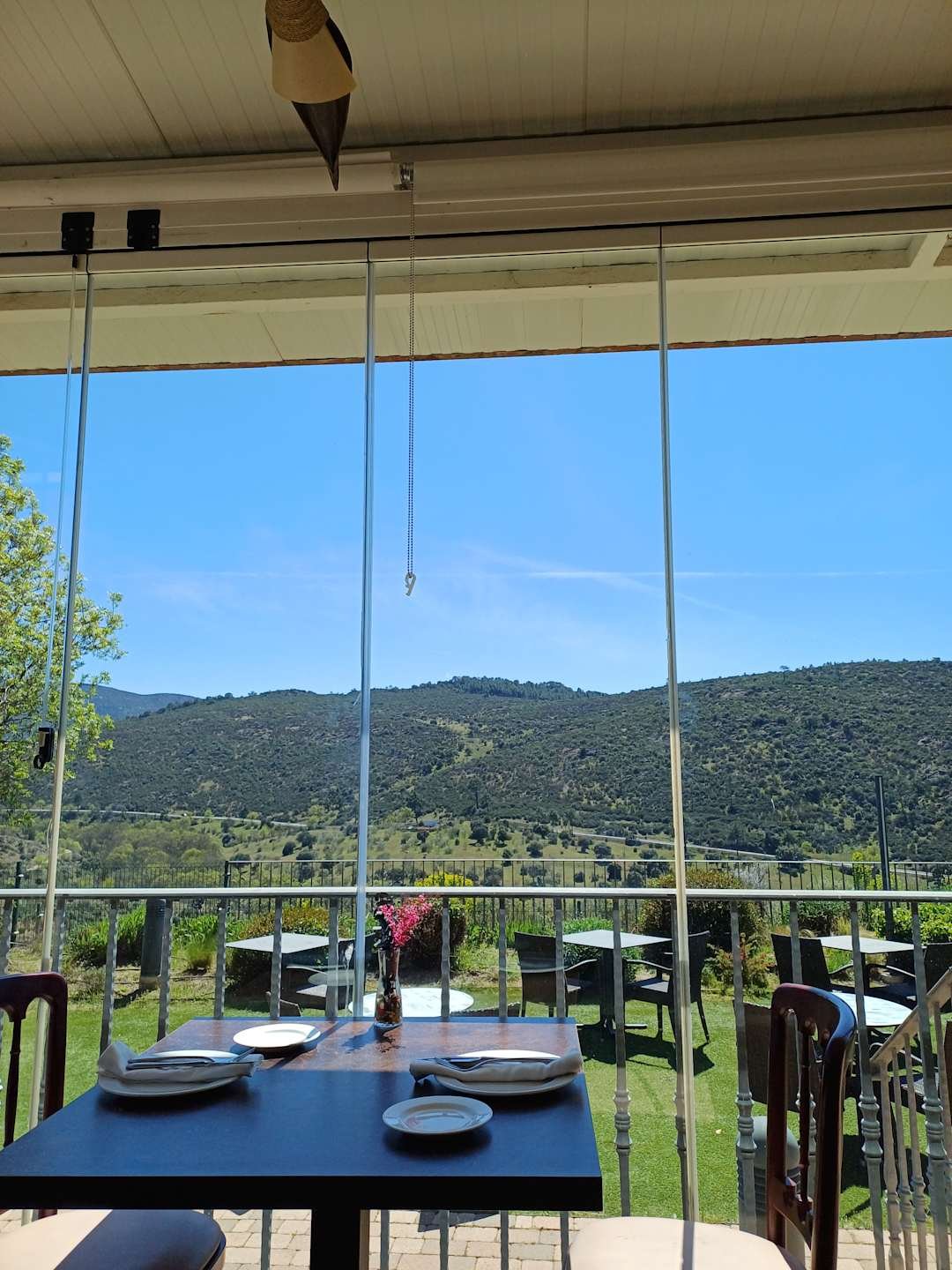
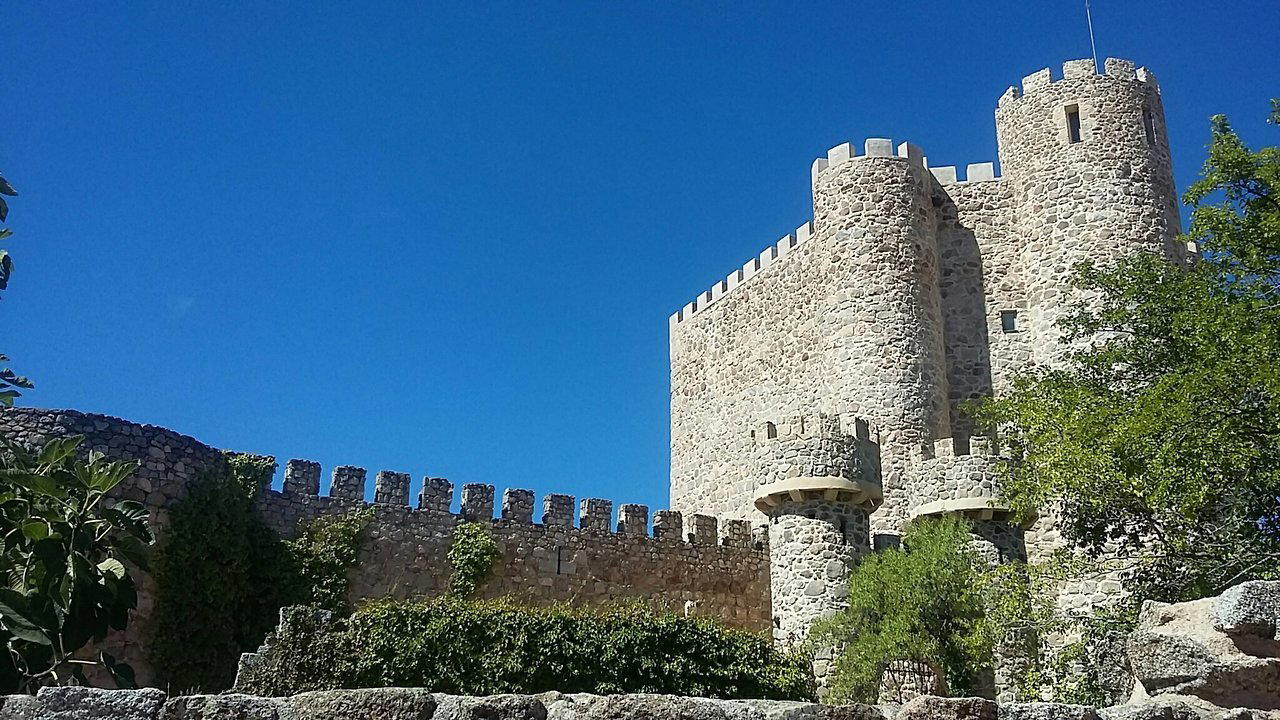
Approach El Almacén from the Salamanca road and the city walls of Ávila present themselves at full height, the afternoon light hitting the battlements in a way that is almost difficult to take seriously, too cinematic for a Tuesday lunch. The restaurant sits in a converted wheat warehouse on Calle Cuatro Postes, directly opposite the viewpoint that most visitors encounter on a passing bus tour. But where the viewpoint draws crowds briefly and moves them on, El Almacén asks you to sit, order carefully, and watch those fortifications across the length of a proper meal. The setting is not incidental. In a city where medieval stone is everywhere, a dining room that places the walls at eye level from a former working building occupies a different register than the historic-centre restaurants a few minutes away.
Ávila's dining scene sits at some distance from the concentrated creative energy of Spain's northern restaurant corridor. Establishments like Arzak in San Sebastián, Azurmendi in Larrabetzu, and Mugaritz in Errenteria define the progressive end of Spanish cooking, as do DiverXO in Madrid and El Celler de Can Roca in Girona. El Almacén operates in a different tradition entirely: Castilian home cooking, family-run, rooted in the daily rhythms of what is available and what has been prepared. That is not a consolation prize. In the same way that Auga in Gijón or Auberge Grand'Maison in Mûr-de-Bretagne represent regional cooking done with conviction and recognised by Michelin for it, El Almacén holds a Michelin Plate for 2024 and 2025, an acknowledgment that the food here meets a consistent standard, even if the ambition is domestic rather than experimental.
How the Meal Unfolds
The structure of a meal at El Almacén is shaped by a specific piece of menu architecture that tells you something about the kitchen's relationship with the day's work. An opening section, named after the cook and introduced as what she has prepared today, functions as the honest header for what follows. This is not a fixed-format tasting menu of the kind found at Aponiente in El Puerto de Santa María or Cocina Hermanos Torres in Barcelona, where each course arrives in prescribed sequence. It is a daily proposition: here is what has been made, and you may choose from it. Daily verbal recommendations supplement the menu, extending that same principle, the kitchen communicates through what it has ready, not through a rehearsed narrative about sourcing philosophy.
This pacing has consequences for how a guest approaches the meal. Ordering at El Almacén requires attention to the daily section first, before the printed card. It also requires one specific piece of forward planning: the Pastel chorreante de almendra, the dripping almond cake, must be ordered at the start of the meal. Restaurants that produce elaborate desserts to order operate on a different clock than those assembling plated components from a cold section; ordering late means either waiting or going without. The instruction is practical, but it also frames the meal as something the kitchen is genuinely making for you, not simply presenting.
The Kitchen's Register
Castilian cooking, particularly in the inland provinces of Castilla y León, is built on long-cooked meats, legumes, and roast preparations that require time rather than technical novelty. Ávila itself is associated with its beef, and the wider region's cocina de cuchara, spoon food, as the Spanish call slow-cooked dishes that arrive in bowls, has been a constant against which the modernist movement has always been measured. El Almacén's markedly traditional and homemade approach places it squarely inside that inheritance. The word homemade, in the context of a Michelin-recognised restaurant, carries a specific meaning: it implies that sauces are reduced in-house, that stocks are made from the day's trimmings, and that the menu's scope is limited by what can be produced at that standard rather than expanded by what can be purchased ready-made.
At the €€ price point, mid-range by Spanish standards, and considerably below the €€€€ tier occupied by the country's three-star restaurants, El Almacén represents a category of Spanish dining that doesn't receive the same international coverage as its progressive counterparts but sustains the actual daily eating culture of the country. For visitors arriving from Madrid, about 110 kilometres away, or from Salamanca to the west, this is the kind of restaurant that functions as a reason to stop rather than merely to pass through.
Where El Almacén Sits in the Ávila Scene
Within Ávila, the restaurant occupies a position outside the walls that differentiates it from the concentration of dining options in the historic centre. This is not a minor geographic point. The location on the Salamanca road, with the Cuatro Postes viewpoint directly opposite, places the meal in a specific relationship with the city's most recognisable image. Ávila's walled circuit is a UNESCO World Heritage Site; most visitors experience the walls as an exterior photograph, taken from this exact vantage. El Almacén reverses that relationship, making the walls a backdrop rather than a monument. The converted warehouse structure adds physical depth to this positioning: the building has a working history that the medieval centre's tourist-adapted spaces do not share.
For a broader picture of the city's restaurants, the full Ávila restaurants guide covers the range in more detail. Creative options like Barro and Caleña occupy a different register within the local scene, and understanding El Almacén's place requires knowing what the alternatives are. The Ávila hotels guide, bars guide, wineries guide, and experiences guide give further context for planning time in the city.
Reservations and current hours should be confirmed directly with the restaurant before visiting; the price tier and location on Ctra. Salamanca at Calle Cuatro Postes, 05002, are consistent reference points for planning. And when you sit down, order the almond cake first.
Frequently asked questions
Has El Almacén won any awards?
El Almacén has received recognition including: A family-run restaurant located in an old wheat warehouse, outside the city walls, which stands out for its views of the imposing medieval fortifications. The markedly traditional and homemade cuisine, is embodied in the dishes on the menu ….
What's the must-try dish at El Almacén?
Order the Pastel chorreante de almendra, the dripping almond cake, at the start of your meal, not the end. The kitchen flags it explicitly on the menu as a dish requiring advance notice, which is unusual enough to signal that it sits apart from the rest of the offering. El Almacén holds a Michelin Plate for 2024 and 2025, and this dessert is among the specific details the guide's reviewers have noted about the kitchen's character.
Cuisine and Credentials
| Venue | Cuisine | Price | Awards | Notes |
|---|---|---|---|---|
| El AlmacénThis venue (the venue you are viewing) | Modern Spanish with Ávila Specialties | Not listed | Michelin Plate · Guía Repsol 1 Sol | Not listed |
| Aponiente | Avant-Garde Marine Seafood | $200–300 | 3 Michelin Stars · World's 50 Best #84 | Progressive - Seafood, Creative |
| Arzak | Contemporary Basque Fine Dining | $300–500 | 3 Michelin Stars · World's 50 Best #31 | Modern Basque, Creative |
| DiverXO | Avant-Garde Spanish Tasting Menu | $300–500 | 3 Michelin Stars · World's 50 Best #4 | Progressive - Asian, Creative |
| El Celler de Can Roca | Creative Catalan Fine Dining | $300–500 | 3 Michelin Stars · World's 50 Best #2 | Progressive Spanish, Creative |
| Quique Dacosta | Avant-Garde Spanish Fine Dining | $300–500 | 3 Michelin Stars · World's 50 Best #65 | Creative |
Recognition history
Dated appearances from independent guides and award organizations, with the underlying list record or original source where available.
Michelin Plate
Michelin
Guía Repsol 1 Sol
Guía Repsol
Full recognition history (4 entries)
Michelin Plate
Michelin
Michelin Plate
Michelin
Continue exploring
More in Ávila
Restaurants in Ávila
All restaurants in Ávila →
Hotels in Ávila
All hotels in Ávila →

Details
- Elegant
- Scenic
- Cozy
- Date Night
- Special Occasion
- Family
- Terrace
- Historic Building
- Extensive Wine List
- Street Scene
- A La Carte
- Allergy Accommodating
Current opening hours
- Monday
- Closed
- Tuesday
- 1:30–3:30 PM, 9–10 PM
- Wednesday
- 1:30–3:30 PM, 9–10 PM
- Thursday
- 1:30–3:30 PM
- Friday
- 1:30–3:30 PM, 9–10:30 PM
- Saturday
- 1:30–3:30 PM, 9–10:30 PM
- Sunday
- 1:30–3:30 PM
Hours can change for holidays and private events. Hours as of .
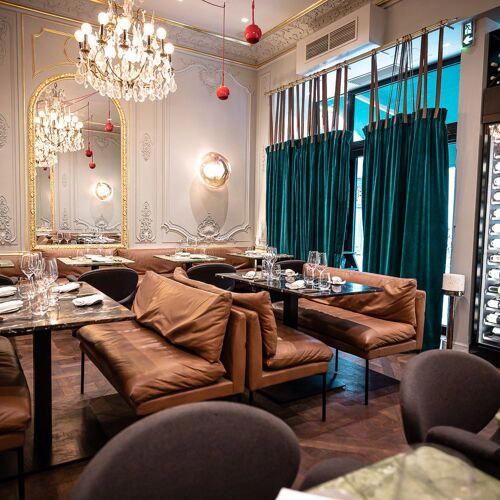
Airy space with window and terrace seating providing far-reaching views of the illuminated city walls, creating a grand and pleasant atmosphere.