

Set within La Casa del Presidente hotel, once the private residence of Adolfo Suárez, Spain's first democratically elected prime minister, Caleña takes its name from the stone of Ávila's medieval walls and frames Castilian culinary tradition through a modern tasting menu. Chef Diego Sanz works with locally sourced ingredients and classical escabeche, stew, and grill techniques, finishing many dishes tableside in a glass-fronted garden annexe alongside the city walls.
Pearl is the En Primeur Club membership app — saves, bookings, and concierge access live there. Same editors, same standards.
- Address
- C. los Telares, 1, 05001 Ávila, Spain
- Phone
- +34 683 13 70 75
- Website
- calenarestaurante.es
- Directions
- Get directions
 Saves & bookings on Pearl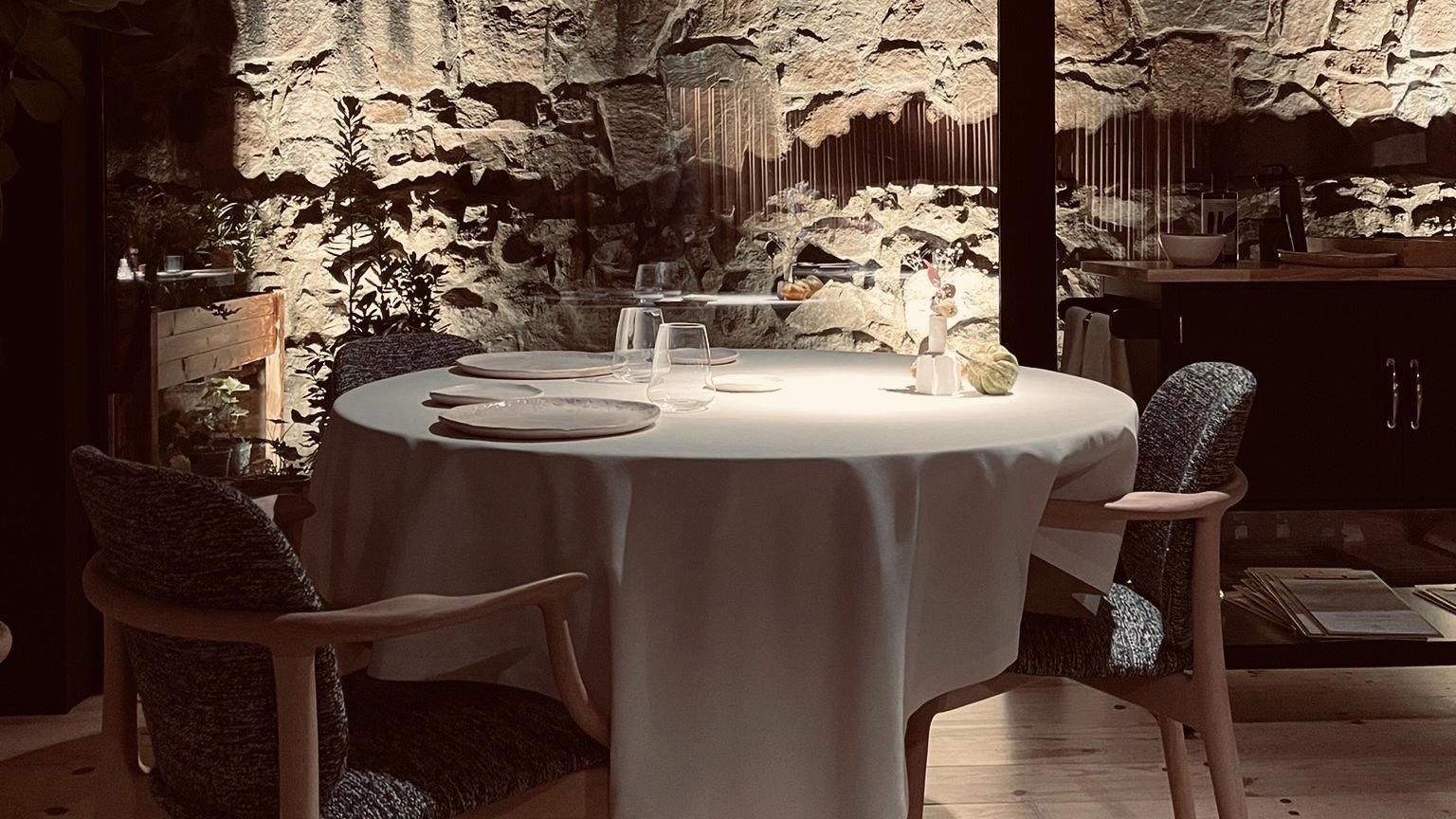
Stone, History, and the Roots of Castilian Cooking
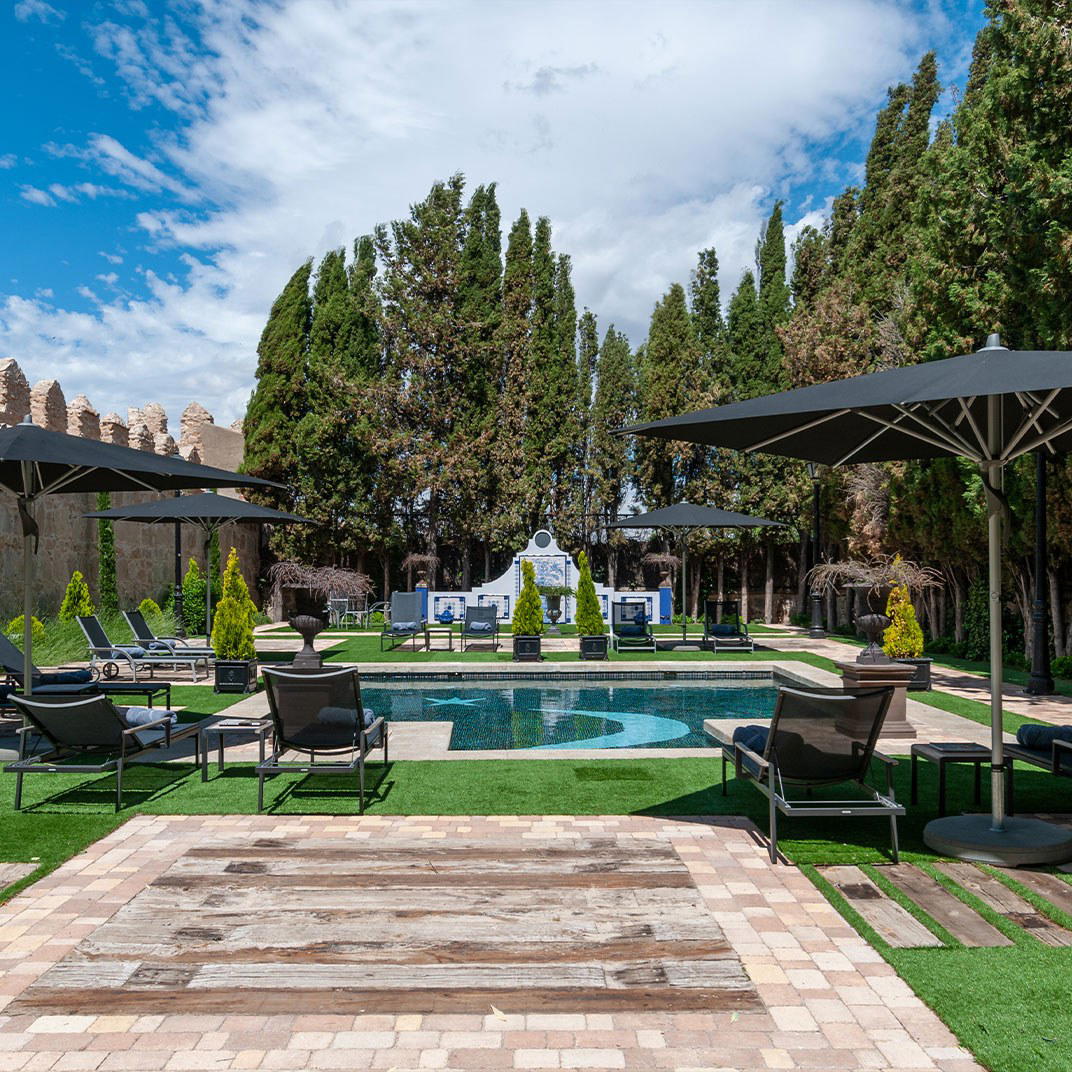
Approaching Caleña, the medieval walls of Ávila are not a backdrop; they are the immediate context. The restaurant occupies a glass-fronted annexe in the garden of La Casa del Presidente, a hotel whose own history carries considerable weight: the building was once the private residence of Adolfo Suárez, the man who guided Spain through the transition from dictatorship to parliamentary democracy and served as the country's first elected prime minister in the modern era. The name Caleña refers to the type of stone used to construct those ancient walls, and the pairing of that geological reference with the hotel's democratic history sets the tone for a restaurant that treats its setting as an argument, not decoration.
The dining room sits in a rustic, glass-fronted structure within the hotel garden, with independent street access. The positioning alongside the city walls means the physical fabric of Ávila is present throughout the meal, a constant reminder that this is a city built on stone, Catholicism, and the agricultural produce of the Castilian meseta. For visitors arriving from Ávila's broader restaurant scene, which ranges from traditional tabernas to newer addresses, Caleña occupies the more considered, format-driven end of the spectrum.
Castilian Cuisine and What It Actually Means
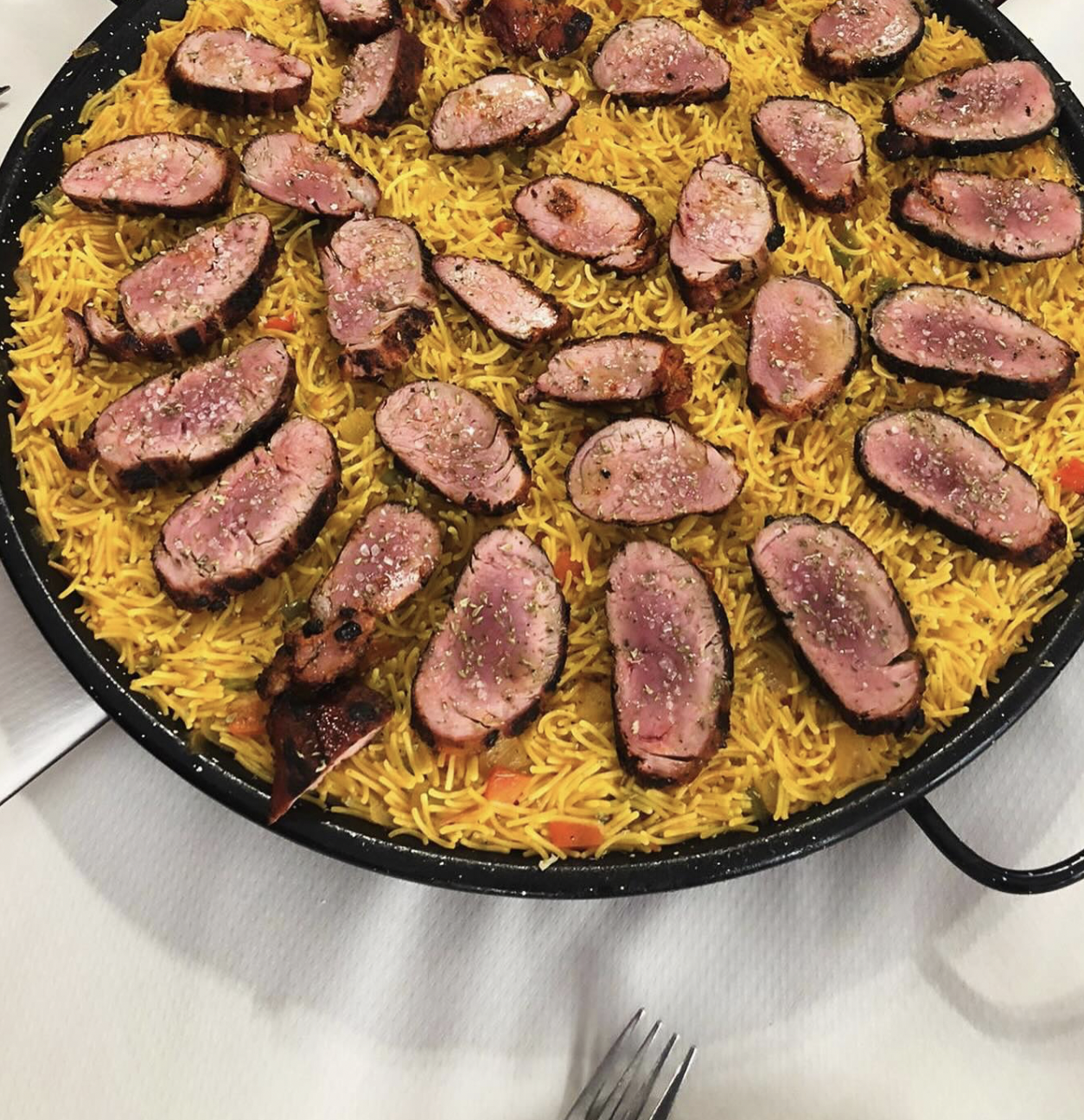
Castilian cooking is among the more misunderstood regional traditions in Spain. Outside the country, it is often reduced to roast lamb and suckling pig, which is accurate as far as it goes but tells you almost nothing about the range of techniques and ingredients that define the broader canon. Escabeche, the acid-cured preservation method with Moorish roots, runs through Castilian cooking as a structural principle, not a garnish. Market garden produce from the meseta, river fish from the Duero basin, and cured meats from pigs raised on dehesa pasture are the recurring materials. The cooking methods are direct: fire, acid, time, and restraint in flavouring.
What younger Spanish chefs working within regional traditions have done over the past decade, and what is visible at Caleña, is reframe these methods through a fine-dining format without abandoning their logic. This approach differs from the purely creative direction taken by Spain's most internationally recognised restaurants, where regional identity is often a starting point for abstraction. At DiverXO in Madrid or El Celler de Can Roca in Girona, the reference to origin is frequently conceptual. At a place like Caleña, the reference to origin is more literal: the ingredients are from specific nearby producers, and the techniques are recognisably descended from the tradition being cited.
This positioning is neither superior nor inferior to the more experimental model, it is a different argument about what fine dining should do with regional cuisine, and it is a more demanding one in some respects. When there is no radical transformation to justify the format, the quality of sourcing and the precision of technique carry more weight.
The Tasting Menu and How It Operates
Chef Diego Sanz runs a tasting menu format that moves through the categories of Castilian cooking as a kind of structured argument. The sequence covers market garden ingredients, escabeche preparations, stews built on long cooking, and grilled dishes, the progression mirrors the actual architecture of traditional Castilian meals while operating under fine-dining discipline. The sourcing is local and specific: leeks from Sahagún appear on the menu alongside cured sardine and a garum vinaigrette, placing a distinctly Castilian vegetable alongside a fermented fish sauce whose use in Spain dates back to Roman occupation of the Iberian peninsula.
The tableside finishing element is worth noting as a structural choice. Many dishes receive their final preparation at a stand brought to the table, which serves a dual purpose: it extends the sense of theatre that tasting menus often require, and it keeps the guest connected to the process rather than receiving food as a finished product. In the context of a menu that is explicitly framed around technique and storytelling, this is a consistent decision rather than a decorative gesture.
For context within Spain's current fine-dining spectrum, Caleña sits at a remove from the three-Michelin-star tier occupied by addresses like Arzak in San Sebastián, Azurmendi in Larrabetzu, or Martin Berasategui in Lasarte-Oria. It belongs instead to the second tier of Spanish fine dining: restaurants led by young chefs with clear technical grounding and a defined regional argument, operating in secondary cities where the competitive pressure is lower but the audience is also smaller. Barro, Ávila's other creative address, and El Almacén, which leans more traditional, give some sense of where Caleña sits locally, between the two in its ambition, framing classical roots through a modern lens.
Budget Reality Check
Comparable venues nearby, for context on price, style, and recognition.
| Venue | Cuisine | Price | Awards | Notes |
|---|---|---|---|---|
| CaleñaThis venue — the venue you are viewing | Ávila historic center, Modern Castilian | $$$$ | Michelin Plate | Not listed |
| El Almacén | Not listed | $$$ | Michelin Plate | Ávila, Modern Spanish with Ávila Specialties |
| Barro | Not listed | $$$$ | Michelin 1 Star | outside the walls, Modern Spanish Creative Tasting |
| Palm Court | Not listed | $$$$ | Michelin Plate | Jeronimos, Traditional Spanish Fine Dining |
| Gastrobodega Martín Berasategui | Not listed | $$$$ | Michelin Plate | Rueda, Modern Spanish Gastronomy with Castilian Influences |
| Barra Alta Madrid | Recoletos, Modern Spanish Seafood Tapas | $$$$ | Michelin Plate | Not listed |
Recognition history
Dated appearances from independent guides and award organizations, with the underlying list record or original source where available.
Guía Repsol 1 Sol
Guía Repsol
Michelin Plate
Michelin

At a Glance
- Elegant
- Cozy
- Modern
- Intimate
- Date Night
- Special Occasion
- Garden
- Historic Building
- Extensive Wine List
- Local Sourcing
- Garden
- Street Scene
Current opening hours
- Monday
- Closed
- Tuesday
- Closed
- Wednesday
- 1:30–3 PM, 8–10 PM
- Thursday
- 1:30–3 PM, 8–10 PM
- Friday
- 1:30–3 PM, 8–10 PM
- Saturday
- 1:30–3 PM, 8–10 PM
- Sunday
- 1:30–3 PM
Hours can change for holidays and private events. Last verified .
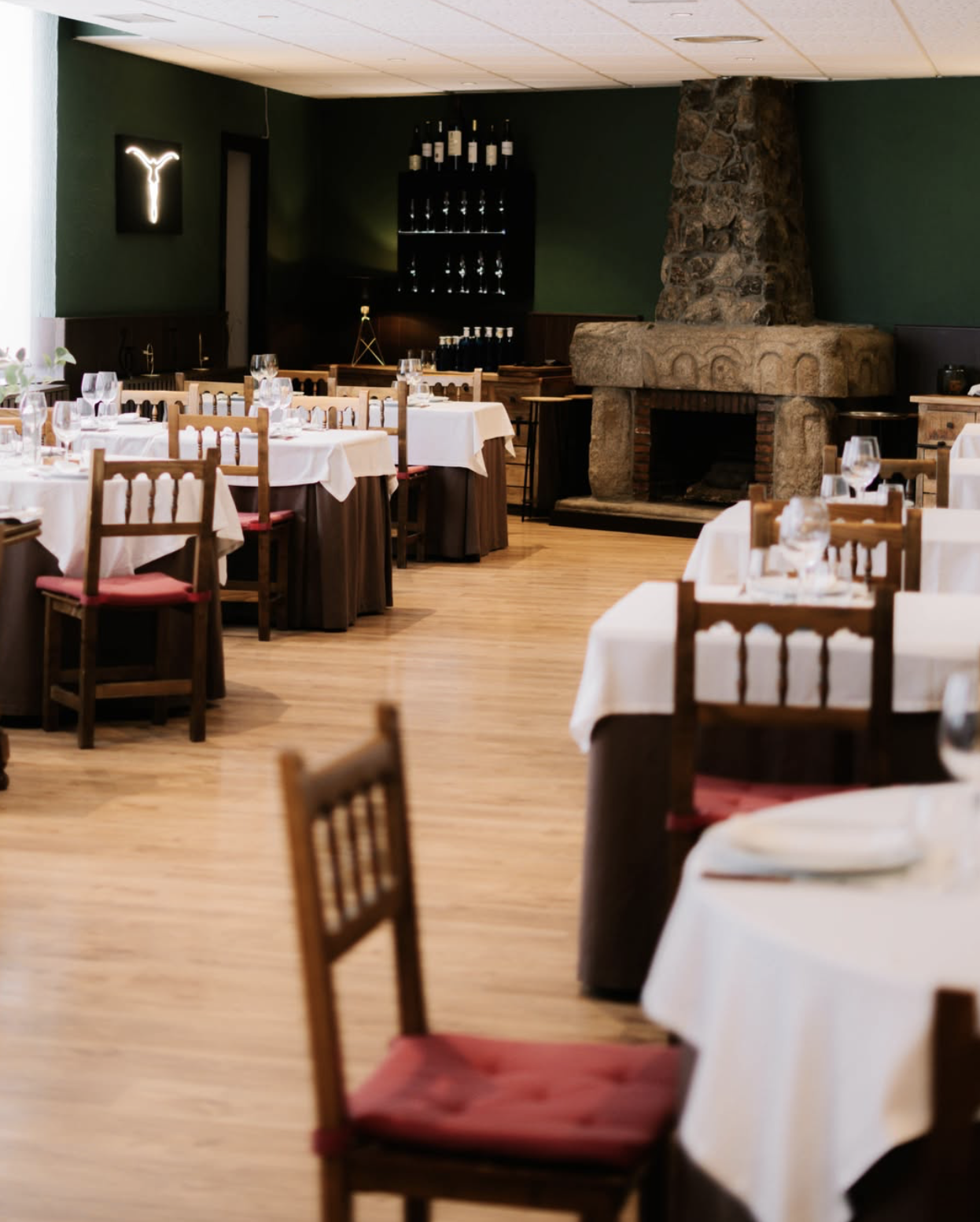
Warm and inviting with Chesterfield sofas, display cabinets, large fireplace, and garden views, creating a cozy yet elegant atmosphere.