
Michelin Plate
Our verdict
A Michelin Plate recipient in both 2024 and 2025, Duong's on Ngo Huyen Street sits in Hanoi's Hoàn Kiếm district at the affordable end of the city's recognised Vietnamese dining tier. The price point places it well below the starred tier while carrying formal Michelin acknowledgement.

Pearl is the En Primeur Club membership app, where members save venues, book tables and use the concierge.
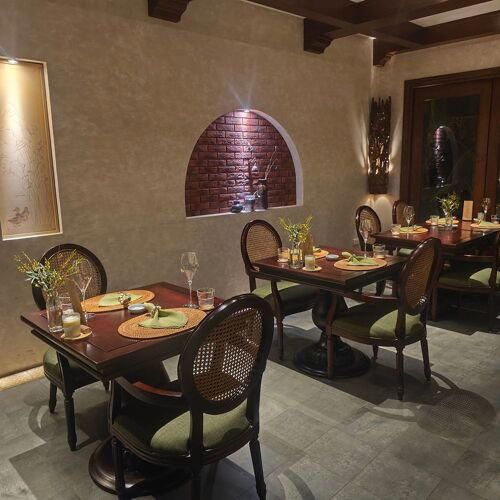
Where Hoàn Kiếm's Street-Level Dining Earns Formal Recognition
Ngo Huyen Street runs along the southern edge of Hoan Kiem Lake, close enough to the water that the hum of motorbikes gives way, at certain hours, to something quieter. The stretch sits between the compressed lanes of the Old Quarter proper and the broader colonial-era streets pushing toward the French Quarter, which means it draws from two distinct Hanoi publics: visitors working outward from the lake and residents who know these blocks as functional neighbourhood dining territory. At number 27, Duong's occupies that intersection, a Vietnamese restaurant operating at the ₫₫ price tier that the Michelin Guide has twice awarded its Plate recognition, in 2024 and again in 2025.
The Michelin Plate sits below a star but above silence. The Guide uses it to mark restaurants where the inspectors found cooking that is good, consistent, and worth knowing about. In a city where Michelin's Vietnam coverage has expanded steadily, the Plate signals that Duong's clears a threshold that most of Hanoi's restaurants do not. Contextually, this places it in a tier that includes Tầm Vị, which holds a full Michelin star at the same ₫₫ price range, and sits above the purely community-facing, unrecognised Vietnamese houses that line neighbouring streets. The separation matters: the Plate is not a consolation category, it is a specific editorial statement from inspectors who visited and formed a view.
Vietnamese Dining at the Accessible End of a Recognised Tier
Hanoi's Vietnamese restaurant spectrum runs from single-dish street stalls priced in the ₫ range, such as 1946 Cua Bac, which operates without formal recognition but with deep local loyalty, up through multi-course contemporary formats at ₫₫₫₫ that align with the city's emerging fine-dining conversation. Duong's price point at ₫₫ positions it as an entry into the formally recognised layer without the financial commitment of the upper tier.
A rating held at 4.5 through more than a thousand data points is not the product of a novelty moment, it suggests a kitchen and a floor operation that deliver reliably across different service conditions. In the context of Vietnamese cuisine specifically, where dishes like pho, bun cha, and com tam are held to exacting local standards by an audience that eats them several times a week, sustaining that kind of approval rating requires genuine technical competence in fundamentally familiar territory. For comparison, A Bản Mountain Dew approaches Vietnamese cooking from a regional highland perspective, while Bếp Prime works a different register entirely. Duong's occupies the neighbourhood-facing middle of that spectrum, where the cooking is rooted in Hanoi tradition rather than positioned as a departure from it.
The Service Dynamic in a Hoàn Kiếm Neighbourhood House
The editorial angle of EA-GN-11, the relationship between kitchen, floor, and guest, is worth examining here not as a feature of this restaurant specifically, but as a structural reality of how Vietnamese dining at this price tier functions in Hanoi. At ₫₫, there is no sommelier programme to speak of, and the front-of-house operation tends to be family-facing rather than formally drilled.
The result, when it works, is an atmosphere with a particular coherence, staff who know the food because they are close to it, not because they were trained to describe it from a card. That kind of operation is exactly what Michelin inspectors are evaluating when they consider a Plate alongside a starred venue: not the same set of technical signals, but a different kind of completeness. Vietnamese restaurants recognised at this level in Hanoi, including those on Cau Go's more tourist-facing strip, tend to hold that recognition through the aggregate of their operation rather than any single standout element.
Vietnamese Cooking in Its Global Context
Hanoi's position in the broader Vietnamese dining conversation is worth noting for visitors who follow the cuisine internationally. The city's cooking tradition differs meaningfully from Ho Chi Minh City's, leaner broths, fewer herbs, less sweetness, and a more austere approach to seasoning that reflects northern Vietnamese culinary history. Restaurants like Akuna in Ho Chi Minh City and La Maison 1888 in Da Nang operate in different regional registers entirely. Internationally, Vietnamese cooking has developed serious representation in cities including Portland, where Berlu approaches the cuisine through a contemporary lens, and in Hong Kong, where Ăn Chơi brings a different framing. An Nam in Singapore, Camille in Orlando, Agave in Ubon Ratchathani, and Ăn Thôi in Da Nang each represent the cuisine's spread across different markets and formats. Eating at a Michelin-recognised address in Hanoi's Hoàn Kiếm district puts the cuisine in its most direct form, not interpreted, not adjusted for an international palate, but cooked for the city it comes from.
Planning a Visit
Duong's is located at 27 Ngo Huyen, Hàng Trống, Hoàn Kiếm, the address places it within walking distance of Hoan Kiem Lake and the southern edge of the Old Quarter, making it accessible from most accommodation in the central districts. For broader context on where Duong's sits in Hanoi's full dining picture, see our full Hanoi restaurants guide. Visitors planning a wider stay can also reference our full Hanoi hotels guide, our full Hanoi bars guide, our full Hanoi wineries guide, and our full Hanoi experiences guide.
Frequently asked questions
What's the address for Duong's (Ngo Huyen Street)?
Duong's (Ngo Huyen Street) is located at 27 Ng. Huyện, Hàng Trống, Hoàn Kiếm, Hà Nội 10000, Vietnam, Hanoi.
What's Duong's (Ngo Huyen Street) known for in terms of accolades?
Duong's (Ngo Huyen Street) has received recognition including: Michelin Plate (2025); Michelin Plate (2024).
What price level is Duong's (Ngo Huyen Street)?
Pricing at Duong's (Ngo Huyen Street) is listed as ₫₫.
Budget Reality Check
| Venue | Cuisine | Price | Awards | Notes |
|---|---|---|---|---|
| Duong's (Ngo Huyen Street)This venue (the venue you are viewing) | Modern Vietnamese Fine Dining | $10–20 | Michelin Plate | Not listed |
| Hibana by Koki | Michelin-Starred Japanese Teppanyaki | $200–300 | 1 Michelin Star · La Liste Top Restaurants | Teppanyaki, ₫₫₫₫ |
| Tầm Vị | Northern Vietnamese Home-Style | $10–20 | 1 Michelin Star | Vietnamese, ₫₫ |
| Gia | Modern Vietnamese Fine Dining | $100–150 | 1 Michelin Star · La Liste Top Restaurants | Vietnamese Contemporary, ₫₫₫₫ |
| 1946 Cua Bac | Northern Vietnamese | $10–20 | Michelin Bib Gourmand | Not listed |
| Bun Cha Ta (Nguyen Huu Huan Street) | Authentic Vietnamese Bun Cha | $1–10 | Michelin Bib Gourmand | Not listed |
Recognition history
Dated appearances from independent guides and award organizations, with the underlying list record or original source where available.
Michelin Plate
Michelin
Full recognition history (3 entries)
Michelin Plate
Michelin
Michelin Plate
Michelin
Continue exploring
More in Hanoi
Restaurants in Hanoi
All restaurants in Hanoi →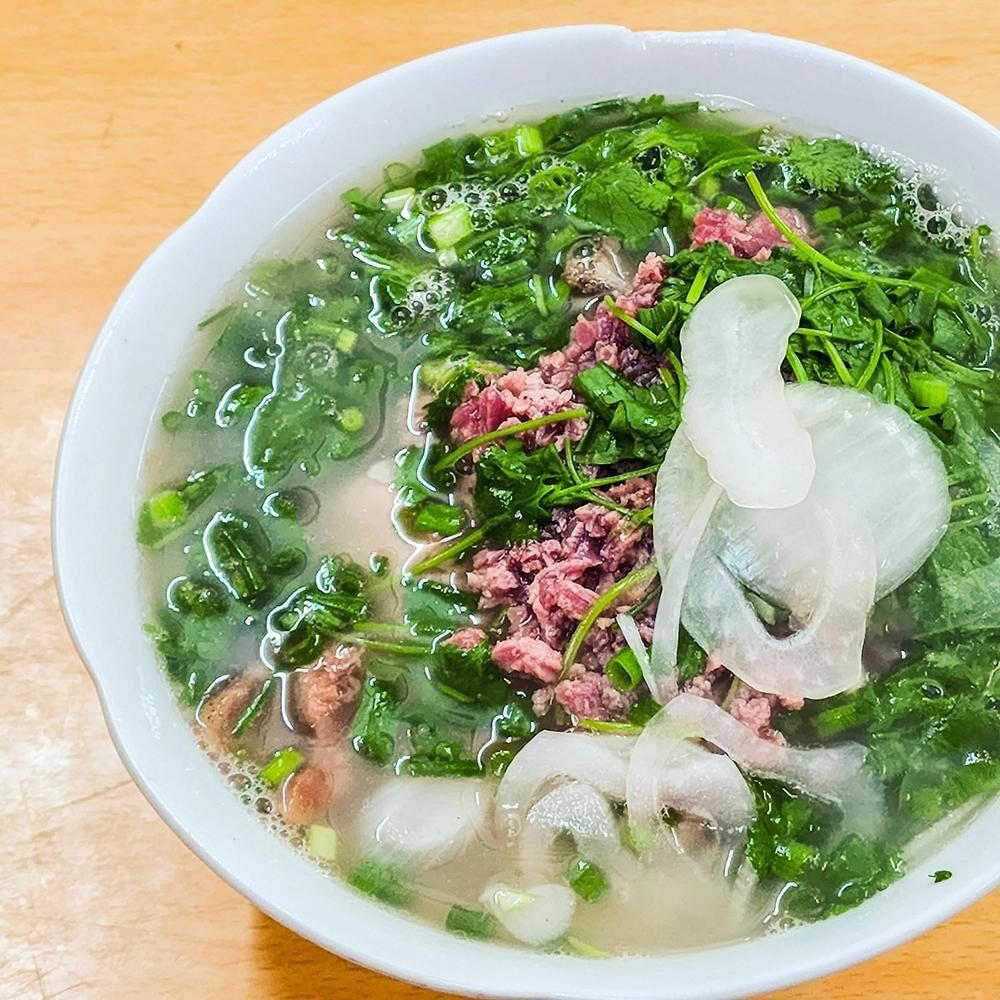
Details
- Intimate
- Cozy
- Elegant
- Date Night
- Special Occasion
- Craft Cocktails
- A La Carte
- Set Menu
- Vegetarian Friendly
Current opening hours
- Monday
- 11 AM–10 PM
- Tuesday
- 11 AM–10 PM
- Wednesday
- 11 AM–10 PM
- Thursday
- 11 AM–10 PM
- Friday
- 11 AM–10 PM
- Saturday
- 11 AM–10 PM
- Sunday
- 11 AM–10 PM
Hours can change for holidays and private events. Hours as of .
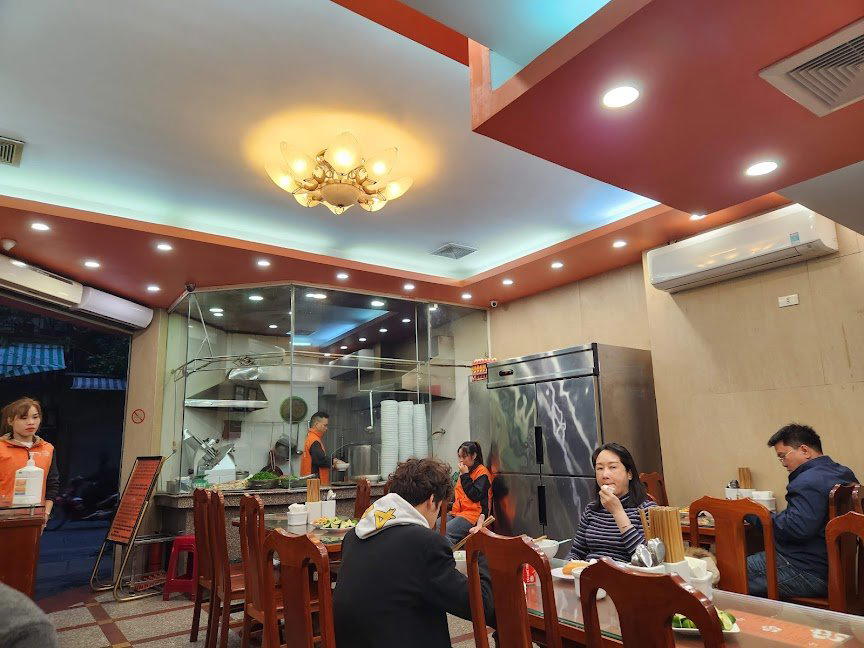
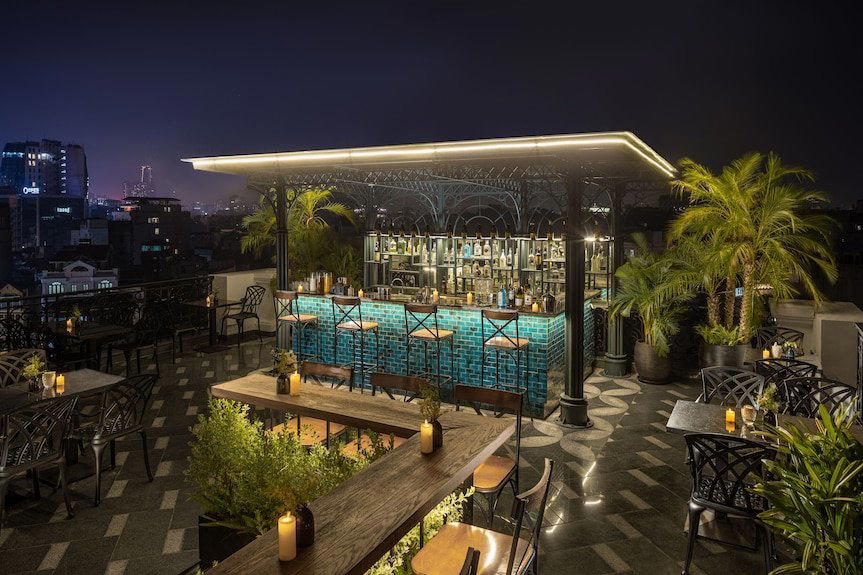
Cosy multi-level setting with comfortable wooden furniture, intimate soft lighting, and a welcoming atmosphere.