
Michelin Plate
Our verdict
Tucked inside a Wong Tai Sin shopping mall at the foot of Lion Rock, Dragons' Den serves a menu of Cantonese classics that have largely disappeared from Hong Kong's restaurant scene. The five-day dry-aged squab, smoked over pear wood and deep-fried, is the signature draw. Dim sum lunch pulls a loyal local crowd, and certain barbecue and seafood dishes require advance ordering.

Pearl is the En Primeur Club membership app, where members save venues, book tables and use the concierge.
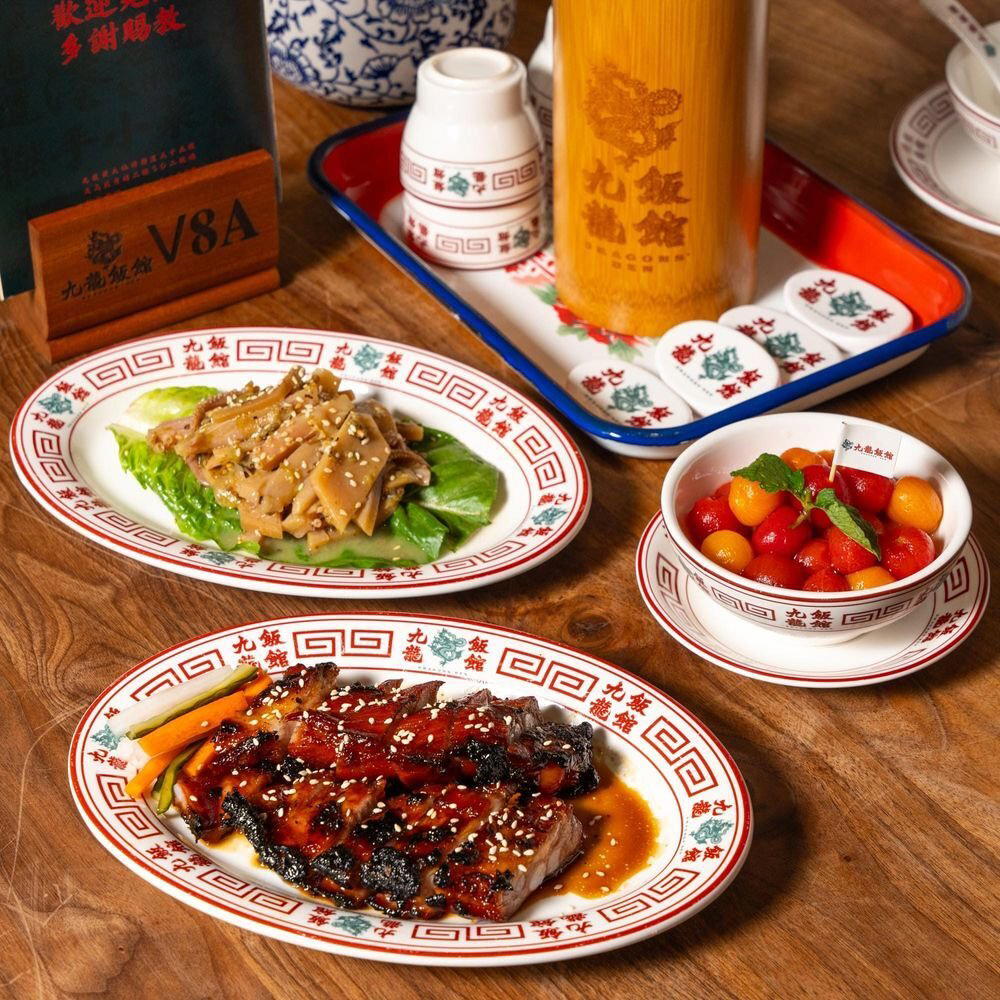
The menu
What to order
- Squab
- Baked egg omelette with fish tripe
Wong Tai Sin and the Cantonese Classics Question
Hong Kong's fine dining conversation tends to orbit Central and Wan Chai, where restaurants like Caprice, Amber, and Ta Vie have spent years accumulating Michelin stars and column inches. Further north, in the residential heartland of Wong Tai Sin, a different kind of dining authority operates. It doesn't announce itself with a doorman or a harbour view. It sits inside Tin Ma Court Commercial Centre, a mid-century mall at the base of Lion Rock, behind a shopfront that reads more neighbourhood institution than destination restaurant. That incongruity is precisely the point.
The broader context worth understanding is this: Hong Kong's Cantonese restaurant scene has bifurcated sharply over the past two decades. On one side, a tier of hotel-anchored and Michelin-recognised houses, including Forum, has preserved Cantonese cooking within a premium, internationally visible framework. On the other, a quieter category of neighbourhood specialists has continued to cook dishes that hotel dining rooms have largely retired from their menus, preparations that require long lead times, specialist sourcing, or techniques that don't scale to high-volume service. Dragons' Den sits firmly in that second category.
Retro Decor as a Deliberate Signal
The physical space at Dragons' Den does something that most restaurants in Hong Kong's competitive dining scene would avoid: it leans into an aesthetic that reads as conspicuously unfashionable by current standards. Mid-century modern furniture, retro decor elements, and a general resistance to renovation, these are not oversights. They function as a coherent signal that the kitchen's priorities lie elsewhere, and that the clientele arriving here already knows what it came for. In cities like Hong Kong, where dining rooms at the level of 8 1/2 Otto e Mezzo Bombana invest heavily in interior vocabulary, a deliberate plainness carries its own credibility among a certain kind of diner.
Contrast extends to neighbourhood character. Wong Tai Sin is primarily a residential and religious district, home to one of Hong Kong's most-visited Taoist temples. Eating here involves none of the transactional energy of the Central or Tsim Sha Tsui dining circuits. The room fills with local regulars rather than tourists or corporate lunch accounts, which in turn shapes how the kitchen performs. There is no equivalent of the performance mode that kicks in when a room is full of first-time visitors.
The Menu as a Record of Cantonese Technique
What Dragons' Den actually cooks is the most significant editorial fact about it. Cantonese cuisine has one of the most technically demanding repertoires in Chinese cooking, and a portion of that repertoire has quietly contracted from Hong Kong's restaurant menus over the past generation. Dishes that require extended preparation windows, specialist knowledge, or ingredients that are difficult to source in consistent quantity tend to disappear first. Baked egg omelette with fish tripe, cited as one of the restaurant's signature preparations, is a precise example: a dish that demands both the right ingredient and the practised hand to execute, and that has become genuinely rare to find well-made in a restaurant setting.
The squab preparation tells a similar story about commitment to process. Five days of dry-aging followed by pear wood smoking and deep-frying is not a method that responds well to shortcuts. At the elite end of Hong Kong's Cantonese tradition, roast squab has long been a benchmark preparation, and the specific technique here places it in a lineage of serious roasting craft. For comparative context, the premium Cantonese houses and tasting menus that attract international coverage, restaurants benchmarked against the likes of Le Bernardin or Alain Ducasse at Louis XV in terms of global ambition, typically operate with far greater resources than a neighbourhood specialist. The fact that a mall-level restaurant in Wong Tai Sin maintains this level of preparation discipline is the genuinely interesting editorial point.
Dim sum lunch occupies a different register on the same menu. Hong Kong's dim sum culture is one of the most codified in Chinese dining, with clear distinctions between workaday yum cha operations and houses that treat the format with serious kitchen investment. The lunchtime popularity at Dragons' Den suggests it has established itself at the credible end of that spectrum within its district, drawing the kind of regular attendance that neighbourhood dim sum houses in Hong Kong earn through consistency over years rather than through marketing cycles.
Pre-Ordering and the Logic of Specialist Service
Certain barbecue and seafood dishes at Dragons' Den require advance ordering, which is a practical constraint but also an accurate description of what cooking at this level actually demands. Pre-ordering is common across serious Cantonese houses when the preparation involved cannot be improvised on a per-service basis. It also functions as a sorting mechanism: diners who know to pre-order are, by definition, engaged enough with the menu to have done the research. The result is a dining room where the kitchen can plan production around committed orders rather than estimating volume on spec.
For visitors planning around this, the practical implication is direct: contact the restaurant ahead of arrival and confirm which dishes require advance notice. Showing up and hoping the squab is available without prior arrangement is the kind of miscalculation that results in a significantly different meal than intended. The same logic applies to dim sum lunch, which draws enough regular demand that arriving without a reservation on busier days carries real risk.
Where Dragons' Den Sits in Hong Kong's Broader Dining Map
Hong Kong's dining offer at the highest end of the market is well-documented. The Central and Wan Chai corridors contain some of the most technically accomplished restaurant cooking in Asia, with high-investment tasting menus that compete in the same global conversation as Alinea, Alléno Paris, or Aponiente. That tier is well served by existing coverage, including EP Club's full Hong Kong restaurants guide.
What is less well documented is the category to which Dragons' Den belongs: neighbourhood Cantonese specialists operating outside the hotel dining and Michelin circuit, cooking a repertoire that the prestige tier has largely contracted away from. The value of this category to a serious diner is not that it is cheap or obscure for its own sake, but that it preserves techniques and dishes that would otherwise become difficult to access at any price point. A preparation like the pear-wood smoked squab is not available at Le Salon de Thé de Joël Robuchon in Central. The trade-off is a longer journey into a residential district, a room without design ambitions, and a need for advance planning. For a certain kind of Cantonese cooking, that trade-off is rational.
Visitors building a Hong Kong itinerary should also consider EP Club's guides to hotels, bars, wineries, and experiences for a broader picture of what the city offers across categories.
Planning Your Visit
Dragons' Den is located at Shop S02, 2F, Tin Ma Court Commercial Centre, 55 Chuk Yuen Road, Wong Tai Sin, reachable via the Wong Tai Sin MTR station, which sits within walking distance of the mall. The setting is entirely functional rather than scenic, so orient your expectations around the food rather than the approach. Pre-order squab and any barbecue or seafood dishes that interest you before arrival, and treat the dim sum lunch as a separate, high-demand visit requiring its own reservation. For fuller context on how this restaurant fits within Hong Kong's Cantonese dining tradition, our Hong Kong restaurants guide maps the wider scene.
Frequently asked questions
What's Dragons' Den known for in terms of accolades?
Dragons' Den has received recognition including: Hidden in a shopping mall at the foot of Lion Rock, this restaurant has retro decor and mid-century modern furniture in keeping with the menu – a rollcall of yesteryear's Cantonese classics, such as baked egg omelette with fish tripe, which….
Where exactly is Dragons' Den?
Dragons' Den is located at Shop S02, 2F, Tin Ma Court Commercial Centre, 55 Chuk Yuen Road, Wong Tai Sin, Hong Kong.
What dish is Dragons' Den famous for?
The squab is the kitchen's signature: dry-aged for five days, smoked over pear wood, then deep-fried. The baked egg omelette with fish tripe is equally cited, a preparation that has largely disappeared from Hong Kong's mainstream Cantonese menus, which is precisely why regulars come for it.
How hard is it to get a table at Dragons' Den?
Dim sum lunch draws a loyal local following and is described as hugely popular, so arriving without a plan is a risk, particularly on weekends. The restaurant is located at Shop S02, 2F, Tin Ma Court Commercial Centre in Wong Tai Sin, a neighbourhood crowd rather than a tourist circuit, which means demand is consistent and driven by repeat visitors.
What's Dragons' Den best at?
Holding onto Cantonese techniques that have contracted from most of Hong Kong's restaurant menus. The pear wood-smoking method for squab and the use of fish tripe represent a style of cooking that requires specialist sourcing and preparation, neither dish appears on many menus in the city today. Note that certain barbecue and seafood preparations require advance ordering, which reflects the kitchen's commitment to doing them properly rather than holding them ready.
Cuisine Context
Comparable venues nearby, for context on price, style, and recognition.
| Venue | Cuisine | Price | Awards | Notes |
|---|---|---|---|---|
| Dragons' DenThis venue (the venue you are viewing) | Classic Cantonese | Not listed | Michelin Plate | Not listed |
| Hop Sze | Traditional Cantonese Private Kitchen | $50–100 | Not listed | Wan Chai |
| Australian Dairy | Hong Kong Cha Chaan Teng | $10–20 | Not listed | Yau Tsim Mong South |
| Shum Shum Desserts | Hong Kong/Taiwanese Sweet Soups | $10–20 | Michelin Plate | Sham Shui Po East |
| Kin's Kitchen | Traditional Cantonese | $30–50 | Not listed | Wan Chai |
| Sijie Sichuan Restaurant | Authentic Sichuan | $30–50 | Not listed | Wan Chai |
Recognition history
Dated appearances from independent guides and award organizations, with the underlying list record or original source where available.
Michelin Plate
Michelin · 2026 Michelin Plate
Full recognition history (2 entries)
Michelin Bib Gourmand
Michelin
Continue exploring
More in Hong Kong
Restaurants in Hong Kong
All restaurants in Hong Kong →
Bars in Hong Kong
All bars in Hong Kong →
Hotels in Hong Kong
All hotels in Hong Kong →

Wineries in Hong Kong
All wineries in Hong Kong →
Details
- Retro
- Classic
- Cozy
- Family
- Group Dining
- A La Carte
Current opening hours
- Monday
- 11 AM–3 PM, 6–10 PM
- Tuesday
- Closed
- Wednesday
- 11 AM–3 PM, 6–10 PM
- Thursday
- 11 AM–3 PM, 6–10 PM
- Friday
- 11 AM–3 PM, 6–10 PM
- Saturday
- 10 AM–12:30 PM, 1–3:30 PM, 6–10 PM
- Sunday
- 10 AM–12:30 PM, 1–3:30 PM, 6–10 PM
Hours can change for holidays and private events. Hours as of .
Retro decor and mid-century modern furniture creating a nostalgic, cozy atmosphere evoking yesteryear's Cantonese dining.